• Wyszukiwanie zaawansowane
  • Kategorie
  • Kategorie BISAC
  • Książki na zamówienie
  • Promocje
  • Granty
  • Książka na prezent
  • Opinie
  • Pomoc
  • Załóż konto
  • Zaloguj się

The Nucleic Acid Protocols Handbook » książka


zaloguj się | załóż konto
Logo Krainaksiazek.pl

koszyk

konto

szukaj
topmenu
Księgarnia internetowa
Szukaj
Książki na zamówienie
Promocje
Granty
Książka na prezent
Moje konto
Pomoc
 
 
Wyszukiwanie zaawansowane
Pusty koszyk
Bezpłatna dostawa dla zamówień powyżej 20 złBezpłatna dostawa dla zamówień powyżej 20 zł

Kategorie główne

• Nauka
 [2949965]
• Literatura piękna
 [1857847]

  więcej...
• Turystyka
 [70818]
• Informatyka
 [151303]
• Komiksy
 [35733]
• Encyklopedie
 [23180]
• Dziecięca
 [617748]
• Hobby
 [139972]
• AudioBooki
 [1650]
• Literatura faktu
 [228361]
• Muzyka CD
 [398]
• Słowniki
 [2862]
• Inne
 [444732]
• Kalendarze
 [1620]
• Podręczniki
 [167233]
• Poradniki
 [482388]
• Religia
 [509867]
• Czasopisma
 [533]
• Sport
 [61361]
• Sztuka
 [243125]
• CD, DVD, Video
 [3451]
• Technologie
 [219309]
• Zdrowie
 [101347]
• Książkowe Klimaty
 [123]
• Zabawki
 [2362]
• Puzzle, gry
 [3791]
• Literatura w języku ukraińskim
 [253]
• Art. papiernicze i szkolne
 [7933]
Kategorie szczegółowe BISAC

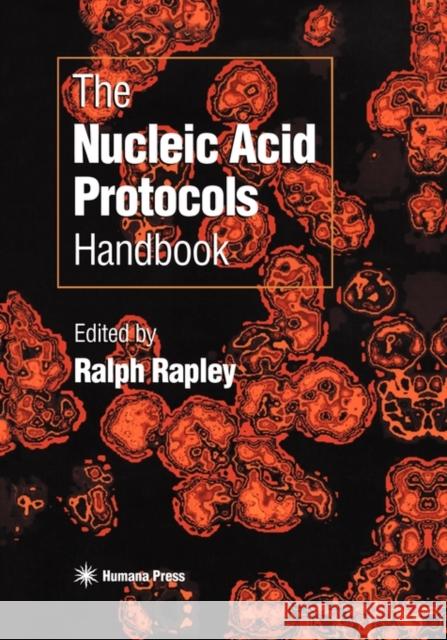
The Nucleic Acid Protocols Handbook

ISBN-13: 9780896038417 / Angielski / Miękka / 2000 / 478 str.
Ralph Rapley
The Nucleic Acid Protocols Handbook Ralph Rapley 9780896038417 Humana Press - książkaWidoczna okładka, to zdjęcie poglądowe, a rzeczywista szata graficzna może różnić się od prezentowanej.

The Nucleic Acid Protocols Handbook

ISBN-13: 9780896038417 / Angielski / Miękka / 2000 / 478 str.

Ralph Rapley
cena 806,99 zł
(netto: 768,56 VAT:  5%)

Najniższa cena z 30 dni: 771,08 zł
Termin realizacji zamówienia:
ok. 22 dni roboczych
Bez gwarancji dostawy przed świętami

Darmowa dostawa!
inne wydania

There can be no doubt that some ofthe most spectacular advances made in science over the past few decades have been in the isolation, analysis, and manipulation of nucleicacids. Thishas ledtoamuchgreaterunderstandingofmechanismsandprocesses across many fields of bioscience, such as biochemistry, microbiology, physiology, pharmacology, and the medical sciences to name a few. It has also led to the growth of the biotechnology industry, which seeks to develop and commercialize many ofthese important processes and methods. Much ofthis has come about because ofthe devel- opment of numerous molecular biology and genetic manipulation techniques. The discovery of restriction enzymes and the development of cloning vectors in the early 1970sopenedthedoortowaysofisolatingandmanipulatingnucleic acidsthathadnever been thought possible. Gene probe labeling and hybridization were developed and refined toprovidepowerfulmethodsofanalysis. These-togetherwiththedevelopment of DNA sequencing methods, protein engineering techniques, and PeR-have all continued to contribute substantially to the understandingofbiological processes at the molecular level. Theprotocols for these importantmethods are the focus ofThe Nucleic AcidProtocols Handbook, whose aim is to provide a comprehensive set oftechniques in onevolume thatwill enable the isolation, analysis, and manipulationofnucleic acids to be readily undertaken. The NucleicAcidProtocols Handbook is divided into 10 parts; within each there are approximately 10chapters. The first fourpartsfollow oneanotherlogically: nucleic acid extraction (Part I), basic separation and analysisofDNA (II), through probe design and labeling (III), and RNA analysis techniques (IV). The following three sections deal with gene libraryconstruction andscreening(V), DNA sequencing (VI), andthe polymerase chain reaction (VII).


Kategorie:
Nauka, Biologia i przyroda
Kategorie BISAC:
Science > Biochemia
Medical > Laboratory Medicine
Medical > Microbiology
Wydawca:
Humana Press
Język:
Angielski
ISBN-13:
9780896038417
Rok wydania:
2000
Wydanie:
2000
Ilość stron:
478
Waga:
1.62 kg
Wymiary:
25.27 x 17.68 x 3.96
Oprawa:
Miękka
Wolumenów:
01
Dodatkowe informacje:
Bibliografia
Wydanie ilustrowane

"... the techniques are presented in minute details and in a "cookbook-standardized manner"... The personal notes inserted by each contributor provide assurance that the techniques would work in any laboratory... Having all of those protocols updated and tested in practice and bound in one volume will be attractive to many scientists who deal with molecular biology techniques."- Modern Pathology

"There were over 190 authors involved in writing the protocols, ...each protocol is presented in outline format an follows a common numbering scheme, making it easy to find relevant sections....Many of the protocols include tables of data or figures, including drawings or photographs of gels...One of the most useful sections in each protocol lists notes, which elucidate possible pitfalls, provide troubleshooting tips, or give alternate methods or explanations for steps. This very practical information makes successful duplication of the procedure much more likely than when attempting to follow the often less detailed or less flexible descriptions given in journal articles....this handbook would be extremely useful as a reference in most university libraries."-E-Streams

"...it covers practically all of the very important and large field of nucleic acid research. The volume summarizes, in 10 parts, recent advances in the isolation , analysis and manipulation of nucleic acids. ...The chapters were contributed by authors from leading laboratories in the field all over the world....The book provides the reader with a large set of ready-to use protocols needed to undertake complex molecular biology experimental project on a large spectrum of biological models involving isolation and analysis of nucleic acids. It is thus an almost indispensable handbook for anybody working in the field of molecular biology and genetics."-Folia Microbiologica

"...extremely useful as a reference in most university libraries." - E-Streams

"...comprehensive and detailed...this is an set of recipes for the genetic kitchen." -The Biologist

Part I. Nucleic Acid Extraction. Isolation of High-Molecular-Weight DNA from Animal Cells, Ian Garner. Isolation of mRNA by Affinity Chromatography, Sian Bryant and David L. Manning. Isolation and Purification of DNA from Plants, Justin Stacey and Peter G. Isaac. Purification of Uncontaminated, Intact Plant RNA, Shu-Hua Cheng, Brandon D. Moore, and Jeffrey R. Seemann. An Improved Method to Isolate Mitochondrial RNA from Green Plant Tissue, Fei Ye and Ralf Reski. Isolating Chromosomal DNA from Bacteria, Elisabeth Chachaty and Patrick Saulnier. Bacterial DNA Extraction for Polymerase Chain Reaction and Pulsed-Field Gel Electrophoresis, Elisabeth Chachaty and Patrick Saulnier. Isolation of Fungal Nucleic Acids, Surapareddy Sreenivasaprasad. Total RNA Isolation from Bacteria, John Heptinstall. Simultaneous RNA and DNA Extraction from Biopsy Material, Culture Cells, Plants, and Bacteria, Udo Döbbeling. Spectrophotometric Analysis of Nucleic Acids, John Heptinstall and Ralph Rapley. Part II. Basic Separation and Analysis of DNA. Restriction Endonuclease Digestion of DNA, Duncan R. Smith. Agarose Gel Electrophoresis of Nucleic Acids, D. Ross Williams and Ralph Rapley. Preparation of RNA Dot Blots, Rachel Hodge. Native Polyacrylamide Gel Electrophoresis, Adrian J. Harwood. Southern Blotting of Agarose Gels by Capillary Transfer, Ralph Rapley and Jane Davenport -Jones. Pulsed-Field Gel Electrophoresis, John Maule. HPLC of DNA and PCR Products, Elena D. Katz. Part III. Probe Design, Synthesis, and Labeling. End-Labeling of DNA Fragments, Adrian J. Harwood. Nick Translation and Random Hexamer Labeling of DNA, Jane Davenport-Jones. Generation of Labeled Probes by Polymerase Chain Reaction, Y. M. Dennis Lo and Shu F. An. Nonradioactive Oligonucleotide Probe Labeling, Sue Fowler and Ian Durrant. Preparation of Direct, Enzyme-Labeled DNA Probes, Ian Durrant and Timothy Stone. Random Prime Labeling of DNA Probes with Fluorescein-Tagged Nucleotides, Bronwen M. Harvey, Claire B.Wheeler, and Martin W. Cunningham. Hybridization and Detection of Fluorescein-Labeled DNA Probes Using Chemiluminescence, Claire B. Wheeler, Bronwen M. Harvey, and Martin W. Cunningham. Hybridization of Enzyme-Labeled Probes and Detection by Chemiluminescence, Timothy Stone and Ian Durrant. Hybridization and Competition Hybridization of Southern Blots, Rosemary Kelsell. Autoradiography and Fluorography, Eric Quéméneur. Part IV. RNA Analysis Techniques. Formaldehyde Gel Electrophoresis of Total RNA, Sian Bryant and David L. Manning. RNA Probes for the Analysis of Gene Expression, Dominique Belin. Primer Extension Analysis of mRNA, Maggie Walmsley, Mark Leonard, and Roger Patient. S1 Mapping Using Single-Stranded DNA Probes, Stéphane Viville and Roberto Mantovani. Measurements of Rate of Transcription in Isolated Nuclei by Nuclear 'Run-Off' Assay, Rai Ajit K. Srivastava and Gustav Schonfeld. One-Tube RT-PCR with Sequence-Specific RT Primers, Ulrich Pfeffer and Paola Ferro. Characterization of RNA Using Continuous RT-PCR Coupled with ELOSA, François Mallet. Quantitative Analysis of RNA Species by Polymerase Chain Reaction and Solid-Phase Minisequencing, Anu Suomalainen and Ann-Christine Syvänen. Nonradioactive Northern Blotting of RNA, Rainer Löw. Analysis of RNA by Northern Blotting Using Riboprobes, Rai Ajit K. Srivastava. Part V. Gene Library Construction and Screening. Production of Double-Stranded cDNA for Gene Library Synthesis, Jane Kirk and Steve Mayall. Using Rapid Amplification of cDNA Ends (RACE) to Obtain Full-Length cDNAs, Yue Zhang and Michael A. Frohman. cDNA Library Construction Using Streptavidin-Paramagnetic Beads and PCR, Kris N. Lambert and Valerie M. Williamson. Rapid (Ligase-Free) Subcloning of Polymerase Chain Reaction Products, Alan R. Shuldiner and Keith Tanner. Subtraction Hybridization cDNA Libraries, Clifford W. Schweinfest, Peter S. Nelson, Michael W. Graber, Rita I. Demopoulos, and Takis S. Papas. Cloning Polymerase Chain Reaction

The Nucleic Acid Protocols Handbook is today's most comprehensive up-to-date treasury of all the key molecular biology methods-ranging from DNA extraction to gene localization in situ-needed to function effectively in the modern laboratory. Each of the 120 highly successful techniques follows the format of the much acclaimed Methods in Molecular Biology™ series, providing an introduction to the scientific basis of each technique, a complete listing of all the materials and reagents needed, and clear step-by-step instructions to permit error-free execution. Included for each technique are notes about pitfalls to avoid, troubleshooting tips, alternate methods, and explanations of the reasons for certain steps-all key elements contributing significantly to success in the lab. The authord are well-experienced masters of the techniques described, often having perfected and optimized them in their own laboratories. In The Nucleic Acid Protocols Handbook, Ralph Rapley has brought together the widest-ranging, one-volume collection of classic and cutting-edge techniques for the successful isolation, analysis, and manipulation of nucleic acids. Eminently practical and reproducible, these proven methods will help both experienced researchers and those entering the field attain the laboratory mastery needed-not only to deepen understanding of biological processes at the molecular level, but also to begin realizing the biotechnological bounty so clearly in prospect.

Rapley, Ralph Dr Ralph Rapley, Department of Biosciences, Univer... więcej >


Udostępnij

Facebook - konto krainaksiazek.pl


Opinie o Krainaksiazek.pl na Opineo.pl

Partner Mybenefit

Krainaksiazek.pl w programie rzetelna firma Krainaksiaze.pl - płatności przez paypal

Czytaj nas na:

Facebook - krainaksiazek.pl
  • książki na zamówienie
  • granty
  • książka na prezent
  • kontakt
  • pomoc
  • opinie
  • regulamin
  • polityka prywatności

Zobacz:

  • Księgarnia czeska

  • Wydawnictwo Książkowe Klimaty

1997-2025 DolnySlask.com Agencja Internetowa

© 1997-2022 krainaksiazek.pl
     
KONTAKT | REGULAMIN | POLITYKA PRYWATNOŚCI | USTAWIENIA PRYWATNOŚCI
Zobacz: Księgarnia Czeska | Wydawnictwo Książkowe Klimaty | Mapa strony | Lista autorów
KrainaKsiazek.PL - Księgarnia Internetowa

Polityka prywatnosci - link
Krainaksiazek.pl - płatnośc Przelewy24
Przechowalnia Przechowalnia





