• Wyszukiwanie zaawansowane
  • Kategorie
  • Kategorie BISAC
  • Książki na zamówienie
  • Promocje
  • Granty
  • Książka na prezent
  • Opinie
  • Pomoc
  • Załóż konto
  • Zaloguj się

The Lower Damodar River, India: Understanding the Human Role in Changing Fluvial Environment » książka


zaloguj się | załóż konto
Logo Krainaksiazek.pl

koszyk

konto

szukaj
topmenu
Księgarnia internetowa
Szukaj
Książki na zamówienie
Promocje
Granty
Książka na prezent
Moje konto
Pomoc
 
 
Wyszukiwanie zaawansowane
Pusty koszyk
Bezpłatna dostawa dla zamówień powyżej 20 złBezpłatna dostawa dla zamówień powyżej 20 zł

Kategorie główne

• Nauka
 [2946600]
• Literatura piękna
 [1856966]

  więcej...
• Turystyka
 [72221]
• Informatyka
 [151456]
• Komiksy
 [35826]
• Encyklopedie
 [23190]
• Dziecięca
 [619653]
• Hobby
 [140543]
• AudioBooki
 [1577]
• Literatura faktu
 [228355]
• Muzyka CD
 [410]
• Słowniki
 [2874]
• Inne
 [445822]
• Kalendarze
 [1744]
• Podręczniki
 [167141]
• Poradniki
 [482898]
• Religia
 [510455]
• Czasopisma
 [526]
• Sport
 [61590]
• Sztuka
 [243598]
• CD, DVD, Video
 [3423]
• Technologie
 [219201]
• Zdrowie
 [101638]
• Książkowe Klimaty
 [124]
• Zabawki
 [2473]
• Puzzle, gry
 [3898]
• Literatura w języku ukraińskim
 [254]
• Art. papiernicze i szkolne
 [8170]
Kategorie szczegółowe BISAC

The Lower Damodar River, India: Understanding the Human Role in Changing Fluvial Environment

ISBN-13: 9789400704664 / Angielski / Twarda / 2011 / 308 str.
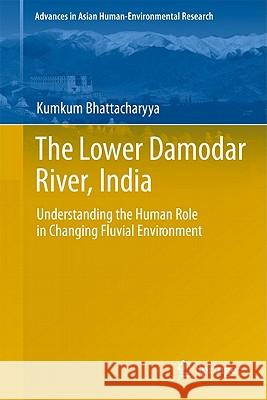
Kumkum Bhattacharyya
The Lower Damodar River, India: Understanding the Human Role in Changing Fluvial Environment Bhattacharyya, Kumkum 9789400704664 Not Avail - książkaWidoczna okładka, to zdjęcie poglądowe, a rzeczywista szata graficzna może różnić się od prezentowanej.

The Lower Damodar River, India: Understanding the Human Role in Changing Fluvial Environment

ISBN-13: 9789400704664 / Angielski / Twarda / 2011 / 308 str.

Kumkum Bhattacharyya
cena 605,23 zł
(netto: 576,41 VAT:  5%)

Najniższa cena z 30 dni: 578,30 zł
Termin realizacji zamówienia:
ok. 22 dni roboczych
Bez gwarancji dostawy przed świętami

Darmowa dostawa!

Interweaving the human aspects of river control with analysis of hydro-physical data, including historical data over the last few centuries, this monograph is a comprehensive evaluation of the Damodar's lower reaches. While the Damodar River isn't an exceptional tropical river, nor does it feature classic examples of river control structures, it is unusual and worthy of study due to the fact that nowhere else in the tropical world have riverine sandbars been used as a resource base as well as for permanent settlements. Based on their knowledge of river stages, the inhabitants have fine-tuned their land use to flood events, applying a concept of flood zoning to the riverbed. Every available space has been utilized rationally and judiciously.This rare human-environmental study analyzes the remarkable way in which immigrants unfamiliar with the riverine environment have adapted to the altered hydrologic regime of the river. In doing so they have demonstrated a sophisticated understanding of the flood regime and the vagaries of an unpromising environment in their land use, cropping and settlement patterns. Spurred on by restricted social and economic mobility and sometimes political constraints, these self-settled refugees have learned to adapt to their environment and live with the floods.Bhattacharyya's text is particularly timely, as anthropogenic processes of this kind have not been adequately studied by geographers.


Kategorie:
Nauka, Archeologia
Kategorie BISAC:
Science > Earth Sciences - Hydrology
Science > Earth Sciences - Geography
Science > Environmental Science (see also Chemistry - Environmental)
Wydawca:
Not Avail
Seria wydawnicza:
Advances in Asian Human-Environmental Research
Język:
Angielski
ISBN-13:
9789400704664
Rok wydania:
2011
Numer serii:
000390195
Ilość stron:
308
Waga:
0.74 kg
Wymiary:
23.5 x 15.5
Oprawa:
Twarda
Wolumenów:
01
Dodatkowe informacje:
Bibliografia
Wydanie ilustrowane

From the reviews:

"The material presented in this book is based on the author's seven years of extensive research and is supported by an extensive literature review. The book will be a good addition to the library of engineers, policy makers, geographers, geomorphologists, environmentalists, and ecologists who are concerned with river training and control. ... The author should be complimented for preparing a well-written treatise on a most interesting topic-the role humans play in changing the fluvial environment." (Vijay P. Singh and C. Prakash Khedun, Journal of Hydrologic Engineering, Vol. 19, March, 2014)

1.Introduction.- 2. Damodar Valley Region.- 3. Floods and Water Resource Management in a Tropical River, the Damodar.- 4. The Reservoired Lower Damodar: Hydro-Geomorphic Perspective.- 5. Colonization Processes in the Damodar Riverbed.- 6. Controlled Lower Damodar: Social Perspective.- 7. The Controlled Lower Damodar: A Product of Hydrogeomorphic and Anthropogenic Processes.- 8. Towards Better Interaction.- References.- APPENDIX I. Model questionnaire of perception survey.- APPENDIX II. List of reference maps.- APPENDIX III. Hydrological observation.- APPENDIX IV. Information about Maithon and Panchet Project.-APPENDIX V. Streamflow of the Damodar River at Rhondia.- APPENDIX VI. Streamflow of the Damodar River at Damodar Bridge Site.- APPENDIX VII. Inflow into Durgapur Barrage and canal consumption.- APPENDIX VIII. Volume of water released down the Durgapur Barrage and canals.- APPENDIX IX. Combined moderation by Maithon and Panchet dams of the Damodar River.- APPENDIX X. Peak flow of the Damodar River, Rhondia.- APPENDIX XI. Average monsoon discharge and suspended sediment of Damodar at Damodar Bridge Site.- APPENDIX XII. GIS as a toolbox for flood, water & land resource planners.

Interweaving the human aspects of river control with analysis of hydro-physical data, including historical data over the last few centuries, this monograph is a comprehensive evaluation of the Damodar’s lower reaches. While the Damodar River isn’t an exceptional tropical river, nor does it feature classic examples of river control structures, it is unusual and worthy of study due to the fact that nowhere else in the tropical world have riverine sandbars been used as a resource base as well as for permanent settlements. Based on their knowledge of river stages, the inhabitants have fine-tuned their land use to flood events, applying a concept of flood zoning to the riverbed. Every available space has been utilized rationally and judiciously.

This rare human-environmental study analyzes the remarkable way in which immigrants unfamiliar with the riverine environment have adapted to the altered hydrologic regime of the river. In doing so they have demonstrated a sophisticated understanding of the flood regime and the vagaries of an unpromising environment in their land use, cropping and settlement patterns. Spurred on by restricted social and economic mobility and sometimes political constraints, these self-settled refugees have learned to adapt to their environment and live with the floods.

Bhattacharyya’s text is particularly timely, as anthropogenic processes of this kind have not been adequately studied by geographers.

"Bhattacharyya's superb study describes and analyzes the interrelationship of geomorphic setting, resource base, perceived environment and social space as well as the role of legal structures, economic geography and infrastructure in accounting for the way society has adapted to, altered and utilized a once natural dynamic environment. Through historical reconstruction of the riverine scene along with marshalling of data on river behavior and social change, including the presentation of detailed studies of settlements within the alluvial bottomland brought to life with excellent maps, the author makes clear how people, ranging from refugees to local settlers have transformed the landscape driven by diverse cultural, economic, religious, and political forces. The author's description of the sophisticated way in which environment, social status, and culture are interwoven in the distribution of crops and associated microtopography is masterful". (Prof. M. Gordon Wolman, Department of Geography and Environmental Engineering, The Johns Hopkins University, Baltimore, MD, USA)


Udostępnij

Facebook - konto krainaksiazek.pl


Opinie o Krainaksiazek.pl na Opineo.pl

Partner Mybenefit

Krainaksiazek.pl w programie rzetelna firma Krainaksiaze.pl - płatności przez paypal

Czytaj nas na:

Facebook - krainaksiazek.pl
  • książki na zamówienie
  • granty
  • książka na prezent
  • kontakt
  • pomoc
  • opinie
  • regulamin
  • polityka prywatności

Zobacz:

  • Księgarnia czeska

  • Wydawnictwo Książkowe Klimaty

1997-2025 DolnySlask.com Agencja Internetowa

© 1997-2022 krainaksiazek.pl
     
KONTAKT | REGULAMIN | POLITYKA PRYWATNOŚCI | USTAWIENIA PRYWATNOŚCI
Zobacz: Księgarnia Czeska | Wydawnictwo Książkowe Klimaty | Mapa strony | Lista autorów
KrainaKsiazek.PL - Księgarnia Internetowa

Polityka prywatnosci - link
Krainaksiazek.pl - płatnośc Przelewy24
Przechowalnia Przechowalnia




