The Genesis of Geopolitics and Friedrich Ratzel: Dismissing the Myth of the Ratzelian Geodeterminism » książka





The Genesis of Geopolitics and Friedrich Ratzel: Dismissing the Myth of the Ratzelian Geodeterminism
ISBN-13: 9783319980348 / Angielski / Twarda / 2018 / 252 str.
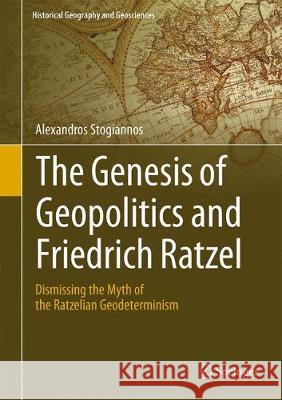
The Genesis of Geopolitics and Friedrich Ratzel: Dismissing the Myth of the Ratzelian Geodeterminism
ISBN-13: 9783319980348 / Angielski / Twarda / 2018 / 252 str.
(netto: 611,96 VAT: 5%)
Najniższa cena z 30 dni: 616,85
ok. 22 dni roboczych.
Darmowa dostawa!
This book discusses the influence of Friedrich Ratzel's ideas in more contemporary geopolitical analytical systems and the geodeterminism commonly attributed to him.
Foreword
1. Friedrich Ratzel and Geopolitics
1.1. Geopolitics as an analysis tool of power redistribution
1.1.1. Systemic Geopolitical Analysis and Critical Geopolitics
1.1.2. The Greek Geopolitical Systemic School (research programme)
1.1.2.1. Methodology of Systemic Geopolitical Analysis
1.2. Ratzel: The father of Geopolitics?
1.3. Ratzel’s scientific Political Geography
1.3.1. About the scientific nature of Political Geography
1.3.2. Epistemological approach and definition of Political Geography
1.3.2.1. Land equals power?
1.3.2.2. Physiographical and human geographical aspects in the political evaluation
1.3.3. Ratzel and modern Geopolitics
1.4. A Methodological approach to Ratzel’s Work
1.5. Determining F. Ratzel’s “geopolitical period”
1.6. Conclusions of Chapter 1
2. F. Ratzel’s State as a “social organism”
2.1. The predominant State perceptions at F. Ratzel’s age (1789 – 1900).
2.2. The German national edifice: specificities and disputes
2.2.1. The German national unity as a starting point of the ideological propensity to social
darwinist and racist theories.
2.3. In-between two eras: Ratzel’s perception of the State
2.4. The myth of Ratzel’s organistic and metaphysical perception of the state
2.4.1. Review of Ratzel’s article “The state as an organism”
2.5. Conclusions of Chapter 2
3. Living space (Lebensraum): Bio-geographical signifier with political-geographical signified?
3.1. Living space (Lebensraum): a bio-geographical term
3.2. The driving forces of the organisms
3.3. A definition of living space: its material characteristics
3.4. The importance of space for development of the species
3.5. Bio-geography as the field for the implementation Migrationstheorie (theory of migration)
3.6. Conclusions of Chapter 3
4. Social / cultural aspects as factors of power contibutors in Ratzel’s state analysis and the issue of racism
4.1. The position of the nature-oriented people (Naturvölker) within humanity
4.2. People evaluation
4.2.1. Family
4.2.2. Intellectual and scientific life4.2.3. Work and economy
4.2.4. Intellectual heroes and great statesmen
4.2.5. The conscience of “socially belonging together”
4.2.6. Language and “national identity”
4.2.7. About extraction and its characteristics
4.2.8. The cosmopolitan age or the oncoming globalisation
4.2.9. About demography as a state power contributor
4.3. Nationalities and races: a human-geographical analysis
4.3.1. The age and universality of the national movements
4.3.2. The race factor as part of the national issue
4.3.3. Incorporation and isolation
4.3.4. Race and Language
4.3.5. Contradictions and ephemerality of the national movements
4.3.6. Contradictions and ephemerality of the national movements
4.3.7. The great racial issues
4.3.7.1. Ratzel’s critique against Gobineau and Chamberlain
4.4. Some objects/elements of a Political Ethnography
4.4.1. Theoretical and applied Ethnography
4.4.2. Land and people
4.4.3. The unity of the human species in Political Ethnography
4.4.4. Peoples’ evaluation
4.4.5. Sociology and Political Ethnography
4.5. Racist or humanist? Ratzel in the centre of a big antinomy
4.5.1. The debiologicalisation of the term race
4.5.2. About the allegedly hierarchical race classification
4.5.3. About the worldwide labor division
4.5.4. Racism and national conflicts
4.6. Conclusions of Chapter 4
5. Ratzel’s worldview (Weltanschauung) and the “Positivist Circle of Leipzig”. The meaning of Ratzel’s law
5.1. Partial or complete renunciation of Darwin?
5.2. Diffusion, evolutionism and socialdarwinism
5.3. Between religion and science
5.4. The positivist and interdisciplinary indagation of the “Positivist Circle of Leipzig”
5.5. Law (Gesetz), Conformity to the law (Gesetzmäßigkeit), Rule (Regel)
5.6. The Laws of Spatial Growth. A Contribution to Scientific Political Geography
5.6.1. 1st Law: The size of the state increases with the development of culture
5.6.2. 2nd Law: The spatial development of countries follows other growth phenomena of the people, which necessarily proceed
5.6.3. 3rd law: The spatial growth of states evolves through the annexation of smaller parts in a merger, through which the people’s connection to the ground becomes increasingly closer
5.6.4. 4th Law: As a peripheral organ of the state, the border is the agent of both its growth and its consolidation, participating in all transformations of the state’s organism
5.6.5. 5th law: When expanding, states seek to appropriate the politically valuable locations
5.6.6. 6th Law: The initial stimuli for the spatial growth of states are external.
5.6.7. 7th Law: The general tendency towards spatial adjustment and balancing transmits spatial growth from one state to the next and continuously intensifies it.
5.7. Conclusions of Chapter 5
6. Ratzel, Central Europe (Mitteleuropa) and “European Union”
6.1. Organising models of the Central European space
6.2. The Pan-Germanic Central Europe
6.2.1. Central Europe in German Political Geography and Geopolitics
6.3. The Central European Economic Association
6.4. Central Europe from Ratzel’s point of view
6.5. Conclusions of Chapter 6
7. Fr. Ratzel and the Eastern Question: Flag follows trade
7.1. The Eastern Question - approaches 222
7.1.1. The Eastern question from the German ultranationalists’ point of view
7.2. Die Bagdadbahn: railway connection from Berlin to Bagdad
7.3. The Eastern Question in Ratzel’s Political Geography
7.3.1. Importance and interdependence of Verkehr with politics
7.3.2. Railways, telecommunications and military roads
7.3.2.1 Railways
7.3.4.2. Telecommunications
7.3.2.3. Military roads
7.4. The need to support the Ottoman Empire
7.5. The English – Russian geostrategic dispute for Persia
7.6. Suez Canal changes balances in the wider area: a geopolitical approach
7.7. Presentation of F.Ratzel’s analysis: The Eastern Questions
7.7.1 The Mediterranean Sea subsystem of a European system
7.7.2. Geostrategical competition and conflicts of Great Powers in the sub-system of Balkans - Mediterranean Sea
7.7.3. Ratzel’s geopolitical doctrine for the Eastern Mediterranean Sea: chock points and islands
7.7.4. Geopolitical players and Realpolitik
7.7.5. English economism and French cultural expansion
7.7.6. Greece
7.7.7. Cyprus
7.7.8. Syria
7.7.9. Psychology of peoples – The role of Press
7.8. Conclusions of Chapter 7
8. Final Conclusions
9. Appendix
9.1. Maps
9.2. Maps of Friedrich Ratzel
10. References
Friedrich Ratzel’s books and articles
German and English
Greek or translated into Greek
WebsitesThis book discusses the influence of Friedrich Ratzel's ideas in more contemporary geopolitical analytical systems and the geodeterminism commonly attributed to him. The author thoroughly analyzes the structural components of Ratzel's thought.




Czytaj nas na:
1997-2026 DolnySlask.com Agencja Internetowa
KrainaKsiazek.PL - Księgarnia Internetowa


