• Wyszukiwanie zaawansowane
  • Kategorie
  • Kategorie BISAC
  • Książki na zamówienie
  • Promocje
  • Granty
  • Książka na prezent
  • Opinie
  • Pomoc
  • Załóż konto
  • Zaloguj się

The DAO of Translation: An East-West Dialogue » książka


zaloguj się | załóż konto
Logo Krainaksiazek.pl

koszyk

konto

szukaj
topmenu
Księgarnia internetowa
Szukaj
Książki na zamówienie
Promocje
Granty
Książka na prezent
Moje konto
Pomoc
 
 
Wyszukiwanie zaawansowane
Pusty koszyk
Bezpłatna dostawa dla zamówień powyżej 20 złBezpłatna dostawa dla zamówień powyżej 20 zł

Kategorie główne

• Nauka
 [2946912]
• Literatura piękna
 [1852311]

  więcej...
• Turystyka
 [71421]
• Informatyka
 [150889]
• Komiksy
 [35717]
• Encyklopedie
 [23177]
• Dziecięca
 [617324]
• Hobby
 [138808]
• AudioBooki
 [1671]
• Literatura faktu
 [228371]
• Muzyka CD
 [400]
• Słowniki
 [2841]
• Inne
 [445428]
• Kalendarze
 [1545]
• Podręczniki
 [166819]
• Poradniki
 [480180]
• Religia
 [510412]
• Czasopisma
 [525]
• Sport
 [61271]
• Sztuka
 [242929]
• CD, DVD, Video
 [3371]
• Technologie
 [219258]
• Zdrowie
 [100961]
• Książkowe Klimaty
 [124]
• Zabawki
 [2341]
• Puzzle, gry
 [3766]
• Literatura w języku ukraińskim
 [255]
• Art. papiernicze i szkolne
 [7810]
Kategorie szczegółowe BISAC

The DAO of Translation: An East-West Dialogue

ISBN-13: 9780367133801 / Angielski / Miękka / 2018 / 242 str.
Douglas Robinson
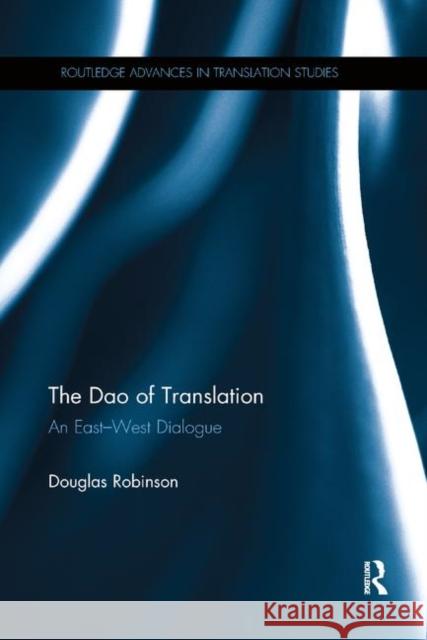
The DAO of Translation: An East-West Dialogue Robinson, Douglas 9780367133801 Routledge - książkaWidoczna okładka, to zdjęcie poglądowe, a rzeczywista szata graficzna może różnić się od prezentowanej.

The DAO of Translation: An East-West Dialogue

ISBN-13: 9780367133801 / Angielski / Miękka / 2018 / 242 str.

Douglas Robinson
cena 219,00
(netto: 208,57 VAT:  5%)

Najniższa cena z 30 dni: 201,44
Termin realizacji zamówienia:
ok. 22 dni roboczych
Bez gwarancji dostawy przed świętami

Darmowa dostawa!
inne wydania

The Dao of Translation sets up an East-West dialogue on the nature of language and translation, and specifically on the "unknown forces" that shape the act of translation. To that end it mobilizes two radically different readings of the Daodejing (formerly romanized as the Tao Te Ching): the traditional "mystical" reading according to which the Dao is a mysterious force that cannot be known, and a more recent reading put forward by Sinologists Roger T. Ames and David L. Hall, to the effect that the Dao is simply the way things happen. Key to Ames and Hall's reading is that what makes the Dao seem both powerful and mysterious is that it channels habit into action-or what the author calls social ecologies, or icoses. The author puts Daoism (and ancient Confucianism) into dialogue with nineteenth-century Western theorists of the sign, Charles Sanders Peirce and Ferdinand de Saussure (and their followers), in order to develop an "icotic" understanding of the tensions between habit and surprise in the activity of translating. The Dao of Translation will interest linguists and translation scholars. This book will also engage researchers of ancient Chinese philosophy and provide Western scholars with a thought-provoking cross-examination of Eastern and Western perspectives.


Kategorie:
Nauka, Językoznawstwo
Kategorie BISAC:
Language Arts & Disciplines > Linguistics - General
Language Arts & Disciplines > Translating & Interpreting
Philosophy > Taoist
Wydawca:
Routledge
Język:
Angielski
ISBN-13:
9780367133801
Rok wydania:
2018
Numer serii:
000790755
Ilość stron:
242
Oprawa:
Miękka
Wolumenów:
01
Dodatkowe informacje:
Wydanie ilustrowane

This book is a genuine contribution to translation studies in an age of interdisciplinarity and multiculturalism. … it introduces insightful ideas from semiotics, ancient Chinese philosophy, neuroscience and psychology into translation studies. Robinson wishes ‘to show not only how ancient Chinese thought can help us understand translation more ecologically but how ecological approaches to the study of translation can help us understand ancient Chinese thought more clearly’ (p. viii). Undoubtedly The Dao of Translation will engage not only linguists and translation scholars, but also those who do research on ancient Chinese philosophy. -- Yunsheng Wang, Huazhong University of Science and Technology and Zhongnan University of Economics and Law and Qin Huang, Huazhong University of Science and Technology, in Australian Journal of Linguistics, 2016

1. Laozi’s Unspeakable Dao  2. The Dao of Abduction: Hartama-Heinonen on Peirce on Translation 2.1 Peirce and his Followers among Semiotic Translation Scholars 2.2 Hartama-Heinonen vs. Robinson 2.3 Exclusive Abduction 2.3.1 Translation as 無爲wuwei 2.3.2 + Reasoning 2.3.3 Foreclosing on Secondness and Thirdness 2.4 Guessing as Divining: Peirce on the Mystery  3. The Dao of Empathy: Mengzi’s Social Ecologies of Feeling 3.1 On Reading with Empathy 3.2 Mengzi’s Ecological Dao 3.3 Habit in Laozi 3.4 Mengzi on Inclinations and Disposition as Habit 3.5 Mengzi on禮 li 3.6 Mengzi on 仁ren: Translation as Transfeeling 3.7 The Chinese Roots of Romantic/Idealist Thought 3.8 Conclusion: "Chinese" Peirce and Saussure?  4. The Dao of Habit: Peirce (and Hartama-Heinonen) on the Tensions between Habit and Surprise 4.1 Peirce on Habit 4.2 Hartama-Heinonen on Habit 4.3 Creativity in the 中庸 Zhongyong 4.4 Conclusion  5. The Dao of the "Potential for Rules": Saussure on the Structuring Force in/of Language 5.1 Linguistic Entities Have No Objective Existence 5.2 Linguitic Entities are Human Constructs 5.3 Confusions Between the Language System and its Evolution 5.4 The Chaos of the "Potential for Rules" 5.5 Linguistic Entities and Social Values 5.6 Language is Social 5.7 The Intergenerational Transmission of a Preconscious Intensity of Experiential Thought 5.8 A Somatics of Language 5.9 Linguistic Habits and Socioaffective Ecologies 5.10 Translation as Dao  6. The Dao of Habitus 1: Bourdieu (and Damasio) on Body Automatisms 6.1 Socio-ecological Stabilizations of Words 6.2 Habit 6.3 The Collective Organization of Habit 6.4 Habitus 6.5 The "Habitual" Openness of the Social Field 6.6 Somatic Markers 1: Habitus Minus Self 6.7 Somatic Markers 2: Reason Minus Habitus 6.8 Somatic Markers 3: Habitus as a Preparatory Component of Reason 6.9 The Habitus and the Field 6.10 The Affective Transmission of Habitus  7. The Dao of Habitus 2: Simeoni on the Submissive Translator 7.1 Precipitation and Propensity 7.2 Somatic Habituses 7.3 Who is Suited to be a Translator? 7.4 The Submissive Translator  8. Conclusion: D(a)oing Translation

Douglas Robinson is Dean of the Faculty of Arts and Chair Professor of English at Hong Kong Baptist University. He has been a freelance translator of technical and literary texts from Finnish to English since 1975. He is also one of the world's leading translation scholars and the author of The Translator's Turn (John Hopkins University Press, 1991), Translation and Taboo (Illinois University Press, 1996), What Is Translation? (Kent State University Press, 1997), Translation and Empire (St. Jerome, 1997), Western Translation Theory From Herodotus to Nietzsche (St. Jerome, 1997), Who Translates? (SUNY Press, 2001), Translation and the Problem of Sway (John Benjamins, 2011) and Schleiermacher's Icoses (Zeta Books, 2013).


Udostępnij

Facebook - konto krainaksiazek.pl


Opinie o Krainaksiazek.pl na Opineo.pl

Partner Mybenefit

Krainaksiazek.pl w programie rzetelna firma Krainaksiaze.pl - płatności przez paypal

Czytaj nas na:

Facebook - krainaksiazek.pl
  • książki na zamówienie
  • granty
  • książka na prezent
  • kontakt
  • pomoc
  • opinie
  • regulamin
  • polityka prywatności

Zobacz:

  • Księgarnia czeska

  • Wydawnictwo Książkowe Klimaty

1997-2025 DolnySlask.com Agencja Internetowa

© 1997-2022 krainaksiazek.pl
     
KONTAKT | REGULAMIN | POLITYKA PRYWATNOŚCI | USTAWIENIA PRYWATNOŚCI
Zobacz: Księgarnia Czeska | Wydawnictwo Książkowe Klimaty | Mapa strony | Lista autorów
KrainaKsiazek.PL - Księgarnia Internetowa

Polityka prywatnosci - link
Krainaksiazek.pl - płatnośc Przelewy24
Przechowalnia Przechowalnia





