• Wyszukiwanie zaawansowane
  • Kategorie
  • Kategorie BISAC
  • Książki na zamówienie
  • Promocje
  • Granty
  • Książka na prezent
  • Opinie
  • Pomoc
  • Załóż konto
  • Zaloguj się

Textile Wastewater Treatment: Sustainable Bio-Nano Materials and Macromolecules, Volume 2 » książka


zaloguj się | załóż konto
Logo Krainaksiazek.pl

koszyk

konto

szukaj
topmenu
Księgarnia internetowa
Szukaj
Książki na zamówienie
Promocje
Granty
Książka na prezent
Moje konto
Pomoc
 
 
Wyszukiwanie zaawansowane
Pusty koszyk
Bezpłatna dostawa dla zamówień powyżej 20 złBezpłatna dostawa dla zamówień powyżej 20 zł

Kategorie główne

• Nauka
 [2949965]
• Literatura piękna
 [1857847]

  więcej...
• Turystyka
 [70818]
• Informatyka
 [151303]
• Komiksy
 [35733]
• Encyklopedie
 [23180]
• Dziecięca
 [617748]
• Hobby
 [139972]
• AudioBooki
 [1650]
• Literatura faktu
 [228361]
• Muzyka CD
 [398]
• Słowniki
 [2862]
• Inne
 [444732]
• Kalendarze
 [1620]
• Podręczniki
 [167233]
• Poradniki
 [482388]
• Religia
 [509867]
• Czasopisma
 [533]
• Sport
 [61361]
• Sztuka
 [243125]
• CD, DVD, Video
 [3451]
• Technologie
 [219309]
• Zdrowie
 [101347]
• Książkowe Klimaty
 [123]
• Zabawki
 [2362]
• Puzzle, gry
 [3791]
• Literatura w języku ukraińskim
 [253]
• Art. papiernicze i szkolne
 [7933]
Kategorie szczegółowe BISAC

Textile Wastewater Treatment: Sustainable Bio-Nano Materials and Macromolecules, Volume 2

ISBN-13: 9789811928512 / Angielski / Twarda / 2022
Muthu, Subramanian Senthilkannan
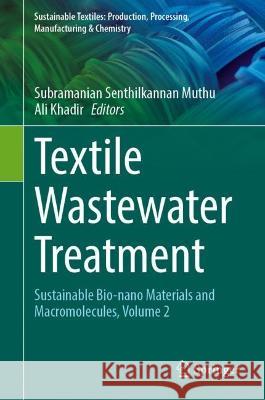
Textile Wastewater Treatment: Sustainable Bio-Nano Materials and Macromolecules, Volume 2 Muthu, Subramanian Senthilkannan 9789811928512 Springer Nature Singapore - książkaWidoczna okładka, to zdjęcie poglądowe, a rzeczywista szata graficzna może różnić się od prezentowanej.

Textile Wastewater Treatment: Sustainable Bio-Nano Materials and Macromolecules, Volume 2

ISBN-13: 9789811928512 / Angielski / Twarda / 2022

Muthu, Subramanian Senthilkannan
cena 564,88 zł
(netto: 537,98 VAT:  5%)

Najniższa cena z 30 dni: 539,74 zł
Termin realizacji zamówienia:
ok. 22 dni roboczych
Bez gwarancji dostawy przed świętami

Darmowa dostawa!
inne wydania

In this second volume, various materials such as Magnetic-based biocomposites, wheat bran/straw-based biomaterials, peel-based biomaterials, luffa Based Biomaterials, composite polymeric membranes, rice husk, hydroxyapatite etc for treating textile waste water are highlighted.   One of the major pollutants in the textiles and fashion sector is textile waste water. Textile wastewater can lead to serious environmental issues if discharged without proper and sufficient treatment. The materials employed along with the technologies available to trate the waste water are the key. There are a lot of advancements in terms materials, technologies employed for textile waste water treatment. Sustainable bio-nano materials and macro molecules play a major role in the efficient textile waste treatment.


Kategorie:
Technologie
Kategorie BISAC:
Technology & Engineering > Materials Science - General
Science > Earth Sciences - Hydrology
Science > Environmental Science (see also Chemistry - Environmental)
Wydawca:
Springer Nature Singapore
Seria wydawnicza:
Sustainable Textiles: Production, Processing, Manufacturing
Język:
Angielski
ISBN-13:
9789811928512
Rok wydania:
2022
Waga:
0.59 kg
Wymiary:
23.5 x 15.5
Oprawa:
Twarda
Dodatkowe informacje:
Wydanie ilustrowane

Treatment of textile wastewater by nanoparticles

Magnetic-based biocomposites in dye adsorption

Application of wheat bran/straw-based biomaterials in textile wastewater

Application of peel-based biomaterials in textile wastewater

Applications of Luffa Based Biomaterials in Textile Wastewater

RECENT TRENDS IN TEXTILE WASTEWATER TREATMENT USING AGRICULTURAL WASTE

Application of Agricultural Waste in Anionic Dyes Removal from Wastewater

Application of composite polymeric membranes in textile wastewater

Role of Chitosan and Chitosan-based Nanocomposite Membranes in the removal of Synthetic dyes from Effluent Wastewaters

Application of Biobased and Inorganic Composite Materials to Remove Heavy Metals from Textile Effluent

Potential of pyrolysis biochar as an eco-friendly biosorbent for dye removal from industrial wastewaters

APPLICATION OF RICE HUSK-BASED BIOMATERIAL IN TEXTILE WASTEWATER TREATMENT

Application of Hydroxyapatite in Textile Wastewater

Dr. Subramanian Senthilkannan Muthu currently works for SgT Group as Head of Sustainability, and is based out of Hong Kong. He earned his PhD from The Hong Kong Polytechnic University, and is a renowned expert in the areas of Environmental Sustainability in Textiles & Clothing Supply Chain, Product Life Cycle Assessment (LCA) and Product Carbon Footprint Assessment (PCF) in various industrial sectors. He has five years of industrial experience in textile manufacturing, research and development and textile testing and over a decade's of experience in life cycle assessment (LCA), carbon and ecological footprints assessment of various consumer products. He has published more than 100 research publications, written numerous book chapters and authored/edited over 100 books in the areas of Carbon Footprint, Recycling, Environmental Assessment and Environmental Sustainability. 

Ali Khadir is an environmental engineer and a member of the Young Researcher and Elite Club, Islamic Azad University of Shahre Rey Branch, Tehran, Iran. He has published several articles and book chapters in reputed international publishers. He also has been the reviewer of journals and international conferences. His research interests center on emerging pollutants, dyes, and pharmaceuticals in aquatic media, advanced water and wastewater remediation techniques and technology.​

In this second volume, various materials such as Magnetic-based biocomposites, wheat bran/straw-based biomaterials, peel-based biomaterials, luffa Based Biomaterials, composite polymeric membranes, rice husk, hydroxyapatite etc for treating textile waste water are highlighted.   One of the major pollutants in the textiles and fashion sector is textile waste water. Textile wastewater can lead to serious environmental issues if discharged without proper and sufficient treatment. The materials employed along with the technologies available to trate the waste water are the key. There are a lot of advancements in terms materials, technologies employed for textile waste water treatment. Sustainable bio-nano materials and macro molecules play a major role in the efficient textile waste treatment.




Udostępnij

Facebook - konto krainaksiazek.pl


Opinie o Krainaksiazek.pl na Opineo.pl

Partner Mybenefit

Krainaksiazek.pl w programie rzetelna firma Krainaksiaze.pl - płatności przez paypal

Czytaj nas na:

Facebook - krainaksiazek.pl
  • książki na zamówienie
  • granty
  • książka na prezent
  • kontakt
  • pomoc
  • opinie
  • regulamin
  • polityka prywatności

Zobacz:

  • Księgarnia czeska

  • Wydawnictwo Książkowe Klimaty

1997-2025 DolnySlask.com Agencja Internetowa

© 1997-2022 krainaksiazek.pl
     
KONTAKT | REGULAMIN | POLITYKA PRYWATNOŚCI | USTAWIENIA PRYWATNOŚCI
Zobacz: Księgarnia Czeska | Wydawnictwo Książkowe Klimaty | Mapa strony | Lista autorów
KrainaKsiazek.PL - Księgarnia Internetowa

Polityka prywatnosci - link
Krainaksiazek.pl - płatnośc Przelewy24
Przechowalnia Przechowalnia



