• Wyszukiwanie zaawansowane
  • Kategorie
  • Kategorie BISAC
  • Książki na zamówienie
  • Promocje
  • Granty
  • Książka na prezent
  • Opinie
  • Pomoc
  • Załóż konto
  • Zaloguj się

Testing Molecular Wires: A Photophysical and Quantum Chemical Assay » książka


zaloguj się | załóż konto
Logo Krainaksiazek.pl

koszyk

konto

szukaj
topmenu
Księgarnia internetowa
Szukaj
Książki na zamówienie
Promocje
Granty
Książka na prezent
Moje konto
Pomoc
 
 
Wyszukiwanie zaawansowane
Pusty koszyk
Bezpłatna dostawa dla zamówień powyżej 20 złBezpłatna dostawa dla zamówień powyżej 20 zł

Kategorie główne

• Nauka
 [2949965]
• Literatura piękna
 [1857847]

  więcej...
• Turystyka
 [70818]
• Informatyka
 [151303]
• Komiksy
 [35733]
• Encyklopedie
 [23180]
• Dziecięca
 [617748]
• Hobby
 [139972]
• AudioBooki
 [1650]
• Literatura faktu
 [228361]
• Muzyka CD
 [398]
• Słowniki
 [2862]
• Inne
 [444732]
• Kalendarze
 [1620]
• Podręczniki
 [167233]
• Poradniki
 [482388]
• Religia
 [509867]
• Czasopisma
 [533]
• Sport
 [61361]
• Sztuka
 [243125]
• CD, DVD, Video
 [3451]
• Technologie
 [219309]
• Zdrowie
 [101347]
• Książkowe Klimaty
 [123]
• Zabawki
 [2362]
• Puzzle, gry
 [3791]
• Literatura w języku ukraińskim
 [253]
• Art. papiernicze i szkolne
 [7933]
Kategorie szczegółowe BISAC

Testing Molecular Wires: A Photophysical and Quantum Chemical Assay

ISBN-13: 9783642147395 / Angielski / Twarda / 2010 / 182 str.
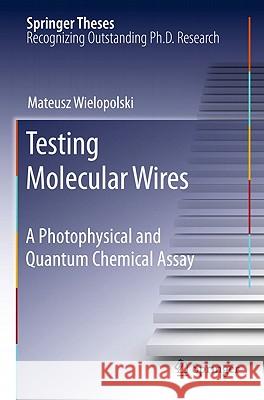
Mateusz Wielopolski
Testing Molecular Wires: A Photophysical and Quantum Chemical Assay Wielopolski, Mateusz 9783642147395 Not Avail - książkaWidoczna okładka, to zdjęcie poglądowe, a rzeczywista szata graficzna może różnić się od prezentowanej.

Testing Molecular Wires: A Photophysical and Quantum Chemical Assay

ISBN-13: 9783642147395 / Angielski / Twarda / 2010 / 182 str.

Mateusz Wielopolski
cena 201,72 zł
(netto: 192,11 VAT:  5%)

Najniższa cena z 30 dni: 192,74 zł
Termin realizacji zamówienia:
ok. 22 dni roboczych
Bez gwarancji dostawy przed świętami

Darmowa dostawa!

One of the major challenges in current chemistry is to ?nd molecules able to move charges rapidly and ef?ciently from, for example, one terminus to another one under the control of an external electrical, electrochemical or photochemical stimulus. Nature has provided impressive examples of how these goals are achieved. The photosynthetic reaction center protein, for instance, rapidly moves electrons with near unity quantum ef?ciency across a lipid bilayer membrane using several redox cofactors, and thus, serves as a model for developing biomimetic analogues for applications in ?elds such as photovoltaic devices, molecular electronics and photonic materials. In this context, p-conjugated oligomeric molecular assemblies are of particular interest because they provide ef?cient electronic couplings between electroactive units - donor and acceptor termini - and display wire-like behavior. In order to make a molecule able to behave as an ideal molecular wire different requirements need to be ful?lled: i) matching between the donor (acceptor) and bridge energy levels, ii) a good electronic coupling between the electron donor and acceptor units via the bridge orbitals, and iii) a small attenuation factor. Among the many different p-conjugated oligomers, oligo(p-phenylenevin- enes) (oPPV), have emerged as a particularly promising model system that helps to comprehend/rationalize the basic features of polymeric poly(p-phenyle- vinylenes) and also as a versatile building block for novel materials with che- cally tailored properties.


Kategorie:
Nauka, Chemia
Kategorie BISAC:
Science > Chemia - Fizyczna
Science > Applied Sciences
Technology & Engineering > Power Resources - Electrical
Wydawca:
Not Avail
Seria wydawnicza:
Springer Theses: Recognizing Outstanding Ph.D. Research
Język:
Angielski
ISBN-13:
9783642147395
Rok wydania:
2010
Numer serii:
000408259
Ilość stron:
182
Waga:
0.41 kg
Wymiary:
23.37 x 15.49 x 1.78
Oprawa:
Twarda
Wolumenów:
01
Dodatkowe informacje:
Bibliografia
Wydanie ilustrowane

I. Introduction and Motivation 1 1. Introduction to Molecular Electronics 2 1.1. Present Technology . . . . . . . . . . . . . . . . . . . . . . . . . . . . . . . . . . . 6 1.2. Limitations of Present Technology . . . . . . . . . . . . . . . . . . . . . . . . . . 7 2. Motivation - Focusing on Molecular Wires 9 II. Theoretical Concepts 11 3. Concepts of Photoinduced Electron and Energy Transfer Processes Across Molecular Bridges 12 3.1. Introduction . . . . . . . . . . . . . . . . . . . . . . . . . . . . . . . . . . . . . . . 12 3.2. Electron TransferMechanisms . . . . . . . . . . . . . . . . . . . . . . . . . . . . 14 3.2.1. Superexchange . . . . . . . . . . . . . . . . . . . . . . . . . . . . . . . . . 17 3.2.2. Charge Hopping . . . . . . . . . . . . . . . . . . . . . . . . . . . . . . . . 22 3.2.3. Interplay ofMechanisms . . . . . . . . . . . . . . . . . . . . . . . . . . . 24 3.3. Electronic Energy Transfer . . . . . . . . . . . . . . . . . . . . . . . . . . . . . . . 25 3.3.1. Coulombic Energy Transfer . . . . . . . . . . . . . . . . . . . . . . . . . . 26 3.3.2. Exchange Energy Transfer . . . . . . . . . . . . . . . . . . . . . . . . . . . 27 4. Molecule-Assisted Transport of Charges and Energy Across Donor-Wire- Acceptor Junctions 30 4.1. Mechanisms of Charge Transfer throughMolecularWires . . . . . . . . . . . . 32 4.1.1. Superexchange Charge Transfer inMolecularWires . . . . . . . . . . . . 33 4.1.2. Sequential Charge Transfer inMolecularWires . . . . . . . . . . . . . . 34 4.2. Factors that Determine the Charge TransferMechanism . . . . . . . . . . . . . 36 4.2.1. Electronic Coupling . . . . . . . . . . . . . . . . . . . . . . . . . . . . . . 36 4.2.2. EnergyMatching . . . . . . . . . . . . . . . . . . . . . . . . . . . . . . . . 37 4.3. Specific Aspects of Photoinduced Electron Transfer in Organic ?-conjugated Systems . . . . . . . . . . . . . . . . . . . . . . . . . . . . . . . . . . . . . . . . . . 39 4.3.1. Background . . . . . . . . . . . . . . . . . .. . . . . . . . . . . . . . . . . 40 4.3.2. The ClassicalMarcus Theory . . . . . . . . . . . . . . . . . . . . . . . . . 41 4.3.3. Photoexcitation and Relaxation Processes in Solution . . . . . . . . . . 45 4.3.3.1. Photoabsorption . . . . . . . . . . . . . . . . . . . . . . . . . . . 45 4.3.3.2. The Franck Condon Principle and Radiative Transitions . . . . 49 4.3.3.3. The Franck Condon Principle and Radiationless Transitions . 52 4.3.3.4. Relaxation Processes Following Photoexcitation . . . . . . . . 55 4.3.3.5. Characterization by Stationary Spectroscopy . . . . . . . . . . 57 4.3.3.6. Characterization by Time-Resolved Spectroscopy . . . . . . . 58 4.3.3.7. Internal Conversion . . . . . . . . . . . . . . . . . . . . . . . . . 58 4.3.4. Influence of the Solvation on the Electronic Relaxation Dynamics . . . 59 4.3.4.1. Static Solvent Influence . . . . . . . . . . . . . . . . . . . . . . . 60 4.3.4.2. Dynamic Solvent Influence . . . . . . . . . . . . . . . . . . . . . 61 5. Examples of Molecular Wire Systems 63 5.1. Oligo(phenylenevinylene)s . . . . . . . . . . . . . . . . . . . . . . . . . . . . . . 64 5.2. Oligophenylenes . . . . . . . . . . . . . . . . . . . . . . . . . . . . . . . . . . . . 65 5.3. Oligo(thiophene) . . . . . . . . . . . . . . . . . . . . . . . . . . . . . . . . . . . . 67 5.4. PhotonicWires . . . . . . . . . . . . . . . . . . . . . . . . . . . . . . . . . . . . . 69 III.Results and Discussion 70 6. Objective 71 7. Instruments and Methods 79 7.1. Photophysics . . . . . . . . . . . . . . . . . . . . . . . . . . . . . . . . . . . . . . 79 7.1.1. Absorption spectroscopy . . . . . . . . . . . . . . . . . . . . . . . . . . . 79 7.1.2. Steady-state emission . . . . . . . . . . . . . . . . . . . . . . . . . . . . . 79 7.1.3. Time-resolved emission . . . . . . . . . . . . . . . . . . . . . . . . . . . . 79 7.1.4. Femtosecond transient absorption spectroscopy . . . . . . . . . . . . . 80 7.1.5. Nanosecond laser Flash Photolysis . . . . . . . . . . . . . .

The field of molecular electronics and organic photovoltaics is steadily growing. One of the major themes in molecular electronics is the construction, measurement, and understanding of the current-voltage response of an electronic circuit, in which molecules may act as conducting elements. The investigated molecular structures in this thesis have been shown to be suitable for distance-independent charge transport. More precisely, the systems investigated were of particular interest due to their ability to provide efficient electronic coupling between electroactive units, and display wire-like behavior in terms of transferring charges from donors to acceptors. Besides impacting on the field of molecular electronics, the results of this research also has applications in the design and development of light harvesting, photoconversion and catalytic modules. This work is a great asset to the field of charge transport through organic pi-conjugated molecules.


Udostępnij

Facebook - konto krainaksiazek.pl


Opinie o Krainaksiazek.pl na Opineo.pl

Partner Mybenefit

Krainaksiazek.pl w programie rzetelna firma Krainaksiaze.pl - płatności przez paypal

Czytaj nas na:

Facebook - krainaksiazek.pl
  • książki na zamówienie
  • granty
  • książka na prezent
  • kontakt
  • pomoc
  • opinie
  • regulamin
  • polityka prywatności

Zobacz:

  • Księgarnia czeska

  • Wydawnictwo Książkowe Klimaty

1997-2025 DolnySlask.com Agencja Internetowa

© 1997-2022 krainaksiazek.pl
     
KONTAKT | REGULAMIN | POLITYKA PRYWATNOŚCI | USTAWIENIA PRYWATNOŚCI
Zobacz: Księgarnia Czeska | Wydawnictwo Książkowe Klimaty | Mapa strony | Lista autorów
KrainaKsiazek.PL - Księgarnia Internetowa

Polityka prywatnosci - link
Krainaksiazek.pl - płatnośc Przelewy24
Przechowalnia Przechowalnia





