• Wyszukiwanie zaawansowane
  • Kategorie
  • Kategorie BISAC
  • Książki na zamówienie
  • Promocje
  • Granty
  • Książka na prezent
  • Opinie
  • Pomoc
  • Załóż konto
  • Zaloguj się

Targeting Protein Kinases for Cancer Therapy » książka


zaloguj się | załóż konto
Logo Krainaksiazek.pl

koszyk

konto

szukaj
topmenu
Księgarnia internetowa
Szukaj
Książki na zamówienie
Promocje
Granty
Książka na prezent
Moje konto
Pomoc
 
 
Wyszukiwanie zaawansowane
Pusty koszyk
Bezpłatna dostawa dla zamówień powyżej 20 złBezpłatna dostawa dla zamówień powyżej 20 zł

Kategorie główne

• Nauka
 [2946350]
• Literatura piękna
 [1816154]

  więcej...
• Turystyka
 [70666]
• Informatyka
 [151172]
• Komiksy
 [35576]
• Encyklopedie
 [23172]
• Dziecięca
 [611458]
• Hobby
 [135995]
• AudioBooki
 [1726]
• Literatura faktu
 [225763]
• Muzyka CD
 [378]
• Słowniki
 [2917]
• Inne
 [444280]
• Kalendarze
 [1179]
• Podręczniki
 [166508]
• Poradniki
 [469467]
• Religia
 [507199]
• Czasopisma
 [496]
• Sport
 [61352]
• Sztuka
 [242330]
• CD, DVD, Video
 [3348]
• Technologie
 [219391]
• Zdrowie
 [98638]
• Książkowe Klimaty
 [124]
• Zabawki
 [2382]
• Puzzle, gry
 [3525]
• Literatura w języku ukraińskim
 [259]
• Art. papiernicze i szkolne
 [7107]
Kategorie szczegółowe BISAC

Targeting Protein Kinases for Cancer Therapy

ISBN-13: 9780470229651 / Angielski / Twarda / 2010 / 720 str.
David J. Matthews
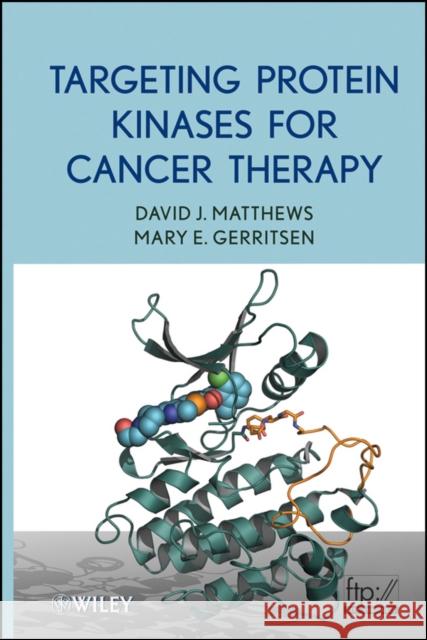
Targeting Protein Kinases for Cancer Therapy David J. Matthews 9780470229651 John Wiley & Sons - książkaWidoczna okładka, to zdjęcie poglądowe, a rzeczywista szata graficzna może różnić się od prezentowanej.

Targeting Protein Kinases for Cancer Therapy

ISBN-13: 9780470229651 / Angielski / Twarda / 2010 / 720 str.

David J. Matthews
cena 721,51
(netto: 687,15 VAT:  5%)

Najniższa cena z 30 dni: 712,70
Termin realizacji zamówienia:
ok. 30 dni roboczych.

Darmowa dostawa!

An expert guide to targeting protein kinases in cancer therapy Research has shown that protein kinases can instigate the formation and spread of cancer when they transmit faulty signals inside cells. Because of this fact, pharmaceutical scientists have targeted kinases for intensive study, and have been working to develop medicinal roadblocks to sever their malignant means of communication. Complete with full-color presentations, Targeting Protein Kinases for Cancer Therapy defines the structural features of protein kinases and examines their cellular functions. Combining kinase biology with chemistry and pharmacology applications, this book enlists emerging data to drive the discovery of new cancer-fighting drugs. Valuable information includes:

  • Comprehensive overviews of the major kinase families involved in oncology, integrating protein structure and function, and providing important tools to assist pharmaceutical researchers to understand and work in this dynamic area of cancer drug research
  • Focus on small molecule inhibitors as well as other therapeutic modalities
  • Discussion of kinase inhibitors that have entered clinical trials for the treatment of cancer, with an emphasis on molecules that have progressed to late stage clinical trials and, in a few cases, to market
Providing a platform for further study, this important work reviews both the successes and challenges of kinase inhibitor therapy, and provides insight into future directions in the war against cancer.

Kategorie:
Nauka, Chemia
Kategorie BISAC:
Medical > Farmakologia
Wydawca:
John Wiley & Sons
Język:
Angielski
ISBN-13:
9780470229651
Rok wydania:
2010
Ilość stron:
720
Waga:
1.10 kg
Wymiary:
23.37 x 16.0 x 3.81
Oprawa:
Twarda
Wolumenów:
01
Dodatkowe informacje:
Bibliografia
Wydanie ilustrowane

"The comprehensive coverage makes the book highly recommendable for beginners and expert researchers in oncology and should be present on their shelves." ( ChemMedChem, November 2010)

Preface.

Acknowledgments.

1 KINASES AND CANCER.

1.1 A Brief History of Protein Phosphorylation.

1.2 Kinases and Cancer.

1.3 A Tour of the Human Protein Kinase Superfamily.

1.3.1 Tyrosine Kinase Group.

1.3.2 TKL (Tyrosine Kinase–Like) Group.

1.3.3 STE Group.

1.3.4 CSNK1 Group.

1.3.5 AGC group.

1.3.6 CAMK Group.

1.3.7 CMGC Group.

1.3.8 RGC Group.

1.3.9 Others.

1.3.10 Atypical Protein Kinases.

1.3.11 Non–Protein Kinases.

1.4 Strategic Considerations for Selecting Kinases as Drug Targets.

1.5 Comparison of Kinase Inhibitor Therapeutic Strategies.

1.5.1 Small Molecule Versus Antibody–Directed Therapies.

1.5.2 Alternative Strategies for Kinase Inhibition.

References.

2 PROTEIN KINASE STRUCTURE, FUNCTION AND REGULATION.

2.1 Ligand Binding to Receptor Tyrosine Kinases.

2.1.1 EGF:EGF Receptor Interactions.

2.1.2 Insulin:Insulin Receptor and IGF1:IGF1R.

2.1.3 FGF:FGF Receptor (Heparin/Heparan Sulphate) Interactions.

2.1.4 VEGF:VEGF Receptor Interactions.

2.1.5 Angiopoietin2:TIE2 Receptor Interactions.

2.1.6 Ephrin:EPH Receptor Interactions.

2.1.7 The Role of Transmembrane Domains.

2.2 Protein Kinase Domain Structure and Function.

2.3 Catalytic Activity of Protein Kinases.

2.3.1 Steady State Kinetics.

2.3.2 Chemistry of Protein Kinase Catalysis.

2.4 Protein Kinase Regulation.

2.4.1 Regulation Via Activation Segment Phosphorylation.

2.4.2 Regulation by N–terminal Sequences and Domains.

2.4.3 C–Terminal Regulatory Regions.

2.4.4 Regulation by Other Domains and Partner Proteins.

References.

3 RECPETOR TYROSINE KINASES.

3.1 EGF/ERBB Receptors.

3.1.1 ERBB Receptors and Cancer.

3.2 Insulin/IGF Receptors.

3.2.1 Insulin/IGF Receptors and Cancer.

3.3 Anaplastic Lymphoma Kinase.

3.3.1 ALK and Cancer.

3.4 VEGF Receptors (VEGFR1, VEGFR2, VEGFR3).

3.5 PDGF Receptors.

3.5.1 PDGFRs and Cancer.

3.6 FGF Receptors.

3.6.1 FGFRs and Cancer.

3.7 KIT.

3.7.1 KIT and Cancer.

3.8 FLT3.

3.8.1 FLT3 and Cancer.

3.9 RET.

3.9.1 RET and Thyroid Carcinoma.

3.10 MET and RON.

3.10.1 MET.

3.10.2 RON.

References.

4 NONRECEPTOR TYROSINE KINASES.

4.1 ABL.

4.2 ARG.

4.3 SRC and SRC Family Kinases.

4.3.1 SRC.

4.3.2 Cellular Roles of SRC.

4.3.3 SRC and Cancer.

4.4 FAK.

4.4.1 FAK and Cancer.

4.5 JAK2.

4.5.1 Activation and Known Mutations and Fusions of the JAK Family of Tyrosine Kinases.

4.5.2 Further Roles of JAK2 in Tumor Growth.

References.

5 INTRACELLULAR SIGNAL TRANSDUCTION CASCADES.

5.1 The PI3K/PTEN Pathway.

5.1.1 PI3K.

5.1.2 PDK1.

5.1.3 AKT.

5.1.4 Other AGC Kinases.

5.1.5 PI3K Pathway Activation in Cancer.

5.2 mTOR Signaling.

5.2.1 mTOR.

5.2.2 p70S6 Kinase.

5.2.3 mTOR Pathway Activation in Cancer.

5.3 MAPK Signaling Pathways.

5.3.1 ERK/MAPK Signaling.

5.3.2 RAF Family Kinases.

5.3.3 MEK and ERK Kinases.

5.3.4 ERK/MAPK Pathway Activation in Cancer.

5.4 PIM Kinases.

5.5 Protein Kinase C.

5.5.1 PKC Activation.

5.5.2 Classical PKCs.

5.5.3 Novel PKCs.

5.5.4 Atypical PKCs.

References.

6 CELL CYCLE CONTROL.

6.1 Cyclin–Dependent Kinases (CDKs) and Cell Cycle Progression.

6.1.1 Introduction.

6.1.2 CDK4 and CDK6.

6.1.3 CDK2.

6.1.4 CDK3.

6.1.5 CDK1.

6.1.6 CDK10.

6.1.7 CCRK/CDCH/p42.

6.2 CDKs and mRNA Production.

6.2.1 Introduction.

6.2.2 CDK7.

6.2.3 CDK8.

6.2.4 CDK9.

6.2.5 CDK11.

6.2.6 CDK12 (CDC2–Related Kinase CRKRS).

6.2.7 CDK13 (CDC2L5).

6.3 Other CDK–Related Kinases.

6.3.1 CDK5.

6.3.2 GAK.

6.4 Mitotic Kinases.

6.4.1 PLKs.

6.4.2 Aurora Kinases.

6.5 Cell Cycle Checkpoint Kinases.

6.5.1 ATM, ATR and DNAPK.

6.5.2 CHK1, CHK2 and MAPKAPK2.

References.

7 STRUCTURAL BIOCHEMSITRY OF KINASE INHIBITORS.

7.1 Strategies for Inhibitor Design.

7.1.1 Targeting the Active Versus Inactive Form.

7.1.2 ATP–Competitive Versus Noncompetitive Inhibitors.

7.1.3 Specific Versus Multitargeted Inhibitors.

7.2 Architecture of the ATP Binding Site: DFG–in.

7.3 Case Study: Inhibitors of CHK1.

7.4 Case Study: Inhibitors of CDK2.

7.5 Case Study: Inhibitors of SRC Family Kinases.

7.6 Case Study: EGF Receptor Inhibitors.

7.7 Targeting the Inactive Conformation.

7.7.1 Binding Mode of Imatinib.

7.7.2 Binding of BAY–43–9006 (Sorafenib) to the Inactive BRAF Kinase.

7.8 Noncompetitive Inhibition.

7.9 Kinase Inhibitor Specificity.

References.

8 TYROSINE KINASE INHIBITORS.

8.1 BCR–ABL Inhibitors.

8.2 SRC Inhibitors.

8.3 JAK2 Inhibitors.

8.4 EGFR/ERBB Inhibitors.

8.4.1 Determinants of Response and Resistance to ERBB Inhibitors.

8.5 IGF1R Inhibitors.

8.6 FLT3 Inhibitors.

8.7 KIT Inhibitors.

8.8 MET/RON Inhibitors.

8.9 RET Inhibitors.

8.10 Other Inhibitors.

8.10.1 FAK.

8.10.2 TGFß Receptor.

References.

9 ANGIOKINASE INHIBITORS.

9.1 Introduction.

9.2 Angiokinase Inhibitors.

References.

10 INTRACELLULAR SIGNALING KINASE INHIBITORS.

10.1 mTOR Inhibitors.

10.1.1 Clinical Pharmacodynamics and Tolerability of mTOR Inhibitors.

10.2 PI3K Inhibitors.

10.3 RAF Kinase Inhibitors.

10.4 MEK Inhibitors.

10.5 CDK Inhibitors.

10.6 Cell Cycle Checkpoint Kinase Inhibitors.

10.7 Mitotic Kinase Inhibitors.

10.7.1 PLK Inhibitors.

10.7.2 Aurora Kinase Inhibitors.

10.8 Protein Kinase C Inhibitors.

References.

11 CURRENT CHALLENGES AND FUTURE DIRECTIONS.

11.1 Kinase Inhibitor Drug Resistance.

11.1.1 Efflux Pumps and Drug Transporters.

11.1.2 Other DMPK factors.

11.1.3 Target Mutation.

11.1.4 Target Overexpression and Activation.

11.1.5 Downstream Pathway Activation.

11.1.6 Redundant Receptors/Pathways.

11.2 Combination Therapy With Kinase Inhibitors.

11.2.1 Angiogenesis Inhibitors and Chemotherapy.

11.2.2 Survival Pathway Inhibitors and Chemotherapy/Targeted Therapy.

11.2.3 DNA Damage Checkpoint Inhibitors and Chemotherapy.

11.2.4 RTK Switching: Targeting Receptor Redundancy.

11.3 Systems Biology and Translational Medicine.

11.3.1 Classification of Tumors and Prediction of Response: Expression Profiling.

11.3.2 Phosphoprotein Analysis, Kinomics and Systems–Based Approaches.

11.3.3 Translational Medicine.

11.4 Conclusions.

References.

List of Abbreviations.

Index.

DAVID J. MATTHEWS is Executive Director of Oncology Discovery at Exelixis, where he is responsible for cancer drug discovery. For more than fifteen years, Dr. Matthews has been involved in drug discovery projects in industry, with particular focus on small molecule inhibitors. He has twenty scientific publications and multiple patents to his credit.

MARY E. GERRITSEN is Vice President of Molecular and Cellular Pharmacology at Exelixis, where she is in charge of cell–based screening in preclinical research and of biomarker studies for clinical development compounds in Phase I and II studies. Her prior industry experience includes positions at Genentech, Bayer and Millennium Pharmaceuticals. She has authored more than one hundred peer–reviewed articles and twenty–six book chapters and is an inventor on forty–two issued patents.

An expert guide to targeting protein kinases in cancer therapy

Research has shown that protein kinases can instigate the formation and spread of cancer when they transmit faulty signals inside cells. Because of this fact, pharmaceutical scientists have targeted kinases for intensive study, and have been working to develop medicinal roadblocks to sever their malignant means of communication.

Complete with full–color presentations, Targeting Protein Kinases for Cancer Therapy defines the structural features of protein kinases and examines their cellular functions. Combining kinase biology with chemistry and pharmacology applications, this book enlists emerging data to drive the discovery of new cancer–fighting drugs. Valuable information includes:

  • Comprehensive overviews of the major kinase families involved in oncology, integrating protein structure and function, and providing important tools to assist pharmaceutical researchers to understand and work in this dynamic area of cancer drug research

  • Focus on small molecule inhibitors as well as other therapeutic modalities

  • Discussion of kinase inhibitors that have entered clinical trials for the treatment of cancer, with an emphasis on molecules that have progressed to late stage clinical trials and, in a few cases, to market


Providing a platform for further study, this important work reviews both the successes and challenges of kinase inhibitor therapy, and provides insight into future directions in the war against cancer.


Udostępnij

Facebook - konto krainaksiazek.pl


Opinie o Krainaksiazek.pl na Opineo.pl

Partner Mybenefit

Krainaksiazek.pl w programie rzetelna firma Krainaksiaze.pl - płatności przez paypal

Czytaj nas na:

Facebook - krainaksiazek.pl
  • książki na zamówienie
  • granty
  • książka na prezent
  • kontakt
  • pomoc
  • opinie
  • regulamin
  • polityka prywatności

Zobacz:

  • Księgarnia czeska

  • Wydawnictwo Książkowe Klimaty

1997-2026 DolnySlask.com Agencja Internetowa

© 1997-2022 krainaksiazek.pl
     
KONTAKT | REGULAMIN | POLITYKA PRYWATNOŚCI | USTAWIENIA PRYWATNOŚCI
Zobacz: Księgarnia Czeska | Wydawnictwo Książkowe Klimaty | Mapa strony | Lista autorów
KrainaKsiazek.PL - Księgarnia Internetowa

Polityka prywatnosci - link
Krainaksiazek.pl - płatnośc Przelewy24
Przechowalnia Przechowalnia






