• Wyszukiwanie zaawansowane
  • Kategorie
  • Kategorie BISAC
  • Książki na zamówienie
  • Promocje
  • Granty
  • Książka na prezent
  • Opinie
  • Pomoc
  • Załóż konto
  • Zaloguj się

Structure and Function of Plasma Proteins » książka


zaloguj się | załóż konto
Logo Krainaksiazek.pl

koszyk

konto

szukaj
topmenu
Księgarnia internetowa
Szukaj
Książki na zamówienie
Promocje
Granty
Książka na prezent
Moje konto
Pomoc
 
 
Wyszukiwanie zaawansowane
Pusty koszyk
Bezpłatna dostawa dla zamówień powyżej 20 złBezpłatna dostawa dla zamówień powyżej 20 zł

Kategorie główne

• Nauka
 [2946350]
• Literatura piękna
 [1816154]

  więcej...
• Turystyka
 [70666]
• Informatyka
 [151172]
• Komiksy
 [35576]
• Encyklopedie
 [23172]
• Dziecięca
 [611458]
• Hobby
 [135995]
• AudioBooki
 [1726]
• Literatura faktu
 [225763]
• Muzyka CD
 [378]
• Słowniki
 [2917]
• Inne
 [444280]
• Kalendarze
 [1179]
• Podręczniki
 [166508]
• Poradniki
 [469467]
• Religia
 [507199]
• Czasopisma
 [496]
• Sport
 [61352]
• Sztuka
 [242330]
• CD, DVD, Video
 [3348]
• Technologie
 [219391]
• Zdrowie
 [98638]
• Książkowe Klimaty
 [124]
• Zabawki
 [2382]
• Puzzle, gry
 [3525]
• Literatura w języku ukraińskim
 [259]
• Art. papiernicze i szkolne
 [7107]
Kategorie szczegółowe BISAC

Structure and Function of Plasma Proteins

ISBN-13: 9781468426816 / Angielski / Miękka / 2012 / 420 str.
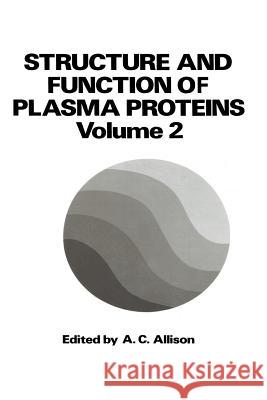
A. Allison
Structure and Function of Plasma Proteins A. Allison 9781468426816 Springer - książkaWidoczna okładka, to zdjęcie poglądowe, a rzeczywista szata graficzna może różnić się od prezentowanej.

Structure and Function of Plasma Proteins

ISBN-13: 9781468426816 / Angielski / Miękka / 2012 / 420 str.

A. Allison
cena 201,24
(netto: 191,66 VAT:  5%)

Najniższa cena z 30 dni: 192,74
Termin realizacji zamówienia:
ok. 22 dni roboczych.

Darmowa dostawa!

Plasma proteins are of interest from many points of view. Biochemists have separated and purified numerous plasma proteins and studied their physical properties, amino acid composition and sequence, the carbohydrate com ponents of some, and binding of metals, hormones, and other materials. Much work has also been carried out on the synthesis, rates of turnoverr, and degradation of plasma proteins. Many plasma proteins show inherited variations, some of which (e.g., those of heptoglobins and transferrins) are common in various human popu lations while others (e.g., absence of lipoproteins or immunoglobins) are rare but important because of their association with clinical syndromes. Since blood is the most accessible bodily constituent, geneticists have made good use of serum protein differences as genetic markers in family and popula tion studies. Physiologists have long been interested in plasma proteins in relation to colloid osmotic pressure; transport of lipids, iron, hormones, and other ma terials; the activities of renal glomeruli and tubules; the function of the liver, and many other bodily activities. Plasma proteins are also widely studied in relation to malnutrition and undernutrition, particularly that associated with defective intake of protein.


Kategorie:
Nauka, Biologia i przyroda
Kategorie BISAC:
Gardening > General
Science > Biochemia
Medical > Fizjologia
Wydawca:
Springer
Język:
Angielski
ISBN-13:
9781468426816
Rok wydania:
2012
Wydanie:
Softcover Repri
Ilość stron:
420
Waga:
0.59 kg
Wymiary:
22.86 x 15.24 x 2.29
Oprawa:
Miękka
Wolumenów:
01
Dodatkowe informacje:
Wydanie ilustrowane

1 Ontogeny of Human Plasma Proteins: Detection of the Onset and Site of Synthesis Using Genetic Markers and in Vitro Cultures.- 1.1. Introduction.- 1.2. Immunoglobulins.- 1.2.1. Classes and Subclasses and Genetic Markers.- 1.2.2. Synthesis of Ig Molecules at Cellular Level.- 1.2.3. Transfer of Immunoglobulins through the Placenta.- 1.2.4. Synthesis of Immunoglobulins during Fetal Life.- 1.3. Complement.- 1.3.1. The Components of Complement.- 1.3.2. Levels and Fetal Synthesis of the Components of C.- 1.4. Haptoglobin System.- 1.5. Transferrins.- 1.6. ?-Lipoprotein Variants: The Ag and Lp Systems.- 1.7. Group-Specific Components: The Gc System.- 1.8. ?1-Antitrypsin: The Pi System.- 1.9. Ceruloplasmin.- 1.10. Other Adult Plasma Proteins.- 1.11. Fetal Proteins.- 1.12. ?-Fetoprotein (AFP).- 1.12.1. AFP in Patients with Primary Cancer of Liver and Teratoblastoma.- 1.12.2. Amniotic Levels of AFP in Neural Tube Defects, Fetal and Placental Distress.- 1.13. Carcinoembryonic Antigen.- 1.14. Fetal Sulfoglycoprotein Antigen (FSA).- 1.15. Other Fetal Proteins Associated with Cancer.- 1.16. Conclusion.- References.- 2 Transferrin.- 2.1. Introduction.- 2.2. Historical.- 2.3. Physicochemical Properties of Transferrin.- 2.3.1. Molecular Weight.- 2.3.2. Amino Acid Composition.- 2.3.3. Carbohydrate Composition.- 2.3.4. Structure of Transferrin.- 2.4. The Metal-Binding Sites.- 2.4.1. Structure of the Binding Sites: Ligands.- 2.4.2. Strength of Metal Binding to Transferrin.- 2.4.3. The Role of Anions in Metal-Transferrin Complexes.- 2.4.4. Differences between Metal-Binding Sites.- 2.4.5. The Effect of Iron-Binding on Transferrin.- 2.4.6. The Binding of Metals Other than Iron.- 2.5. Functions of Transferrin.- 2.5.1. Iron Exchange.- 2.5.2. Bacteriostasis.- 2.6. Distribution and Metabolism.- 2.6.1. Atransferrinemia.- 2.6.2. Transferrin Levels in Plasma and Serum.- 2.6.3. Transferrin in Other Body Fluids.- 2.6.4. Factors Affecting Transferrin Levels in Plasma.- 2.6.5. Distribution and Catabolism.- 2.6.6. Synthesis of Transferrin.- 2.7. Conclusion.- References.- 3 Albumin Synthesis and Degradation.- 3.1. Introduction.- 3.2. Evolution and Variants.- 3.3. Albumin Metabolism.- 3.3.1. Methods of Study.- 3.3.2. Albumin Synthesis.- 3.3.3. Site of Albumin Synthesis.- 3.4. Albumin Transport.- 3.4.1. Cellular Transport.- 3.4.2. Extracellular Transport.- 3.5. Development and Normal Values for Albumin Metabolism.- 3.5.1. Development.- 3.5.2. Albumin Metabolism.- 3.6. Nutritional Control.- 3.7. Hormonal Effects.- 3.8. Osmotic Regulation.- 3.9. Environmental Effects.- 3.9.1. Distribution—Intravascular.- 3.9.2. Distribution—Extravascular.- 3.10. Degradation.- Addendum.- References.- 4 Turnover of Plasma Proteins.- 4.1. Introduction.- 4.2. Measurement of Protein Turnover.- 4.2.1. Measurement of Synthesis Rates in Vivo.- 4.2.2. Measurement of Degradation Rates in Vivo.- 4.2.3. Measurement of Degradation and Synthesis in Nonsteady-State Conditions.- 4.2.4. Short-Term Measurement of Degradation.- 4.2.5. Measurement of Synthesis and Degradation in Vitro.- 4.3. Mechanisms of Synthesis and Degradation of Liver-Produced Plasma Proteins.- 4.3.1. Mechanisms of Synthesis at the Transcriptional Level.- 4.3.2. Mechanisms of Synthesis at the Translational Level.- 4.3.3. Mechanisms of Degradation of Plasma Proteins.- 4.4. Regulation of Protein Turnover.- 4.4.1. Nonspecific Regulatory Mechanisms.- 4.4.2. Specific Regulatory Mechanisms.- 4.5. Summary.- References.- 5 The Role of Sialic Acid in the Catabolism of Plasma Glycoproteins.- 5.1. Introduction.- 5.2. A Unified Mechanism for Turnover and Catabolism.- 5.2.1. Catabolic Initiation.- 5.2.2. Interaction of Desialylated Glycoproteins with Liver Cells.- 5.2.3. Catabolism.- 5.3. Physiological Significance of Desialylation of Plasma Glycoproteins.- 5.4. Disorders of Glycoprotein Catabolism.- References.- 6 Catabolism of Plasma Proteins.- 6.1. Introduction.- 6.2. Preparation of Labeled Proteins for Metabolic Studies.- 6.3. Some Considerations about Sites of Catabolism.- 6.3.1. The Plasma and Other Body Fluid Compartments.- 6.3.2. The Cell in General.- 6.3.3. The Gastrointestinal Lumen.- 6.4. Organs Involved in Plasma Protein Catabolism.- 6.4.1. The Liver.- 6.4.2. The Lung.- 6.4.3. The Kidney.- 6.4.4. The Reticuloendothelial Cells.- 6.5. Is the Catabolism of Plasma Proteins a One-Step Process?.- 6.6. Concluding Remarks.- References.- 7 Plasma Proteinase Inhibitors.- 7.1. Introduction.- 7.2. The Identification and Separation of Plasma Proteinase Inhibitors.- 7.3. ?1-Antichymotrypsin.- 7.4. ?1-Globulin Trypsin Inhibitor (?1-TI).- 7.4.1. Purification of ?1-TI.- 7.4.2. Measurement of Proteinase-Inhibitory Activity of ?1-TI..- 7.4.3. Normal Plasma Levels of ?1TI.- 7.4.4. The Interaction of ?1-TI with Proteinases.- 7.4.5. Metabolism and Turnover of ?1-TI.- 7.4.6. Variations of ?1-TI in Health and Disease.- 7.4.7. Genetic Polymorphism of ?1-TI.- 7.4.8. The Association of ?1-TI Deficiency with Chronic Obstructive Pulmonary Disease (COPD).- 7.4.9. ?1-TI Deficiency in Infantile Cirrhosis.- 7.4.10. ?1-TI Levels in the Idiopathic Respiratory Distress Syndrome (IRDS).- 7.5. ?2-Macroglobulin (?2-M).- 7.5.1. Purification and Properties.- 7.5.2. Measurement of ?2-M.- 7.5.3. Normal Levels of ?2-M.- 7.5.4. Variation of ?2-M Levels in Health and Disease.- 7.5.5. Metabolism and Turnover of ?2-M.- 7.5.6. Genetics of ?2-M.- 7.5.7. The Interaction of ?2-M with Proteinases.- 7.5.8. Residual Peptidase and Proteinase Activity of ?2-M-Proteinase Complexes.- 7.5.9. In Vivo Fate of ?2-M-Proteinase Complexes.- 7.6. Inter-?-Trypsin Inhibitor (I?I).- 7.7. Antithrombin III (AT III).- 7.8. Cl-Esterase Inhibitor (Cl INH).- 7.8.1. Measurement of Cl INH.- 7.8.2 Inhibition of Proteinases by Cl INH.- 7.8.3. Deficiencies of Cl INH.- 7.9. Concluding Remarks.- Addendum.- References.- 8 Growth Regulation in Vitro and the Role of Serum.- 8.1. Introduction.- 8.2. Contact Inhibition of Locomotion and Density-Dependent Inhibition of Growth.- 8.3. Density-Dependent Inhibition of Growth and Serum Requirement.- 8.4. Transformation and the Loss of Contact Inhibition of Locomotion.- 8.5. Transformation and Serum Requirement.- 8.6. Transformation and Density-Dependent Inhibition of Growth.- 8.7. Density-Dependent Inhibition of Growth: Some Conclusions.- 8.8. Anchorage Dependence and Sensitivity to Polyanions of Normal and Transformed Cells.- 8.9. Fractionation of Serum.- 8.9.1. Growth Factors.- 8.9.2. Migration Factors.- 8.9.3. Survival Factors.- 8.10. Physiological Action of Serum.- 8.11. Significance of Growth Regulation in Vitro.- References.- 9 Fractionation of Plasma Proteins.- 9.1. Introduction.- 9.2. Gel Chromatography.- 9.2.1. Outline of Principle.- 9.2.2. Gel Chromatography Media.- 9.2.3. Fractionation of Serum by Gel Chromatography.- 9.3. Ion Exchange Chromatography.- 9.3.1. Outline of Principle.- 9.3.2. Classification of Ion Exchangers.- 9.3.3. Elution Methods.- 9.3.4. Ion Exchange of Whole Serum.- 9.4. Affinity Chromatography.- 9.4.1. Definition and Brief History.- 9.4.2. Brief Outline of the Procedure.- 9.4.3. Matrix Materials.- 9.4.4. Affinity Materials (Ligands).- 9.4.5. Methods of Covalently Linking Ligand to Matrix.- 9.4.6. Preparation of Agarose Derivatives.- 9.5. Polyacrylamide Gel Electrophoresis.- 9.5.1. Gel Formation.- 9.5.2. Analytical-Scale Experiments.- 9.5.3. Radioactive Techniques and Polyacrylamide Gel Electrophoresis.- 9.5.4. Molecular-Weight Determinations Using Polyacrylamide Gel Electrophoresis.- 9.5.5. Combination of Polyacrylamide Gel Electrophoresis with Other Techniques.- 9.5.6. Preparative-Scale Polyacrylamide Gel Electrophoresis.- 9.6. Isoelectric Focusing or Electrofocusing.- 9.6.1. Principle of the Method.- 9.6.2. Properties of Ampholytes.- 9.6.3. Methods of Electrofocusing Using Natural pH Gradients.- 9.6.4. A Brief Outline of a Practical Experiment Using a Vertical Column.- 9.6.5. Electrofocusing in a Horizontal Apparatus Using an Entirely Liquid System. Zone Convection Electrofocusing.- 9.6.6. Separation of Ampholine from Proteins after Electrofocusing.- 9.6.7. Electrofocusing in Gels.- 9.6.8. Experimental Details for Electrofocusing in Polyacrylamide Gels.- 9.6.9. Electrofocusing in Layers of Sephadex.- 9.7. Two-Dimensional Immunoelectrophoresis (Laurell Technique).- 9.7.1. Principle.- 9.7.2. Identification of Proteins.- 9.7.3. Practical Details.- 9.7.4. Combination of Two-Dimensional Immunoelectrophoresis with Polyacrylamide Gel Electrophoresis or Electrofocusing.- 9.8. Isotachophoresis.- 9.8.1. Outline of Principle.- 9.8.2. Analytical-Scale Isotachophoresis.- 9.8.3. Preparative Isotachophoresis.- 9.9. Two-Phase Separation Systems.- 9.9.1. Aqueous Solvents.- 9.9.2. Distribution of a Protein between Two Phases.- 9.9.3. Countercurrent Separations.- 9.9.4. Distribution of a Protein between Two Phases in a Countercurrent Separator.- 9.9.5. Factors Affecting Resolution of Proteins.- 9.9.6. Removal of Polymers.- 9.9.7. Serum Proteins.- 9.10. Evidence of Denaturation.- Addendum.- References.- 10 Protein Chemistry in a General Hospital.- 10.1. Introduction.- 10.2. Methods of Protein Analysis—General Aspects.- 10.2.1. Measurement of Proteins.- 10.2.2. Quality Control and Standards.- 10.2.3. Preservation of Specimens.- 10.2.4. Factors Interfering with the Biochemical Analyses of Proteins.- 10.2.5. Physiological Variations in Plasma Protein Measurement.- 10.2.6. Normal Ranges.- 10.3. Chemical and Physical Methods for the Determination of Serum Proteins.- 10.3.1. Total Protein.- 10.3.2. Albumin.- 10.3.3. Serum Protein Electrophoresis.- 10.4. Immunochemical Methods for the Measurement and Examination of Serum Proteins.- 10.4.1. Simplified (Single) Radial Immunodiffusion.- 10.4.2. “Rocket” Electroimmunoassay for the Estimation of Serum Proteins.- 10.4.3. Two-Dimensional Immunoelectrophoresis.- 10.4.4. Nephelometric Techniques in Protein Chemistry.- 10.4.5. Radioimmunoassay Techniques.- 10.4.6. Special Techniques for Individual Proteins.- 10.5. Monoclonal Protein Increases.- 10.5.1. Serum Immunoelectrophoresis.- 10.5.2. Detection and Identification of Bence-Jones Proteinuria.- 10.5.3. An Immunoselection Technique to Identify Heavy Chain.- 10.5.4. Detection of 7 S IgM Subunits.- 10.5.5. Measurement of Serum Viscosity.- 10.6. Plasma Proteins and Disease.- 10.7. Hypogammaglobulinemia.- 10.8. Hypergammaglobulinemia.- 10.8.1. Polyclonal Hypergammaglobulinemia.- 10.8.2. Monoclonal Hypergammaglobulinemia.- 10.9. Renal Disease.- 10.10. Central Nervous System.- 10.11. Gastrointestinal Disease.- 10.12. Liver Disease.- 10.13. Respiratory Disease.- 10.14. Skin Disease.- 10.15. Cardiovascular Disease.- 10.16. Pediatrics.- 10.17. Cryoproteinemia.- 10.18. Protein Changes in Association with Neoplasia.- References.


Udostępnij

Facebook - konto krainaksiazek.pl


Opinie o Krainaksiazek.pl na Opineo.pl

Partner Mybenefit

Krainaksiazek.pl w programie rzetelna firma Krainaksiaze.pl - płatności przez paypal

Czytaj nas na:

Facebook - krainaksiazek.pl
  • książki na zamówienie
  • granty
  • książka na prezent
  • kontakt
  • pomoc
  • opinie
  • regulamin
  • polityka prywatności

Zobacz:

  • Księgarnia czeska

  • Wydawnictwo Książkowe Klimaty

1997-2026 DolnySlask.com Agencja Internetowa

© 1997-2022 krainaksiazek.pl
     
KONTAKT | REGULAMIN | POLITYKA PRYWATNOŚCI | USTAWIENIA PRYWATNOŚCI
Zobacz: Księgarnia Czeska | Wydawnictwo Książkowe Klimaty | Mapa strony | Lista autorów
KrainaKsiazek.PL - Księgarnia Internetowa

Polityka prywatnosci - link
Krainaksiazek.pl - płatnośc Przelewy24
Przechowalnia Przechowalnia






