• Wyszukiwanie zaawansowane
  • Kategorie
  • Kategorie BISAC
  • Książki na zamówienie
  • Promocje
  • Granty
  • Książka na prezent
  • Opinie
  • Pomoc
  • Załóż konto
  • Zaloguj się

Sterile Insect Technique: Principles and Practice in Area-Wide Integrated Pest Management » książka

zaloguj się | załóż konto
Logo Krainaksiazek.pl

koszyk

konto

szukaj
topmenu
Księgarnia internetowa
Szukaj
Książki na zamówienie
Promocje
Granty
Książka na prezent
Moje konto
Pomoc
 
 
Wyszukiwanie zaawansowane
Pusty koszyk
Bezpłatna dostawa dla zamówień powyżej 20 złBezpłatna dostawa dla zamówień powyżej 20 zł

Kategorie główne

• Nauka
 [2946600]
• Literatura piękna
 [1856966]

  więcej...
• Turystyka
 [72221]
• Informatyka
 [151456]
• Komiksy
 [35826]
• Encyklopedie
 [23190]
• Dziecięca
 [619653]
• Hobby
 [140543]
• AudioBooki
 [1577]
• Literatura faktu
 [228355]
• Muzyka CD
 [410]
• Słowniki
 [2874]
• Inne
 [445822]
• Kalendarze
 [1744]
• Podręczniki
 [167141]
• Poradniki
 [482898]
• Religia
 [510455]
• Czasopisma
 [526]
• Sport
 [61590]
• Sztuka
 [243598]
• CD, DVD, Video
 [3423]
• Technologie
 [219201]
• Zdrowie
 [101638]
• Książkowe Klimaty
 [124]
• Zabawki
 [2473]
• Puzzle, gry
 [3898]
• Literatura w języku ukraińskim
 [254]
• Art. papiernicze i szkolne
 [8170]
Kategorie szczegółowe BISAC

Sterile Insect Technique: Principles and Practice in Area-Wide Integrated Pest Management

ISBN-13: 9781402040504 / Angielski / Twarda / 2005 / 787 str.
V. Arnold Dyck; J. Hendrichs; A. S. Robinson
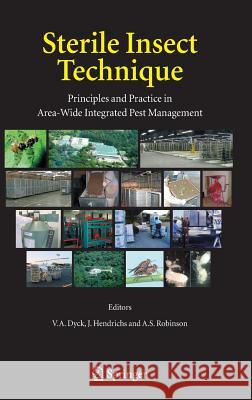
Sterile Insect Technique: Principles and Practice in Area-Wide Integrated Pest Management Dyck, V. a. 9781402040504 Springer Netherlands - książkaWidoczna okładka, to zdjęcie poglądowe, a rzeczywista szata graficzna może różnić się od prezentowanej.

Sterile Insect Technique: Principles and Practice in Area-Wide Integrated Pest Management

ISBN-13: 9781402040504 / Angielski / Twarda / 2005 / 787 str.

V. Arnold Dyck; J. Hendrichs; A. S. Robinson
cena 1210,50 zł
(netto: 1152,86 VAT:  5%)

Najniższa cena z 30 dni: 1156,64 zł
Termin realizacji zamówienia:
ok. 22 dni roboczych
Bez gwarancji dostawy przed świętami

Darmowa dostawa!
inne wydania

The sterile insect technique (SIT) is an environment-friendly pest control method that fits into area-wide integrated pest management (AW-IPM) programmes. This book describes the principles and practice of SIT, frankly evaluating its strengths and weaknesses, successes and failures. SIT is useful against pests that have considerable impact on plant, animal and human health, and criteria are provided to guide in the selection of pests appropriate for SIT.


Kategorie:
Nauka, Biologia i przyroda
Kategorie BISAC:
Technology & Engineering > Agriculture - General
Science > Biochemia
Science > Botanika
Wydawca:
Springer Netherlands
Język:
Angielski
ISBN-13:
9781402040504
Rok wydania:
2005
Wydanie:
2005
Ilość stron:
787
Waga:
1.24 kg
Wymiary:
23.37 x 15.75 x 4.83
Oprawa:
Twarda
Wolumenów:
01
Dodatkowe informacje:
Bibliografia
Wydanie ilustrowane

From the reviews:

"Integrated pest management (IPM) requires the use of all available tools to manage pests. Sterile Insect Technique (SIT) exhaustively reviews the principles and practices of SIT in area-wide IPM. ... this book thoroughly reviews the history, application, successes and failures of SIT, and its value as a component of area-wide IPM. ... the application of newer technologies to area-wide IPM makes this an outstanding international contribution to IPM. Summing Up: Highly recommended. Upper-division undergraduates and above; general readers." (R. Frederiksen, CHOICE, Vol. 43 (10), June, 2006)

Part I. Introduction. 1.1. History of the Sterile Insect Technique; W. Klassen, C.F. Curtis. Part II. Principles of the Sterile Insect Technique. 2.1. Area-Wide Integrated Pest Management and the Sterile Insect Technique; W. Klassen. 2.2. Biological Basis of the Sterile Insect Technique; D.R. Lance, D.O. McInnis. 2.3. Genetic Basis of the Sterile Insect Technique; A.S. Robinson. 2.4. Inherited Sterility in Insects; J.E. Carpenter et al. 2.5. Mathematical Models for the Use of Sterile Insects; H.J. Barclay. Part III. Technical Components of the Sterile Insect Technique. 3.1. Role of Population and Behavioural Ecology in the Sterile Insect Technique; Y. Itô,K. Yamamura. 3.2. Mass-Rearing for Sterile Insect Release; A.G. Parker. 3.3. Sterilizing Insects with Ionizing Radiation; A. Bakri et al. 3.4. Sterile Insect Quality; C.O. Calkins, A.G. Parker. 3.5. Sterile Insect Supply, Emergence, and Release; R.V. Dowell et al. 3.6. Monitoring Sterile and Wild Insects in Area-Wide Integrated Pest Management Programmes; M.J.B. Vreysen. 3.7. Procedures for Declaring Pest Free Status; H.J. Barclay et al. Part IV. Supportive Technologies to improve the Sterile Insect Technique. 4.1. Role of Population Genetics in the Sterile Insect Technique; E.S. Krafsur. 4.2. Population Suppression in Support of the Sterile Insect Technique; R.L. Mangan. 4.3. Genetic Sexing Strains in Mediterranean Fruit Fly, an Example for Other Species Amenable to Large-Scale Rearing for the Sterile Insect Technique; G. Franz. 4.4. Use of Geographic Information Systems and Spatial Analysis in Area-Wide Integrated Pest Management Programmes that Integrate the Sterile Insect Technique; J.St.H. Cox, M.J.B. Vreysen. PartV. Economic, Environmental, and Management Considerations. 5.1. Application of Benefit/Cost Analysis to Insect Pest Control Using the Sterile Insect Technique; J.D. Mumford. 5.2. Environment and the Sterile Insect Technique; P. Nagel, R. Peveling. 5.3. Management of Area-Wide Integrated Pest Management Programmes that Integrate the Sterile Insect Technique; V.A. Dyck et al. 5.4. Public Relations and Political Support in Area-Wide Integrated Pest Management Programmes that Integrate the Sterile Insect Technique; V.A. Dyck et al. Part VI. Application of the Sterile Insect Technique. 6.1. Strategic Options in Using Sterile Insects for Area-Wide Integrated Pest Management; J. Hendrichs et al. 6.2. Misconceptions and Constraints; M. Whitten, R. Mahon. Part VII. Impact of Area-Wide Integrated Pest Management Programmes that integrate the Sterile Insect Technique. 7.1. Impact of Screwworm Eradication Programmes Using the Sterile Insect Technique; M. Vargas-Terán et al. 7.2. Impact of Fruit Fly Control Programmes Using the Sterile Insect Technique; W.R. Enkerlin. 7.3. Impact of Moth Suppression/Eradication Programmes Using the Sterile Insect Technique or Inherited Sterility; K.A. Bloem et al. 7.4. Potential Impact of Tsetse Fly Control Involving the Sterile Insect Technique; U. Feldmann et al. Part VIII. Future Development of the Sterile Insect Technique. 8.1. Prospects for the Future Development and Application of the Sterile Insect Technique; A.S. Robinson, J. Hendrichs. Author index. Subject Index.

The sterile insect technique (SIT) is an environment-friendly method of pest control that integrates well into area-wide integrated pest management (AW-IPM) programmes. A first of its kind, this book takes a generic, comprehensive, and global approach in describing the principles and practice of the SIT. The strengths and weaknesses, and successes and failures, of the SIT are evaluated openly and fairly from a scientific perspective. The SIT is applicable to some major pests of plant, animal and human health importance, and criteria are provided to guide in the selection of pests appropriate for the SIT.

A great variety of subjects are covered, from the history of the SIT to improved prospects for its future application. The major chapters discuss the principles, technical components, and application of sterile insects. The four main strategic options in using the SIT — suppression, containment, prevention, and eradication — with examples of each option, are described in detail. Other chapters deal with supportive technologies, economic, environmental, and management considerations, and the socio-economic impact of AW-IPM programmes that integrate the SIT.

This book provides a wealth of information and reference material never before available in one volume. It will be a standard reference on the subject for many years. The authors, from 19 countries, are highly experienced in the subject, and reflect the international character of SIT activities.

Since no university offers courses on the SIT, the book’s audience will be mainly students in general animal and plant health courses, but the in-depth reviews of all aspects of the SIT and its integration into AW-IPM programmes will be of great value to researchers, teachers, animal and plant health practitioners, and policy makers.


Udostępnij

Facebook - konto krainaksiazek.pl


Opinie o Krainaksiazek.pl na Opineo.pl

Partner Mybenefit

Krainaksiazek.pl w programie rzetelna firma Krainaksiaze.pl - płatności przez paypal

Czytaj nas na:

Facebook - krainaksiazek.pl
  • książki na zamówienie
  • granty
  • książka na prezent
  • kontakt
  • pomoc
  • opinie
  • regulamin
  • polityka prywatności

Zobacz:

  • Księgarnia czeska

  • Wydawnictwo Książkowe Klimaty

1997-2025 DolnySlask.com Agencja Internetowa

© 1997-2022 krainaksiazek.pl
     
KONTAKT | REGULAMIN | POLITYKA PRYWATNOŚCI | USTAWIENIA PRYWATNOŚCI
Zobacz: Księgarnia Czeska | Wydawnictwo Książkowe Klimaty | Mapa strony | Lista autorów
KrainaKsiazek.PL - Księgarnia Internetowa

Polityka prywatnosci - link
Krainaksiazek.pl - płatnośc Przelewy24
Przechowalnia Przechowalnia






