• Wyszukiwanie zaawansowane
  • Kategorie
  • Kategorie BISAC
  • Książki na zamówienie
  • Promocje
  • Granty
  • Książka na prezent
  • Opinie
  • Pomoc
  • Załóż konto
  • Zaloguj się

Stereoselective Synthesis in Organic Chemistry » książka


zaloguj się | załóż konto
Logo Krainaksiazek.pl

koszyk

konto

szukaj
topmenu
Księgarnia internetowa
Szukaj
Książki na zamówienie
Promocje
Granty
Książka na prezent
Moje konto
Pomoc
 
 
Wyszukiwanie zaawansowane
Pusty koszyk
Bezpłatna dostawa dla zamówień powyżej 20 złBezpłatna dostawa dla zamówień powyżej 20 zł

Kategorie główne

• Nauka
 [2949965]
• Literatura piękna
 [1857847]

  więcej...
• Turystyka
 [70818]
• Informatyka
 [151303]
• Komiksy
 [35733]
• Encyklopedie
 [23180]
• Dziecięca
 [617748]
• Hobby
 [139972]
• AudioBooki
 [1650]
• Literatura faktu
 [228361]
• Muzyka CD
 [398]
• Słowniki
 [2862]
• Inne
 [444732]
• Kalendarze
 [1620]
• Podręczniki
 [167233]
• Poradniki
 [482388]
• Religia
 [509867]
• Czasopisma
 [533]
• Sport
 [61361]
• Sztuka
 [243125]
• CD, DVD, Video
 [3451]
• Technologie
 [219309]
• Zdrowie
 [101347]
• Książkowe Klimaty
 [123]
• Zabawki
 [2362]
• Puzzle, gry
 [3791]
• Literatura w języku ukraińskim
 [253]
• Art. papiernicze i szkolne
 [7933]
Kategorie szczegółowe BISAC

Stereoselective Synthesis in Organic Chemistry

ISBN-13: 9781461383291 / Angielski / Miękka / 2011 / 522 str.
Atta-Ur-Rahman; Zahir Shah
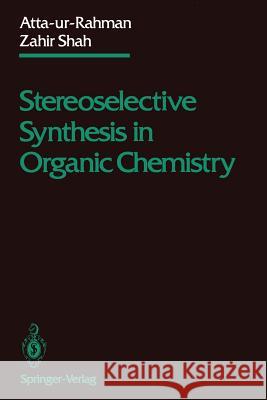
Stereoselective Synthesis in Organic Chemistry Atta-Ur-Rahman                           Zahir Shah 9781461383291 Springer - książkaWidoczna okładka, to zdjęcie poglądowe, a rzeczywista szata graficzna może różnić się od prezentowanej.

Stereoselective Synthesis in Organic Chemistry

ISBN-13: 9781461383291 / Angielski / Miękka / 2011 / 522 str.

Atta-Ur-Rahman; Zahir Shah
cena 403,47 zł
(netto: 384,26 VAT:  5%)

Najniższa cena z 30 dni: 385,52 zł
Termin realizacji zamówienia:
ok. 22 dni roboczych
Bez gwarancji dostawy przed świętami

Darmowa dostawa!

This monumental tome by Prof. Atta-ur-Rahman and Dr. Zahir Shah pres ents a broad overall perspective of stereo selectivity in the synthesis of or ganic molecules. Thus it treats a problem that is of fundamental importance and will be even more important in the future as the drug industry is required to supply 1000/0 optically pure compounds. After an exposition of general principles, the following subjects are treated: Catalytic Reductions, Heterogeneous Catalytic Hydrogenations, Stereoselective Non-Catalytic Reductions, Stereos elective Carbon-Carbon Bond Forming Reactions, Asymmetric Oxidations, Asymmetric Carbon Heteroatom Bond Formations, Enzyme Catalyzed Reactions, Stereo selective Free Radical Reactions, and finally Miscellaneous Stereoselective Reactions. For each subject, a wealth of examples are given. The highly selective reactions are mentioned along with reactions that are not. This is helpful as it will teach the practical chemist what to avoid. Much progress has been made in the last two decades in the design of new, very stereoselective reactions which can be applied in industry. For example, and in alphabetical order, we can mention (among other peers): H.C. Brown (hydroboration), D.C. Evans (carbon-carbon bond forma tion), R. Noyori (BINAP reagents for hydrogenation), and K.B. Sharpless (epoxidation and dihydroxylation of double bonds). Thus the field has completely changed since the 1950s, when optically pure compounds were always obtained by difficult resolutions of racemates and not by stereoselec tive reactions.


Kategorie:
Nauka, Chemia
Kategorie BISAC:
Science > Chemia - Organiczna
Wydawca:
Springer
Język:
Angielski
ISBN-13:
9781461383291
Rok wydania:
2011
Wydanie:
Softcover Repri
Ilość stron:
522
Waga:
0.81 kg
Wymiary:
23.5 x 15.5
Oprawa:
Miękka
Wolumenów:
01

1 Stereochemical Principles.- 1.1 Introduction.- 1.2 Chirality.- 1.3 Diastereotopic Groups and Faces.- 1.4 Enantiotopic Groups and Faces.- 1.5 Homotopic Groups and Faces.- 1.6 Homochiral Relationships.- 1.7 Selectivity in Organic Synthesis.- 1.7.1 Chemoselectivity.- 1.7.2 Regioselectivity.- 1.7.3 Diastereoselectivity.- 1.7.4 Enantioselectivity.- 1.7.4.1 Reactions in Presence of Chiral Additives.- 1.7.4.2 Reactions Involving Covalent Linkages of Chiral Auxiliary Groups with Substrates.- 1.7.4.3 Reactions with Chiral Reagents.- 1.7.4.4 Reactions with Enzymes.- 1.8 References.- 2 Stereoselective Catalytic Reductions.- 2.1 Homogeneous Catalytic Hydrogenations.- 2.1.1 Hydrogenation of Olefins.- 2.1.1.1 Hydrogenation with Rh-complexes.- 2.1.1.1.1 Tetrasubstituted Olefins.- 2.1.1.1.2 Substituted Itaconate Esters.- 2.1.1.2 Hydrogenation with Ru-complexes.- 2.1.1.2.1 Allylic and Homoallylic Alcohols.- 2.1.1.2.2 Unsaturated Carboxylic Acids.- 2.1.1.2.3 Dicarboxylic Acids.- 2.1.1.2.4 Dehydroamino Acids.- 2.1.1.2.5 Prochiral Ketones.- 2.1.1.3 Hydrogenation with Ti-complexes.- 2.1.1.4 Hydrogenation with Co-complexes.- 2.1.1.5 Hydrogenation with Heterobimetallic Complexes.- 2.1.2 Catalytic Hydrosilylation.- 2.1.2.1 Catalytic Hydrosilylation of Olefins.- 2.1.2.2 Catalytic Hydrosilylation of Imines.- 2.1.3 Catalytic Hydrogenation of Ketones.- 2.1.3.1 Direct Hydrogenation of Simple Ketones.- 2.1.3.2 Direct Hydrogenation of Functionalized Ketones.- 2.1.3.2.1 With Rhodium-Diphosphine Catalysts.- 2.1.3.2.2 With Ruthenium Complexes.- 2.1.3.2.3 With Copper Complexes.- 2.1.3.3 Hydrogenation of Ketones via Derivatization.- 2.1.3.3.1 Hydrogenation of Simple Ketones via Hydrosilylation.- 2.1.3.3.2 Hydrogenation of Functionalized Ketones via Hydrosilylation.- 2.1.3.3.3 Hydrogenation of Ketones via Enol Phosphinates.- 2.2 Heterogeneous Catalytic Hydrogenations.- 2.2.1 Enantioselective Heterogeneous Catalytic Hydrogenations.- 2.2.2 Diastereoselective Heterogeneous Catalytic Hydrogenations.- 2.2.2.1 Asymmetric Hydrogenation of Carbon-Carbon Double Bonds.- 2.2.2.1.1 Hydrogenation of N-Acyl-?,ß-Dehydroamino Acids.- 2.2.2.1.2 Asymmetric Hydrogenation of Cyclic Dehydropeptides.- 2.2.2.2 Asymmetric Hydrogenation of other Carbonyl Compounds.- 2.2.2.2.1 Asymmetric Hydrogenation of Benzoylformic Acid Esters.- 2.2.2.2.2 Asymmetric Hydrogenation of ?-Keto Amides.- 2.2.2.3 Asymmetric Hydrogenation of Carbon-Nitrogen Double Bonds.- 2.2.2.3.1 Hydrogenation of Imines, Oximes and Hydrazones.- 2.3 References.- 3 Stereoselective Non-Catalytic Reductions.- 3.1 Enantioselective Non-Catalytic Reductions.- 3.1.1 Chiral Metal-hydride Complexes.- 3.1.1.1 Lithium Aluminium Hydride Modified with Chiral Groups.- 3.1.1.1.1 LAH Modified with Alcohols.- 3.1.1.1.2 LAH Modified with Amino Alcohols.- 3.1.1.2 Chiral Boranes and Borohydrides.- 3.1.1.2.1 Chiral Alkylboranes.- 3.1.1.2.2 Chiral Borohydride Reagents.- 3.1.1.2.2.1 NaBH4-derived Reagents.- 3.1.1.2.2.1.1 Phase Transfer Catalyzed Reductions.- 3.1.1.2.2.1.2 LiBH4 Reductions.- 3.1.1.2.2.2 Super Hydrides.- 3.1.2 Chiral Metal Alkyls and Alkoxides.- 3.1.3 Chiral Dihydropyridine Reagents.- 3.2 Diastereoselective Non-Catalytic Reductions.- 3.2.1 Cyclic Substrates.- 3.2.2 Acyclic Substrates.- 3.2.2.1 1, 2- Induction.- 3.2.2.2 1,3-, 1,4- and 1,6- Inductions.- 3.2.2.2.1 Cyclic Ketones.- 3.3 References.- 4 Stereoselective Carbon-Carbon Bond Forming Reactions.- 4.1 Nucleophilic Additions to Aldehydes and Ketones.- 4.1.1 Enantioselective Addition Reactions.- 4.1.2 Diastereoselective Addition Reactions.- 4.1.2.1 Diastereoselective Additions to Carbonyl Compounds.- 4.1.2.2 Diastereoselective Additions to Cyclic Ketones.- 4.1.3 Addition of Chiral Reagents.- 4.1.4 Stereoselectivity of Nucleophilic Addition Reactions.- 4.2 Asymmetric Catalytic Hydrocarbonylations.- 4.2.1 Asymmetric Hydroformylations.- 4.2.1.1 Asymmetric Hydroformylation with Homogeneous Catalysts.- 4.2.1.2 Asymmetric Hydroformylations with Heterogeneous Catalysts.- 4.2.2 Asymmetric Hydroesterification.- 4.3 Asymmetric Aldol Reactions.- 4.3.1 Stereochemistry of the Aldol Reaction.- 4.3.1.1 Transition State Models in the Aldol Reaction.- 4.3.2 Addition of Enolates to Achiral Aldehydes.- 4.3.2.1 Generation and Aldol Reactions of Enolates.- 4.3.2.1.1 Li Enolates in Aldol Reactions.- 4.3.2.1.1.1 Ketone Enolates.- 4.3.2.1.1.2 Ester and Lactone Enolates.- 4.3.2.1.1.3 Amide and Lactam Enolates.- 4.3.2.1.1.4 Thioester and Thioamide Enolates.- 4.3.2.1.1.5 Carboxylic Acid Dianions.- 4.3.2.1.2 Boron Enolates in Aldol Reactions.- 4.3.2.1.3. Magnesium Enolates in Aldol Reactions.- 4.3.2.1.4 Titanium Enolates in Aldol Reactions.- 4.3.2.1.5 Zinc Enolates in Aldol Reactions.- 4.3.2.1.6 Tin Enolates in Aldol Reactions.- 4.3.2.1.7 Silicon Enolates in Aldol Reactions.- 4.3.2.1.8 Zirconium Enolates in Aldol Reactions.- 4.3.3 Addition of Chiral Enolates to Achiral Aldehydes and Unsymmetric Ketones (the Cross Aldol Reaction).- 4.3.3.1 Metal Atoms as Chiral Centres in Aldol Reactions.- 4.3.3.2 Chiral Ketone Enolates in Aldol Reactions.- 4.3.3.3 Chiral Azaenolates in Aldol Reactions.- 4.3.4 Addition of Achiral Enolates to Chiral Aldehydes.- 4.3.5 Reactions of Chiral Aldehydes with Chiral Enolates.- 4.4 Allylmetal and Allylboron Additions.- 4.4.1 Configurational Stability of Allylmetal Compounds.- 4.4.2 Stereochemistry of Allylmetal Additions.- 4.4.3 Addition of Allylboron Compounds.- 4.4.4 Addition of Allyltitanium Compounds.- 4.4.5 Addition of Allylstannanes.- 4.4.6 Addition of Allylsilanes.- 4.4.7 Palladium-Catalyzed Asymmetric Allylation.- 4.4.8 Chromium (II)-Catalyzed Allylic Additions.- 4.4.9 Addition of other Allylmetals.- 4.5 Asymmetric Alkylation Reactions.- 4.5.1 Alkylation of Chiral Enolates.- 4.5.1.1 Exocyclic Enolates.- 4.5.1.2 Endocyclic Enolates.- 4.5.1.3 Norbornyl Enolates.- 4.5.2 Alkylation of Imine and Enamine Salts.- 4.5.3 Alkylation of Chiral Hydrazones.- 4.5.4 Alkylation of Chiral Oxazolines.- 4.5.4.1 Synthesis of Alkyl Alkanoic Acids.- 4.5.4.2 Synthesis of ?-Hydroxyacids.- 4.5.4.3 Synthesis of Butyrolactones and Valerolactones.- 4.5.4.4 Synthesis of ß-Alkylalkanoic Acid.- 4.5.4.5 Synthesis of Unsubstituted 1,4-Dihydropyridines.- 4.5.4.6 Synthesis of Resin-Bound Oxazolines.- 4.5.4.7 Alkylation via Diketopiperazines.- 4.5.5 Alkylation of Sulfoxides and Dithianes.- 4.5.6 Michael Addition Reactions.- 4.5.6.1 Addition of Chiral Anions.- 4.5.6.2 Addition of Achiral Anions Complexed with Chiral Ligands to Prochiral Michael Acceptors.- 4.5.6.3 Addition of Achiral Anions to Michael Acceptors Having One or More Chiral Centres.- 4.5.6.4 Addition with Optically Active Transition Metal-Ligand Catalysts.- 4.6 Pericyclic Reactions.- 4.6.1 Asymmetric Cycloaddition Reactions.- 4.6.1.1 Asymmetric Diels-Alder Reactions.- 4.6.1.1.1 Addition to Chiral Dienophiles.- 4.6.1.1.2 Addition to Chiral Dienes.- 4.6.1.1.3 Chiral Catalysts.- 4.6.2 Asymmetric [2+2] Cycloadditions.- 4.6.3 Asymmetric 1,3-Dipolar [3+2] Cycloadditions.- 4.6.4 Sigmatropic Rearrangements.- 4.6.4.1 [3, 3] Sigmatropic Rearrangements.- 4.6.4.2 [2, 3] Sigmatropic (Wittig) Rearrangements.- 4.6.4.2.1 Allylsulfenate Rearrangements.- 4.6.5 Ene Reactions.- 4.6.5.1 Intermolecular Ene Reactions.- 4.6.5.2 Intramolecular Ene Reactions.- 4.7 References.- 5 Asymmetric Oxidations.- 5.1 Asymmetric Epoxidation.- 5.1.1 Asymmetric Epoxidation of Allylic Alcohols.- 5.1.1.1 Katsuki-Sharpless Epoxidation.- 5.1.2 Asymmetric Epoxidation of other Substrates.- 5.2 Asymmetric Oxidation of Sulfides.- 5.3 Asymmetric Oxidation of Selenides.- 5.4 Asymmetric Hydroxylations.- 5.4.1 Vicinal Hydroxylations.- 5.5 Asymmetric Oxidation of Aromatic Substrates via Donor-Acceptor Interaction.- 5.6 References.- 6 Asymmetric Carbon-Heteroatom Bond Formations.- 6.1 Carbon-Oxygen Bond Formation.- 6.1.1 Asymmetric Halolactonization.- 6.1.2 Asymmetric Hydroboration.- 6.2 Carbon-Nitrogen Bond Formation.- 6.2.1 Halocyclization.- 6.2.1.1 Iodolactamization.- 6.2.2 Mercuricyclization.- 6.3 Carbon-Sulfur Bond Formation.- 6.4 Carbon-Phosphorus Bond Formation.- 6.5 Stereoselective C-H Bond Formation and Proton Migration.- 6.6 References.- 7 Enzyme-Catalyzed Reactions.- 7.1 Enzyme Specificity.- 7.1.1 Enantiomeric Specificity of Enzymes.- 7.1.2 Prochiral Stereospecificity.- 7.1.2.1 Additions to Stereoheterotopic Faces.- 7.1.2.2 Stereoheterotopic Groups and Atoms.- 7.2 Meso Compound Transformations.- 7.3 Multienzyme Systems.- 7.4 References.- 8 Stereoselective Free Radical Reactions.- 8.1 Free Radical Chain Reactions.- 8.1.1 The Tin Hydride Method.- 8.1.1.1 Intramolecular Radical Cyclizations.- 8.1.1.2 Intermolecular Radical Additions.- 8.1.2 The Mercury Hydride Method.- 8.1.2.1 Intramolecular Cyclization Reactions.- 8.1.2.2 Intermolecular Radical Reactions.- 8.1.2.2.1 Cyclic Radicals.- 8.1.2.2.2 Acyclic Substrates.- 8.1.3 The Fragmentation Method.- 8.1.4 The Barton (Thiohydroxamate Ester) Method.- 8.1.5 The Atom Transfer Method.- 8.1.5.1 Hydrogen Atom Transfer Addition and Cyclization.- 8.1.5.2 Halogen Atom Transfer.- 8.1.5.2.1 Halogen Atom Transfer Additions.- 8.1.5.2.2 Halogen Atom Transfer Cyclizations.- 8.1.5.2.3 Halogen Atom Transfer Annulations.- 8.1.6 Heteroatom-Halogen Donors.- 8.1.7 Organocobalt Transfer Method.- 8.2 Non-Chain Radical Reactions.- 8.3 References.- 9 Miscellaneous Stereoselective Reactions.- 9.1 Asymmetric Cyclopropanations.- 9.2 References.


Udostępnij

Facebook - konto krainaksiazek.pl


Opinie o Krainaksiazek.pl na Opineo.pl

Partner Mybenefit

Krainaksiazek.pl w programie rzetelna firma Krainaksiaze.pl - płatności przez paypal

Czytaj nas na:

Facebook - krainaksiazek.pl
  • książki na zamówienie
  • granty
  • książka na prezent
  • kontakt
  • pomoc
  • opinie
  • regulamin
  • polityka prywatności

Zobacz:

  • Księgarnia czeska

  • Wydawnictwo Książkowe Klimaty

1997-2025 DolnySlask.com Agencja Internetowa

© 1997-2022 krainaksiazek.pl
     
KONTAKT | REGULAMIN | POLITYKA PRYWATNOŚCI | USTAWIENIA PRYWATNOŚCI
Zobacz: Księgarnia Czeska | Wydawnictwo Książkowe Klimaty | Mapa strony | Lista autorów
KrainaKsiazek.PL - Księgarnia Internetowa

Polityka prywatnosci - link
Krainaksiazek.pl - płatnośc Przelewy24
Przechowalnia Przechowalnia





