• Wyszukiwanie zaawansowane
  • Kategorie
  • Kategorie BISAC
  • Książki na zamówienie
  • Promocje
  • Granty
  • Książka na prezent
  • Opinie
  • Pomoc
  • Załóż konto
  • Zaloguj się

Solvent Effects in Chemistry » książka


zaloguj się | załóż konto
Logo Krainaksiazek.pl

koszyk

konto

szukaj
topmenu
Księgarnia internetowa
Szukaj
Książki na zamówienie
Promocje
Granty
Książka na prezent
Moje konto
Pomoc
 
 
Wyszukiwanie zaawansowane
Pusty koszyk
Bezpłatna dostawa dla zamówień powyżej 20 złBezpłatna dostawa dla zamówień powyżej 20 zł

Kategorie główne

• Nauka
 [2952079]
• Literatura piękna
 [1850969]

  więcej...
• Turystyka
 [71058]
• Informatyka
 [151066]
• Komiksy
 [35579]
• Encyklopedie
 [23181]
• Dziecięca
 [620496]
• Hobby
 [139036]
• AudioBooki
 [1646]
• Literatura faktu
 [228729]
• Muzyka CD
 [379]
• Słowniki
 [2932]
• Inne
 [445708]
• Kalendarze
 [1409]
• Podręczniki
 [164793]
• Poradniki
 [480107]
• Religia
 [510956]
• Czasopisma
 [511]
• Sport
 [61267]
• Sztuka
 [243299]
• CD, DVD, Video
 [3411]
• Technologie
 [219640]
• Zdrowie
 [100984]
• Książkowe Klimaty
 [124]
• Zabawki
 [2281]
• Puzzle, gry
 [3363]
• Literatura w języku ukraińskim
 [258]
• Art. papiernicze i szkolne
 [8020]
Kategorie szczegółowe BISAC

Solvent Effects in Chemistry

ISBN-13: 9781119030980 / Angielski / Twarda / 2015 / 240 str.
Erwin Buncel; Robert A. Stairs
Solvent Effects in Chemistry Erwin Buncel Robert A. Stairs 9781119030980 Wiley - książkaWidoczna okładka, to zdjęcie poglądowe, a rzeczywista szata graficzna może różnić się od prezentowanej.

Solvent Effects in Chemistry

ISBN-13: 9781119030980 / Angielski / Twarda / 2015 / 240 str.

Erwin Buncel; Robert A. Stairs
cena 553,14
(netto: 526,80 VAT:  5%)

Najniższa cena z 30 dni: 548,60
Termin realizacji zamówienia:
ok. 30 dni roboczych.

Darmowa dostawa!

This book introduces the concepts, theory and experimental knowledge concerning solvent effects on the rate and equilibrium of chemical reactions of all kinds. It begins with basic thermodynamics and kinetics, building on this foundation to demonstrate how a more detailed understanding of these effects may be used to aid in determination of reaction mechanisms, and to aid in planning syntheses. Consideration is given to theoretical calculations (quantum chemistry, molecular dynamics, etc.), to statistical methods (chemometrics), and to modern day concerns such as -green- chemistry, where utilization and disposal of chemical waste or by-products in an environmentally safe way is as important as achieving the desired end products by all chemists nowadays. The treatment progresses from elementary to advanced material in straightforward fashion. The more advanced topics are not developed in an overly rigorous way so that upper-level undergraduates, graduates, and newcomers to the field can grasp the concepts easily.


Kategorie:
Nauka, Chemia
Kategorie BISAC:
Technology & Engineering > Chemical & Biochemical
Science > Chemia - Organiczna
Science > Chemia - Nieorganiczna
Wydawca:
Wiley
Język:
Angielski
ISBN-13:
9781119030980
Rok wydania:
2015
Wydanie:
Revised
Ilość stron:
240
Waga:
0.52 kg
Wymiary:
23.62 x 15.75 x 2.03
Oprawa:
Twarda
Wolumenów:
01
Dodatkowe informacje:
Bibliografia
Wydanie ilustrowane

Preface to the Second Edition viii

Preface to the First Edition x

1 Physicochemical Foundations 1

1.1 Generalities 1

1.2 Classification of Solvents 4

1.3 Solvents in the Workplace and the Environment 6

1.4 Some Essential Thermodynamics and Kinetics: Tendency and Rate 7

1.5 Equilibrium Considerations 7

1.6 Thermodynamic Transfer Functions 9

1.7 Kinetic Considerations: Collision Theory 10

1.8 Transition –State Theory 11

1.9 Reactions in Solution 16

1.10 Diffusion –Controlled Reactions 16

1.11 Reaction in Solution and the Transition State Theory 18

Problems 21

2 Unreactive Solvents 23

2.1 Intermolecular Potentials 23

2.2 Activity and Equilibrium in Nonelectrolyte Solutions 24

2.3 Kinetic Solvent Effects 28

2.4 Solvent Polarity 30

2.5 Electrostatic Forces 30

2.6 Electrolytes in Solution 33

2.7 Solvation 36

2.8 Single Ion Solvation 39

2.9 Ionic Association 42

2.10 Solvent Mixtures 47

2.11 Salt Effects 53

Problems 55

3 Reactive Solvents 57

3.1 Specific Solute/Solvent Interactions 57

3.2 Hydrogen Bonding 58

3.3 Acids and Bases in Solvents 59

3.4 Brønsted Lowry Acids and Bases 60

3.5 Acidity Functions 62

3.6 Acids and Bases in Kinetics 65

3.7 Lewis Acids and Bases 76

3.8 Hard and Soft Acids and Bases (HSAB) 77

3.9 Scales of Hardness or Softness 78

3.10 Acids and Bases in Reactive Aprotic Solvents 82

3.11 Extremes of Acidity and Basicity 83

3.12 O xidation and Reduction 83

3.13 Acidity/Redox Diagrams 84

3.14 Unification of acid Base and Redox Concepts 86

Problems 87

4 Chemometrics: Solvent Effects and Statistics 89

4.1 Linear Free Energy Relationships 89

4.2 Correlations between Empirical Parameters and Other Measurable Solvent Properties 91

4.3 Representation of Correlation Data on the Hemisphere 95

4.4 Some Particular Cases 101

4.5 Acidity and Basicity Parameters 106

4.6 Base Softness Parameters 110

4.7 Conclusion 111

5 T heories of Solvent Effects 112

5.1 Introduction: Modeling 112

5.2 Quantum –Mechanical Methods 113

5.3 Statistical –Mechanical Methods 119

5.4 Integral Equation Theories 123

5.5 Solvation Calculations 123

5.6 Some Results 126

Problems 139

6 Dipolar Aprotic Solvents 140

6.1 Introduction 140

6.2 Acidities in DMSO and the H –Scale in DMSO 2 O Mixtures 142

6.3 Use of Thermodynamic Transfer Functions 144

6.4 Classification of Rate Profile –Medium Effect Reaction Types 147

6.5 Bimolecular Nucleophilic Substitution 149

6.6 Proton Transfer 152

6.7 D2 HO Exchange 153

Problems 154

7 E xamples of Other Solvent Classes 155

7.1 Introduction 155

7.2 Acidic Solvents 155

7.3 Basic Solvents 158

7.4 Chiral Solvents 161

8 N ew Solvents and Green Chemistry 164

8.1 Neoteric Solvents 164

8.2 Supercritical Fluids 164

8.3 Ionic Liquids 167

8.4 Low –Transition –Temperature Mixtures 173

8.5 Bio –Based Solvents 174

8.6 Fluorous Solvents 174

8.7 Switchable Solvents 174

8.8 Green Solvent Chemistry 176

9 Concluding Observations 182

9.1 Choosing a Solvent 182

9.2 Envoi 184

Appendix (Tables listing parameters, selected values) 185

Answers 197

References 199

Index 214

Robert A. Stairs, Ph.D, FCIC, is Professor Emeritus in the Department of Chemistry at Trent University at Peterborough, Ontario, having joined at its opening in 1964, after teaching at Cornell and at Queen′s University in Kingston. During his 25 years at Trent, he served as chair of the Department twice. Since retiring, Prof. Stairs keeps up a close relationship with Trent, returning regularly for seminars and special events, and maintaining a modest research program.

Erwin Buncel, PhD, FRCS, is Professor Emeritus in the Physical Organic Chemistry department at Queen′s University. He received his Ph.D. in Organic Chemistry in 1957 and his D.Sc. in Physical Organic Chemistry in 1970, both at the Unversity of London. He has won several awards and honors, including the R.U. Lemieux Award in Organic Chemistry – Canadian Society for Chemistry in 1999 and he was a Fellow, World Innovation Foundation (2001). He has recently been elected a fellow of the Royal Society of Canada.

Solvents are integral to everyday research activities. Choosing the appropriate solvent allows thermodynamic and kinetic control of a chemical reaction. Building on this foundation to cultivate a deeper understanding of the topic can better aid and result in the determination of reaction mechanisms and syntheses planning.

Solvent Effects in Chemistry provides the introduction to the concepts, theory and experimental knowledge concerning solvent effects on the rate and equilibrium of chemical reactions. It begins with basic thermodynamics and kinetics, with consideration given to theoretical calculations (quantum chemistry, molecular dynamics, etc.), to statistical methods (chemometrics), and to modern–day concerns such as green chemistry. Furthermore, this monograph:

 Employs a semi quantitative approach, avoiding unnecessary detail or rigor so that the discussions are accessible to students and professionals alike

 Is suitable for undergraduates, graduate students, and newcomers from related fields in chemistry and chemical engineering where an understanding of solvent effects is desired

 Provides examples from inorganic and organic chemistry

As this book is aimed at upper–level undergraduates, graduates, and newcomers to the field, the more advanced topics in the book are presented in a succinct and clear way so that concepts can be easily grasped. It is also intended as a supplementary text for all kinds of chemists, namely, academic researchers, chemical engineers, environmental scientists, government and industrial workers in chemistry who will find the text a reliable source for their research.
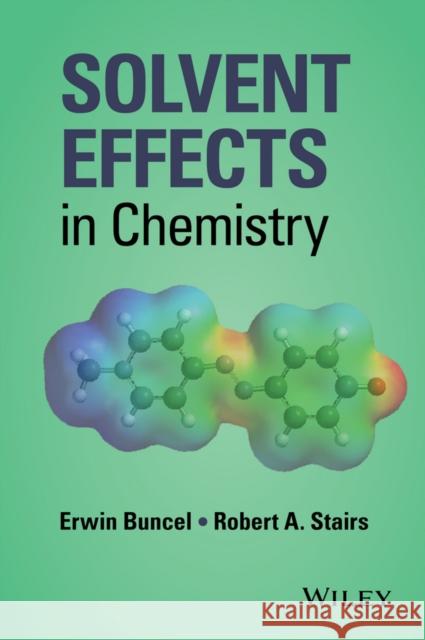
The molecule represented on the front cover is 4–[(4 –hydroxyphenyl)azo–N–methylpyridine, called Buncel s dye by Rauhut, Clark and Steinke (1993). The solvatochromism of this and a small number of related dyes forms the basis of the polarity parameter ∗azo


Udostępnij

Facebook - konto krainaksiazek.pl


Opinie o Krainaksiazek.pl na Opineo.pl

Partner Mybenefit

Krainaksiazek.pl w programie rzetelna firma Krainaksiaze.pl - płatności przez paypal

Czytaj nas na:

Facebook - krainaksiazek.pl
  • książki na zamówienie
  • granty
  • książka na prezent
  • kontakt
  • pomoc
  • opinie
  • regulamin
  • polityka prywatności

Zobacz:

  • Księgarnia czeska

  • Wydawnictwo Książkowe Klimaty

1997-2026 DolnySlask.com Agencja Internetowa

© 1997-2022 krainaksiazek.pl
     
KONTAKT | REGULAMIN | POLITYKA PRYWATNOŚCI | USTAWIENIA PRYWATNOŚCI
Zobacz: Księgarnia Czeska | Wydawnictwo Książkowe Klimaty | Mapa strony | Lista autorów
KrainaKsiazek.PL - Księgarnia Internetowa

Polityka prywatnosci - link
Krainaksiazek.pl - płatnośc Przelewy24
Przechowalnia Przechowalnia






