• Wyszukiwanie zaawansowane
  • Kategorie
  • Kategorie BISAC
  • Książki na zamówienie
  • Promocje
  • Granty
  • Książka na prezent
  • Opinie
  • Pomoc
  • Załóż konto
  • Zaloguj się

Solar Energy Conversion Systems in the Built Environment » książka


zaloguj się | załóż konto
Logo Krainaksiazek.pl

koszyk

konto

szukaj
topmenu
Księgarnia internetowa
Szukaj
Książki na zamówienie
Promocje
Granty
Książka na prezent
Moje konto
Pomoc
 
 
Wyszukiwanie zaawansowane
Pusty koszyk
Bezpłatna dostawa dla zamówień powyżej 20 złBezpłatna dostawa dla zamówień powyżej 20 zł

Kategorie główne

• Nauka
 [2949965]
• Literatura piękna
 [1857847]

  więcej...
• Turystyka
 [70818]
• Informatyka
 [151303]
• Komiksy
 [35733]
• Encyklopedie
 [23180]
• Dziecięca
 [617748]
• Hobby
 [139972]
• AudioBooki
 [1650]
• Literatura faktu
 [228361]
• Muzyka CD
 [398]
• Słowniki
 [2862]
• Inne
 [444732]
• Kalendarze
 [1620]
• Podręczniki
 [167233]
• Poradniki
 [482388]
• Religia
 [509867]
• Czasopisma
 [533]
• Sport
 [61361]
• Sztuka
 [243125]
• CD, DVD, Video
 [3451]
• Technologie
 [219309]
• Zdrowie
 [101347]
• Książkowe Klimaty
 [123]
• Zabawki
 [2362]
• Puzzle, gry
 [3791]
• Literatura w języku ukraińskim
 [253]
• Art. papiernicze i szkolne
 [7933]
Kategorie szczegółowe BISAC

Solar Energy Conversion Systems in the Built Environment

ISBN-13: 9783030348311 / Angielski / Miękka / 2021 / 384 str.
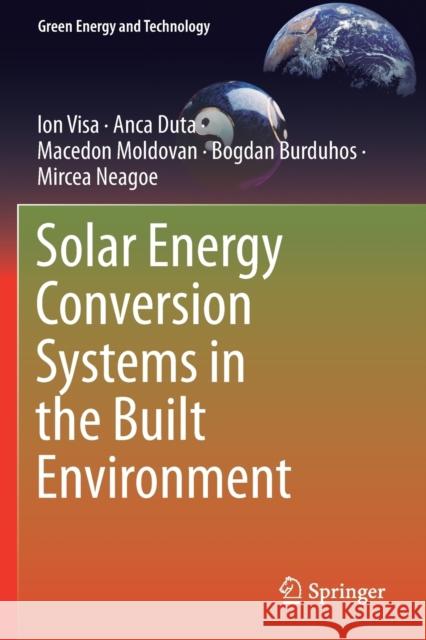
Ion Visa; Anca Duta; Macedon Moldovan
Solar Energy Conversion Systems in the Built Environment Visa, Ion, Duta, Anca, Moldovan, Macedon 9783030348311 Springer International Publishing - książkaWidoczna okładka, to zdjęcie poglądowe, a rzeczywista szata graficzna może różnić się od prezentowanej.

Solar Energy Conversion Systems in the Built Environment

ISBN-13: 9783030348311 / Angielski / Miękka / 2021 / 384 str.

Ion Visa; Anca Duta; Macedon Moldovan
cena 645,58 zł
(netto: 614,84 VAT:  5%)

Najniższa cena z 30 dni: 616,85 zł
Termin realizacji zamówienia:
ok. 22 dni roboczych
Bez gwarancji dostawy przed świętami

Darmowa dostawa!
inne wydania

This book focuses on solar energy conversion systems that can be implemented in the built environment, at building or at community level. The quest for developing a sustainable built environment asks for specific solutions to provide clean energy based on renewable sources, and solar energy is considered one of the cleanest available energy on Earth. The specific issues raised by the implementation location are discussed, including the climatic profile distorted by the buildings, the available surface on the buildings for implementation, etc. This book also discusses the seasonal and diurnal variability of the solar energy resource in parallel with the variability of the electrical and thermal energy demand in the built environment (particularly focusing on the residential buildings). Solutions are proposed to match these variabilities, including the development of energy mixes with other renewables (e.g. geothermal or biomass, for thermal energy production). Specific solutions, including case studies of systems implemented on buildings all over the world, are presented and analyzed for electrical and for thermal energy production and the main differences in the systems design are outlined. The conversion efficiency (thus the output) and the main causes of energy losses are considered in both cases. The architectural constraints are additionally considered and novel solar energy convertors with different shapes and colors are presented and discussed.The durability of the solar energy conversion systems is analyzed considering the specific issues that occur when these systems are implemented in the built environment; based on practical examples, general conclusions are formulated and specific aspects are discussed in relation to experimental results and literature data.With renewables implemented in the built environment likely to expand in the near future, this book represents welcome and timely material for all professionals and researchers that are aiming to provide efficient and feasible solutions for the sustainable built environment.


Kategorie:
Technologie
Kategorie BISAC:
Science > Energia
Technology & Engineering > Power Resources - Alternative & Renewable
Architecture > Sustainability & Green Design
Wydawca:
Springer International Publishing
Seria wydawnicza:
Green Energy and Technology
Język:
Angielski
ISBN-13:
9783030348311
Rok wydania:
2021
Wydanie:
2020
Ilość stron:
384
Waga:
0.55 kg
Wymiary:
23.39 x 15.6 x 2.06
Oprawa:
Miękka
Wolumenów:
01
Dodatkowe informacje:
Wydanie ilustrowane

Foreword

1.      The built environment  (70 pg.)

1.1.         Building, built environment, community

1.2.         Energy demand in the built environment

1.3.         Meeting the energy demand in the built environment

1.4.         The building sector. Indicators for buildings efficiency and sustainability

            References

2.   Renewable energy sources and systems (110 pg)

2.1.         Renewable energy sources: type, potential, assessment

2.1.1. Solar radiation

2.1.2. Geothermal

2.1.3 Biomass

2.2.         Available renewable energy potential in the built environment

2.2.1. Solar radiation

2.2.2. Geothermal

2.2.3. Biomass

2.3.         Renewable energy systems

2.3.1.        Photovoltaic systems

2.3.2.        Solar-thermal systems

2.3.3.        Geothermal systems

2.3.4.        Biomass systems

                     References

3.      Increasing the solar share in electricity production in the built environment  (85 pg.)

3.1.         Building integrated photovoltaic systems

3.2.         Design of photovoltaic systems

3.3.         Increasing the electric output of photovoltaic systems by using solar tracking systems

3.4.         PV integration in communities

                      References

4.      Increasing the solar share for heating, cooling and DHW in the built environment (100 pg.)

4.1.         Thermal energy demand at building level

4.2.         Solar-thermal systems in buildings

4.3.         Design of solar-thermal systems integrated in the built environment

4.4.         Increasing the thermal output and durability of solar-thermal systems

4.5.         Increasing the share of solar energy in meeting the thermal energy demand of a building

4.6.         Renewable energy mixes based on solar energy in nearly zero energy buildings (nZEB)

4.6.1.        Solar-thermal – heat pumps

4.6.2.        Solar-thermal – heat pumps – photovoltaics

4.6.3.        Solar-thermal – biomass

References

5.      PVT systems (20 pg.)

5.1.     PVT modules

5.2.     PVT output

5.3.    PVT systems in the built environment

                References

6.      Sustainable communities (40 pg.)

6.1. Nearly Zero Energy Communities (nZEC): concept, definitions

6.2. Energy for nZEC: Steps in implementing renewable energy systems in nZEB and in nZEC

6.3. Operation and energy management

6.4. Case studies

6.5. Emergent trends in using solar energy at community level

          References


short bios will follow


Prof. dr. eng. Ion Visa developed an intensive activity aiming at implementing the sustainable development concept, as the European and Romanian strategies proposed. This group formed in 2005 the R&D Centre Renewable Energy Systems and Recycling (RESREC) and in the same year the first edition of the international Conference for Sustainable Energy (CSE) was launched, being followed, each three years, by a new edition organized in the RESREC Centre and benefiting by a continuous increase in quality and visibility. The last two CSE editions had the proceedings volumes published in Springer: Sustainable Energy in the Built Environment – Steps towards nZEB (2014) and Nearly Zero Energy Communities (2017) and both volumes are in the 25% highly cited publications of Springer.

The RESREC Centre was and is the nucleus of a coherent activity, both in education and in research. The group of authors represents the core that supported the development of an integrated training line that offers study programs to students at B.Sc. level (Engineering of Renewable Energy Systems, Environmental Engineering for Industrial Processes and Wastes Recycling Engineering), at M.Sc. level (Product Design for Sustainable Development and Environment Protection) and at Ph. D. level (in Materials Science and Mechanical Engineering). These study programs were developed mainly through European cooperation grants and activities as the CDA project Solar Energy: Technology and Management (1999-2002). To extend the use of this newly developed knowledge and training line, various adults training projects supported the development of specialized courses for teachers (Comenius 2.1. projects: SEE EU Tool, CO: Prof. Ion VISA and CHEMINC, CO: Prof. Anca DUTA) and for different professionals (e.g. the Leonardo da Vinci project: RES&EM ICT Tools, CO: Prof. Ion VISA).

The team in the RESREC Centre continuously developed a research activity focused on specific aspects of renewable energy systems with a view on the particular aspects of their implementation in the built environment, in a multi-disciplinary approach “from material to product”. More than 30 grants financed by national and EU research programs supported this activity. Among these there can be mentioned the grant Product Design for Sustainable Development (CNCSIS Platform, 79/2006, 1.89 million EUR, CO: Prof. Ion VISA) that supported the development and updating of the R&D Infrastructure in the Centre. Based on the experience gained in this grant, in 2009 a structural funds project was granted to the Transilvania University of Brasov, RDI Institute High Tech Products for Sustainable Development, (POSCCE, ID123, 22 million EUR, CO: Prof. Ion VISA) and allowed the development of the R&D Institute of the University, with a specific focus on renewable energy systems implemented in the built environment, consisting of 11 low energy buildings and high level infrastructure fully dedicated to research. Using all these resources, many other grants and contracts were developed focusing on the development of novel solar-thermal collectors implemented in the built environment (grants: EST IN URBA, 28/2010 and MATSOL-T, 277/2006) or on the implementation of photovoltaic systems on buildings or in communities (PLATSOL – PV, 752/2006 or EMAX-BIPV/131/2015) or on novel advanced wastewater treatement processes activated by solar radiation (FOTOCOMPLEX, 71-047/2007; NANOVISMAT 162/2012). Additionally, the team was involved in EU projects promoting sustainable energy, as the Bioenergy Train grant (BET, H2020 N 65676/2015) or the COST projects: Building Integration of Solar-Thermal Systems (COST-STSM-TU1205-35351, CO: Prof. dr. eng. Ion Visa) and PEARL-PV (COST Action CA16235, CO: Assoc. prof. dr. eng. Bogdan Burduhos). These allowed to extend the cooperation network and the research topics towards subjects extremely important today as the quest for new and clean energy resources. Based on the R&D results and on the capability of extending these results towards education and training, the authors’ group is well involved in EU structures as the European Sustainable Energy Innovation Alliance, ESEIA (where Prof. Visa is Vice-President); additionally, Prof. Visa was the main proposer of a new Technical Commitee (TC) in the frame of the International Federation for the Promotion of Mechanism and Machine Science, IFToMM. The TC is called Sustainable Energy Systems (CO: Prof. Ion VISA) and aims at implementing the complex concept of “sustainability” for mechanisms and mechanical systems, by defining energy efficiency, along with renewables and clean energy in industry and society.  

The group published the R&D results in over 200 scientific papers most of them in ISI indexed journals as: Renewable Energy, Applied Thermal Engineering, Energy and Buildings, Energy Procedia, International Journal of Green Energy, Journal of Renewable and Sustainable Energy, Journal of Photovoltaics, Journal of Energy Engineering, Materials Science and Engineering, Applied Catalysis B- Environmental Sciences, Journal of Photochemistry and Photobiology A- Chemistry, Clean Technology and Environmental Policy, etc.

This extensive research activity developed under the coordination of Prof. Ion VISA was recognized also by the Romanian Academy of Technical Sciences, where prof. VISA is full member and by the Romanian Academy, where prof. VISA is member of the Renewable Energy Commission.


This book focuses on solar energy conversion systems that can be implemented in the built environment, at building or at community level. The quest for developing a sustainable built environment asks for specific solutions to provide clean energy based on renewable sources, and solar energy is considered one of the cleanest available energy on Earth. The specific issues raised by the implementation location are discussed, including the climatic profile distorted by the buildings, the available surface on the buildings for implementation, etc. This book also discusses the seasonal and diurnal variability of the solar energy resource in parallel with the variability of the electrical and thermal energy demand in the built environment (particularly focusing on the residential buildings). Solutions are proposed to match these variabilities, including the development of energy mixes with other renewables (e.g. geothermal or biomass, for thermal energy production). Specific solutions, including case studies of systems implemented on buildings all over the world, are presented and analyzed for electrical and for thermal energy production and the main differences in the systems design are outlined. The conversion efficiency (thus the output) and the main causes of energy losses are considered in both cases. The architectural constraints are additionally considered and novel solar energy convertors with different shapes and colors are presented and discussed.

The durability of the solar energy conversion systems is analyzed considering the specific issues that occur when these systems are implemented in the built environment; based on practical examples, general conclusions are formulated and specific aspects are discussed in relation to experimental results and literature data.

With renewables implemented in the built environment likely to expand in the near future, this book represents welcome and timely material for all professionals and researchers that are aiming to provide efficient and feasible solutions for the sustainable built environment.




Udostępnij

Facebook - konto krainaksiazek.pl


Opinie o Krainaksiazek.pl na Opineo.pl

Partner Mybenefit

Krainaksiazek.pl w programie rzetelna firma Krainaksiaze.pl - płatności przez paypal

Czytaj nas na:

Facebook - krainaksiazek.pl
  • książki na zamówienie
  • granty
  • książka na prezent
  • kontakt
  • pomoc
  • opinie
  • regulamin
  • polityka prywatności

Zobacz:

  • Księgarnia czeska

  • Wydawnictwo Książkowe Klimaty

1997-2025 DolnySlask.com Agencja Internetowa

© 1997-2022 krainaksiazek.pl
     
KONTAKT | REGULAMIN | POLITYKA PRYWATNOŚCI | USTAWIENIA PRYWATNOŚCI
Zobacz: Księgarnia Czeska | Wydawnictwo Książkowe Klimaty | Mapa strony | Lista autorów
KrainaKsiazek.PL - Księgarnia Internetowa

Polityka prywatnosci - link
Krainaksiazek.pl - płatnośc Przelewy24
Przechowalnia Przechowalnia




