• Wyszukiwanie zaawansowane
  • Kategorie
  • Kategorie BISAC
  • Książki na zamówienie
  • Promocje
  • Granty
  • Książka na prezent
  • Opinie
  • Pomoc
  • Załóż konto
  • Zaloguj się

Salicylic Acid - A Versatile Plant Growth Regulator » książka


zaloguj się | załóż konto
Logo Krainaksiazek.pl

koszyk

konto

szukaj
topmenu
Księgarnia internetowa
Szukaj
Książki na zamówienie
Promocje
Granty
Książka na prezent
Moje konto
Pomoc
 
 
Wyszukiwanie zaawansowane
Pusty koszyk
Bezpłatna dostawa dla zamówień powyżej 20 złBezpłatna dostawa dla zamówień powyżej 20 zł

Kategorie główne

• Nauka
 [2949965]
• Literatura piękna
 [1857847]

  więcej...
• Turystyka
 [70818]
• Informatyka
 [151303]
• Komiksy
 [35733]
• Encyklopedie
 [23180]
• Dziecięca
 [617748]
• Hobby
 [139972]
• AudioBooki
 [1650]
• Literatura faktu
 [228361]
• Muzyka CD
 [398]
• Słowniki
 [2862]
• Inne
 [444732]
• Kalendarze
 [1620]
• Podręczniki
 [167233]
• Poradniki
 [482388]
• Religia
 [509867]
• Czasopisma
 [533]
• Sport
 [61361]
• Sztuka
 [243125]
• CD, DVD, Video
 [3451]
• Technologie
 [219309]
• Zdrowie
 [101347]
• Książkowe Klimaty
 [123]
• Zabawki
 [2362]
• Puzzle, gry
 [3791]
• Literatura w języku ukraińskim
 [253]
• Art. papiernicze i szkolne
 [7933]
Kategorie szczegółowe BISAC

Salicylic Acid - A Versatile Plant Growth Regulator

ISBN-13: 9783030792312 / Angielski / Miękka / 2023 / 305 str.
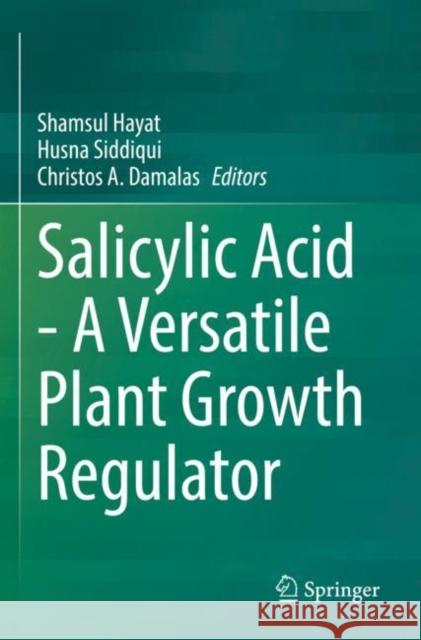
Shamsul Hayat; Husna Siddiqui; Christos A. Damalas
Salicylic Acid - A Versatile Plant Growth Regulator Shamsul Hayat Husna Siddiqui Christos A. Damalas 9783030792312 Springer - książkaWidoczna okładka, to zdjęcie poglądowe, a rzeczywista szata graficzna może różnić się od prezentowanej.

Salicylic Acid - A Versatile Plant Growth Regulator

ISBN-13: 9783030792312 / Angielski / Miękka / 2023 / 305 str.

Shamsul Hayat; Husna Siddiqui; Christos A. Damalas
cena 685,93 zł
(netto: 653,27 VAT:  5%)

Najniższa cena z 30 dni: 655,41 zł
Termin realizacji zamówienia:
ok. 22 dni roboczych
Bez gwarancji dostawy przed świętami

Darmowa dostawa!
inne wydania

Phytohormones are known to affect the growth and development of plant directly as well as indirectly. Salicylic acid (SA) is a phenolic phytohormone which induces systemic resistance in plants and also regulates defence responses. The derivatives of SA also play an important role in the regulation of various physiological and developmental processes in plants under normal and stressful environmental conditions. SA regulates seed germination, photosynthesis, ethylene biosynthesis, enzyme activities, nutrition, flowering, legume nodulation and overall growth and development of plant. Recently, advancement in elucidating the specific pathways of SA signal transduction has been noticed which helps in understanding the expression of specific genes associated with different developmental programs. The horizon of SA-mediated regulation of various physiological processes has also expanded, and various studies enumerating the efficacy of exogenously applied SA in practical agriculture have also been documented. Therefore, information regarding such recent developments needs to be compiled in the form of a book. This book aims to provide a collective information regarding SA which makes it a versatile plant growth regulator. The chapters included both theoretical and practical aspects that could be of immense use for researches and possible significant developments in future. It is intended that this book will be a help for students, teachers, and researchers, in understanding the relation between the phytohormone and agricultural sciences.


Phytohormones are known to affect the growth and development of plant directly as well as indirectly. Salicylic acid (SA) is a phenolic phytohormone which induces systemic resistance in plants and also regulates defence responses. The derivatives of SA also play an important role in the regulation of various physiological and developmental processes in plants under normal and stressful environmental conditions. SA regulates seed germination, photosynthesis, ethylene biosynthesis, enzyme activities, nutrition, flowering, legume nodulation and overall growth and development of plant. Recently, advancement in elucidating the specific pathways of SA signal transduction has been noticed which helps in understanding the expression of specific genes associated with different developmental programs. The horizon of SA-mediated regulation of various physiological processes has also expanded, and various studies enumerating the efficacy of exogenously applied SA in practical agriculture have also been documented. Therefore, information regarding such recent developments needs to be compiled in the form of a book. This book aims to provide a collective information regarding SA which makes it a versatile plant growth regulator. The chapters included both theoretical and practical aspects that could be of immense use for researches and possible significant developments in future. It is intended that this book will be a help for students, teachers, and researchers, in understanding the relation between the phytohormone and agricultural sciences.

Kategorie:
Nauka, Biologia i przyroda
Kategorie BISAC:
Science > Botanika
Technology & Engineering > Agriculture - General
Wydawca:
Springer
Język:
Angielski
ISBN-13:
9783030792312
Rok wydania:
2023
Dostępne języki:
Ilość stron:
305
Waga:
0.49 kg
Wymiary:
23.5 x 15.5
Oprawa:
Miękka
Dodatkowe informacje:
Wydanie ilustrowane

Chapter 1 Plant elicitation with salicylic acid as a tool for enhance bioactive compounds; Ana Cláudia Pacheco and Pedro Henrique Gorni
Chapter 2 Salicylic acid increases root size that favours the absorption and accumulation of macro and micronutrients that contribute to biomass production; C. J. Tucuch-Haas S. Vergara-Yoisura and A. Larqué-Saavedra
Chapter 3 The role of salicylic acid in plant reproductive development; Aslıhan Çetinbaş-Genç and Filiz Vardar
Chapter 4 The role of salicylic acid in pre- and post-harvest attributes in horticulture; Barket Ali
Chapter 5 Foliar applications of salicylic acid for improving crop tolerance to drought stress: a review; Christos A. Damalas and Spyridon D. Koutroubas
Chapter 6 Salicylic acid and drought stress response: physiological to genomics principle; Chongping Huang
Chapter 7 Interplay between environmental signals and endogenous salicylic acid; Ahmad Humayan Kabir
Chapter 8 The role of salicylic acid in crops to tolerate abiotic stresses; Khaled F.M. Salem, Maysoun M. Saleh, Farrag F.B. Abu-Ellail, Laila Aldahak and Lina M. Alnaddaf
Chapter 9 Interplay between salicylates and jasmonates under stress; Yamshi Arif, Priyanka Singh, Husna Siddiqui and Shamsul Hayat
Chapter 10 Increasing evidence on the relationship between salicylic acid and polyamines in plants; M. Pal, T. Janda, O. K. Gondor, G. Szalai
Chapter 11 Salicylic acid and melatonin crosstalk in plants; Husna Siddiqui, Khan Bilal Mukhtar Ahmed, Fareen Sami, Shamsul Hayat
Chapter 12 A dynamic crosstalk between GSH and salicylic acid to mitigate environmental stress; Sharmila Chattopadhyay
Chapter 13 Crosstalk between salicylic acid signalling and betalains biosynthesis; Kumala Dewi
Chapter 14 Regulation of SA-mediated signal transduction in plant immune system; Hideo Nakashtia
Chapter 15 The role of phytohormones including salicylic acid in potato tuber development; Abhishek Pathak and Chandrama Prakash Upadhyaya
Chapter 16 Potato virus elimination as short and long-term effect of salicylic acid is mediated by oxidative stress and induction of tolerance to thermotherapy or cryotherapy; Humberto Antonio López-Delgado, Diana Rocío Ruiz-Saénz, Diana Daniela Ayala-Hernández, Miguel Aguilar-Camacho
Chapter 17 The role of salicylic acid in mitigation of biotic stress; Amandeep Rattan, Dhriti Kapoor and Anket Sharma
Chapter 18 The role of salicylic acid in the immune system of plants; Sergio Molinari

Dr. Shamsul Hayat is Professor, in the Department of Botany, Aligarh Muslim University, Aligarh, India. He received his Ph.D. degree in Botany from Aligarh Muslim University, Aligarh, India. Before joining the Department as faculty, he has worked as Research Associate and Young Scientist in the same Department. He has also worked as Associate Professor in King Saud University, Riyadh, Saudi Arabia, as a BOYSCAST Fellow at National Institute of Agrobiological Sciences, Tsukuba, Japan and as visiting scientist through INSA-Bilateral exchange programme at Faculty of Biology and Chemistry, Institute of Biology, Department of Plant Biochemistry and Toxicology, University of Bialystok, Poland. The major area of research includes plant hormone, nanoscience and abiotic stress in plants. It has been reported from his group that phytohormone such as brassinosteroids and salicylic acid plays an important role in increasing the photosynthetic efficiency of the plant and regulate the antioxidant system even under abiotic stress. He is also studying the protein profiling in hormone-treated plants under abiotic stress. Dr. Hayat has been awarded Prof. Hira Lal Chakravorty Award by Indian Science Congress Association, Kolkata, India, Associate of National Academy of Agricultural Sciences, New Delhi, India, BOYSCAST fellow by Department of Science & Technology, Government of India, New Delhi and young scientist by Association of the Advancement of Science, Aligarh, India. Dr. P.S. Khankhoje gold medal has also been awarded to him by Dr. Punjab Rao Deshmukh Krishi Vidyapeeth, Akola. He has been the Principal Investigator of the various projects sanctioned by different agencies and guided seven students for the award of Ph.D. degree and two students for the award of M.Phil degree besides a number of M.Sc. students. Dr. Hayat has published more than one hundred sixty research papers in leading journal of the world such as Ecotoxicology and Environmental Safety, Environmental & Experimental Botany, Plant Physiology & Biochemistry, Environmental Pollution, Nitric Oxide, Protoplasma, Plant Signalling & Behaviour, Photosynthetica, Acta Physiologiae Plantarum with high impact factor and also published twelve books by Kluwer Academic, Springer, Wiley-VCH, Science Publisher and Narosa Publishing House. Besides this twenty five book chapters has also been published. Dr. Hayat has presented his work at several national and international conferences in Japan, Brazil, Spain, China, Poland and Saudia Arabia. He is a regular reviewer and on the panel of editorial boards of National and International journals, Dr. Hayat is also the member of important National and International scientific societies. Recently he has been appointed as Indian representative in Asia Association of Plant Scientist. Dr. Husna Siddiqui is working in the Department of Botany, Aligarh Muslim University, Aligarh, India. She received her B.Sc. degree from Chaudhary Charan Singh University, Meerut, India whereas M.Sc. and Ph.D. degree in Botany from Aligarh Muslim University, Aligarh, India. Her thrust area of research includes the study of plant physiology, nanosciences and plant growth regulator-mediated abiotic stress tolerance in crop plants. She has been awarded Excellence Award in Science by Indian Women Scientist Association, Mumbai, India and also received fellowship under DBT-Builder Programme, by AMU, Aligarh. She has published more than 35 research articles in the national as well as international journals of repute with high impact factor such as such as Ecotoxicology and Environmental Safety, Environmental & Experimental Botany, Plant Physiology & Biochemistry, Nitric Oxide, Protoplasma, Acta Physiologiae Plantarum, South African Journal of Botany, Carbohydrate Research, Bulletin of Environmental Contamination and Toxicology, and Carbohydrate Polymers.Dr. Christos A. Damalas currently serves as an Associate Professor of Agronomy in the Department of Agricultural Development, Democritus University of Thrace, Greece. He holds a BSc in Plant Science, an MSc in Plant Physiology, and a PhD in Weed Science. In 2000, he received the diploma in Educational Studies from the Technical & Vocational Teacher Training Institute of Thessaloniki, Greece. At the BSc level, Dr. Christos Damalas teaches the courses Cereals and Legumes, Industrial Crops, Weed Science, Aromatic Plants, and Pesticide Application Principles and at the MSc level, he teaches the course Crop Physiology. Before he was appointed as a faculty member in the Department of Agricultural Development, Democritus University of Thrace in 2010, he spent more than eight years in leading positions in the Directorate of Agricultural Development, Pieria Prefecture, Greece as a crop protection specialist. He conducts applied research in the areas of Crop Physiology, Weed Science, Pesticide Safety, and Farmers’ Behavior. He has published more than 100 full scientific papers indexed in Web of Science and currently acts as an editorial board member of well-respected journals in the area of Agronomy and Plant Sciences. His research has attracted attention in the international literature

Phytohormones are known to affect the growth and development of plant directly as well as indirectly. Salicylic acid (SA) is a phenolic phytohormone which induces systemic resistance in plants and also regulates defence responses. The derivatives of SA also play an important role in the regulation of various physiological and developmental processes in plants under normal and stressful environmental conditions. SA regulates seed germination, photosynthesis, ethylene biosynthesis, enzyme activities, nutrition, flowering, legume nodulation and overall growth and development of plant. Recently, advancement in elucidating the specific pathways of SA signal transduction has been noticed which helps in understanding the expression of specific genes associated with different developmental programs. The horizon of SA-mediated regulation of various physiological processes has also expanded, and various studies enumerating the efficacy of exogenously applied SA in practical agriculture have also been documented. Therefore, information regarding such recent developments needs to be compiled in the form of a book. This book aims to provide a collective information regarding SA which makes it a versatile plant growth regulator. The chapters included both theoretical and practical aspects that could be of immense use for researches and possible significant developments in future. It is intended that this book will be a help for students, teachers, and researchers, in understanding the relation between the phytohormone and agricultural sciences.




Udostępnij

Facebook - konto krainaksiazek.pl


Opinie o Krainaksiazek.pl na Opineo.pl

Partner Mybenefit

Krainaksiazek.pl w programie rzetelna firma Krainaksiaze.pl - płatności przez paypal

Czytaj nas na:

Facebook - krainaksiazek.pl
  • książki na zamówienie
  • granty
  • książka na prezent
  • kontakt
  • pomoc
  • opinie
  • regulamin
  • polityka prywatności

Zobacz:

  • Księgarnia czeska

  • Wydawnictwo Książkowe Klimaty

1997-2025 DolnySlask.com Agencja Internetowa

© 1997-2022 krainaksiazek.pl
     
KONTAKT | REGULAMIN | POLITYKA PRYWATNOŚCI | USTAWIENIA PRYWATNOŚCI
Zobacz: Księgarnia Czeska | Wydawnictwo Książkowe Klimaty | Mapa strony | Lista autorów
KrainaKsiazek.PL - Księgarnia Internetowa

Polityka prywatnosci - link
Krainaksiazek.pl - płatnośc Przelewy24
Przechowalnia Przechowalnia



