• Wyszukiwanie zaawansowane
  • Kategorie
  • Kategorie BISAC
  • Książki na zamówienie
  • Promocje
  • Granty
  • Książka na prezent
  • Opinie
  • Pomoc
  • Załóż konto
  • Zaloguj się

Rice Functional Genomics: Challenges, Progress and Prospects » książka


zaloguj się | załóż konto
Logo Krainaksiazek.pl

koszyk

konto

szukaj
topmenu
Księgarnia internetowa
Szukaj
Książki na zamówienie
Promocje
Granty
Książka na prezent
Moje konto
Pomoc
 
 
Wyszukiwanie zaawansowane
Pusty koszyk
Bezpłatna dostawa dla zamówień powyżej 20 złBezpłatna dostawa dla zamówień powyżej 20 zł

Kategorie główne

• Nauka
 [2946350]
• Literatura piękna
 [1816154]

  więcej...
• Turystyka
 [70666]
• Informatyka
 [151172]
• Komiksy
 [35576]
• Encyklopedie
 [23172]
• Dziecięca
 [611458]
• Hobby
 [135995]
• AudioBooki
 [1726]
• Literatura faktu
 [225763]
• Muzyka CD
 [378]
• Słowniki
 [2917]
• Inne
 [444280]
• Kalendarze
 [1179]
• Podręczniki
 [166508]
• Poradniki
 [469467]
• Religia
 [507199]
• Czasopisma
 [496]
• Sport
 [61352]
• Sztuka
 [242330]
• CD, DVD, Video
 [3348]
• Technologie
 [219391]
• Zdrowie
 [98638]
• Książkowe Klimaty
 [124]
• Zabawki
 [2382]
• Puzzle, gry
 [3525]
• Literatura w języku ukraińskim
 [259]
• Art. papiernicze i szkolne
 [7107]
Kategorie szczegółowe BISAC

Rice Functional Genomics: Challenges, Progress and Prospects

ISBN-13: 9781441923752 / Angielski / Miękka / 2010 / 500 str.
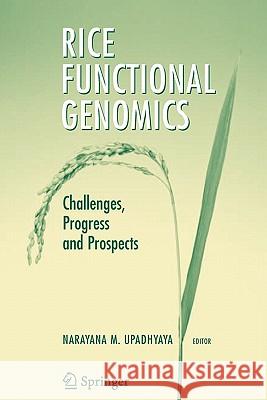
Narayana M. Upadhyaya
Rice Functional Genomics: Challenges, Progress and Prospects Upadhyaya, Narayana M. 9781441923752 Springer - książkaWidoczna okładka, to zdjęcie poglądowe, a rzeczywista szata graficzna może różnić się od prezentowanej.

Rice Functional Genomics: Challenges, Progress and Prospects

ISBN-13: 9781441923752 / Angielski / Miękka / 2010 / 500 str.

Narayana M. Upadhyaya
cena 805,10
(netto: 766,76 VAT:  5%)

Najniższa cena z 30 dni: 771,08
Termin realizacji zamówienia:
ok. 16-18 dni roboczych.

Darmowa dostawa!

Rice has been chosen as the model cereal for functional genomics by the international scientific community not only because rice is a major food crop of the world but also because of its small genome ( 430 Mb which is the smallest among cereal genomes); the ease with which it can be transformed; its well understood genetics with detailed genome physical maps and dense molecular markers; and the existence of great similarities in gene sequence, gene structure, gene order and gene function among all the cereals and grasses. Genes identified in rice as being important agronomically are also important in other cereals, and any understanding of rice genes is directly applicable to other cereals. Rice Functional Genomics - Challenges, Progress and Prospects covers the whole spectrum of rice functional genomics. In addition to overviews of current status of genome sequencing and annotation, various tools and resources being developed worldwide such as expressed sequence tags (ESTs), full-length cDNAs, gene expression profiles (transcriptome, proteome and metabolome), chemical- and radiation-induced mutants, TILLING resources, insertional knockout mutants (T-DNA, transposon and retrotransposon) and activation tags have been described in various chapters. Exploitation of naturally occurring alleles, Oryza alignment maps (OMAP), gene targeting by homologous recombination and gene silencing by RNAi as well as the application of functional genomics tools for crop improvement and the power of comparative genomics are covered in separate chapters. Various bioinformatics tools and resources pertinent to rice functional genomics are also described and discussed. It is hoped that scientists involved in all aspects of rice research will find this book useful as it spans the divide between molecular biology and plant improvement.


Kategorie:
Nauka, Biologia i przyroda
Kategorie BISAC:
Science > Botanika
Science > Life Sciences - Genetics & Genomics
Technology & Engineering > Food Science - General
Wydawca:
Springer
Język:
Angielski
ISBN-13:
9781441923752
Rok wydania:
2010
Ilość stron:
500
Waga:
0.74 kg
Wymiary:
23.39 x 15.6 x 2.74
Oprawa:
Miękka
Wolumenów:
01

From the reviews:

"This book represents an excellent set of (reviewed) reviews that explains what is happening in the world of rice genomic research now. ... This is a useful book for genetic resources workers because understanding the way in which the genome works is generating huge numbers of mutants required for forward (from phenotype to genome sequence) and reverse genetics (genome sequence to phenotype)." (D. Vaughan, Genetic Resources and Crop Evolution, Vol. 54, 2007)

Rice Genome Sequence: The Foundation for Understanding the Genetic Systems.- Rice Genome Annotation: Beginnings of Functional Genomics.- Genome-Wide RNA Expression Profiling in Rice.- Rice Proteomics: A Step Toward Functional Analysis of the Rice Genome.- Metabolomics: Enabling Systems-Level Phenotyping in Rice Functional Genomics.- Use of Naturally Occurring Alleles for Crop Improvement.- Chemical- and Irradiation-Induced Mutants and TILLING.- T-DNA Insertion Mutants as a Resource for Rice Functional Genomics.- Transposon Insertional Mutants: A Resource for Rice Functional Genomics.- Gene Targeting by Homologous Recombination for Rice Functional Genomics.- RNA Silencing and Its Application in Functional Genomics.- Activation Tagging Systems in Rice.- Informatics Resources for Rice Functional Genomics.- The Oryza Map Alignment Project (OMAP): A New Resource for Comparative Genome Studies within Oryza.- Application of Functional Genomics Tools for Crop Improvement.- From Rice to Other Cereals: Comparative Genomics.

Narayana M. Upadhyaya is currently a Principal Research Scientist at CSIRO Plant Industry, Canberra, Australia and leads the group working on Rice Functional Genomics. Previously, he pioneered research into the sequencing of the Rice Ragged Stunt Oryzavirus (RRSV) genome and produced RRSV genome-based synthetic resistance gene constructs while working on a Rockefeller Foundation-funded Rice Biotechnology project (1990-1997) which involved international collaboration. He has been the principal investigator in the bilateral science and technology collaborative research with China (1997-2000). He was instrumental in developing and setting up the rice transformation facility at CSIRO Plant Industry not only for RRSV research but also for other research projects where rice has been used as a model system. He has developed the T-DNA double right border (DRB) vector technology for generating selectable marker-free (SMF) transgenic plants. Since then he has developed a research project on "Rice Functional Genomics" (funded by Australia’s RIRDC and the NSW Centre for Agricultural Genomics) aimed at determining the function of rice genes using an insertional mutagenesis approach. The tools and resources being developed in the group are internationally competitive and as a result CSIRO Plant Industry has become an active member of the International Rice Functional Genomics Consortium. Dr. Upadhyaya has 50 refereed papers, 11 invited presentations and over 50 conference presentations to his credit.

Rice has been chosen as the model cereal for functional genomics by the international scientific community not only because it is a major global food crop but also because of its small genome, the ease with which it can be transformed, its well understood genetics with detailed genome physical maps and dense molecular markers, and the existence of great similarities in gene sequence, gene structure, gene order and gene function among all the cereals and grasses. Genes identified in rice as being important agronomically are also important in other cereals, and any understanding of rice genes is directly applicable to other cereals.

Rice Functional Genomics - Challenges, Progress and Prospects covers the whole spectrum of rice functional genomics. The contributed chapters reflect the collective wisdom of more than 70 leading scientists working in this emerging and fascinating area of science. In addition to overviews of the current status of genome sequencing and annotation, various chapters describe the tools and resources being developed worldwide such as expressed sequence tags (ESTs), full-length cDNAs, gene expression profiles (transcriptome, proteome and metabolome), chemical- and radiation-induced mutants, TILLING resources, insertional knockout mutants (T-DNA, transposon and retrotransposon) and activation tags. Exploitation of naturally occurring alleles, Oryza map alignments, gene targeting by homologous recombination and gene silencing by RNAi as well as the application of functional genomics tools for crop improvement and the power of comparative genomics are covered in separate chapters. Various bioinformatics tools and resources pertinent to rice functional genomics are also described and discussed. It is hoped that scientists involved in all aspects of rice research will find this book useful as it spans the divide between molecular biology and plant improvement.

About the Editor:

Narayana M. Upadhyaya is currently a Principal Research Scientist at CSIRO Plant Industry, Canberra, Australia and leads the group working on Rice Functional Genomics. Previously, he pioneered research into the sequencing of the Rice Ragged Stunt Oryzavirus (RRSV) genome and produced RRSV genome-based synthetic resistance gene constructs while working on a Rockefeller Foundation-funded Rice Biotechnology project (1990-1997) which involved international collaboration. He has been the principal investigator in the bilateral science and technology collaborative research with China (1997-2000). He was instrumental in developing and setting up the rice transformation facility at CSIRO Plant Industry not only for RRSV research but also for other research projects where rice has been used as a model system. He has developed the T-DNA double right border (DRB) vector technology for generating selectable marker-free (SMF) transgenic plants. Since then he has developed a research project on "Rice Functional Genomics" (funded by Australia’s RIRDC and the NSW Centre for Agricultural Genomics) aimed at determining the function of rice genes using an insertional mutagenesis approach. The tools and resources being developed in the group are internationally competitive and as a result CSIRO Plant Industry has become an active member of the International Rice Functional Genomics Consortium. Dr. Upadhyaya has 50 refereed papers, 11 invited presentations and over 50 conference presentations to his credit.


Udostępnij

Facebook - konto krainaksiazek.pl


Opinie o Krainaksiazek.pl na Opineo.pl

Partner Mybenefit

Krainaksiazek.pl w programie rzetelna firma Krainaksiaze.pl - płatności przez paypal

Czytaj nas na:

Facebook - krainaksiazek.pl
  • książki na zamówienie
  • granty
  • książka na prezent
  • kontakt
  • pomoc
  • opinie
  • regulamin
  • polityka prywatności

Zobacz:

  • Księgarnia czeska

  • Wydawnictwo Książkowe Klimaty

1997-2026 DolnySlask.com Agencja Internetowa

© 1997-2022 krainaksiazek.pl
     
KONTAKT | REGULAMIN | POLITYKA PRYWATNOŚCI | USTAWIENIA PRYWATNOŚCI
Zobacz: Księgarnia Czeska | Wydawnictwo Książkowe Klimaty | Mapa strony | Lista autorów
KrainaKsiazek.PL - Księgarnia Internetowa

Polityka prywatnosci - link
Krainaksiazek.pl - płatnośc Przelewy24
Przechowalnia Przechowalnia




