




• Wyszukiwanie zaawansowane
  • Kategorie
  • Kategorie BISAC
  • Książki na zamówienie
  • Promocje
  • Granty
  • Książka na prezent
  • Opinie
  • Pomoc
  • Załóż konto
  • Zaloguj się

Rice » książka

zaloguj się | załóż konto
Logo Krainaksiazek.pl

koszyk

konto

szukaj
topmenu
Księgarnia internetowa
Szukaj
Książki na zamówienie
Promocje
Granty
Książka na prezent
Moje konto
Pomoc
 
 
Wyszukiwanie zaawansowane
Pusty koszyk
Bezpłatna dostawa dla zamówień powyżej 20 złBezpłatna dostawa dla zamówień powyżej 20 zł

Kategorie główne

• Nauka
 [2946912]
• Literatura piękna
 [1852311]

  więcej...
• Turystyka
 [71421]
• Informatyka
 [150889]
• Komiksy
 [35717]
• Encyklopedie
 [23177]
• Dziecięca
 [617324]
• Hobby
 [138808]
• AudioBooki
 [1671]
• Literatura faktu
 [228371]
• Muzyka CD
 [400]
• Słowniki
 [2841]
• Inne
 [445428]
• Kalendarze
 [1545]
• Podręczniki
 [166819]
• Poradniki
 [480180]
• Religia
 [510412]
• Czasopisma
 [525]
• Sport
 [61271]
• Sztuka
 [242929]
• CD, DVD, Video
 [3371]
• Technologie
 [219258]
• Zdrowie
 [100961]
• Książkowe Klimaty
 [124]
• Zabawki
 [2341]
• Puzzle, gry
 [3766]
• Literatura w języku ukraińskim
 [255]
• Art. papiernicze i szkolne
 [7810]
Kategorie szczegółowe BISAC

Rice

ISBN-13: 9783642839887 / Angielski / Miękka / 2013 / 645 str.
Y. P. S. Bajaj
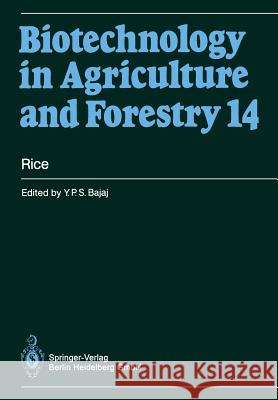
Rice Y. P. S. Bajaj 9783642839887 Springer-Verlag Berlin and Heidelberg GmbH &  - książkaWidoczna okładka, to zdjęcie poglądowe, a rzeczywista szata graficzna może różnić się od prezentowanej.

Rice

ISBN-13: 9783642839887 / Angielski / Miękka / 2013 / 645 str.

Y. P. S. Bajaj
cena 605,23
(netto: 576,41 VAT:  5%)

Najniższa cena z 30 dni: 578,30
Termin realizacji zamówienia:
ok. 22 dni roboczych
Bez gwarancji dostawy przed świętami

Darmowa dostawa!

Rice is the most important cereal crop which feeds more than half the population of the world. It is being grown in more than 144. 641 million ha with a production of over 468. 275 million tons (in 1988). Rice is attacked by a large number of pests and diseases which cause an enormous loss in its yield. Therefore, the major objectives in rice breeding are the development of disease resistance, tolerance to insects, adverse soil water, and drought; and improvement of quality including increased protein content. Tremendous efforts being made at the International Rice Research Institute have resulted in the release of improved varieties. It is estimated that the world's annual rice production must increase from 460 million tons (in 1987) to 560 million tons by the year 2000, and to 760 million tons by 2020 (a 65% increase) in order to keep up with the population growth (IRRI Rice Facts 1988). To achieve this gigantic goal, new strategies have to be evolved. Since the success of any crop improvement program de pends on the extent of genetic variability in the base population, new techniques need to be developed not only to generate the much needed variability but also for its conservation. In this regard the progress made in the biotechnology of rice during the last 5 years has amply demonstrated the immense value of innovative approaches for further improvement of this crop."


Kategorie:
Nauka, Biologia i przyroda
Kategorie BISAC:
Technology & Engineering > Agriculture - General
Technology & Engineering > Agriculture - Forestry
Science > Botanika
Wydawca:
Springer-Verlag Berlin and Heidelberg GmbH &
Seria wydawnicza:
Biotechnology in Agriculture and Forestry
Język:
Angielski
ISBN-13:
9783642839887
Rok wydania:
2013
Dostępne języki:
Angielski
Wydanie:
Softcover Repri
Numer serii:
000053271
Ilość stron:
645
Waga:
1.14 kg
Wymiary:
24.224.2 x 17.0
Oprawa:
Miękka
Wolumenów:
01
Dodatkowe informacje:
Wydanie ilustrowane

Section I Establishment of Tissue Cultures, Somatic Embryogenesis, Plant Regeneration, and Ultrastructural Studies.- I.1 Biotechnology in Rice Improvement.- 1 General Account.- 2 In Vitro Culture Studies.- 3 Summary and Conclusions.- References.- I.2 Rice (Oryza sativa L.): Establishment of Callus Cultures and the Regeneration of Plants.- 1 General Account.- 2 Suspension Culture.- 3 Protoplast Culture and Plant Regeneration.- 4 Protocol.- 5 Summary and Conclusions.- References.- I.3 Regeneration of Rice Plants from Suspension Cultures.- 1 Introduction.- 2 Establishment of Root Callus.- 3 Induction and Maintenance of Cell Suspension Cultures.- 4 Plant Regeneration from Suspension Cultures.- 5 Genotypic Variability for Plant Regeneration.- 6 Protocol.- 7 Summary and Conclusions.- References.- I.4 Enhancement of Regeneration in Rice Tissue Cultures by Water and Salt Stress.- 1 Introduction.- 2 Plant Regeneration from Callus Cultures.- 3 Plant Regeneration from Cell Suspension Cultures.- 4 Growth, Water Content, and Proline Accumulation of Callus.- 5 Changes in Polypeptide Patterns in Callus During Stress Treatment.- 6 Discussion and Conclusion.- References.- I.5 Early Events in Zygotic and Somatic Embryogenesis in Rice.- 1 Introduction.- 2 Rice Zygotic Embryogenesis.- 3 Rice Somatic Embryogenesis.- 4 Summary and Conclusions.- References.- I.6 Endosperm Culture and the Regeneration of Triploid Rice Plants.- 1 Introduction.- 2 In Vitro Culture of Endosperm.- 3 Summary.- References.- I.7 Ultrastructural Aspects of Rice Scutellum as Related to Seminal Root Cultures.- 1 Introduction.- 2 Scutellar Epithelium.- 3 Root Culture System.- 4 Ultrastructural Analysis of Scutellar Epithelium.- 5 Multifunctional Nature.- 6 Conclusion.- References.- Section II Hybridization, Embryo Culture, Hybrid Rice.- II.1 Embryo Culture for Wide Hybridization in Rice.- 1 Introduction.- 2 The Genus Oryza.- 3 Seed and Embryo Differentiation.- 4 Embryo Culture.- 5 Other Applications of In Vitro Culture.- 6 Summary and Conclusion.- References.- II.2 Improvement of Tongil-Type Rice Cultivars from Indica/Japonica Hybridization in Korea.- 1 Introduction.- 2 Breeding Procedure of Tongil and Tongil-Type Cultivars.- 3 Conclusions.- References.- II.3 Genetics of Hybrid Sterility in Wide Hybridization in Rice (Oryza sativa L.).- 1 Introduction.- 2 Methods of Investigation.- 3 Evidence of Allelic Interaction for Semi-Sterility in Wide Crosses.- 4 Application of Wide-Compatibility Gene to Hybrid Rice Breeding.- 5 Conclusion.- References.- II.4 Hybrid Rice in China — Techniques and Production.- 1 Introduction.- 2 Heterosis in Rice.- 3 Concept of Three Lines.- 4 Principles and Procedures of Hybrid Rice Breeding.- 5 Breeding for CMS Lines and Their Maintainers.- 6 Breeding for Restorer Lines.- 7 Selection of Parents for Superior Hybrid Combinations.- 8 Hybrid Seed Production.- 9 Future Outlook.- References.- Section III Anther Culture, Haploid Production, and Release of Cultivars.- III.1 Anther Culture for Rice Improvement in China.- 1 Introduction.- 2 Anther and Pollen Culture.- 3 Uses of Pollen Plants in Rice Breeding.- 4 Conclusions.- References.- III.2 In Vitro Production of Haploids in Rice Through Ovary Culture.- 1 Introduction.- 2 Culture Techniques.- 3 Factors Affecting Induction of Haploids.- 4 Embryological Studies.- 5 Characteristics of Regenerated Plants.- 6 Concluding Remarks.- References.- III.3 Factors Affecting Androgenesis in Rice (Oryza sativa L.).- 1 Introduction.- 2 Induction for Sporophytic Development.- 3 Culture Media.- 4 Culture Conditions.- 5 Developmental Stage of Pollen.- 6 Genotype of Donor Plants.- 7 Physiological State of Donor Plants.- 8 Anther Wall.- 9 Differentiation of Callus.- 10 Albinism.- 11 Conclusions.- References.- III.4 Breeding New Rice Strains Through Anther Culture.- 1 Introduction.- 2 Anther Donor.- 3 Media.- 4 Rooting of Plantlets and Transfer to Soil.- 5 Characteristics of New Rice Strains.- 6 Conclusion.- References.- III.5 Huayu 15, a High-Yielding Rice Variety Bred by Anther Culture.- 1 Introduction.- 2 Material and Method.- 3 Results and Discussion.- 4 Summary and Conclusions.- References.- Section IV Protoplast Isolation, Fusion, Culture, and Field Trials of Regenerated Plants.- IV.1 Isolation, Culture and Fusion of Rice Protoplasts.- 1 Introduction.- 2 Protoplast Isolation from sinica (japonica) Rice Cell Suspension Cultures.- 3 The Culture of sinica (japonica) Rice Protoplasts.- 4 Plant Regeneration from Protoplast-Derived Callus.- 5 Protoplast Fusion.- 6 Conclusion and Prospects.- 7 Protocol for sinica (japonica) Rice Protoplast Regeneration.- References.- IV.2 Field Performance of Protoplast-Derived Rice Plants and the Release of a New Variety.- 1 Introduction.- 2 Plant Regeneration from Protoplast-Derived Callus.- 3 Somaclonal Variation.- 4 Agronomic Traits of Protoplast-Derived Plants (Pt1 Plants).- 5 Field Performance of the First Progeny of the Protoplast-Derived Plants (Pt2 Plants).- 6 Field Performance of the Second Progeny of the Protoplast-Derived Plants (Pt3 Plants).- 7 Development of a New Variety, Hatsuyume, by the Protoplast Breeding Method.- 8 Discussion and Conclusions.- References.- Section V In Vitro Mutation and Somaclonal Variation.- V.1 In Vitro Mutation in Rice.- 1 Introduction.- 2 Mutations in Tissue Cultures.- 3 Prospects for Utilization of Somatic Mutations.- References.- V.2 Rice Mutants Resistant to Amino Acids and Amino Acid Analogs.- 1 Introduction.- 2 Selection for Lysine Overproduction with Aminoethylcysteine (AEC) and Lysine Plus Threonine (LT).- 3 Selection for Tryptophan Overproduction with 5-Methyltryptophan (5MT).- 4 Conclusions and Prospects.- References.- V.3 Hydroxy-L-Proline-Resistant Mutants in Rice.- 1 Introduction.- 2 Isolation of Hyp-Resistant Mutants.- 3 Characterization of HYP Mutants.- 4 Characterization of HYP Mutants at Cell Level.- 5 Stress Resistance.- 6 Conclusion.- References.- V.4 Utilization of Somaclonal Variation in Rice Breeding.- 1 Introduction.- 2 Somaclonal Variation in Rice.- 3 Utilization of Somaclones and Crop Improvement.- 4 Conclusions and Prospects.- References.- V.5 Male Sterile Mutants from Rice Somaclones.- 1 Introduction.- 2 Types of ms-Mutant and Their Expressions.- 3 Genetics of the ms-Mutant from Somaclones.- 4 Frequency of ms Variations from Somaclones.- 5 Fertile Revertants from Somaclones of ms Plants.- 6 Conclusion and Prospects.- References.- V.6 Somaclonal Variation for Salt Tolerance in Rice.- 1 Introduction.- 2 Review of Previous Work.- 3 Selection.- 4 Concluding Remarks.- References.- V.7 Somaclonal Selection for Tolerance to Streptomycin and Herbicides Through Rice Cell Culture.- 1 Introduction.- 2 Resistance to Streptomycin.- 3 Tolerance to Herbicides.- 4 Somaclonal Selection of Herbicide and Salt Tolerance in Calli.- 5 Expression of Isozyme Genes in Cell Culture.- 6 Conclusion.- References.- V.8 Rice Somaclones Resistant to Xanthomonas Oryzae.- 1 Introduction.- 2 Material and Methods.- 3 Results.- 4 Discussion.- 5 Summary and Conclusion.- References.- Section VI Transformation, Molecular Biology, and Nutritional Improvement.- VI.1 Transformation in Rice.- 1 Introduction.- 2 Transformation in Rice Protoplasts.- 3 Transgenic Rice Plants from Protoplasts.- 4 Other Methods.- 5 Inheritance of Inserted Genes.- 6 Summary and Conclusions.- References.- VI.2 Molecular Analysis of Rice Genes and Methods for Gene Transfer.- 1 Introduction.- 2 Nuclear Genes.- 3 Repetitive DNA.- 4 Mitochondrial Genomes.- 5 Chloroplast Genomes.- 6 Gene Transfer Techniques.- 7 Conclusions and Future Directions.- References.- VI.3 Plasticity of the Rice Genome: DNA Amplification in Cultured Cells.- 1 DNA Amplification in Higher Plants.- 2 DNA Amplification in Rice.- 3 Cloning of Rice Nuclear DNA in pBR322 and Selection of Highly Repeated Sequences.- 4 Identification of Preserved or Species-Specific Clones.- 5 Highly Repeated DNA Sequences from Rice.- 6 Quantitative Changes of the Cloned Rice DNA Sequences in Seedlings and in Suspension Culture.- 7 Quantitative Variations of the Cloned Sequences in Roots, Leaves, and Suspension Cultured Rice Cells.- 8 Modulation of Repeated DNA in Regenerated Rice Plants.- 9 Discussion.- References.- VI.4 Molecular Structure of Chloroplast DNA from Rice.- 1 Introduction.- 2 Physical Map of Rice Chloroplast DNA.- 3 Cloning of ctDNA Fragments.- 4 Nucleotide Sequence and Expression of Genes for Photosynthesis.- 5 Complete Nucleotide Sequence of Rice ctDNA.- 6 Summary and Conclusions.- References.- VI.5 Molecular Markers in Rice Systematics and the Evaluation of Genetic Resources.- 1 Introduction.- 2 Methods.- 3 The Genetic Structure and Phylogenetic Relationships in Oryza section Oryza.- 4 Mapping of the Rice Genome.- 5 Short-Term Perspectives.- References.- VI.6 Rice Storage Proteins: Genetic Analysis of Accumulation Process.- 1 Introduction.- 2 Biosynthesis and Deposition of Rice Storage Proteins.- 3 Amino Acid Sequence of Rice Storage Proteins.- 4 Polypeptide Sorting for PB Formation in Rice Starchy Endosperm.- 5 Perspectives.- References.- VI.7 Biotechnology in Nutritional Improvement of Rice.- 1 Introduction.- 2 Nutritional Contribution of Rice.- 3 Genetics of Rice Proteins.- 4 Nutritional Considerations in Improvement.- 5 Conventional Methods.- 6 Biotechnological Approaches to Nutritional Improvement.- 7 Conclusions and Prospects.- References.- Section VII Conservation of Genetic Resources and Cryopreservation.- VII.1 Conservation and Potentials of Rice Genetic Resources.- 1 Introduction.- 2 Diversity of Rice Genetic Resources and the Expanding Gene Pool.- 3 Ex Situ Conservation.- 4 In Situ Conservation.- 5 Evaluation and Use of Germplasm.- 6 Future Potentials in Rice Germplasm and Related Grasses.- 7 Concluding Remarks.- References.- VII.2 Cryopreservation of Germplasm of Rice.- 1 Introduction.- 2 Cryopreservation of in Vitro Cultures.- 3 Summary and Conclusions.- References.- Section VIII Rice Tissue Culture Studies in the USSR, France, and Hungary.- VIII.1 Rice Improvement Through Tissue Culture in the USSR.- 1 Introduction.- 2 Seed and Embryo Culture for Plant Reproduction.- 3 Callus Induction and Plant Regeneration from Somatic Tissue.- 4 Selection of Somaclonal Variants.- 5 In Vitro Selection for Stress Tolerance.- 6 Conclusion.- References.- VIII.2 Rice Somatic Tissue and Anther Cultures: Current Status in France.- 1 Introduction.- 2 Anther Culture and Doubled Haploid Line Production.- 3 Somatic Tissue Cell and Protoplast Culture.- 4 Summary and Conclusions.- References.- VIII.3 In Vitro Studies on Rice in Hungary.- 1 Introduction.- 2 Induction of High Morphogenic Haploid (n) and Diploid (2n) Callus.- 3 Factors Affecting Plant Regeneration During Subculture.- 4 Selection for Salt Tolerance.- 5 Tissue-Specific and Ploidy-Dependent Somaclonal Variation.- 6 Summary and Conclusion.- References.


Udostępnij

Facebook - konto krainaksiazek.pl


Opinie o Krainaksiazek.pl na Opineo.pl

Partner Mybenefit

Krainaksiazek.pl w programie rzetelna firma Krainaksiaze.pl - płatności przez paypal

Czytaj nas na:

Facebook - krainaksiazek.pl
  • książki na zamówienie
  • granty
  • książka na prezent
  • kontakt
  • pomoc
  • opinie
  • regulamin
  • polityka prywatności

Zobacz:

  • Księgarnia czeska

  • Wydawnictwo Książkowe Klimaty

1997-2025 DolnySlask.com Agencja Internetowa

© 1997-2022 krainaksiazek.pl
     
KONTAKT | REGULAMIN | POLITYKA PRYWATNOŚCI | USTAWIENIA PRYWATNOŚCI
Zobacz: Księgarnia Czeska | Wydawnictwo Książkowe Klimaty | Mapa strony | Lista autorów
KrainaKsiazek.PL - Księgarnia Internetowa

Polityka prywatnosci - link
Krainaksiazek.pl - płatnośc Przelewy24
Przechowalnia Przechowalnia



