• Wyszukiwanie zaawansowane
  • Kategorie
  • Kategorie BISAC
  • Książki na zamówienie
  • Promocje
  • Granty
  • Książka na prezent
  • Opinie
  • Pomoc
  • Załóż konto
  • Zaloguj się

Reformulation as a Strategy for Developing Healthier Food Products: Challenges, Recent Developments and Future Prospects » książka


zaloguj się | załóż konto
Logo Krainaksiazek.pl

koszyk

konto

szukaj
topmenu
Księgarnia internetowa
Szukaj
Książki na zamówienie
Promocje
Granty
Książka na prezent
Moje konto
Pomoc
 
 
Wyszukiwanie zaawansowane
Pusty koszyk
Bezpłatna dostawa dla zamówień powyżej 20 złBezpłatna dostawa dla zamówień powyżej 20 zł

Kategorie główne

• Nauka
 [2946600]
• Literatura piękna
 [1856966]

  więcej...
• Turystyka
 [72221]
• Informatyka
 [151456]
• Komiksy
 [35826]
• Encyklopedie
 [23190]
• Dziecięca
 [619653]
• Hobby
 [140543]
• AudioBooki
 [1577]
• Literatura faktu
 [228355]
• Muzyka CD
 [410]
• Słowniki
 [2874]
• Inne
 [445822]
• Kalendarze
 [1744]
• Podręczniki
 [167141]
• Poradniki
 [482898]
• Religia
 [510455]
• Czasopisma
 [526]
• Sport
 [61590]
• Sztuka
 [243598]
• CD, DVD, Video
 [3423]
• Technologie
 [219201]
• Zdrowie
 [101638]
• Książkowe Klimaty
 [124]
• Zabawki
 [2473]
• Puzzle, gry
 [3898]
• Literatura w języku ukraińskim
 [254]
• Art. papiernicze i szkolne
 [8170]
Kategorie szczegółowe BISAC

Reformulation as a Strategy for Developing Healthier Food Products: Challenges, Recent Developments and Future Prospects

ISBN-13: 9783030236205 / Angielski / Twarda / 2019 / 318 str.
Raikos, Vassilios
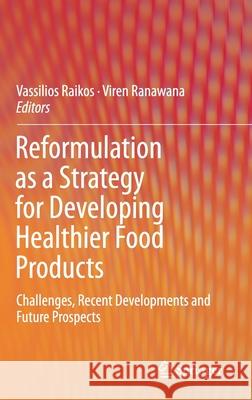
Reformulation as a Strategy for Developing Healthier Food Products: Challenges, Recent Developments and Future Prospects Raikos, Vassilios 9783030236205 Springer - książkaWidoczna okładka, to zdjęcie poglądowe, a rzeczywista szata graficzna może różnić się od prezentowanej.

Reformulation as a Strategy for Developing Healthier Food Products: Challenges, Recent Developments and Future Prospects

ISBN-13: 9783030236205 / Angielski / Twarda / 2019 / 318 str.

Raikos, Vassilios
cena 403,47 zł
(netto: 384,26 VAT:  5%)

Najniższa cena z 30 dni: 385,52 zł
Termin realizacji zamówienia:
ok. 22 dni roboczych
Bez gwarancji dostawy przed świętami

Darmowa dostawa!
inne wydania

This work introduces the concept of reformulation, a relatively new strategy to develop foods with beneficial properties. Food reformulation by definition is the act of re-designing an existing, often popular, processed food product with the primary objective of making it healthier. In recent years the concept of food reformulation has evolved significantly as additional benefits of re-designing food have become apparent. In addition to targeting specific food ingredients that are considered potentially harmful for human health, food reformulation can also be effectively used as a strategy to make foods more nutritious by introducing essential macro- /micro-nutrients or phytochemicals in the diet. Reformulating foods can also improve sustainability by introducing "waste" (and underutilized) ingredients into the food chain. In light of these developments, reformulating existing foods is now considered a realistic and attractive opportunity to provide healthy, nutritious, and sustainable food choices to the consumers and likewise improve public health. Indeed reformulation has now become essential in many cases for redressing the health properties of foods that are popularly consumed and significantly affecting public health. This edited volume covers aspects of food reformulation from various angles, exploring the role of the food industry, academia, and consumers in developing new products. Some of the major themes contributors address include methods of reformulating food products for health, improving the nutritional composition of foods, and challenges to the food industry, including regulation as well as consumer perception of new products. The book presents several case studies to clarify these objectives and illustrate the difficulties encountered in the process of developing a reformulated product. Chapters from experts in the field identify emerging and future trends in food product development, and highlight ways in which these efforts will help with increasing food security, improving nutrition and health, and promoting sustainable production. The editors have designed the book to be useful for both industry professionals and the research community. This interdisciplinary approach incorporates a wide spectrum of food sciences (including composition, engineering, and chemistry) as well as nutrition and public health. Food and nutrition professionals, policy makers, health care and social scientists, and graduate students will also find the information relevant.


Kategorie:
Nauka, Biologia i przyroda
Kategorie BISAC:
Technology & Engineering > Food Science - Chemistry & Biotechnology
Medical > Zdrowie publiczne
Science > Biochemia
Wydawca:
Springer
Język:
Angielski
ISBN-13:
9783030236205
Rok wydania:
2019
Wydanie:
2019
Ilość stron:
318
Waga:
0.63 kg
Wymiary:
23.39 x 15.6 x 1.91
Oprawa:
Twarda
Wolumenów:
01
Dodatkowe informacje:
Wydanie ilustrowane

Chapter 1: Introducing the concept of food reformulation (rationale, objectives, history, conventional/non-conventional approaches)
Potential authors: Catherine Birch, Georgios Koutsidis, Rachel Griffiths, Cristina M. Rosel  

Chapter 2: Reformulating food products for health (public health, sugar, salt, saturated fats, trans fats, energy density)
Potential authors: Miriam Clegg, Sangeetha Thondre, Bhupinder Kaur, Viduranga Waisundera  

Chapter 3: Improving the nutritional composition of foods by reformulation (fruits & vegetables, less common nutrients, natural products, phytochemicals, nutrient delivery, processed ingredients)
Potential authors: Panagiotis Kandylis, Konstantina Nasopoulou, Julia Rodriguez Garcia, Lisa Marshall, Tassos Koidis, Mick O’ Sullivan  

Chapter 4: Food reformulation as a strategy to promote sustainability (food security, by-products of processing, underutilized plants, food waste, processed ingredients, environment)
Potential authors: Andrew Planket, Denise I. Skonberg, Anabela Raymundo, Charlotte Jacobsen  

Chapter 5: Food reformulation: the challenges to the food industry (technical aspects, product formulation and development, financial impact, effects on food properties, case studies)
Potential authors: Stephen R. Euston, Chris Ritzoulis, Ioanna Mandala, Emma Weston, Jon Wilkin, Seamus A O’Mahony, Leo Stevenson  

Chapter 6: Food reformulation and consumer acceptability (sensory properties, food choice, modern diets, consumer behavior, health education)
Potential authors: Vassilis Kontogiorgos, Marcella Mastromatteo, Lisa Methven, Carla Di Mattia, Joyce Boye 

Chapter 7: Policy implications in food reformulation (legislation, food guidelines, labelling, information campaign, public health challenge) 
TBD

Chapter 8: Future trends in food reformulation (the future of food security/technology/sustainability/manufacturing)
TBD

Vassilios Raikos, PhD, is a Research Fellow at the Rowett Institute at the University of Aberdeen (Scotland).  His research interests lie in the interface between Food Science and Human Nutrition with particular interest in food reformulation, valorisation of secondary-products of food processing, characterisation and development of dairy products and beverage emulsions and improving the oxidative stability of vegetable oils. Dr. Raikos is a graduate of the University of Leeds (BSc in Human Genetics), University of Nottingham (MSc in Applied Biomolecular Technology) and Heriot-Watt University (PhD in Food Colloids). He has authored  numerous publications in international, peer-reviewed journals, and has presented talks at several international conferences. He is also a Fellow of the Institute of Food Science and Technology (IFST) and an Associate Fellow of the  Higher Education Academy.


Viren Ranawana, PhD is a Research Fellow at the Rowett Institute at the University of Aberdeen. He is a human nutritionist with a background in food and culinary sciences, and has worked in academia, food industry and hospitality. He completed his undergraduate studies in food science and technology in Sri Lanka and then his Masters and PhD in human nutrition in the UK. His research interests are in the interface between food and nutrition. His current work focuses on the use of reformulation for developing healthier foods, valorising underutilised secondary products and novel plant products for chronic disease control, and identifying factors responsible for inter-individual variations in postprandial metabolic responses. He has a particular interest in work around diabetes control and dietary fibre. His research expertise spans human intervention studies, food product development and in vitro work (chemistry and cell model based).

This work introduces the concept of reformulation, a relatively new strategy to develop foods with beneficial properties. Food reformulation by definition is the act of re-designing an existing, often popular, processed food product with the primary objective of making it healthier. In recent years the concept of food reformulation has evolved significantly as additional benefits of re-designing food have become apparent. In addition to targeting specific food ingredients that are considered potentially harmful for human health, food reformulation can also be effectively used as a strategy to make foods more nutritious by introducing essential macro- /micro-nutrients or phytochemicals in the diet.  Reformulating foods can also improve sustainability by introducing “waste” (and underutilized) ingredients into the food chain. In light of these developments, reformulating existing foods is now considered a realistic and attractive opportunity to provide healthy, nutritious, and sustainable food choices to the consumers and likewise improve public health. Indeed reformulation has now become essential in many cases for redressing the health properties of foods that are popularly consumed and significantly affecting public health.

This edited volume covers aspects of food reformulation from various angles, exploring the role of the food industry, academia, and consumers in developing new products. Some of the major themes contributors address include methods of reformulating food products for health, improving the nutritional composition of foods, and challenges to the food industry, including regulation as well as consumer perception of new products. The book presents several case studies to clarify these objectives and illustrate the difficulties encountered in the process of developing a reformulated product. Chapters from experts in the field identify emerging and future trends in food product development, and highlight ways in which these efforts will help with increasing food security, improving nutrition and health, and promoting sustainable production.

The editors have designed the book to be useful for both industry professionals and the research community. This interdisciplinary approach incorporates a wide spectrum of food sciences (including composition, engineering, and chemistry) as well as nutrition and public health. Food and nutrition professionals, policy makers, health care and social scientists, and graduate students will also find the information relevant. 



Udostępnij

Facebook - konto krainaksiazek.pl


Opinie o Krainaksiazek.pl na Opineo.pl

Partner Mybenefit

Krainaksiazek.pl w programie rzetelna firma Krainaksiaze.pl - płatności przez paypal

Czytaj nas na:

Facebook - krainaksiazek.pl
  • książki na zamówienie
  • granty
  • książka na prezent
  • kontakt
  • pomoc
  • opinie
  • regulamin
  • polityka prywatności

Zobacz:

  • Księgarnia czeska

  • Wydawnictwo Książkowe Klimaty

1997-2025 DolnySlask.com Agencja Internetowa

© 1997-2022 krainaksiazek.pl
     
KONTAKT | REGULAMIN | POLITYKA PRYWATNOŚCI | USTAWIENIA PRYWATNOŚCI
Zobacz: Księgarnia Czeska | Wydawnictwo Książkowe Klimaty | Mapa strony | Lista autorów
KrainaKsiazek.PL - Księgarnia Internetowa

Polityka prywatnosci - link
Krainaksiazek.pl - płatnośc Przelewy24
Przechowalnia Przechowalnia





