• Wyszukiwanie zaawansowane
  • Kategorie
  • Kategorie BISAC
  • Książki na zamówienie
  • Promocje
  • Granty
  • Książka na prezent
  • Opinie
  • Pomoc
  • Załóż konto
  • Zaloguj się

Radionuclide Contamination and Remediation Through Plants » książka


zaloguj się | załóż konto
Logo Krainaksiazek.pl

koszyk

konto

szukaj
topmenu
Księgarnia internetowa
Szukaj
Książki na zamówienie
Promocje
Granty
Książka na prezent
Moje konto
Pomoc
 
 
Wyszukiwanie zaawansowane
Pusty koszyk
Bezpłatna dostawa dla zamówień powyżej 20 złBezpłatna dostawa dla zamówień powyżej 20 zł

Kategorie główne

• Nauka
 [2946600]
• Literatura piękna
 [1856966]

  więcej...
• Turystyka
 [72221]
• Informatyka
 [151456]
• Komiksy
 [35826]
• Encyklopedie
 [23190]
• Dziecięca
 [619653]
• Hobby
 [140543]
• AudioBooki
 [1577]
• Literatura faktu
 [228355]
• Muzyka CD
 [410]
• Słowniki
 [2874]
• Inne
 [445822]
• Kalendarze
 [1744]
• Podręczniki
 [167141]
• Poradniki
 [482898]
• Religia
 [510455]
• Czasopisma
 [526]
• Sport
 [61590]
• Sztuka
 [243598]
• CD, DVD, Video
 [3423]
• Technologie
 [219201]
• Zdrowie
 [101638]
• Książkowe Klimaty
 [124]
• Zabawki
 [2473]
• Puzzle, gry
 [3898]
• Literatura w języku ukraińskim
 [254]
• Art. papiernicze i szkolne
 [8170]
Kategorie szczegółowe BISAC

Radionuclide Contamination and Remediation Through Plants

ISBN-13: 9783319354897 / Angielski / Miękka / 2016 / 314 str.
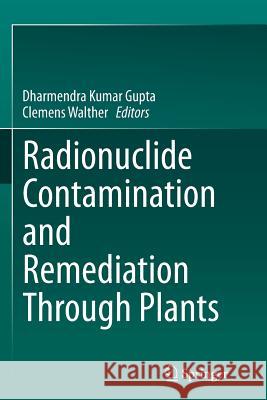
Dharmendra Kumar Gupta; Clemens Walther
Radionuclide Contamination and Remediation Through Plants Dharmendra Kumar Gupta Clemens Walther 9783319354897 Springer - książkaWidoczna okładka, to zdjęcie poglądowe, a rzeczywista szata graficzna może różnić się od prezentowanej.

Radionuclide Contamination and Remediation Through Plants

ISBN-13: 9783319354897 / Angielski / Miękka / 2016 / 314 str.

Dharmendra Kumar Gupta; Clemens Walther
cena 765,61 zł
(netto: 729,15 VAT:  5%)

Najniższa cena z 30 dni: 759,08 zł
Termin realizacji zamówienia:
ok. 10-14 dni roboczych
Bez gwarancji dostawy przed świętami

Darmowa dostawa!

This book focuses on the mechanistic (microscopic) understanding of radionuclide uptake by plants in contaminated soils and potential use of phytoremediation. The key features concern radionuclide toxicity in plants, how the radioactive materials are absorbed by plants, and how the plants cope with the toxic responses. The respective chapters examine soil classification, natural plant selection, speciation of actinides, kinetic modeling, and case studies on cesium uptake after radiation accidents. Radionuclide contaminants pose serious problems for biological systems, due to their chemical toxicity and radiological effects. The processes by which radionuclides can be incorporated into vegetation can either originate from activity interception by external plant surfaces (either directly from the atmosphere or from resuspended material), or through uptake of radionuclides via the root system. Subsequent transfer of toxic elements to the human food chain is a concrete danger. Therefore, the molecular mechanisms and genetic basis of transport into and within plants needs to be understood for two reasons: The effectiveness of radionuclide uptake into crop plants - so-called transfer coefficient - is a prerequisite for the calculation of dose due to the food path. On the other hand, efficient radionuclide transfer into plants can be made use of for decontamination of land - so-called phytoremediation, the direct use of living, green plants for in situ removal of pollutants from the environment or to reduce their concentrations to harmless levels.


Kategorie:
Nauka
Kategorie BISAC:
Science > Biochemia
Technology & Engineering > Environmental - General
Science > Environmental Science (see also Chemistry - Environmental)
Wydawca:
Springer
Język:
Angielski
ISBN-13:
9783319354897
Rok wydania:
2016
Wydanie:
Softcover Repri
Ilość stron:
314
Waga:
0.67 kg
Wymiary:
23.5 x 15.5
Oprawa:
Miękka
Wolumenów:
01
Dodatkowe informacje:
Wydanie ilustrowane

Phytoremediation of Radionuclides: A Report on the State of the Art.- Natural Plant Selection for Radioactive Waste Remediation.- Radionuclide Uptake From Soil to Plants: Influence of Soil Classification.- Contributions to the State of the Art in Radionuclides-Plants Interaction Field.- Transfer of Radionuclides to Plants: Influence on the Speciation of Radionuclides in Soil.- Radionuclide Uptake by Plants: Soil to Plant Transfer Factors, Kinetics of Absorption and Internal Radionuclide Distribution of 137Cs And 40K in South American Species.- Impact on Plant Growth in Waste Contaminated Areas.- Remediation of Radionuclide Contaminated Sites Using Plant Litter Decomposition.- Bioaccumulation of Radionuclide Metals in Plants: A Case Study of Cesium.- Speciation of Actinides After Plant Uptake.- Kinetic Models for Representing the Uptake of Radionuclides in Plants.- Metal-Microbe Interaction and Bioremediation.- Metabolism of 14C-Containing Contaminants in Plants and Microorganisms.- 90Sr and 137Cs Accumulation in Plants in the Area of Radiation Accidents.- Migration of 90Sr and 137Cs in the Soil After Radiation Accidents.

This book focuses on the mechanistic (microscopic) understanding of radionuclide uptake by plants in contaminated soils and potential use of phytoremediation. The key features concern radionuclide toxicity in plants, how the radioactive materials are absorbed by plants, and how the plants cope with the toxic responses. The respective chapters examine soil classification, natural plant selection, speciation of actinides, kinetic modeling, and case studies on cesium uptake after radiation accidents.

Radionuclide contaminants pose serious problems for biological systems, due to their chemical toxicity and radiological effects. The processes by which radionuclides can be incorporated into vegetation can either originate from activity interception by external plant surfaces (either directly from the atmosphere or from resuspended material), or through uptake of radionuclides via the root system. Subsequent transfer of toxic elements to the human food chain is a concrete danger. Therefore, the molecular mechanisms and genetic basis of transport into and within plants needs to be understood for two reasons: The effectiveness of radionuclide uptake into crop plants – so-called transfer coefficient – is a prerequisite for the calculation of dose due to the food path. On the other hand, efficient radionuclide transfer into plants can be made use of for decontamination of land – so-called phytoremediation, the direct use of living, green plants for in situ removal of pollutants from the environment or to reduce their concentrations to harmless levels.




Udostępnij

Facebook - konto krainaksiazek.pl


Opinie o Krainaksiazek.pl na Opineo.pl

Partner Mybenefit

Krainaksiazek.pl w programie rzetelna firma Krainaksiaze.pl - płatności przez paypal

Czytaj nas na:

Facebook - krainaksiazek.pl
  • książki na zamówienie
  • granty
  • książka na prezent
  • kontakt
  • pomoc
  • opinie
  • regulamin
  • polityka prywatności

Zobacz:

  • Księgarnia czeska

  • Wydawnictwo Książkowe Klimaty

1997-2025 DolnySlask.com Agencja Internetowa

© 1997-2022 krainaksiazek.pl
     
KONTAKT | REGULAMIN | POLITYKA PRYWATNOŚCI | USTAWIENIA PRYWATNOŚCI
Zobacz: Księgarnia Czeska | Wydawnictwo Książkowe Klimaty | Mapa strony | Lista autorów
KrainaKsiazek.PL - Księgarnia Internetowa

Polityka prywatnosci - link
Krainaksiazek.pl - płatnośc Przelewy24
Przechowalnia Przechowalnia




