• Wyszukiwanie zaawansowane
  • Kategorie
  • Kategorie BISAC
  • Książki na zamówienie
  • Promocje
  • Granty
  • Książka na prezent
  • Opinie
  • Pomoc
  • Załóż konto
  • Zaloguj się

Protein Surface Recognition: Approaches for Drug Discovery » książka

zaloguj się | załóż konto
Logo Krainaksiazek.pl

koszyk

konto

szukaj
topmenu
Księgarnia internetowa
Szukaj
Książki na zamówienie
Promocje
Granty
Książka na prezent
Moje konto
Pomoc
 
 
Wyszukiwanie zaawansowane
Pusty koszyk
Bezpłatna dostawa dla zamówień powyżej 20 złBezpłatna dostawa dla zamówień powyżej 20 zł

Kategorie główne

• Nauka
 [2950560]
• Literatura piękna
 [1849509]

  więcej...
• Turystyka
 [71097]
• Informatyka
 [151150]
• Komiksy
 [35848]
• Encyklopedie
 [23178]
• Dziecięca
 [617388]
• Hobby
 [139064]
• AudioBooki
 [1657]
• Literatura faktu
 [228597]
• Muzyka CD
 [383]
• Słowniki
 [2855]
• Inne
 [445295]
• Kalendarze
 [1464]
• Podręczniki
 [167547]
• Poradniki
 [480102]
• Religia
 [510749]
• Czasopisma
 [516]
• Sport
 [61293]
• Sztuka
 [243352]
• CD, DVD, Video
 [3414]
• Technologie
 [219456]
• Zdrowie
 [101002]
• Książkowe Klimaty
 [124]
• Zabawki
 [2311]
• Puzzle, gry
 [3459]
• Literatura w języku ukraińskim
 [254]
• Art. papiernicze i szkolne
 [8079]
Kategorie szczegółowe BISAC

Protein Surface Recognition: Approaches for Drug Discovery

ISBN-13: 9780470059050 / Angielski / Twarda / 2011 / 344 str.
Ernest Giralt
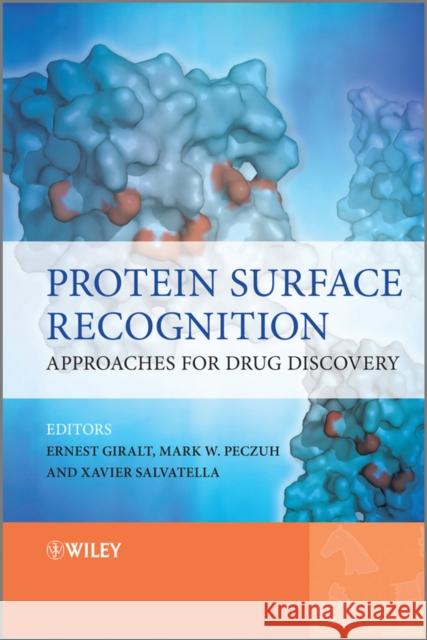
Protein Surface Recognition: Approaches for Drug Discovery Giralt, Ernest 9780470059050 John Wiley & Sons - książkaWidoczna okładka, to zdjęcie poglądowe, a rzeczywista szata graficzna może różnić się od prezentowanej.

Protein Surface Recognition: Approaches for Drug Discovery

ISBN-13: 9780470059050 / Angielski / Twarda / 2011 / 344 str.

Ernest Giralt
cena 654,28
(netto: 623,12 VAT:  5%)

Najniższa cena z 30 dni: 650,24
Termin realizacji zamówienia:
ok. 30 dni roboczych
Dostawa w 2026 r.

Darmowa dostawa!

A new perspective on the design of molecular therapeutics is emerging. This new strategy emphasizes the rational complementation of functionality along extended patches of a protein surface with the aim of inhibiting protein/protein interactions. The successful development of compounds able to inhibit these interactions offers a unique chance to selectively intervene in a large number of key cellular processes related to human disease. Protein Surface Recognition presents a detailed treatment of this strategy, with topics including:

  • an extended survey of protein-protein interactions that are key players in human disease and biology and the potential for therapeutics derived from this new perspective
  • the fundamental physical issues that surround protein-protein interactions that must be considered when designing ligands for protein surfaces
  • examples of protein surface-small molecule interactions, including treatments of protein-natural product interactions, protein-interface peptides, and rational approaches to protein surface recognition from model to biological systems
  • a survey of techniques that will be integral to the discovery of new small molecule protein surface binders, from high throughput synthesis and screening techniques to in silico and in vitro methods for the discovery of novel protein ligands.
Protein Surface Recognition provides an intellectual "tool-kit" for investigators in medicinal and bioorganic chemistry looking to exploit this emerging paradigm in drug discovery.

Kategorie:
Nauka, Chemia
Kategorie BISAC:
Medical > Farmacja
Science > Chemistry - Industrial & Technical
Wydawca:
John Wiley & Sons
Język:
Angielski
ISBN-13:
9780470059050
Rok wydania:
2011
Ilość stron:
344
Waga:
0.77 kg
Wymiary:
24.89 x 17.53 x 2.29
Oprawa:
Twarda
Wolumenów:
01
Dodatkowe informacje:
Bibliografia
Wydanie ilustrowane

"This book picks up this trend and provides an excellent overview of the current topics in the field of PPI modulation by small molecules and peptides. . . Taken together, this excellent book is very suitable both as an introduction to the field, as well as a compendium for readers already familiar with the chemical approach of modulating PPIs." (ChemMedChem, 2011)


Preface.

List of Contributors.

PART I PRINCIPLES.

1 The Discovery and Characterization of Protein–Protein Interactions (C.W. Bertoncini, A. Higueruelo, and X. Salvatella).

1.1 Introduction.

1.2 Techniques to Identify Protein–Protein Interactions.

1.3 Techniques to Characterize Protein–Protein Interactions.

1.4 Structure and Dynamics of Protein Complexes.

1.5 Protein–Protein Complexes as Therapeutic Targets.

1.6 Conclusions.

References.

2 Biophysics of Protein–Protein Interactions (Irene Luque).

2.1 Introduction.

2.2 Intermolecular Forces in Protein Recognition.

2.3 Basic Binding Thermodynamics.

2.4 Thermodynamically Driven Drug Design.

2.5 Measurement of Binding Energetics.

2.6 Structure–based Calculation of Protein Binding Energetics.

2.7 Interfacial Water Molecules in Protein Recognition.

2.8 The Linkage Between Binding and Conformational Equilibrium in Proteins.

References.

PART II APPROACHES.

3 On the Logic of Natural Product Binding in Protein–Protein Interactivity (James J. La Clair).

3.1 Introduction.

3.2 Structural Logic.

3.3 Functional Logic.

3.4 The Need for Programmers.

3.5 Compiling the NPPI Mapper.

References.

4 Interface peptide inhibitors of PPIs (Mark W. Peczuh, and Richard T. Desmond).

4.1 Interface Peptides Defined.

4.2 Unmodified Peptides.

4.3 Modified Peptides.

4.4 Summary/Perspective.

References.

5 Inhibition of Protein–Protein Interactions by Peptide Mimics (Jorge Becerril, Johanna M. Rodriguez, Pauline N. Wyrembak, and Andrew D. Hamilton).

5.1 Introduction.

5.2 Inhibition of Calmodulin.

5.3 Inhibition of HIV–1 Fusion.

5.4 Inhibition of the Nuclear Estrogen Receptor.

5.5 Inhibition of the Bcl–xL/Bak Interaction.

5.6 Inhibition of the p53/MDM2 Interaction.

5.7 Miscellaneous Protein Targets.

5.8 Conclusion.

References.

6 Discovery of Inhibitors of Protein–Protein Interactions by Screening Chemical Libraries (Carlos García–Echeverría).

6.1 Introduction.

6.2 Screening Strategies to Identify and Develop Antagonists of Protein–Protein Interactions.

6.3 Mimetics of Common Protein Structure Motifs and Structure–based Design of Peptidomimetics.

6.4 Conclusions and Outlook.

References.

PART III TECHNIQUES.

7 High–throughput Methods of Chemical Synthesis Applied to the Preparation of Inhibitors of Protein–Protein Interactions (Annaliese K. Franz, Jared T. Shaw, and Yuchen Tang).

7.1 Introduction.

7.2 Survey of High–throughput Organic Synthesis.

7.3 Synthesis of ′Peptide–Inspired′ Compounds and Libraries.

7.4 Synthesis of ′Natural Product–Inspired′ Compounds and Libraries.

7.5 Diversity Oriented Synthesis (DOS) in the Discovery of PPI Inhibitors.

7.6 Summary and Outlook.

References.

8 In Silico screening (F.J. Luque, and Xavier Barril).

8.1 Introduction.

8.2 Methods for Virtual Ligand Screening.

8.3 Binding Site Characterization.

8.4 Case Studies.

8.5 Outlook and Conclusions.

References.

9.1 In Vitro Screening: Screening by Nuclear Magnetic Resonance (Ernest Giralt).

9.1.1 Saturation Transfer Difference (STD).

9.1.2 STD in Fragment–based Drug Design.

9.1.3 Chemical Shift Perturbation (CSP).

9.1.4 19F–NMR in Molecular Recognition Studies.

References.

9.2 In Vitro Screening: Methods of High–throughput Screening (Wenjiao Song and Qing Lin).

9.2.1 Introduction.

9.2.2 Statistical Evaluation of the HTS Assay Performance.

9.2.3 Biochemical Assays.

9.2.4 Cell–based Assays.

9.2.5 Conclusion.

References.

PART IV CASE STUDIES.

10 Case Study: Inhibitors of the MDM2–p53 Protein–Protein Interaction (Sanjeev Shangary, Denzil Bernard, and Shaomeng Wang).

10.1 MDM2–p53 Protein–Protein Interaction: A Case Study.

10.2 Regulation of p53 by the MDM2–p53 Protein–Protein Interaction.

10.3 Structural Basis of the MDM2–p53 Interaction.

10.4 Design of p53–based Peptides.

10.5 Design of Nonpeptidic Small–Molecule Inhibitors of the MDM2–p53 Interaction.

10.6 Challenges in the Design of Small Molecule Inhibitors of the MDM2–p53 Interaction.

10.7 Reactivation of p53 by Inhibitors of the MDM2–p53 Interaction.

10.8 Development of MDM2 Inhibitors and New Anticancer Drugs.

10.9 Concluding Remarks.

References.

11 Case Study: The Discovery of Potent LFA–1 Antagonists (Tom Gadek).

11.1 Introduction.

11.2 Structural, Molecular and Cellular Biologies of LFA–1.

11.3 The Search for Small Molecule LFA–1 Antagonists.

11.4 Screening Assays.

11.5 Lead Identification and Optimization.

11.6 Protein and Small Molecule Structure Activity Relationships (PSAR) in the LFA–1/ICAM–1 Interaction.

11.7 Summary.

References.

Index.

ERNEST GIRALT, Department of Organic Chemistry, University of Barcelona and Institute for Research in Biomedicine, Barcelona, Spain

MARK PECZUH, Department of Chemistry, University of Connecticut, USA

XAVIER SALVATELLA, ICREA and Institute for Research in Biomedicine, Barcelona, Spain

Protein Surface Recognition: Approaches for Drug Discovery

A new perspective on the design of molecular therapeutics is emerging. This new strategy emphasizes the rational complementation of functionality along extended patches of a protein surface with the aim of inhibiting protein–protein interactions (PPIs). The successful development of compounds able to inhibit these interactions offers a unique chance to selectively intervene in a large number of key cellular processes related to human disease.

Protein Surface Recognition: Approaches for Drug Discovery presents a detailed treatment of this strategy. Starting with a survey of PPIs that are key players in human disease and biology and the potential for therapeutics derived from this new perspective, the book then examines the fundamental physical issues that surround protein–protein interactions that must be considered when designing ligands for protein surfaces. Examples of protein surface–small molecule interactions, including treatments of protein–natural product interactions, protein–interface peptides, and rational approaches to protein surface recognition are given. Finally, the book surveys techniques that will be integral to the discovery of new small molecule protein surface binders, from high throughput synthesis and screening techniques to in silico and in vitro methods for the discovery of novel protein ligands, and ends with two extended case studies – inhibitors of the MDM2–p53 PPI, and the discovery of potent LFA–1 antagonists.

Protein Surface Recognition: Approaches for Drug Discovery provides an intellectual tool–kit′ for investigators in medicinal and bioorganic chemistry looking to exploit this emerging paradigm in drug discovery.


Udostępnij

Facebook - konto krainaksiazek.pl


Opinie o Krainaksiazek.pl na Opineo.pl

Partner Mybenefit

Krainaksiazek.pl w programie rzetelna firma Krainaksiaze.pl - płatności przez paypal

Czytaj nas na:

Facebook - krainaksiazek.pl
  • książki na zamówienie
  • granty
  • książka na prezent
  • kontakt
  • pomoc
  • opinie
  • regulamin
  • polityka prywatności

Zobacz:

  • Księgarnia czeska

  • Wydawnictwo Książkowe Klimaty

1997-2025 DolnySlask.com Agencja Internetowa

© 1997-2022 krainaksiazek.pl
     
KONTAKT | REGULAMIN | POLITYKA PRYWATNOŚCI | USTAWIENIA PRYWATNOŚCI
Zobacz: Księgarnia Czeska | Wydawnictwo Książkowe Klimaty | Mapa strony | Lista autorów
KrainaKsiazek.PL - Księgarnia Internetowa

Polityka prywatnosci - link
Krainaksiazek.pl - płatnośc Przelewy24
Przechowalnia Przechowalnia








