• Wyszukiwanie zaawansowane
  • Kategorie
  • Kategorie BISAC
  • Książki na zamówienie
  • Promocje
  • Granty
  • Książka na prezent
  • Opinie
  • Pomoc
  • Załóż konto
  • Zaloguj się

Practical High-Performance Liquid Chromatography » książka

zaloguj się | załóż konto
Logo Krainaksiazek.pl

koszyk

konto

szukaj
topmenu
Księgarnia internetowa
Szukaj
Książki na zamówienie
Promocje
Granty
Książka na prezent
Moje konto
Pomoc
 
 
Wyszukiwanie zaawansowane
Pusty koszyk
Bezpłatna dostawa dla zamówień powyżej 20 złBezpłatna dostawa dla zamówień powyżej 20 zł

Kategorie główne

• Nauka
 [2946350]
• Literatura piękna
 [1816154]

  więcej...
• Turystyka
 [70666]
• Informatyka
 [151172]
• Komiksy
 [35576]
• Encyklopedie
 [23172]
• Dziecięca
 [611458]
• Hobby
 [135995]
• AudioBooki
 [1726]
• Literatura faktu
 [225763]
• Muzyka CD
 [378]
• Słowniki
 [2917]
• Inne
 [444280]
• Kalendarze
 [1179]
• Podręczniki
 [166508]
• Poradniki
 [469467]
• Religia
 [507199]
• Czasopisma
 [496]
• Sport
 [61352]
• Sztuka
 [242330]
• CD, DVD, Video
 [3348]
• Technologie
 [219391]
• Zdrowie
 [98638]
• Książkowe Klimaty
 [124]
• Zabawki
 [2382]
• Puzzle, gry
 [3525]
• Literatura w języku ukraińskim
 [259]
• Art. papiernicze i szkolne
 [7107]
Kategorie szczegółowe BISAC

Practical High-Performance Liquid Chromatography

ISBN-13: 9780470682173 / Angielski / Miękka / 2010 / 432 str.
Veronica Meyer
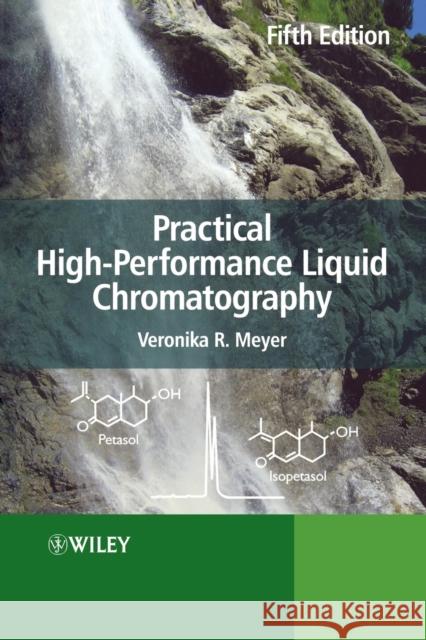
Practical High-Performance Liquid Chromatography Veronica Meyer 9780470682173 John Wiley & Sons - książkaWidoczna okładka, to zdjęcie poglądowe, a rzeczywista szata graficzna może różnić się od prezentowanej.

Practical High-Performance Liquid Chromatography

ISBN-13: 9780470682173 / Angielski / Miękka / 2010 / 432 str.

Veronica Meyer
cena 278,13
(netto: 264,89 VAT:  5%)

Najniższa cena z 30 dni: 274,74
Termin realizacji zamówienia:
ok. 30 dni roboczych.

Darmowa dostawa!

Jump into the HPLC adventure Three decades on from publication of the 1st German edition of Veronika Meyer's book on HPLC, this classic text remains one of the few titles available on general HPLC aimed at practitioners. New sections on the following topics have been included in this fifth edition:

  • Comparison of HPLC with capillary electrophoresis
  • How to obtain peak capacity
  • van Deemter curves and other coherences
  • Hydrophilic interaction chromatography
  • Method transfer
  • Comprehensive two-dimensional HPLC
  • Fast separations at 1000 bar
  • HPLC with superheated water
In addition, two chapters on the instrument test and troubleshooting in the appendix have been updated and expanded by Bruno E. Lendi, and many details have been improved and numerous references added. A completely new chapter is presented on quality assurance covering:
  • Is it worth the effort?
  • Verification with a second method
  • Method validation
  • Standard operating procedures
  • Measurement uncertainty
  • Qualifications, instrument test, and system suitability test
  • The quest for quality
Reviews of earlier editions "That this text is written by an expert in both the practice and teaching of HPLC is evident from the first paragraph....not only an enjoyable, fascinating and easy read, but a truly excellent text that has and will serve many teachers, students and practitioners very well." --The Analyst ..".provides essential information on HPLC for LC practitioners in academia, industry, government, and research laboratories...a valuable introduction." - American Journal of Therapeutics

Kategorie:
Nauka, Chemia
Kategorie BISAC:
Science > Chemia - Analityczna
Wydawca:
John Wiley & Sons
Język:
Angielski
ISBN-13:
9780470682173
Rok wydania:
2010
Ilość stron:
432
Waga:
0.61 kg
Wymiary:
22.61 x 14.99 x 2.54
Oprawa:
Miękka
Wolumenów:
01
Dodatkowe informacje:
Bibliografia
Wydanie ilustrowane

"This book is very much an aid to this end′′ and should be number one on every young chromatographer′s book list. The publishers too have played their part in producing a book that is pleasing on the eye and a pleasure to read." (Chromatographia, 1 December 2010)

Preface to the Fifth Edition.

Important and Useful Equations for HPLC.

1 Introduction.

1.1 HPLC: A powerful separation method.

1.2 A first HPLC experiment.

1.3 Liquid chromatographic separation modes.

1.4 The HPLC instrument.

1.5 Safety in the HPLC laboratory.

1.6 Comparison between high–performance liquid chromatography and gas chromatography.

1.7 Comparison between high–performance liquid chromatography and capillary electrophoresis.

1.8 Units for pressure, length and viscosity.

1.9 Scientific journals.

1.10 Recommended books.

2 Theoretical Principles.

2.1 The chromatographic process.

2.2 Band broadening.

2.3 The chromatogram and its purport.

2.4 Graphical representation of peak pairs with different degree of resolution.

2.5 Factors affecting resolution.

2.6 Extra–column volumes (dead volumes).

2.7 Tailing.

2.8 Peak capacity and statistical resolution probability.

2.9 Effects of temperature in HPLC.

2.10 The limits of HPLC.

2.11 How to obtain peak capacity.

3 Pumps.

3.1 General requirements.

3.2 The short–stroke piston pump.

3.3 Maintenance and repair.

3.4 Other pump designs.

4 Preparation of Equipment up to Sample Injection.

4.1 Selection of the mobile phase.

4.2 Preparation of the mobile phase.

4.3 Gradient systems.

4.4 Capillary tubing.

4.5 Fittings.

4.6 Sample injectors.

4.7 Sample solution and sample volume.

5 Solvent Properties.

5.1 Table of organic solvents.

5.2 Solvent selectivity.

5.3 Miscibility.

5.4 Buffers.

5.5 Shelf life of mobile phases.

5.6 The mixing cross.

6 Detectors.

6.1 General.

6.2 UV detectors.

6.3 Refractive index detectors.

6.4 Fluorescence detectors.

6.5 Electrochemical (amperometric) detectors.

6.6 Light–scattering detectors.

6.7 Other detectors.

6.8 Multiple detection.

6.9 Indirect detection.

6.10 Coupling with spectroscopy.

7 Columns and Stationary Phases.

7.1 Columns for HPLC.

7.2 Precolumns.

7.3 General properties of stationary phases.

7.4 Silica.

7.5 Chemically modified silica.

7.6 Styrene–divinylbenzene.

7.7 Some other stationary phases.

7.8 Column care and regeneration.

8 HPLC Column Tests.

8.1 Simple tests for HPLC columns.

8.2 Determination of particle size.

8.3 Determination of breakthrough time.

8.4 The test mixture.

8.5 Dimensionless parameters for HPLC column characterization.

8.6 The van Deemter equation from reduced parameters and its use in column diagnosis.

8.7 van Deemter curves and other coherences.

8.8 Diffusion coefficients.

9 Adsorption Chromatography: Normal–Phase Chromatography.

9.1 What is adsorption?.

9.2 The eluotropic series.

9.3 Selectivity properties of the mobile phase.

9.4 Choice and optimization of the mobile phase.

9.5 Applications.

10 Reversed–Phase Chromatography.

10.1 Principle.

10.2 Mobile phases in reversed–phase chromatography.

10.3 Solvent selectivity and strength.

10.4 Stationary phases.

10.5 Method development in reversed–phase chromatography.

10.6 Applications.

10.7 Hydrophobic interaction chromatography.

11 Chromatography with Chemically Bonded Phases.

11.1 Introduction.

11.2 Properties of some stationary phases.

11.3 Hydrophilic interaction chromatography.

12 Ion–Exchange Chromatography.

12.1 Introduction.

12.2 Principle.

12.3 Properties of ion exchangers.

12.4 Influence of the mobile phase.

12.5 Special possibilities of ion exchange.

12.6 Practical hints.

12.7 Applications.

13 Ion–Pair Chromatography.

13.1 Introduction.

13.2 Ion–pair chromatography in practice.

13.3 Applications.

13.4 Appendix: UV detection using ion–pair reagents.

14 Ion Chromatography.

14.1 Principle.

14.2 Suppression techniques.

14.3 Phase systems.

14.4 Applications.

15 Size–Exclusion Chromatography.

15.1 Principle.

15.2 The calibration chromatogram.

15.3 Molecular mass determination by means of size–exclusion chromatography.

15.4 Coupled size–exclusion columns.

15.5 Phase systems.

15.6 Applications.

16 Affinity Chromatography.

16.1 Principle.

16.2 Affinity chromatography as a special case of HPLC.

16.3 Applications.

17 Choice of Method.

17.1 The various possibilities.

17.2 Method transfer.

18 Solving the Elution Problem.

18.1 The elution problem.

18.2 Solvent gradients.

18.3 Column switching.

18.4 Comprehensive two–dimensional HPLC.

18.5 Optimization of an isocratic chromatogram using four solvents.

18.6 Optimization of the other parameters.

18.7 Mixed stationary phases.

19 Analytical HPLC.

19.1 Qualitative analysis.

19.2 Trace analysis.

19.3 Quantitative analysis.

19.4 Recovery.

19.5 Peak–height and peak–area determination for quantitative analysis.

19.6 Integration errors.

19.7 The detection wavelength.

19.8 Derivatization.

19.9 Unexpected peaks: Ghost and system peaks.

20 Quality Assurance.

20.1 Is it worth the effort?.

20.2 Verification with a second method.

20.3 Method validation.

20.4 Standard operating procedures.

20.5 Measurement uncertainty.

20.6 Qualifications, instrument test and system suitability test.

20.7 The quest for quality.

21 Preparative HPLC.

21.1 Problem.

21.2 Preparative HPLC in practice.

21.3 Overloading effects.

21.4 Fraction collection.

21.5 Recycling.

21.6 Displacement chromatography.

22 Separation of Enantiomers.

22.1 Introduction.

22.2 Chiral mobile phases.

22.3 Chiral liquid stationary phases.

22.4 Chiral solid stationary phases.

22.5 Indirect separation of enantiomers.

23 Special Possibilities.

23.1 Micro, capillary and chip HPLC.

23.2 High–speed and super–speed HPLC.

23.3 Fast separations at 1000 bar: UHPLC.

23.4 HPLC with supercritical mobile phases.

23.5 HPLC with superheated water.

23.6 Electrochromatography.

24 Appendix 1: Applied HPLC Theory.

25 Appendix 2: How to Perform the Instrument Test.

25.1 Introduction.

25.2 Test sequence.

25.3 Preparations.

25.4 Pump test.

25.5 UV detector test.

25.6 Autosampler test.

25.7 Column oven test.

25.8 Equations and calculations.

25.9 Documentation.

26 Appendix 3: Troubleshooting.

26.1 Pressure problems.

26.2 Leak in the pump system.

26.3 Deviating retention times.

26.4 Injection problems.

26.5 Baseline problems.

26.6 Peak shape problems.

26.7 Problems with light–scattering detectors.

26.8 Other causes.

26.9 Instrument test.

27 Appendix 4: Column Packing.

Index of Separations.

Subject Index.

Jump into the HPLC adventure!

Three decades on from publication of the 1st German edition of Veronika Meyer′s book on HPLC, this classic text remains one of the few titles available on general HPLC aimed at practitioners.

New sections on the following topics have been included in this fifth edition:

  • Comparison of HPLC with capillary electrophoresis
  • How to obtain peak capacity
  • van Deemter curves and other coherences
  • Hydrophilic interaction chromatography
  • Method transfer
  • Comprehensive two–dimensional HPLC
  • Fast separations at 1000 bar
  • HPLC with superheated water

In addition, two chapters on the instrument test and troubleshooting in the appendix have been updated and expanded by Bruno E. Lendi, and many details have been improved and numerous references added.

A completely new chapter is presented on quality assurance covering:

  • Is it worth the effort?
  • Verification with a second method
  • Method validation
  • Standard operating procedures
  • Measurement uncertainty
  • Qualifications, instrument test, and system suitability test
  • The quest for quality

Reviews of earlier editions

"That this text is written by an expert in both the practice and teaching of HPLC is evident from the first paragraph....not only an enjoyable, fascinating and easy read, but a truly excellent text that has and will serve many teachers, students and practitioners very well." The Analyst

provides essential information on HPLC for LC practitioners in academia, industry, government, and research laboratories a valuable introduction." – American Journal of Therapeutics


Udostępnij

Facebook - konto krainaksiazek.pl


Opinie o Krainaksiazek.pl na Opineo.pl

Partner Mybenefit

Krainaksiazek.pl w programie rzetelna firma Krainaksiaze.pl - płatności przez paypal

Czytaj nas na:

Facebook - krainaksiazek.pl
  • książki na zamówienie
  • granty
  • książka na prezent
  • kontakt
  • pomoc
  • opinie
  • regulamin
  • polityka prywatności

Zobacz:

  • Księgarnia czeska

  • Wydawnictwo Książkowe Klimaty

1997-2026 DolnySlask.com Agencja Internetowa

© 1997-2022 krainaksiazek.pl
     
KONTAKT | REGULAMIN | POLITYKA PRYWATNOŚCI | USTAWIENIA PRYWATNOŚCI
Zobacz: Księgarnia Czeska | Wydawnictwo Książkowe Klimaty | Mapa strony | Lista autorów
KrainaKsiazek.PL - Księgarnia Internetowa

Polityka prywatnosci - link
Krainaksiazek.pl - płatnośc Przelewy24
Przechowalnia Przechowalnia








