• Wyszukiwanie zaawansowane
  • Kategorie
  • Kategorie BISAC
  • Książki na zamówienie
  • Promocje
  • Granty
  • Książka na prezent
  • Opinie
  • Pomoc
  • Załóż konto
  • Zaloguj się

Plant Protoplasts and Genetic Engineering I » książka


zaloguj się | załóż konto
Logo Krainaksiazek.pl

koszyk

konto

szukaj
topmenu
Księgarnia internetowa
Szukaj
Książki na zamówienie
Promocje
Granty
Książka na prezent
Moje konto
Pomoc
 
 
Wyszukiwanie zaawansowane
Pusty koszyk
Bezpłatna dostawa dla zamówień powyżej 20 złBezpłatna dostawa dla zamówień powyżej 20 zł

Kategorie główne

• Nauka
 [2946912]
• Literatura piękna
 [1852311]

  więcej...
• Turystyka
 [71421]
• Informatyka
 [150889]
• Komiksy
 [35717]
• Encyklopedie
 [23177]
• Dziecięca
 [617324]
• Hobby
 [138808]
• AudioBooki
 [1671]
• Literatura faktu
 [228371]
• Muzyka CD
 [400]
• Słowniki
 [2841]
• Inne
 [445428]
• Kalendarze
 [1545]
• Podręczniki
 [166819]
• Poradniki
 [480180]
• Religia
 [510412]
• Czasopisma
 [525]
• Sport
 [61271]
• Sztuka
 [242929]
• CD, DVD, Video
 [3371]
• Technologie
 [219258]
• Zdrowie
 [100961]
• Książkowe Klimaty
 [124]
• Zabawki
 [2341]
• Puzzle, gry
 [3766]
• Literatura w języku ukraińskim
 [255]
• Art. papiernicze i szkolne
 [7810]
Kategorie szczegółowe BISAC

Plant Protoplasts and Genetic Engineering I

ISBN-13: 9783642736162 / Angielski / Miękka / 2011 / 444 str.
Y. P. S. Bajaj
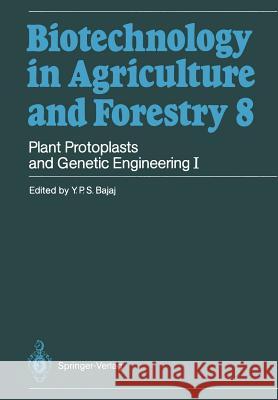
Plant Protoplasts and Genetic Engineering I Y. P. S. Bajaj 9783642736162 Springer-Verlag Berlin and Heidelberg GmbH &  - książkaWidoczna okładka, to zdjęcie poglądowe, a rzeczywista szata graficzna może różnić się od prezentowanej.

Plant Protoplasts and Genetic Engineering I

ISBN-13: 9783642736162 / Angielski / Miękka / 2011 / 444 str.

Y. P. S. Bajaj
cena 403,47
(netto: 384,26 VAT:  5%)

Najniższa cena z 30 dni: 385,52
Termin realizacji zamówienia:
ok. 22 dni roboczych
Bez gwarancji dostawy przed świętami

Darmowa dostawa!

Isolated protoplasts are a unique tool for genetic manipulation of plants. Since the discovery of a method for the enzymatic isolation of pro-. toplasts by Professor E. C. Cocking in 1960, tremendous progress has been made in this very fascinating area of research. I have witnessed the struggle in the 1960's and early 1970's, when obtaining a clean prepara tion of protoplasts was considered an achievement. I also shared the pioneering excitement and enthusiasm in this field during the 2nd Inter national Congress of Plant Tissue Culture held at Strasbourg in 1970, where Dr. I. Thkebe of Japan presented his work on the induction of division in tobacco protoplasts. This was followed by my participation in three international conferences devoted to plant protoplasts held in 1972 in Salamanca (Spain) and Versailles (France), and then in 1975 in Nottingham (England). The enthusiasm shown by plant scientists at these meetings was ample proof of the bright future of protoplast technology, and it became evident that protoplasts would playa major role in plant biotechnology, especially in genetic engineering. Since then we have never looked back, and now the methods for isolation, fusion, and culture, as well as regeneration of somatic hybrids, have become routine laboratory procedures for most plant species. Currently the focus is on cereal and tree protoplasts. In order to bring about any genetic manipulation through fusion, in corporation of DNA, and transformation, the regeneration of the entire plant through manipulation of protoplasts is a prerequisite."


Kategorie:
Nauka, Biologia i przyroda
Kategorie BISAC:
Technology & Engineering > Agriculture - General
Technology & Engineering > Agriculture - Forestry
Science > Botanika
Wydawca:
Springer-Verlag Berlin and Heidelberg GmbH &
Seria wydawnicza:
Biotechnology in Agriculture and Forestry
Język:
Angielski
ISBN-13:
9783642736162
Rok wydania:
2011
Dostępne języki:
Angielski
Wydanie:
Softcover Repri
Numer serii:
000053271
Ilość stron:
444
Waga:
0.80 kg
Wymiary:
24.424.4 x 17.0
Oprawa:
Miękka
Wolumenów:
01

Section I Isolation Culture and Preservation of Protoplasts.- I.1 Recent Advances in the Isolation and Culture of Protoplasts and Their Implications in Crop Improvement.- 1. Introduction.- 2. Enzymes.- 3. Viability.- 4. Agarose Plating.- 5. Regeneration of Plants from Protoplasts.- 6. Culture of Haploid Protoplasts.- 7. Protoplast Culture and Somaclonal Variation.- 8. Immobilization of Protoplasts.- 9. Cryopreservation of Protoplasts.- 10. Conclusions and Prospects.- References.- I.2 Enzymes for the Isolation of Protoplasts.- 1. Introduction.- 2. Cell Wall Compositions.- 3. Enzymes that are Effective for Isolating Protoplasts from Gramineae Tissues.- 4. Comparison of Enzymes Between Monocots and Dicots that are Effective for Isolating Protoplasts.- 5. Purification Procedures of Enzymes.- 6. Protoplasts Isolated by Purified Enzymes.- 7. Summary and Conclusion.- References.- I.3 Viability of Plant Protoplasts.- 1. Introduction.- 2. Methodology.- 3. Efficacy of the Methods.- 4. Summary.- References.- I.4 Agarose Plating of Protoplasts and Its Applications.- 1. Introduction.- 2. Embedding of Protoplasts in Agarose.- 3. Methods for the Culture of Agarose-Embedded Protoplasts.- 4. A Survey of Literature on the Application of Agarose Plating in Protoplast Culture.- 5. Special Applications of Agarose Culture.- 6. Concluding Remarks.- References.- I.5 Immobilization of Plant Protoplasts.- 1. Introduction.- 2. Immobilization in Gel Matrices.- 3. Entrapment of Cell Protoplasts in Different Matrices.- 4. Viability of Immobilized Cells and Protoplasts.- 5. Applications of Immobilized Plant Cells and Protoplasts.- 6. Biotransformation.- 7. Biosynthesis.- 8. Product Release.- 9. Conclusions.- 10. Protocol for the Immobilization of Protoplasts.- References.- I.6 Cryopreservation of Plant Protoplasts.- 1. Introduction.- 2. Significance of Cryopreservation of Protoplasts.- 3. Review of Work.- 4. Isolation, Freezing and Culture of Protoplasts.- 5. Survival of Somatic Hybrid Protoplasts.- 6. Summary and Conclusions.- References.- Section II Regeneration of Plants from Protoplasts.- II.1 Regeneration of Plants from Rice Protoplasts.- 1. Introduction.- 2. Isolation of Protoplasts.- 3. Culture of Protoplasts.- 4. Regeneration of Plants.- 5. Somaclonal Variation.- 6. Agronomic Traits of Protoplast-Derived Plants.- 7. Conclusions and Prospects.- 8. Protocol.- References.- II.2 Isolation and Culture of Potato Protoplasts.- 1. Introduction.- 2. Isolation of Protoplasts.- 3. Culture of Protoplasts.- 4. Regeneration of Plants and the Characters of Regenerated Plants.- 5. Fusion of Protoplasts.- 6. Conclusions and Prospects.- 7. Protocols.- References.- II.3 Isolation and Culture of Citrus Protoplasts.- 1. General Account.- 2. Isolation of Protoplasts.- 3. Protoplast Culture.- 4. Embryogenesis.- 5. Regeneration of Plants.- 6. Fusion of Protoplast.- 7. Conclusions and Prospects.- 8. Protocol.- References.- II.4 Regeneration of Plants from Linum Protoplasts.- 1. Economic Importance and Breeding Objectives in Linum.- 2. Source Material for Protoplast Isolation.- 3. Protoplast Isolation.- 4. Protoplast Culture.- 5. Plant Regeneration from Protoplast-Derived Callus.- 6. Protoplast Fusion.- 7. Conclusions.- 8. Protocol.- References.- II.5 Isolation and Culture of Glycine Protoplasts.- 1. Introduction.- 2. Isolation of Protoplasts.- 3. Culture of Protoplasts.- 4. Regeneration of Plants.- 5. Fusion of Protoplasts.- 6. Miscellaneous Studies.- 7. Conclusions and Prospects.- 8. Protocol.- References.- II.6 Regeneration of Plants from Cabbage (Brassica oleracea var. capitata) Protoplasts.- 1. Introduction.- 2. Isolation of Protoplasts.- 3. Culture of Protoplasts.- 4. Regeneration of Plants.- 5. Characterization of Protoplast-Derived Plants.- 6. Protoplast Fusion.- 7. Conclusion.- 8. Protocol.- References.- II.7 Regeneration of Plants from Chicory (Chicorium intybus L.) Protoplasts.- 1. Introduction.- 2. Isolation of Protoplasts.- 3. Culture of Protoplasts.- 4. Regeneration of Plants.- 5. Conclusions and Prospects.- 6. Protocol.- References.- II.8 Regeneration of Plants from Protoplasts of Lettuce and its Wild Species.- 1. General Account.- 2. Isolation of Protoplasts.- 3. Protoplast Culture.- 4. Plant Regeneration.- 5. Protoplast Fusion.- 6. Conclusions and Prospects.- 7. Protocol.- References.- II.9 Regeneration of Plants from Protoplasts of Butterbur (Petasites japonicus, Fr. Schmidt).- 1. Introduction.- 2. Isolation of Protoplasts.- 3. Culture of Protoplasts.- 4. Regeneration of Plants.- 5. Fusion of Protoplasts.- 6. Conclusion and Prospects.- 7. Protocol.- References.- II.10 Isolation and Culture of Orchid Protoplasts.- 1. Introduction.- 2. Isolation of Protoplasts.- 3. Culture of Protoplasts.- 4. Fusion of Protoplasts.- 5. Conclusions and Prospects.- References.- II.11 Regeneration of Plants from Protoplasts of Salpiglossis.- 1. Introduction.- 2. Isolation of Protoplasts.- 3. Culture of Protoplasts.- 4. Regeneration of Plants.- 5. Protoplast Fusion.- 6. Conclusions and Prospects.- 7. Protocol.- References.- II.12 Isolation and Culture of Protoplasts of Forest Tree Species.- 1. Introduction.- 2. The Status of Protoplast Research with Forest Species.- 3. Long-Range Application of Protoplast Techniques to Tree Improvement.- References.- Section III Protoplast Fusion and Somatic Hybridization.- III.1 Fusion of Plant Protoplasts — Techniques.- 1. Introduction.- 2. Methods of Fusion.- 3. Summary.- References.- III.2 Ultrastructural Studies of Plant Protoplast Fusion.- 1. Introduction.- 2. Higher Plants.- 3. Algae and Higher Plants.- 4. Conclusions.- 5. Protocols.- References.- III.3 Symmetric Versus Asymmetric Fusion Combinations in Higher Plants.- 1. Introduction.- 2. Wide Crosses by Means of Protoplast Fusion.- 3. Spontaneous Asymmetrization of Fusion Products.- 4. Symmetric Hybrids Between Unrelated Plant Species — the Disappointment.- 5. Technical Advances with Relevance to Fusion Studies.- 6. Asymmetric Hybrides in Wide Crosses by Gamma-Fusion: Towards Chromosome Transfer and Gene Introgression.- 7. Gamma-Fusion in the N. plumbaginifolia System.- 8. Conclusion.- References.- III.4 Somatic Hybridization in Tomato.- 1. Introduction.- 2. Protoplast Isolation.- 3. Protoplast Culture.- 4. Regeneration of Plants.- 5. Protoplast Fusion.- 6. Conclusions and Prospects.- 7. Protocols.- References.- III.5 Lycopersicon and Petunia Somatic Hybrids.- 1. Introduction.- 2. Important Factors in Protoplast Culture and Somatic Hybridization of the Genus Lycopersicon.- 3. An Overview of Somatic Hybridization with the Genus Lycopersicon.- 4. Somatic Hybridization in Lycopersicon and Petunia.- 5. Conclusion and Prospects.- 6. Protocol for Isolation, Fusion and Culture of Lycopersicon peruvianum and Petunia hybrida Protoplasts.- References.- III.6 Somatic Hybridization in Hyoscyamus and Nicotiana.- 1. Introduction.- 2. Isolation of Protoplasts.- 3. Protoplast Culture.- 4. Plant Regeneration.- 5. Somatic Hybridization.- 6. Conclusions and Prospects.- 7. Protocol.- References.- III.7 Medicago Protoplasts: Fusion, Culture and Plant Regeneration.- 1. Introduction.- 2. Isolation of Protoplasts.- 3. Culture of Protoplasts.- 4. Regeneration of Plants.- 5. Fusion of Protoplasts and Culture of Heterokaryons.- 6. Miscellaneous Studies.- 7. Conclusions and Prospects.- 8. Protocol for the Isolation and Fusion of Medicago Seedling Cotyledon Protoplasts.- References.- III.8 Somatic Hybridization Between Moricandia and Brassica.- 1. Introduction.- 2. Isolation of Protoplasts.- 3. Culture of Protoplasts.- 4. Fusion of Protoplasts and Somatic Hybridization.- 5. Protocol for the Protoplast Fusion by the Dextran Method.- References.- III.9 Somatic Hybridization in Trifolium.- 1. Introduction.- 2. Isolation of Protoplasts.- 3. Culture of Protoplasts.- 4. Regeneration of Plants.- 5. Fusion of Protoplasts.- 6. Conclusions and Prospects.- 7. Protocol.- References.- III.10 Somatic Hybridization in Rice × Soybean.- 1. Introduction.- 2. Isolation of Protoplasts.- 3. Culture of Protoplasts.- 4. Fusion of Protoplasts.- 5. Response to Streptomycin.- 6. Conclusion and Prospects.- Protocol.- References.


Udostępnij

Facebook - konto krainaksiazek.pl


Opinie o Krainaksiazek.pl na Opineo.pl

Partner Mybenefit

Krainaksiazek.pl w programie rzetelna firma Krainaksiaze.pl - płatności przez paypal

Czytaj nas na:

Facebook - krainaksiazek.pl
  • książki na zamówienie
  • granty
  • książka na prezent
  • kontakt
  • pomoc
  • opinie
  • regulamin
  • polityka prywatności

Zobacz:

  • Księgarnia czeska

  • Wydawnictwo Książkowe Klimaty

1997-2025 DolnySlask.com Agencja Internetowa

© 1997-2022 krainaksiazek.pl
     
KONTAKT | REGULAMIN | POLITYKA PRYWATNOŚCI | USTAWIENIA PRYWATNOŚCI
Zobacz: Księgarnia Czeska | Wydawnictwo Książkowe Klimaty | Mapa strony | Lista autorów
KrainaKsiazek.PL - Księgarnia Internetowa

Polityka prywatnosci - link
Krainaksiazek.pl - płatnośc Przelewy24
Przechowalnia Przechowalnia






