• Wyszukiwanie zaawansowane
  • Kategorie
  • Kategorie BISAC
  • Książki na zamówienie
  • Promocje
  • Granty
  • Książka na prezent
  • Opinie
  • Pomoc
  • Załóż konto
  • Zaloguj się

Piaget's Genetic Epistemology for Mathematics Education Research » książka


zaloguj się | załóż konto
Logo Krainaksiazek.pl

koszyk

konto

szukaj
topmenu
Księgarnia internetowa
Szukaj
Książki na zamówienie
Promocje
Granty
Książka na prezent
Moje konto
Pomoc
 
 
Wyszukiwanie zaawansowane
Pusty koszyk
Bezpłatna dostawa dla zamówień powyżej 20 złBezpłatna dostawa dla zamówień powyżej 20 zł

Kategorie główne

• Nauka
 [2946912]
• Literatura piękna
 [1852311]

  więcej...
• Turystyka
 [71421]
• Informatyka
 [150889]
• Komiksy
 [35717]
• Encyklopedie
 [23177]
• Dziecięca
 [617324]
• Hobby
 [138808]
• AudioBooki
 [1671]
• Literatura faktu
 [228371]
• Muzyka CD
 [400]
• Słowniki
 [2841]
• Inne
 [445428]
• Kalendarze
 [1545]
• Podręczniki
 [166819]
• Poradniki
 [480180]
• Religia
 [510412]
• Czasopisma
 [525]
• Sport
 [61271]
• Sztuka
 [242929]
• CD, DVD, Video
 [3371]
• Technologie
 [219258]
• Zdrowie
 [100961]
• Książkowe Klimaty
 [124]
• Zabawki
 [2341]
• Puzzle, gry
 [3766]
• Literatura w języku ukraińskim
 [255]
• Art. papiernicze i szkolne
 [7810]
Kategorie szczegółowe BISAC

Piaget's Genetic Epistemology for Mathematics Education Research

ISBN-13: 9783031473852 / Angielski
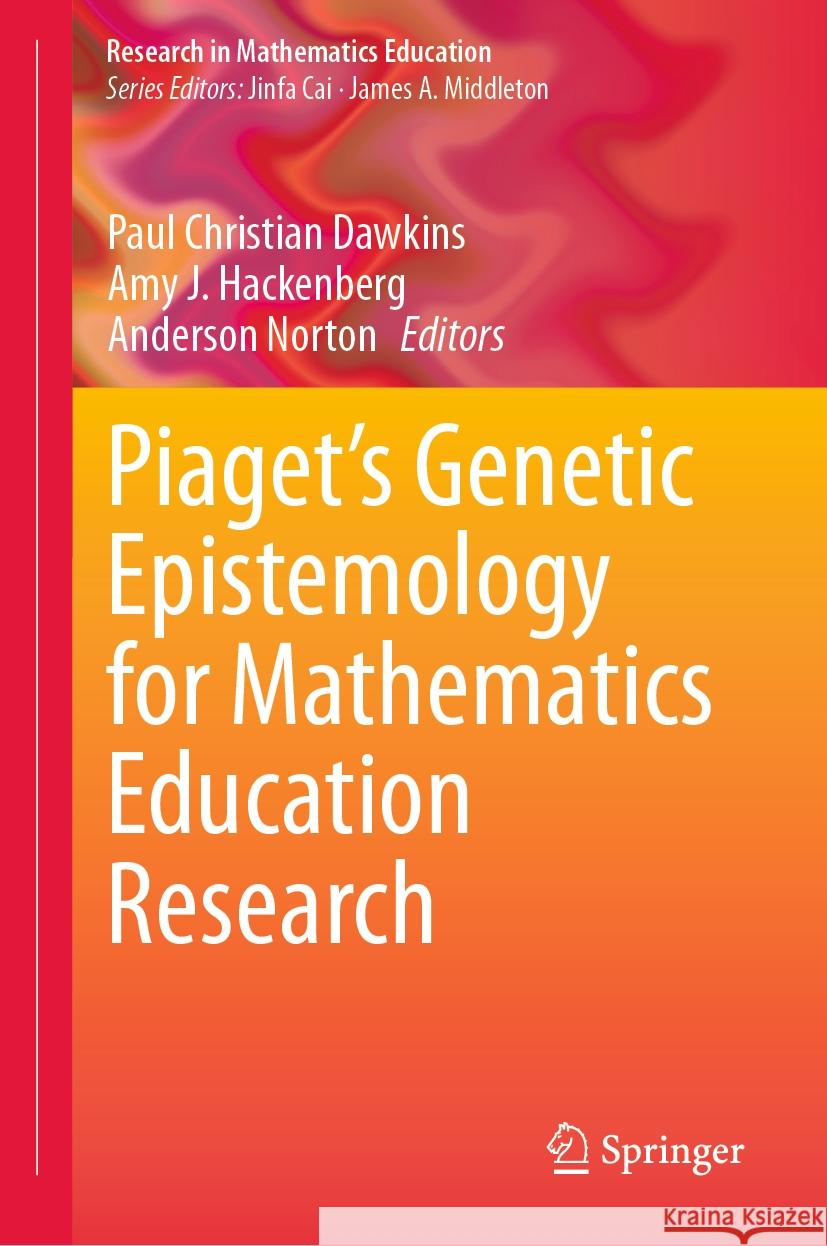
Paul Christian Dawkins; Amy J. Hackenberg; Anderson Norton
Piaget's Genetic Epistemology for Mathematics Education Research Paul Christian Dawkins Amy J. Hackenberg Anderson Norton 9783031473852 Springer - książkaWidoczna okładka, to zdjęcie poglądowe, a rzeczywista szata graficzna może różnić się od prezentowanej.

Piaget's Genetic Epistemology for Mathematics Education Research

ISBN-13: 9783031473852 / Angielski

Paul Christian Dawkins; Amy J. Hackenberg; Anderson Norton
cena 805,10
(netto: 766,76 VAT:  5%)

Najniższa cena z 30 dni: 693,97
Termin realizacji zamówienia:
ok. 22 dni roboczych
Bez gwarancji dostawy przed świętami

Darmowa dostawa!
Kategorie:
Nauka, Pedagogika i oświata
Kategorie BISAC:
Education > Teaching - Subjects - Mathematics
Education > Philosophy, Theory & Social Aspects
Wydawca:
Springer
Seria wydawnicza:
Research in Mathematics Education
Język:
Angielski
ISBN-13:
9783031473852

Section 1 – Introduction to Piaget’s genetic epistemology and the tradition of use featured in this book

Chapter 1) Introduction to Piaget’s Genetic Epistemology– Paul Christian Dawkins, Amy J. Hackenberg, & Andy Norton 
Chapter 2) An Historical Reflection on Adapting Piaget’s Work for Ongoing Mathematics Education Research – Les Steffe 

Section 2 – Key constructs from genetic epistemology being used in ongoing mathematics education research 

Chapter 3) Schemes and Scheme Theory: Core Explanatory Constructs for Studying Mathematical Learning – Erik Tillema & Andrew Gatza
Chapter 4) Operationalizing Figurative and Operative Framings of Thought – Kevin Moore, Irma Stevens, Halil Tasova, & Biyao Liang
Chapter 5) Figurative and Operative Imagery: Essential Aspects of Reflection in the Development of Schemes and Meanings – Patrick Thompson, Cameron Byerley, & Alan O’Bryan
Chapter 6) Empirical and Reflective Abstraction – Amy Ellis, Elise Lockwood, & Teo Paoletti
Chapter 7) Group and Group-like Structures – Anderson Norton
Chapter 8) Reflected Abstraction – Michael Tallman & Alan O’Bryan
Chapter 9) The Construct of Decentering in Research on Mathematics Learning and Teaching – Marilyn Carlson, Sinem Bas Ader, Alan O’Bryan, & Abby Rocha
Chapter 10) Logic in Genetic Epistemology – Paul Christian Dawkins
Chapter 11) Units Coordination – Amy J. Hackenberg and Serife Sevinc
Chapter 12) Modeling Quantitative and Covariational Reasoning –Steven Boyce

Section 3 – Commentaries on genetic epistemology and its use in ongoing research 

Chapter 13) Genetic Epistemology as a Complex and Unified Theory of Knowing – Anderson Norton 
Chapter 14) Second-Order Models as Acts of Equity – Amy Hackenberg, Erik Tillema, & Andrew Gatza 
Chapter 15) Reflections on the Power of Genetic Epistemology by the Modern Cognitive Psychologist – Percival Matthews and Alexandria Viegut
Chapter 16) Skepticism and Constructivism – Paul Christian Dawkins 

Section 4 (Chs 17-21) – Using constructs from genetic epistemology to develop agendas of research
Chapter 17) Researching Special Education: Using and Expanding Upon Genetic Epistemology Constructs – Jessica Hunt 
Chapter 18) Research in Subitizing to Examine Early Number Construction – Beth MacDonald 
Chapter 19) Researching Coordinate Systems Using Genetic Epistemology Constructs – Hwa Young Lee 
Chapter 20) Researching Quantifications of Angularity Using Genetic Epistemology Constructs – Hamilton Hardison 
Chapter 21) Using Constructivism to Develop an Agenda of Research in Stochastics Education Research – Neil Hatfield

Dr. Paul Christian Dawkins is a Professor of mathematics education at Texas State University, USA. His research focuses on students’ learning of proof-oriented mathematics at the university level, specifically on student understanding of logic, defining, and axioms. Since he began as a professor in 2010, he has published 30 peer-reviewed journal articles and received multiple awards for his work, including the Selden Prize from the Mathematics Association of America. He serves on the editorial board of the Journal of Mathematical Behavior and the International Journal of Research in Undergraduate Mathematics Education.

Dr. Amy J. Hackenberg is a Professor of mathematics education at Indiana University, Bloomington, USA. Her research focuses on how middle school students construct rational number knowledge and algebraic reasoning and the role of units coordination in those processes. She also does research on how to orchestrate mathematics instruction for middle school students at different stages of units coordination, studying her own teaching as well as co-teaching with classroom teachers. She was the recipient of an early career award from the National Science Foundation, and she has earned the Trustees Teaching Award for excellence in teaching four times since she joined the faculty at IU in 2007. She serves on the Advisory Board of the journal For the Learning of Mathematics.

Dr. Anderson Norton is a Professor of mathematics education in the Department of Mathematics at Virginia Tech. USA. His research focuses on building psychological models of students’ mathematical development—particularly in the domain of fractions knowledge—and epistemology of mathematics. He has served as chair for the editorial panel of the Journal for Research in Mathematics Education, chair of the steering committee for the North American Chapter of the International Group for the Psychology of Mathematics Education, and lead editor for the Springer book, Constructing Number. In 2013, in recognition of his outreach efforts, he received the Early Career Award from the Association of Mathematics Teacher Educators.

The book provides an entry point for graduate students and other scholars interested in using the constructs of Piaget’s genetic epistemology in mathematics education research. Constructs comprising genetic epistemology form the basis for some of the most well-developed theoretical frameworks available for characterizing learning, particularly in mathematics. The depth and complexity of Piaget’s work can make it challenging to find adequate entry points for learners, not least because it requires a reorientation regarding the nature of mathematical knowledge itself. This volume gathers leading scholars to help address that challenge. The main section of the book presents key Piagetian constructs for mathematics education research such as schemes and operations, figurative and operative thought, images and meanings, and decentering. The chapters that discuss these constructs include examples from research and address how these constructs can be used in research. There are two chapters on various types of reflective abstraction, because this construct is Piaget’s primary tool for characterizing the advancement of knowledge. The later sections of the book contain commentaries reflecting on the contributions of the body of theory developed in the first section. They connect genetic epistemology to current research domains such as equity and the latest in educational psychology. Finally, the book closes with short chapters portraying how scholars are using these tools in specific arenas of mathematics education research, including in special education, early childhood education, and statistics education.




Udostępnij

Facebook - konto krainaksiazek.pl


Opinie o Krainaksiazek.pl na Opineo.pl

Partner Mybenefit

Krainaksiazek.pl w programie rzetelna firma Krainaksiaze.pl - płatności przez paypal

Czytaj nas na:

Facebook - krainaksiazek.pl
  • książki na zamówienie
  • granty
  • książka na prezent
  • kontakt
  • pomoc
  • opinie
  • regulamin
  • polityka prywatności

Zobacz:

  • Księgarnia czeska

  • Wydawnictwo Książkowe Klimaty

1997-2025 DolnySlask.com Agencja Internetowa

© 1997-2022 krainaksiazek.pl
     
KONTAKT | REGULAMIN | POLITYKA PRYWATNOŚCI | USTAWIENIA PRYWATNOŚCI
Zobacz: Księgarnia Czeska | Wydawnictwo Książkowe Klimaty | Mapa strony | Lista autorów
KrainaKsiazek.PL - Księgarnia Internetowa

Polityka prywatnosci - link
Krainaksiazek.pl - płatnośc Przelewy24
Przechowalnia Przechowalnia



