• Wyszukiwanie zaawansowane
  • Kategorie
  • Kategorie BISAC
  • Książki na zamówienie
  • Promocje
  • Granty
  • Książka na prezent
  • Opinie
  • Pomoc
  • Załóż konto
  • Zaloguj się

Physiology and Pathology of Chloride Transporters and Channels in the Nervous System: From Molecules to Diseases » książka


zaloguj się | załóż konto
Logo Krainaksiazek.pl

koszyk

konto

szukaj
topmenu
Księgarnia internetowa
Szukaj
Książki na zamówienie
Promocje
Granty
Książka na prezent
Moje konto
Pomoc
 
 
Wyszukiwanie zaawansowane
Pusty koszyk
Bezpłatna dostawa dla zamówień powyżej 20 złBezpłatna dostawa dla zamówień powyżej 20 zł

Kategorie główne

• Nauka
 [2949965]
• Literatura piękna
 [1857847]

  więcej...
• Turystyka
 [70818]
• Informatyka
 [151303]
• Komiksy
 [35733]
• Encyklopedie
 [23180]
• Dziecięca
 [617748]
• Hobby
 [139972]
• AudioBooki
 [1650]
• Literatura faktu
 [228361]
• Muzyka CD
 [398]
• Słowniki
 [2862]
• Inne
 [444732]
• Kalendarze
 [1620]
• Podręczniki
 [167233]
• Poradniki
 [482388]
• Religia
 [509867]
• Czasopisma
 [533]
• Sport
 [61361]
• Sztuka
 [243125]
• CD, DVD, Video
 [3451]
• Technologie
 [219309]
• Zdrowie
 [101347]
• Książkowe Klimaty
 [123]
• Zabawki
 [2362]
• Puzzle, gry
 [3791]
• Literatura w języku ukraińskim
 [253]
• Art. papiernicze i szkolne
 [7933]
Kategorie szczegółowe BISAC

Physiology and Pathology of Chloride Transporters and Channels in the Nervous System: From Molecules to Diseases

ISBN-13: 9780123743732 / Angielski / Twarda / 2009 / 617 str.
Alvarez-Leefmans, F. Javier
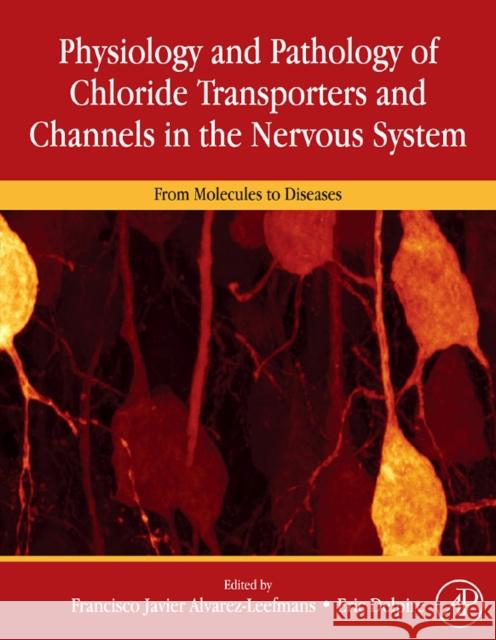
Physiology and Pathology of Chloride Transporters and Channels in the Nervous System: From Molecules to Diseases Alvarez-Leefmans, F. Javier 9780123743732 ELSEVIER SCIENCE & TECHNOLOGY - książkaWidoczna okładka, to zdjęcie poglądowe, a rzeczywista szata graficzna może różnić się od prezentowanej.

Physiology and Pathology of Chloride Transporters and Channels in the Nervous System: From Molecules to Diseases

ISBN-13: 9780123743732 / Angielski / Twarda / 2009 / 617 str.

Alvarez-Leefmans, F. Javier
cena 590,22
(netto: 562,11 VAT:  5%)

Najniższa cena z 30 dni: 584,18
Termin realizacji zamówienia:
ok. 30 dni roboczych
Bez gwarancji dostawy przed świętami

Darmowa dostawa!

The importance of chloride ions in cell physiology has not been fully recognized until recently, in spite of the fact that chloride (Cl-), together with bicarbonate, is the most abundant free anion in animal cells, and performs or determines fundamental biological functions in all tissues. For many years it was thought that Cl- was distributed in thermodynamic equilibrium across the plasma membrane of most cells. Research carried out during the last couple of decades has led to a dramatic change in this simplistic view. We now know that most animal cells, neurons included, exhibit a non-equilibrium distribution of Cl- across their plasma membranes. Over the last 10 to 15 years, with the growth of molecular biology and the advent of new optical methods, an enormous amount of exciting new information has become available on the molecular structure and function of Cl- channels and carriers. In nerve cells, Cl- channels and carriers play key functional roles in GABA- and glycine-mediated synaptic inhibition, neuronal growth and development, extracellular potassium scavenging, sensory-transduction, neurotransmitter uptake and cell volume control. Disruption of Cl- homeostasis in neurons underlies pathological conditions such as epilepsy, deafness, imbalance, brain edema and ischemia, pain and neurogenic inflammation. This book is about how chloride ions are regulated and how they cross the plasma membrane of neurons. It spans from molecular structure and function of carriers and channels involved in Cl- transport to their role in various diseases.

  • The first comprehensive book on the structure, molecular biology, cell physiology, and role in diseases of chloride transporters / channels in the nervous system in almost 20 years
  • Chloride is the most abundant free anion in animal cells. THis book summarizes and integrates for the first time the important research of the past two decades that has shown that Cl- channels and carriers play key functional roles in GABA- and glycine-mediated synaptic inhibition, neuronal growth and development, extracellular potassium scavenging, sensory-transduction, neurotransmitter uptake and cell volume control
  • The first book that systematically discusses the result of disruption of Cl- homeostasis in neurons which underlies pathological conditions such as epilepsy, deafness, imbalance, brain edema and ischemia, pain and neurogenic inflammation
  • Spanning topics from molecular structure and function of carriers and channels involved in Cl- transport to their role in various diseases
  • Involves all of the leading researchers in the field
  • Includes an extensive introductory section that covers basic thermodynamic and kinetics aspects of Cl- transport, as well as current methods for studying Cl- regulation, spanning from fluorescent dyes in single cells to knock-out models to make the book available for a growing population of graduate students and postdocs entering the field


Kategorie:
Inne
Kategorie BISAC:
Medical > Neuroscience
Science > Biologia molekularna
Science > Biochemia
Wydawca:
ELSEVIER SCIENCE & TECHNOLOGY
Język:
Angielski
ISBN-13:
9780123743732
Rok wydania:
2009
Ilość stron:
617
Waga:
2.25 kg
Wymiary:
27.94 x 22.1 x 3.81
Oprawa:
Twarda
Wolumenów:
01
Dodatkowe informacje:
Wydanie ilustrowane

"Overall, the authors and editors have done a marvelous job. I strongly recommend their book to those already in the Cl- field and those who need an introduction to it, because the topics are appealing for a specialized as well as a general audience. The editors have been very successful in getting an up-to-date review from many of the major players in the field and in covering the key topics (literature is cited until 2008). Although the pace of discoveries in the field is brisk, at present this book provides an excellent overview." --The Physiologist

Section I Overview of chloride transporters and channels

1. Chloride Channels: An Historical Perspective by H. Criss Hartzell

2. Sodium-Coupled Chloride Cotransporters: Discovery and Newly Emerging Concepts by John Russell

3. Pathophysiology of the K+-Cl- Cotransporters: Paths to Discovery and Overview by John S. Gibson, J. Clive Ellory, Norma C. Adragna and Peter K. Lauf

4. From Cloning to Structure, Function, and Regulation of Chloride-dependent and Independent Bicarbonate Transporters by Michael F. Romero, Min-Hwang Chang and David Mount

5. Thermodynamics and Kinetics of chloride transport in Neurons: An Outline by F. Javier Alvarez-Leefmans and Eric Delpire

Section II Current methods for studying chloride regulation

6. Chemical and GFP-based Fluorescent Chloride Indicators by Alan S. Verkman

7. Clomeleon, a Genetically-encoded Chloride Indicator by Ken Berglund, Thomas Kuner and George J. Augustine

8. Gramicidin Perforated Patch by Norio Akaike

9. Measuring Electroneutral Chloride-dependent Ion Fluxes in Heterologous Expression Systems by Kenneth

Gagnon

10. Knockout models of cation chloride cotransporters by Nicole Garbarini and Eric Delpire

Section III From cloning to structure, function and regulation of chloride channels

11. The NKCC and NCC genes: An in silico view by Mauricio Di Fulvio and F. Javier Alvarez-Leefmans

12. The ClC Family of Chloride Channels and Transporters by Tobias Stauber, Gaia Novarino and Thomas J. Jentsch

13. Calcium-Activated Chloride Channels by Fiona Britton, Normand Leblanc and James L. Kenyon

14. GABAA Receptor Channels by Robert L. Macdonald and Emmanuel J. Botzolakis

15. The Puzzles of Volume-Activated Anion Channels by Yasunobu Okada, Kaori Sato, Abduqodir H. Toychiev, Makoto Suzuki, Amal K. Dutta, Hana Inoue and Ravshan Z. Sabirov

16. The Sodium-Dependent Chloride Cotransporters by Gerardo Gamba

17. The Potassium-Chloride Cotransporters: from Cloning to Structure and Function by John A. Payne

18. Regulation of Cation-Chloride Cotransporters by Gerardo Gamba, Nicole Garbarini and Eric Delpire

Section IV Cation-chloride cotransporters in neural function and dysfunction

19. GABA, Glycine and Cation-Chloride Cotransporterts in Retinal Function and Development by Noga Vardi and ling-Li Zhang

20. Chloride-based Signal Amplification in Olfactory Sensory Neurons by Stephan Frings

21. Cochlear and Vestibular Function and Dysfunction by Daniel C. Marcus and Philine Wangemann

22. Presynaptic inhibition, pain and neurogenic inflammation by F. Javier Alvarez-Leefmans

23. Modulation of Chloride Homeostasis by Microglia by Yves De Koninck

24. Cation-Chloride Cotransporters as Pharmacological Targets in the Treatment of Epilepsy by Kristopher T. Kahle and Kevin Staley

25. The Role of Cation-Chloride Cotransporters in Brain Ischemia by Dandan Sun, Doug Kintner and Brooks B. Pond

26. Chloride Transport in Glioma Growth and Cell Invasion by Harald Sontheimer

27. The Sodium-Potassium-Chloride Cotransporter, Human Cytomegalovirus, and the Cell Cycle by John M. Russell

Section V Cation-chloride cotransport in Choroid Plexus and blood brain barrier

28. Chloride Transporters as Water Pumps: Elements in a New Model of Epithelial Water Transport by Nanna MacAulay, Steffen Hamann, and Thomas Zeuthen

29. Choroid plexus and chloride transport by Peter D. Brown , Sarah L. Davies and Ian D. Millar

30. Ion and Water Transport Across the Blood-Brain Barrier by Martha E. O'Donnell

Research Interests Research in his laboratory focuses on the molecular and cellular physiology of carrier protein molecules that actively transport chloride ions (Cl-) across the plasma membrane of neurons and epithelial cells. Specifically, they study some members of the cation-coupled-chloride contransporter gene/protein family SLC12A: the Na+, K+, 2 Cl- cotransporters (NKCC1 and NKCC2) and the K+-Cl- cotransporters (KCC1, 2, 3 and 4). These carrier proteins play key roles in: intracellular Cl- homeostasis in neurons, GABA- and glycine-mediated synaptic signaling, neuronal development, sensory transduction including nociception, transepithelial salt transport, cell water volume control, and extracellular K+ scavenging. Not surprisingly, altered function of these proteins underlies several pathologies and hence they have become significant targets for therapeutic interventions and translational research. To study the function of these proteins we use state-of-the-art live-cell imaging microscopy and fluorescent probes for measuring and manipulating intracellular ions and water in dissociated neurons and epithelial cells. Some of these optical methods have been developed in their lab, and are used in conjunction with molecular methods, knockout models, and several microanatomical techniques. Their current research involves two projects: Mechanisms regulating intracellular chloride in primary afferent neurons and their impact on GABA-mediated presynaptic inhibition and sensory transduction. This project aims at understanding the molecular mechanisms that determine intracellular Cl- concentration in primary afferent neurons, their regulation, and the role they play in presynaptic inhibition, acute somatic pain, neurogenic inflammation and proprioception. Roles of cation-coupled-chloride contransporters of choroid plexus epithelial cells in the regulation of cerebrospinal fluid ion composition. The choroid plexus epithelial cells (CPECs) form the blood-cerebrospinal fluid (CSF) barrier. CPECs secrete CSF and regulate its electrolyte composition. Regulation of CSF ion levels is fundamental for maintaining normal brain function. The overarching goal of this project is to understand how NKCC1, KCCs and aquaporins control the ion composition of the cerebrospinal fluid. Current emphasis is on the molecular and cellular mechanisms used by CPECs to regulate and maintain the CSF K+ concentration, a fundamental problem of broad physiological significance. CSF composition has a major impact on the fluid microenvironment of neurons and glial cells, and vice versa. Extracellular K+ homeostasis is critical for normal brain function; small changes in extracellular K+ profoundly affect neuronal excitability and osmotic water balance of glial cells and neurons. Dr. Eric Delpire teaches at the Vanderbilt University, Nashville, USA


Udostępnij

Facebook - konto krainaksiazek.pl


Opinie o Krainaksiazek.pl na Opineo.pl

Partner Mybenefit

Krainaksiazek.pl w programie rzetelna firma Krainaksiaze.pl - płatności przez paypal

Czytaj nas na:

Facebook - krainaksiazek.pl
  • książki na zamówienie
  • granty
  • książka na prezent
  • kontakt
  • pomoc
  • opinie
  • regulamin
  • polityka prywatności

Zobacz:

  • Księgarnia czeska

  • Wydawnictwo Książkowe Klimaty

1997-2025 DolnySlask.com Agencja Internetowa

© 1997-2022 krainaksiazek.pl
     
KONTAKT | REGULAMIN | POLITYKA PRYWATNOŚCI | USTAWIENIA PRYWATNOŚCI
Zobacz: Księgarnia Czeska | Wydawnictwo Książkowe Klimaty | Mapa strony | Lista autorów
KrainaKsiazek.PL - Księgarnia Internetowa

Polityka prywatnosci - link
Krainaksiazek.pl - płatnośc Przelewy24
Przechowalnia Przechowalnia






