Physiologically Based Pharmacokinetic (Pbpk) Modeling and Simulations: Principles, Methods, and Applications in the Pharmaceutical Industry » książka





Physiologically Based Pharmacokinetic (Pbpk) Modeling and Simulations: Principles, Methods, and Applications in the Pharmaceutical Industry
ISBN-13: 9781119497684 / Angielski / Twarda / 2021 / 624 str.
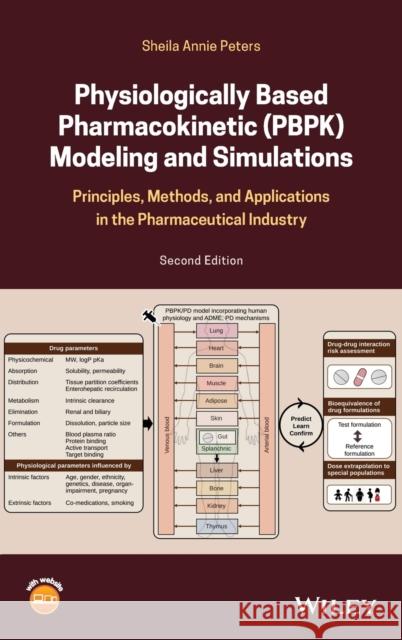
Physiologically Based Pharmacokinetic (Pbpk) Modeling and Simulations: Principles, Methods, and Applications in the Pharmaceutical Industry
ISBN-13: 9781119497684 / Angielski / Twarda / 2021 / 624 str.
(netto: 761,69 VAT: 5%)
Najniższa cena z 30 dni: 778,90
ok. 30 dni roboczych.
Darmowa dostawa!
Preface xixAcknowledgements xxiAbout the companion xxiiiSection I. Principles, Methods, andBackground Information 11 A Review of Pharmacokinetic and Pharmacodynamic Principles 31.1 Introduction 41.2 Pharmacokinetic Principles 41.2.1 Routes of Drug Administration 41.2.2 Intravenous Bolus 41.2.3 Plasma Protein Binding and Blood-Plasma Ratio 91.2.4 Hepatic, Renal, and Biliary Clearances 121.2.5 Extravascular (Subcutaneous, Intramuscular, and Per Oral) Absorption 161.2.6 Absorption from Solid Dosage Forms 201.2.7 Role of Transporters in ADME 221.2.8 Linear and Non-Linear Pharmacokinetics 241.2.9 Intravenous Infusion, Repeated Dosing, Steady State Kinetics, and Accumulation 251.2.10 Active Metabolite and Prodrug Kinetics 281.3 Pharmacokinetic Variability 321.4 Pharmacokinetics Optimization in Drug Discovery 341.5 Pharmacodynamic Principles 341.5.1 Pharmacological Targets and Drug Action 351.5.2 Functional Adaptation Processes 391.5.3 Biomarkers, Surrogate Endpoints, and Clinical Endpoints 41Keywords 47References 482 A Review of Drug-Drug Interactions 512.1 Introduction 512.2 Drug Interactions Mediated by Enzymes and Transporters at Various Sites 542.3 Factors Affecting DDI 542.4 In Vitro Methods to Evaluate Drug-Drug Interactions 562.4.1 Candidate Drug as a Potential Perpetrator 572.4.2 Candidate Drug as a Potential Victim of Inhibition 582.5 Sources of Uncertainty 592.6 Therapeutic Protein-Drug Interaction 59References 613 Modeling Pharmacokinetics, Pharmacodynamics, And Drug Interactions 653.1 Introduction 663.2 Modeling Pharmacokinetics 663.2.1 Compartmental Modeling of Linear and Nonlinear Pharmacokinetics (Enzyme and/or Transporter Capacity Limitation as Well as Target-Mediated Drug Disposition) 673.2.2 Population Pharmacokinetics 763.3 Pharmacokinetics/Pharmacodynamics and PK/Efficacy (Exposure/ Response) Modeling 803.3.1 PK/PD Models for Direct Effect: Sigmoid Emax Model 843.3.2 PK/PD Models for Direct Effect: Classical Receptor Theory 863.3.3 PK/PD Models Accommodating Delayed Pharmacological Response 893.3.4 PK/PD Models Accommodating Functional Adaptation Leading to Nonlinearity in Pharmacological Response with Respect to Time 963.3.5 PK/Efficacy Modeling 973.3.6 Translation of PK/PD and PK/Efficacy Modeling to Human 1003.3.7 Average, Minimum, and Maximum Steady-State Concentrations 1043.3.8 Estimation of Biologically Effective Dose in Human 1073.3.9 Therapeutic Window 1093.3.10 Static Models for Drug Interactions 1093.4 Physiologically Based Pharmacokinetic (PBPK) Modeling and Its Integration with Pharmacodynamics and Efficacy Models 1123.4.1 PK Modeling Compartmental vs PBPK 1123.4.2 PK Variability: Population PK (popPK) Modeling vs PBPK 1143.4.3 Integration of PBPK with PD, Quantitative Systems Pharmacology (QSP) Models or Quantitative Systems Toxicologyand Safety (QSTS) 1143.4.4 PBPK Models to Evaluate Drug-Drug Interactions 1153.4.5 DDI Risk Assessment with PBPK vs Static Models 118Keywords 123References 1254 Physiological Model For Absorption 1294.1 Introduction 1304.2 Drug Absorption and Gut Bioavailability 1304.2.1 Solubility and Dissolution Rate 1304.2.2 Permeability: Transcellular, Paracellular, and Carrier-Mediated Pathways 1364.2.3 Barriers to Membrane Transport - Luminal Degradation, Efflux, and Gut Metabolism 1384.3 Factors Affecting Drug Absorption and Gut Bioavailability 1404.3.1 Physiological Factors Affecting Oral Drug Absorption and Species Differences in Physiology 1404.3.2 Compound-Dependent Factors 1444.3.3 Formulation-Dependent Factors 1444.4 In Silico Predictions of Passive Permeability and Solubility 1474.4.1 In Silico Models for Permeability 1474.4.2 In Silico Models for Solubility 1474.5 Measurement of Permeability, Solubility, Luminal Stability, Efflux, Intestinal Metabolism 1484.5.1 In Vitro, In Situ, and In Vivo Models for Effective Permeability 1484.5.2 Measurement of Thermodynamic or Equilibrium Solubility 1534.5.3 Luminal Stability 1544.5.4 Efflux 1544.5.5 In Vitro Models for Gut Metabolism and Estimation of Fraction Escaping Gut Metabolism 1554.6 Absorption Modeling 156Keywords 162References 1635 Physiological Model For Distribution 1695.1 Introduction 1705.2 Factors Affecting Tissue Distribution of Xenobiotics 1705.2.1 Physiological Factors and Species Differences in Physiology 1715.2.2 Compound-Dependent Factors 1765.3 In Silico Models of Tissue Partition Coefficients 1765.4 Measurement of Parameters Representing the Rate and Extent of Tissue Distribution 1815.4.1 Assessment of Rate and Extent of Brain Penetration 1815.5 Physiological Model for Drug Distribution 1865.6 Drug Concentrations at the Site of Action 187Keywords 189References 1896 Physiological Models For Drug Metabolism And Excretion 1936.1 Introduction 1936.2 Factors Affecting Drug Metabolism and Excretion of Xenobiotics 1946.3 Models for Hepatobiliary and Renal Excretion 1976.3.1 In Silico Models 1976.3.2 In Vitro Models for Hepatic Metabolism 1976.3.3 In Vitro Models for Transporters 2006.4 Physiological Models 2036.4.1 Hepato-Biliary Elimination of Parent Drug and Metabolites 2056.4.2 Renal Excretion 208References 2117 Generic Whole-Body Physiologically Based Pharmacokinetic Modeling 2177.1 Introduction 2177.2 Structure of a Generic Physiologically-Based Pharmacokinetic (PBPK) Model 2187.3 Somatic Compartments 2207.3.1 Lungs (LU) 2207.3.2 Arterial Blood (ART) 2207.3.3 Venous Blood (VEN) 2207.3.4 Stomach (ST) 2207.3.5 Gut (GU) 2207.4 Model Assumptions 2217.5 PBPK Software 221References 2238 Pbpk Modeling Of Biotherapeutics 2258.1 Introduction 2268.2 Therapeutic Proteins 2268.2.1 Peptides and Proteins 2268.2.2 Antibodies and Antibody-Based Therapies 2278.3 Pharmacokinetics of Therapeutic Proteins 2348.3.1 Absorption 2348.3.2 Renal Elimination 2358.3.3 Immunogenicity 2358.3.4 PEGylation 2398.3.5 Transport by Convective and Transcytotic Extravasation 2398.3.6 Catabolic Elimination (Proteolysis) 2398.3.7 FcRn-Mediated Protection of IgGs Against Catabolism in FcRn-Rich Cells 2418.3.8 Distribution and lymphatic elimination 2428.3.9 Target-Mediated Drug Disposition and Receptor-Mediated Endocytosis 2438.4 PBPK Modeling of Monoclonal Antibodies 2448.4.1 Full PBPK Model for Monoclonal Antibodies 2448.4.2 Minimal PBPK Model for Monoclonal Antibodies 2538.5 Applications of PBPK Modeling of Monoclonal Antibodies 2538.5.1 Pharmacokinetic Scaling 2538.5.2 PBPK Integration with Pharmacodynamics of Monoclonal Antibodies 255Keywords 156References 2589 Uncertainty And Population Variability 2639.1 Introduction 2649.2 Distinguishing Uncertainty and Variability 2649.3 Sources of Uncertainty in Drug-related Parameters 2649.4 Sources of Variability in System Parameters 2669.5 Handling Population Variability 2699.5.1 A POSTERIORI and A PRIORI Approaches to Handling Population Variability 2699.5.2 Correlations Between Parameters 2719.6 Uncertainty and Sensitivity Analysis 2729.6.1 Local Sensitivity Analysis (One-at-a-time (OAT) and Derivative-based Methods) 2729.6.2 Parameter Interactions and Global Sensitivity Analysis (GSA) 2759.6.3 Global Sensitivity Analysis for Correlated Parameters (cGSA) 2789.6.4 Applications of Sensitivity Analysis for PBPK Models 2809.6.5 Limitations of Global Sensitivity Analysis 2819.7 Uncertainty and Population Variability in Clinical Efficacy and Safety 282Keywords 285References 28510 Nonclinical, Clinical, and Model-Informed Drug Development 29310.1 Introduction: An Overview of Different Phases of Drug Development 29410.2 Nonclinical Development 29510.2.1 Preclinical Pharmacology, PK/PD Modeling, and Human Dose Prediction 29710.2.2 Safety and Toxicology Studies 29710.2.3 Studies with Radiolabeled Compound 29810.3 Clinical Pharmacology Studies 30210.3.1 First-in-Human, Single, and Multiple Ascending Dose Studies 30210.3.2 Biopharmaceutics - Absolute Oral Bioavailability and Bioequivalence Study 30410.3.3 Food Effect Study 30410.3.4 Organ (Hepatic and Renal) Impairment Study 30510.3.5 Pediatric Assessment 30610.3.6 Mass Balance Study 30710.3.7 Drug Interaction Study 30710.3.8 Pharmacogenomics Study 30810.3.9 Thorough QT (TQT) and Concentration QT (C-QT) Study 30810.3.10 Immunogenicity Assays and Comparability Study for Biologics 30910.3.11 Drug Labelling 30910.4 Clinical Development in Oncology 31010.5 Fast Track Routes to Address Unmet Medical Need in the Treatment of Serious Conditions 31110.6 Model-Informed Drug Development 31210.7 Physiologically Based Pharmacokinetic Models Complementing Clinical Pharmacology Studies 31410.8 PBPK in Oncology 315Regulatory Guidelines 316References 319Section II. Applications In The Pharmaceutical Industry 32311 Overview Of Pbpk Applications 32511.1 Introduction 32511.2 PBPK Applications for Internal Decisions 32611.3 PBPK Applications for Regulatory Filing 32811.4 PBPK Modeling and Simulations Along the Value Chain 332References 33512 Applications Of Hypothesis Generation And Testing With Pbpk Models 33712.1 Introduction 33812.2 Hypothesis Generation and Testing with PBPK Models 33812.2.1 Parameter Estimation from Intravenous Pharmacokinetic Profiles 33812.2.2 Simulation of Oral PK Profile 34112.2.3 Sensitivity Analysis 34212.2.4 Verification of Hypotheses 34612.2.5 Auto-inhibition of Drug-Metabolizing Enzymes, Uptake and Efflux Transporters 34712.3 Hypothesis Generation and Testing Along the Value Chain 34812.4 Conclusions 351References 35113 Applications of Physiologically Based Pharmacokinetic Models Integrated With Drug Effect Models (Pbpk/Pd) 35313.1 Introduction: Integration of PBPK with Drug Effect Models 35413.2 Dosing in Specific Populations 35513.3 PBPK/PD for Bottom-Up Prediction of Inter-Patient Variability in Drug Response 35713.4 PBPK/PD for Predicting the Inter-Patient Variability in Response to Prodrugs and Active Metabolites 35813.5 PBPK/PD When Systemic Concentrations are not the Driver forDrug Response 35913.5.1 Pre-Systemic Drug Target 35913.5.2 Effect-Site Drug Concentration Different from Systemic Concentration 36013.6 PBPK/PD for Monoclonal Antibodies 36213.7 PBPK Models Linked to Quantitative Systems Pharmacology and Toxicology Models 36313.7.1 PBPK-QST Models to Predict Drug-Induced Liver Injury 36313.7.2 PBPK-QST Models to Predict Drug-Induced Cardiotoxicity 36713.8 Conclusions 371References 37114 Pbpk Modeling and Simulations to Evaluate Clinical Drug-Drug Interactions 37514.1 Introduction 37614.2 Clinical DDI Studies and Modeling Approaches to Address Key Questions Related to Drug-Drug Interactions 37614.2.1 Dedicated Clinical DDI Studies 37814.2.2 Investigation of Phenotypic Effects for NMEs Predominantly Cleared by Polymorphic Enzyme or Transporter 37914.2.3 Prospective Nested DDI Study 38014.2.4 Cocktail DDI Study 38114.2.5 PBPK Modeling and Simulations 38114.2.6 Claims Relating to Results of DDI Studies 38114.2.7 Impact on Label 38214.3 PBPK Modeling of Different Types of Drug Interactions 38214.3.1 PBPK Modeling Strategy: New Molecular Entity as Victim of CYP-Based Drug Interactions 38214.3.2 PBPK Modeling Strategy: New Molecular Entity as Perpetrator of CYP-Based Drug Interactions 38314.3.3 Non-CYP Based Drug Interactions 38414.3.4 Transporter-Mediated Drug Interactions 38514.4 DDI Predictions with PBPK Modeling and Simulations in Clinical Drug Development and Regulatory Submissions 38714.4.1 DDI Predictions Along the Value Chain (Figure 14.5) 38714.4.2 Possible Regulatory Outcomes, Based on the Predictions from a Verified and Validated PBPK Model 38914.4.3 Regulatory Acceptance of PBPK Analyses Included in Regulatory Submissions 39014.4.4 Predictive Performance of PBPK Models 39114.5 Comparison of DDI Prediction Using Static and Dynamic Models 39214.6 Conclusions 393References 39415 Dose Extrapolation Across Populations (Healthy Adult Caucasian To Pediatric, Pregnant Women, Different Ethnicities, Geriatric, Smokers And Obese Populations) 39715.1 Introduction 39815.2 PBPK Modeling Strategy for Dose Extrapolation to Specific Populations 39815.3 Potential Benefits of PBPK Modeling for Dose Extrapolations to Specific Populations 39915.4 Dose Extrapolations to Specific populations 40415.4.1 Pediatric Starting Dose Selection 40415.4.2 Pregnancy 40615.4.3 Ethnicity - Japanese Population 40715.4.4 Geriatric Population 40815.4.5 Obese 40915.4.6 Smokers 41015.5 Conclusions 410References 41116 Dose Extrapolation Across Populations: Healthy Adult To Hepatic And Renal Impairment Populations 41716.1 Introduction 41816.2 Pathophysiological Changes in Organ Impairment 41916.2.1 Hepatic Impairment 41916.2.2 Renal Impairment 42016.3 PBPK Modeling Strategy: Model Development, Verification, Validation, and Application 42016.4 Benefits of Applying Validated PBPK Models to Organ-Impaired Populations 42116.4.1 Enhancing Regulatory Confidence in the Application of PBPK Modeling for the Prediction of Exposure in the Organ-Impaired Population 42116.4.2 Contribution of PBPK to the Totality of Evidence in Evaluating the Effect of Renal Impairment on Drug Exposure to Inform Labelling 42416.5 Conclusions 425References 42617 Absorption-Related Applications Of Pbpk Modeling 42917.1 Introduction 42917.2 In Vitro - In Vivo Disconnect, Parameter Non-Identifiability and the Importance of Identifying Factors Limiting Absorption Through a Deconvolution of the Mechanisms Contributing to Gut Bioavailability 43117.3 Non-Regulatory Internal Applications of PBPK Modeling and Simulations 43317.3.1 Prediction of Fraction Absorbed 43317.3.2 Oral Formulation Development 43317.4 Regulatory Applications of PBPK Modeling and Simulations 43817.4.1 Food-Drug Interactions 43817.4.2 Interactions of a Poorly Soluble Weak Base with Acid Reducing Agents (ARAs) 44417.4.3 In Vitro - In Vivo Correlations (IVIVCs) to Serve as Surrogate for Bioequivalence Testing (Case Study 12) 44517.4.4 Biowaivers Based on Virtual Bioequivalence 44917.4.5 Virtual Bioequivalence of Locally Acting Products (LAPs) 45017.5 Conclusions 450References 45218 Regulatory Guidelines On The Reporting Of Physiologically Based Pharmacokinetic (Pbpk) Modeling Analysis 45718.1 Introduction 45718.2 Food and Drug Administration (FDA) Guidelines 45818.3 European Medicines Agency (EMA) Guidelines 45918.4 Comparison of FDA and EMA Guidelines 46118.5 Risk-Informed Evidentiary Framework to Assess PBPK Model Credibility 46318.6 Drug Model Verification of Locally Acting Products (LAPs) 464 References 46619 Resolving The Challenges To Establishing Confidence In Pbpk Models 46919.1 Introduction 47019.2 Requirements for Developing Mechanistically Credible PBPK Models for the Three Broad Categories of Applications 47019.3 Challenges to Developing Mechanistically Credible PBPK Models and Consequences 47319.3.1 Model Building 47319.3.2 Model Verification of Predicted Exposure and Validation of Predictive Performance 47619.4 Resolving the Challenges to Developing Mechanistically Credible PBPK Models 47619.5 Totality of Evidence 47819.6 Conclusions 480References 48120 Epilogue 48320.1 PBPK Modeling Successes 48320.2 Challenges 48420.2.1 Drug Model Parameterization 48420.2.2 Knowledge Gaps in Physiological Parameters 48520.2.3 Prospective Validation of Prediction Performance 48520.3 Meeting the Challenges 48520.4 Future Directions for PBPK Modeling 486References 488Section III. Case Studies Of Pbpk Applications In The Pharmaceutical Industry 491Case Study 1 Hypothesis Testing (Solubility) 493Case Study 2 Hypothesis Testing (Gastric Emptying) 499Case Study 3 Hypothesis Testing (Intestinal Loss) 505Case Study 4 Pbpk/Pd 509Case Study 5 Drug-Drug Interaction (Inhibition) 515Case Study 6 Drug-Drug Interaction (Induction) 521Case Study 7 Genetic Polymorphism 527Case Study 8 Pediatric Extrapolation 535Case Study 9 Pregnancy 541Case Study 10 Hepatic Impairment 547Case Study 11 Renal Impairment 555Case Study 12 Absorption - Ivivc 561Appendices 567Index 579
Sheila Annie Peters, PhD, is Head of Translational Quantitative Pharmacology at Merck Healthcare, Darmstadt, Germany. Previously, she was an Associate Principal Scientist for Discovery DMPK and Bioanalytical Chemistry at AstraZeneca and Principal Scientist at Cyprotex Discovery. She has lectured at the Regional Engineering College (Trichy, India) and University of Madras and Pondicherry University.




Czytaj nas na:
1997-2026 DolnySlask.com Agencja Internetowa
KrainaKsiazek.PL - Księgarnia Internetowa


