• Wyszukiwanie zaawansowane
  • Kategorie
  • Kategorie BISAC
  • Książki na zamówienie
  • Promocje
  • Granty
  • Książka na prezent
  • Opinie
  • Pomoc
  • Załóż konto
  • Zaloguj się

Photoinitiators for Polymer Synthesis: Scope, Reactivity, and Efficiency » książka

zaloguj się | załóż konto
Logo Krainaksiazek.pl

koszyk

konto

szukaj
topmenu
Księgarnia internetowa
Szukaj
Książki na zamówienie
Promocje
Granty
Książka na prezent
Moje konto
Pomoc
 
 
Wyszukiwanie zaawansowane
Pusty koszyk
Bezpłatna dostawa dla zamówień powyżej 40 złBezpłatna dostawa dla zamówień powyżej 40 zł

Kategorie główne

• Nauka
 [2953408]
• Literatura piękna
 [1818674]

  więcej...
• Turystyka
 [70115]
• Informatyka
 [151610]
• Komiksy
 [36466]
• Encyklopedie
 [23169]
• Dziecięca
 [612210]
• Hobby
 [135681]
• AudioBooki
 [1806]
• Literatura faktu
 [226254]
• Muzyka CD
 [391]
• Słowniki
 [2978]
• Inne
 [449189]
• Kalendarze
 [1375]
• Podręczniki
 [166538]
• Poradniki
 [469635]
• Religia
 [508779]
• Czasopisma
 [523]
• Sport
 [61275]
• Sztuka
 [243340]
• CD, DVD, Video
 [3479]
• Technologie
 [219064]
• Zdrowie
 [98975]
• Książkowe Klimaty
 [124]
• Zabawki
 [2531]
• Puzzle, gry
 [3670]
• Literatura w języku ukraińskim
 [261]
• Art. papiernicze i szkolne
 [8134]
Kategorie szczegółowe BISAC

Photoinitiators for Polymer Synthesis: Scope, Reactivity, and Efficiency

ISBN-13: 9783527332106 / Angielski / Twarda / 2012 / 494 str.
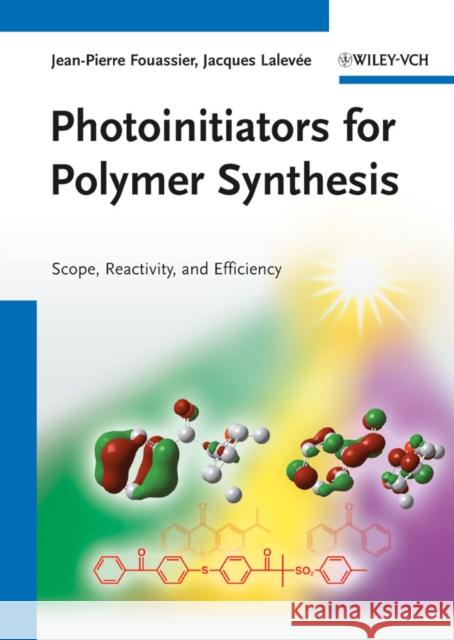
J.P. Fouassier;Jacques Lalevee
Photoinitiators for Polymer Synthesis: Scope, Reactivity, and Efficiency Fouassier, Jean-Pierre 9783527332106 Wiley-VCH Verlag GmbH - książkaWidoczna okładka, to zdjęcie poglądowe, a rzeczywista szata graficzna może różnić się od prezentowanej.

Photoinitiators for Polymer Synthesis: Scope, Reactivity, and Efficiency

ISBN-13: 9783527332106 / Angielski / Twarda / 2012 / 494 str.

J.P. Fouassier;Jacques Lalevee
cena 952,34
(netto: 906,99 VAT:  5%)

Najniższa cena z 30 dni: 821,63
Termin realizacji zamówienia:
ok. 16-18 dni roboczych.

Darmowa dostawa!

Photoinitiating systems for polymerization reactions are largely encountered in a variety of traditional and high-tech sectors, such as radiation curing, (laser) imaging, (micro)electronics, optics, and medicine.

This book extensively covers radical and nonradical photoinitiating systems and is divided into four parts:

* Basic principles in photopolymerization reactions
* Radical photoinitiating systems
* Nonradical photoinitiating systems
* Reactivity of the photoinitiating system

The four parts present the basic concepts of photopolymerization reactions, review all of the available photoinitiating systems and deliver a
thorough description of the encountered mechanisms. A large amount of experimental and theoretical data has been collected herein. This
book allows the reader to gain a clear understanding by providing a general discussion of the photochemistry and chemistry involved.
The most recent and exciting developments, as well as the promising prospects for new applications, are outlined.


Kategorie:
Nauka, Chemia
Kategorie BISAC:
Science > Chemistry - Industrial & Technical
Wydawca:
Wiley-VCH Verlag GmbH
Język:
Angielski
ISBN-13:
9783527332106
Rok wydania:
2012
Ilość stron:
494
Waga:
1.05 kg
Wymiary:
24.64 x 17.27 x 2.79
Oprawa:
Twarda
Wolumenów:
01
Dodatkowe informacje:
Bibliografia
Wydanie ilustrowane

Abbreviations XIX

Introduction XXV

Part I Basic Principles and Applications of Photopolymerization Reactions 1

1 Photopolymerization and Photo–Cross–Linking 3

References 6

2 Light Sources 11

2.1 Electromagnetic Radiation 11

2.2 Characteristics of a Light Source 12

2.3 Conventional and Unconventional Light Sources 13

References 20

3 Experimental Devices and Examples of Applications 21

3.1 UV Curing Area: Coatings, Inks, Varnishes, Paints, and Adhesives 21

3.2 Conventional Printing Plates 25

3.3 Manufacture of Objects and Composites 25

3.4 Stereolithography 25

3.5 Applications in Microelectronics 26

3.6 Laser Direct Imaging 26

3.7 Computer–to–Plate Technology 27

3.8 Holography 27

3.9 Optics 28

3.10 Medical Applications 28

3.11 Fabrication of Nano–Objects through a Two–Photon Absorption Polymerization 29

3.12 Photopolymerization Using Near–Field Optical Techniques 29

3.13 Search for New Properties and New End Uses 30

3.14 Photopolymerization and Nanotechnology 32

3.15 Search for a Green Chemistry 33

References 34

4 Photopolymerization Reactions 41

4.1 Encountered Reactions, Media, and Experimental Conditions 41

4.2 Typical Characteristics of Selected Photopolymerization Reactions 45

4.3 Two–Photon Absorption–Induced Polymerization 60

4.4 Remote Curing: Photopolymerization without Light 60

4.5 Photoactivated Hydrosilylation Reactions 61

References 61

5 Photosensitive Systems 73

5.1 General Properties 73

5.2 Absorption of Light by a Molecule 74

5.3 Jablonski s Diagram 78

5.4 Kinetics of the Excited State Processes 78

5.5 Photoinitiator and Photosensitizer 80

5.6 Absorption of a Photosensitive System 81

5.7 Initiation Step of a Photoinduced Polymerization 82

5.8 Reactivity of a Photosensitive System 86

References 87

6 Approach of the Photochemical and Chemical Reactivity 89

6.1 Analysis of the Excited–State Processes 89

6.2 Quantum Mechanical Calculations 93

6.3 Cleavage Process 94

6.4 Hydrogen Transfer Processes 95

6.5 Energy Transfer 96

6.6 Reactivity of Radicals 98

References 99

7 Efficiency of a Photopolymerization Reaction 103

7.1 Kinetic Laws 103

7.2 Monitoring the Photopolymerization Reaction 109

7.3 Efficiency versus Reactivity 111

7.4 Absorption of Light by a Pigment 112

7.5 Oxygen Inhibition 114

7.6 Absorption of Light Stabilizers 115

7.7 Role of the Environment 117

References 118

Part II Radical Photoinitiating Systems 123

8 One–Component Photoinitiating Systems 127

8.1 Benzoyl–Chromophore–Based Photoinitiators 127

8.2 Substituted Benzoyl–Chromophore–Based Photoinitiators 148

8.3 Hydroxy Alkyl Heterocyclic Ketones 157

8.4 Hydroxy Alkyl Conjugated Ketones 158

8.5 Benzophenone– and Thioxanthone–Moiety–Based Cleavable Systems 158

8.6 Benzoyl Phosphine Oxide Derivatives 161

8.7 Phosphine Oxide Derivatives 165

8.8 Trichloromethyl Triazines 165

8.9 Biradical–Generating Ketones 166

8.10 Peroxides 166

8.11 Diketones 167

8.12 Azides and Aromatic Bis–Azides 168

8.13 Azo Derivatives 168

8.14 Disulfide Derivatives 168

8.15 Disilane Derivatives 169

8.16 Diselenide and Diphenylditelluride Derivatives 170

8.17 Digermane and Distannane Derivatives 170

8.18 Carbon Germanium Cleavable–Bond–Based Derivatives 170

8.19 Carbon Silicon and Germanium Silicon Cleavable Bond–Based Derivatives 172

8.20 Silicon Chemistry and Conventional Cleavable Photoinitiators 172

8.21 Sulfur Carbon Cleavable–Bond–Based Derivatives 173

8.22 Sulfur Silicon Cleavable–Bond–Based Derivatives 173

8.23 Peresters 173

8.24 Barton s Ester Derivatives 174

8.25 Hydroxamic and Thiohydroxamic Acids and Esters 174

8.26 Organoborates 176

8.27 Organometallic Compounds 176

8.28 Metal Salts and Metallic Salt Complexes 178

8.29 Metal–Releasing Compound 178

8.30 Cleavable Photoinitiators in Living Polymerization 179

8.31 Oxyamines 183

8.32 Cleavable Photoinitiators for Two–Photon Absorption 184

8.33 Nanoparticle–Formation–Mediated Cleavable Photoinitiators 185

8.34 Miscellaneous Systems 185

8.35 Tentatively Explored UV–Light–Cleavable Bonds 185

References 187

9 Two–Component Photoinitiating Systems 199

9.1 Ketone–/Hydrogen–Donor–Based Systems 199

9.2 Dye–Based Systems 238

9.3 Other Type II Photoinitiating Systems 241

References 258

10 Multicomponent Photoinitiating Systems 269

10.1 Generally Encountered Mechanism 269

10.2 Other Mechanisms 271

10.3 Type II Photoinitiator/Silane: Search for New Properties 279

10.4 Miscellaneous Multicomponent Systems 281

References 281

11 Other Photoinitiating Systems 283

11.1 Photoinitiator–Free Systems or Self–Initiating Monomers 283

11.2 Semiconductor Nanoparticles 284

11.3 Self–Assembled Photoinitiator Monolayers 284

References 285

Part III Nonradical Photoinitiating Systems 287

12 Cationic Photoinitiating Systems 289

12.1 Diazonium Salts 289

12.2 Onium Salts 289

12.3 Organometallic Derivatives 308

12.4 Onium Salt/Photosensitizer Systems 311

12.5 Free–Radical–Promoted Cationic Photopolymerization 318

12.6 Miscellaneous Systems 332

12.7 Photosensitive Systems for Living Cationic Polymerization 332

12.8 Photosensitive Systems for Hybrid Cure 333

References 333

13 Anionic Photoinitiators 343

13.1 Inorganic Complexes 343

13.2 Organometallic Complexes 343

13.3 Cyano Derivative/Amine System 344

13.4 Photosensitive Systems for Living Anionic Polymerization 344

References 345

14 Photoacid Generators (PAG) Systems 347

14.1 Iminosulfonates and Oximesulfonates 347

14.2 Naphthalimides 348

14.3 Photoacids and Chemical Amplification 349

References 349

15 Photobase Generators (PBG) Systems 351

15.1 Oxime Esters 351

15.2 Carbamates 351

15.3 Ammonium Tetraorganyl Borate Salts 351

15.4 N–Benzylated–Structure–Based Photobases 352

15.5 Other Miscellaneous Systems 353

15.6 Photobases and Base Proliferation Processes 354

References 354

Part IV Reactivity of the Photoinitiating System 357

16 Role of the Experimental Conditions in the Performance of a Radical Photoinitiator 359

16.1 Role of Viscosity 360

16.2 Role of the Surrounding Atmosphere 361

16.3 Role of the Light Intensity 361

References 364

17 Reactivity and Efficiency of Radical Photoinitiators 367

17.1 Relative Efficiency of Photoinitiators 367

17.2 Role of the Excited–State Reactivity 377

17.3 Role of the Medium on the Photoinitiator Reactivity 381

17.4 Structure/Property Relationships in Photoinitiating Systems 388

References 394

18 Reactivity of Radicals toward Oxygen, Hydrogen Donors, Monomers, and Additives: Understanding and Discussion 399

18.1 Alkyl and Related Carbon–Centered Radicals 399

18.2 Aryl Radicals 401

18.3 Benzoyl Radicals 402

18.4 Acrylate and Methacrylate Radicals 403

18.5 Aminoalkyl Radicals 404

18.6 Phosphorus–Centered Radicals 412

18.7 Thiyl Radicals 413

18.8 Sulfonyl and Sulfonyloxy Radicals 417

18.9 Silyl Radicals 418

18.10 Oxyl Radicals 425

18.11 Peroxyl Radicals 426

18.12 Aminyl Radicals 431

18.13 Germyl and Stannyl Radicals 432

18.14 Boryl Radicals 435

18.15 Lophyl Radicals 439

18.16 Iminyl Radicals 439

18.17 Metal–Centered Radicals 440

18.18 Propagating Radicals 442

18.19 Radicals in Controlled Photopolymerization Reactions 443

18.20 Radicals in Hydrosilylation Reactions 446

References 447

19 Reactivity of Radicals: Towards the Oxidation Process 455

19.1 Reactivity of Radicals toward Metal Salts 455

19.2 Radical/Onium Salt Reactivity in Free–Radical–Promoted Cationic Photopolymerization 456

References 459

Conclusion 461

Index 465

Jean–Pierre Fouassier was a Professor of Physical Chemistry at the University of Haute Alsace, Mulhouse until October 2011. He was Head of a University/CNRS Laboratory, a Member of the Organizing Committees of many International Conferences, a Director of the Ecole Nationale
Supérieure de Chimie de Mulhouse and a Member of the French National University Council. His research interests focused both on the excited–state processes in photoinitiatiors and photosensitizers and their application to photopolymerization reactions in various areas. He has
published a total of around 600 research articles, book chapters, review papers, technical papers, proceedings, and patents, as well as authoring one book, one technical report and editing 6 books (14 volumes).

Jacques Lalevée is a Professor of Physical Chemistry at the University of Haute Alsace, Mulhouse. His research interests are focused on free–radical chemistry and the design of efficient systems for photopolymerization processes. He has published a total of around 160 research
articles, technical papers, proceedings, patents, review papers, and book chapters. He is also a Member of the Institut Universitaire de France (Paris).

Photoinitiating systems for polymerization reactions are largely encountered in a variety of traditional and high–tech sectors, such as radiation curing, (laser) imaging, (micro)electronics, optics, and medicine. This book extensively covers radical and nonradical photoinitiating systems and is divided into four parts:

  • Basic principles in photopolymerization reactions
  • Radical photoinitiating systems
  • Nonradical photoinitiating systems
  • Reactivity of the photoinitiating system

The four parts present the basic concepts of photopolymerization reactions, review all of the available photoinitiating systems and deliver a thorough description of the encountered mechanisms. A large amount of experimental and theoretical data has been collected herein. This book allows the reader to gain a clear understanding by providing a general discussion of the photochemistry and chemistry involved.
The most recent and exciting developments, as well as the promising prospects for new applications, are outlined.




Udostępnij

Facebook - konto krainaksiazek.pl


Opinie o Krainaksiazek.pl na Opineo.pl

Partner Mybenefit

Krainaksiazek.pl w programie rzetelna firma Krainaksiaze.pl - płatności przez paypal

Czytaj nas na:

Facebook - krainaksiazek.pl
  • książki na zamówienie
  • granty
  • książka na prezent
  • kontakt
  • pomoc
  • opinie
  • regulamin
  • polityka prywatności

Zobacz:

  • Księgarnia czeska

  • Wydawnictwo Książkowe Klimaty

1997-2026 DolnySlask.com Agencja Internetowa

© 1997-2022 krainaksiazek.pl
     
KONTAKT | REGULAMIN | POLITYKA PRYWATNOŚCI | USTAWIENIA PRYWATNOŚCI
Zobacz: Księgarnia Czeska | Wydawnictwo Książkowe Klimaty | Mapa strony | Lista autorów
KrainaKsiazek.PL - Księgarnia Internetowa

Polityka prywatnosci - link
Krainaksiazek.pl - płatnośc Przelewy24
Przechowalnia Przechowalnia




