• Wyszukiwanie zaawansowane
  • Kategorie
  • Kategorie BISAC
  • Książki na zamówienie
  • Promocje
  • Granty
  • Książka na prezent
  • Opinie
  • Pomoc
  • Załóż konto
  • Zaloguj się

Peptides and Peptide-Based Biomaterials and Their Biomedical Applications » książka


zaloguj się | załóż konto
Logo Krainaksiazek.pl

koszyk

konto

szukaj
topmenu
Księgarnia internetowa
Szukaj
Książki na zamówienie
Promocje
Granty
Książka na prezent
Moje konto
Pomoc
 
 
Wyszukiwanie zaawansowane
Pusty koszyk
Bezpłatna dostawa dla zamówień powyżej 20 złBezpłatna dostawa dla zamówień powyżej 20 zł

Kategorie główne

• Nauka
 [2950560]
• Literatura piękna
 [1849509]

  więcej...
• Turystyka
 [71097]
• Informatyka
 [151150]
• Komiksy
 [35848]
• Encyklopedie
 [23178]
• Dziecięca
 [617388]
• Hobby
 [139064]
• AudioBooki
 [1657]
• Literatura faktu
 [228597]
• Muzyka CD
 [383]
• Słowniki
 [2855]
• Inne
 [445295]
• Kalendarze
 [1464]
• Podręczniki
 [167547]
• Poradniki
 [480102]
• Religia
 [510749]
• Czasopisma
 [516]
• Sport
 [61293]
• Sztuka
 [243352]
• CD, DVD, Video
 [3414]
• Technologie
 [219456]
• Zdrowie
 [101002]
• Książkowe Klimaty
 [124]
• Zabawki
 [2311]
• Puzzle, gry
 [3459]
• Literatura w języku ukraińskim
 [254]
• Art. papiernicze i szkolne
 [8079]
Kategorie szczegółowe BISAC

Peptides and Peptide-Based Biomaterials and Their Biomedical Applications

ISBN-13: 9783319660943 / Angielski / Twarda / 2017 / 300 str.
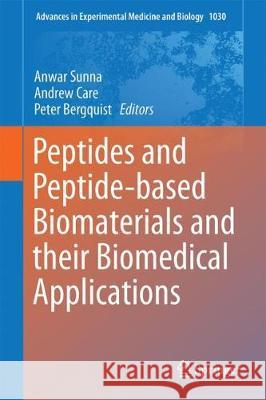
Anwar Sunna; Andrew Care; Peter Bergquist
Peptides and Peptide-Based Biomaterials and Their Biomedical Applications Sunna, Anwar 9783319660943 Springer - książkaWidoczna okładka, to zdjęcie poglądowe, a rzeczywista szata graficzna może różnić się od prezentowanej.

Peptides and Peptide-Based Biomaterials and Their Biomedical Applications

ISBN-13: 9783319660943 / Angielski / Twarda / 2017 / 300 str.

Anwar Sunna; Andrew Care; Peter Bergquist
cena 603,81
(netto: 575,06 VAT:  5%)

Najniższa cena z 30 dni: 578,30
Termin realizacji zamówienia:
ok. 22 dni roboczych
Dostawa w 2026 r.

Darmowa dostawa!

Solid-binding peptides have been used increasingly as molecular building blocks in nanobiotechnology as they can direct the assembly and functionalisation of a diverse range of materials and have the ability to regulate the synthesis of nanoparticles and complex nanostructures. Nanostructured materials such as β-sheet fibril-forming peptides and α-helical coiled coil systems have displayed many useful properties including stimulus-responsiveness, modularity and multi-functionality, providing potential technological applications in tissue engineering, antimicrobials, drug delivery and nanoscale electronics. The current situation with respect to self-assembling peptides and bioactive matrices for regenerative medicine are reviewed, as well as peptide-target modeling and an examination of future prospects for peptides in these areas.


Kategorie:
Nauka, Medycyna
Kategorie BISAC:
Science > Biologia molekularna
Science > Biochemia
Technology & Engineering > Materials Science - General
Wydawca:
Springer
Seria wydawnicza:
Advances in Experimental Medicine and Biology
Język:
Angielski
ISBN-13:
9783319660943
Rok wydania:
2017
Wydanie:
2017
Numer serii:
000253056
Ilość stron:
300
Waga:
8.10 kg
Wymiary:
25.4 x 17.8
Oprawa:
Twarda
Wolumenów:
01

Introduction
Binding peptides for the functionalisation of nanomaterials in biomedicine  
Peptide-based biopolymers in biomedicine and biotechnology 
Cell penetrating peptides 
Bioactive peptides 
Nanostructured materials constructed from peptides 
Peptides for the synthesis of biomaterials and biomedical electronics 
Self-assembling peptides for tissue 
Peptide-based bioactive matrices for regenerative medicine
Antimicrobial peptides 
Peptides and drug delivery 
Peptide-target interaction modelling

Anwar Sunna is an Associate Professor in the Department of Chemistry and Biomolecular Sciences at Macquarie University (MQ), Sydney, Australia. He obtained a PhD from the Hamburg University of Technology in Germany. He was manager of the Environmental Biotechnology Co-operative Research Centre at MQ and later was the recipient of the prestigious Vice-Chancellor's Innovation Fellowship. His recent research has been on the interaction between biomolecules and inorganic compounds including new synthetic peptide linkers with applications in the functionalisation of nanoparticles, bioimaging and cancer therapy. Anwar is a member of the MQ Biomolecular Discovery and Design Research Centre, MQ Biosecurity Futures Research Centre, Australian Research Council (ARC) Training Centre for Molecular Technology in the Food Industry and the ARC Centre of Excellence for Nanoscale BioPhotonics. He is also one of the directors of Synthetic Biology Australasia.

Andrew Care is a Research Fellow in the ARC Centre of Excellence for Nanoscale BioPhotonics, a transdisciplinary research centre that aims to develop innovative nanotechnologies to investigate complex living systems. He obtained his PhD from Macquarie University (MQ) in Sydney, Australia. Andrew is also a member of both the MQ Biomolecular Discovery and Design Research Centre and the MQ BioFocus Research Centre. His current research is focused on the development of engineered biomolecules, including solid-binding peptides, to control the self-assembly and biofunctionalisation of materials and biomolecules in a range of biomedical and biotechnological applications.

Peter Bergquist is Emeritus Professor in the Biomolecular Discovery and Design Research Centre at Macquarie University and Emeritus Professor in the Department of Molecular Medicine & Pathology at The University of Auckland Medical School. He has a PhD and DSc from the University of Auckland in New Zealand and has been a Postdoctoral Fellow and Research Fellow at Harvard Medical School, Yale and Oxford Universities and a Visiting Fellow at New York University School of Medicine. His recent publications reflect research performed with the Environmental Biotechnology Co-operative Research Centre in Australia and he developed research expertise in gas phase catalysis and biofunctionalisation of inorganic matrices containing silica. He has been on the editorial boards of several significant journals such as Applied and Environmental Microbiology and Journal of Bacteriology.

This edited volume is composed of chapters written by experts in the field describing fundamental research on small peptide fragments in relation to their biological action and potential roles in biomedical applications from diagnosis to implant protection. It provides a review of the wide scope and significance of these relatively simple arrays of amino acids that have the ability to bind to surfaces of all kinds and can facilitate the autonomous assembly of structures in nanotechnology as well as penetrating cell membranes and delivering therapeutic drugs. Readers will learn of some of the impediments to a wider and more comprehensive catalog of these molecules and of some of the attributes of rationally-designed and chemically synthesised peptides as anticancer agents.

An overview is provided of the expansive variety of biological leads for biomedically relevant peptides as well as the wide array of tissues and biological, bioactive scaffolds that are dependent on these short peptide sequences addressing topics such as cartilage and hard tissue initiation and regeneration and the transition of active reagents from molluscs to drug leads for the treatment of chronic pain. Peptides can possess surface-specific non-covalent adsorption properties that can be exploited to enhance the functionality of medical implant materials but their implementation is largely on a trial-and-error basis because an understanding of general structure/function relationships is lacking. Molecular simulation approaches can provide relevant details at the atomic scale and prospects for advancing peptide-mediated medical implant surface treatments via molecular simulation are summarized. The literature has papers emphasizing the role of peptides in the design of biohybrid functional surfaces and there has been a growing interest in applying peptides as materials-selective assemblers and self-organizers, but applications are based largely on an empirical understanding of solid surface binding characteristics, as reviewed here.

The present work is written for researchers who may be considering entering this field and are exposed to a mass of fundamental research information on individual applications.  It has been our intention to trace how and where the research has emerged and to outline the opportunities we see to develop novel and well-grounded tools for specific therapeutic scenarios.


Udostępnij

Facebook - konto krainaksiazek.pl


Opinie o Krainaksiazek.pl na Opineo.pl

Partner Mybenefit

Krainaksiazek.pl w programie rzetelna firma Krainaksiaze.pl - płatności przez paypal

Czytaj nas na:

Facebook - krainaksiazek.pl
  • książki na zamówienie
  • granty
  • książka na prezent
  • kontakt
  • pomoc
  • opinie
  • regulamin
  • polityka prywatności

Zobacz:

  • Księgarnia czeska

  • Wydawnictwo Książkowe Klimaty

1997-2025 DolnySlask.com Agencja Internetowa

© 1997-2022 krainaksiazek.pl
     
KONTAKT | REGULAMIN | POLITYKA PRYWATNOŚCI | USTAWIENIA PRYWATNOŚCI
Zobacz: Księgarnia Czeska | Wydawnictwo Książkowe Klimaty | Mapa strony | Lista autorów
KrainaKsiazek.PL - Księgarnia Internetowa

Polityka prywatnosci - link
Krainaksiazek.pl - płatnośc Przelewy24
Przechowalnia Przechowalnia





