• Wyszukiwanie zaawansowane
  • Kategorie
  • Kategorie BISAC
  • Książki na zamówienie
  • Promocje
  • Granty
  • Książka na prezent
  • Opinie
  • Pomoc
  • Załóż konto
  • Zaloguj się

Particulate Emissions from Vehicles » książka


zaloguj się | załóż konto
Logo Krainaksiazek.pl

koszyk

konto

szukaj
topmenu
Księgarnia internetowa
Szukaj
Książki na zamówienie
Promocje
Granty
Książka na prezent
Moje konto
Pomoc
 
 
Wyszukiwanie zaawansowane
Pusty koszyk
Bezpłatna dostawa dla zamówień powyżej 20 złBezpłatna dostawa dla zamówień powyżej 20 zł

Kategorie główne

• Nauka
 [2949965]
• Literatura piękna
 [1857847]

  więcej...
• Turystyka
 [70818]
• Informatyka
 [151303]
• Komiksy
 [35733]
• Encyklopedie
 [23180]
• Dziecięca
 [617748]
• Hobby
 [139972]
• AudioBooki
 [1650]
• Literatura faktu
 [228361]
• Muzyka CD
 [398]
• Słowniki
 [2862]
• Inne
 [444732]
• Kalendarze
 [1620]
• Podręczniki
 [167233]
• Poradniki
 [482388]
• Religia
 [509867]
• Czasopisma
 [533]
• Sport
 [61361]
• Sztuka
 [243125]
• CD, DVD, Video
 [3451]
• Technologie
 [219309]
• Zdrowie
 [101347]
• Książkowe Klimaty
 [123]
• Zabawki
 [2362]
• Puzzle, gry
 [3791]
• Literatura w języku ukraińskim
 [253]
• Art. papiernicze i szkolne
 [7933]
Kategorie szczegółowe BISAC

Particulate Emissions from Vehicles

ISBN-13: 9780470724552 / Angielski / Twarda / 2008 / 512 str.
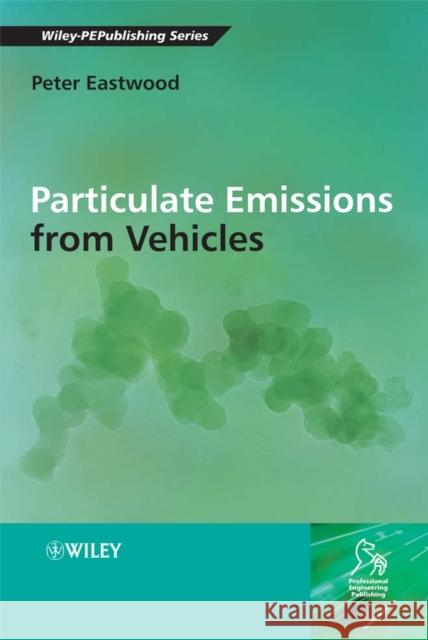
Peter Eastwood
Particulate Emissions from Vehicles Peter Eastwood 9780470724552 John Wiley & Sons - książkaWidoczna okładka, to zdjęcie poglądowe, a rzeczywista szata graficzna może różnić się od prezentowanej.

Particulate Emissions from Vehicles

ISBN-13: 9780470724552 / Angielski / Twarda / 2008 / 512 str.

Peter Eastwood
cena 621,02 zł
(netto: 591,45 VAT:  5%)

Najniższa cena z 30 dni: 614,67 zł
Termin realizacji zamówienia:
ok. 30 dni roboczych
Bez gwarancji dostawy przed świętami

Darmowa dostawa!

The public health risks posed by automotive particulate emissions are well known. Such particles are sufficiently small to reach the deepest regions of the lungs; and moreover act as carriers for many potentially toxic substances. Historically, diesel engines have been singled out in this regard, but recent research shows the need to consider particulate emissions from gasoline engines as well. Already implicated in more than one respiratory disease, the strongest evidence in recent times points to particle-mediated cardiovascular disorders (strokes and heart attacks). Accordingly, legislation limiting particulate emissions is becoming increasingly stringent, placing great pressure on the automotive industry to produce cleaner vehicles - pressure only heightened by the ever-increasing number of cars on our roads. Particulate Emissions from Vehicles addresses a field of increased international interest and research activity; discusses the impact of new legislation globally on the automotive industry; and explains new ways of measuring particle size, number and composition that are currently under development. The expert analysis and summary of the state-of-the-art, which encompasses the key areas of combustion performance, measurement techniques and toxicology, will appeal to R&D practitioners and engineers working in the automotive industry and related mechanical fields, as well as postgraduate students and researchers of engine technology, air pollution and life/ environmental science. The public health aspects will also appeal to the biomedical research community.


Kategorie:
Technologie
Kategorie BISAC:
Technology & Engineering > Machinery
Transportation > Automotive - General
Wydawca:
John Wiley & Sons
Seria wydawnicza:
Rsp
Język:
Angielski
ISBN-13:
9780470724552
Rok wydania:
2008
Numer serii:
000402200
Ilość stron:
512
Waga:
0.99 kg
Wymiary:
24.89 x 17.27 x 3.3
Oprawa:
Twarda
Wolumenów:
01
Dodatkowe informacje:
Bibliografia
Wydanie ilustrowane

"A comprehensive work ... a mission well accomplished ... a wealth of knowledge" (International Journal of Environment and Pollution, January 2010 )

"This is the definitive text in the field today Dr Eastwood has performed a valuable service" (Chemistry World, October 2008)

Preface.

Acronyms and Abbreviations.

Chapter 1. Introduction.

Chapter 2. Fundamentals.

2.1 Introduction.

2.2 Properties of Aerosol Particles.

2.2.1 Diameter and Shape.

2.2.2 Size Distribution.

2.2.3 Transport and Deposition.

2.2.4 Transformation and Mutation.

2.3 Particles in the Atmosphere.

2.3.1 Character and Behaviour.

2.3.2 Aerosols in Nature.

2.3.3 Anthropogenic Aerosols.

2.3.4 Environmental Implications.

2.4 Motor Vehicle Particulate.

2.4.1 Some Typical Particles Dissected.

2.4.2 What happens within the Engine.

2.4.3 What Happens within the Exhaust.

2.4.4 Number versus Mass.

2.5 Closure.

Chapter 3. Formation I: Composition.

3.1 Introduction.

3.2 Carbonaceous Fraction: I.

Classical Models.

3.2.1 Empiricisms.

3.2.2 Inception.

3.2.3 Surface Growth.

3.2.4 Agglomeration.

3.2.5 Oxidation.

3.3 Carbonaceous Fraction: II.

The Combusting Plume.

3.3.1 Historical Overview.

3.3.2 Premixed Burn.

3.3.3 Mixing–Controlled Burn.

3.3.4 Late Burn.

3.4 Carbonaceous Fraction: III.

Wall Interactions.

3.4.1 Theoretical.

3.4.2 Experimental.

3.5 Ash Fraction.

3.5.1 Chemical Reactions.

3.5.2 Gas–to–Particle Conversion.

3.6 Organic Fraction.

3.6.1 Preparatory Chemical Reactions.

3.6.2 Chemical Reactions in the Exhaust.

3.6.3 Gas–Particle Conversion: Models.

3.6.4 Gas–Particle Conversion: Measurements .

3.6.5 White Smoke.

3.7 Sulphate Fraction.

3.7.1 Chemical Reactions.

3.7.2 Gas–to–Particle Conversion.

3.8 Closure.

Chapter 4. Formation II: Location.

4.1 Introduction.

4.2 Within the Exhaust System.

4.2.1 Storage and Release.

4.2.2 Deposition within Catalysts.

4.3 Within the Exhaust Plume.

4.4 Within the Transfer Line.

4.5 Within the Dilution Tunnel.

4.6 On the Filter.

4.7 Closure.

Chapter 5. Measurement.

5.1 Introduction.

5.2 Particulate Measured Conventionally.

5.2.1 Drawing a Sample of Exhaust.

5.2.2 Diluting the Exhaust.

5.2.3 Collection onto a Filter.

5.2.4 Fractionation by Gasification.

5.2.5 Fractionation by Dissolution.

5.3.6 Chemically Assaying the Organic Fraction .

5.3.7 Biologically Assaying the Organic Fraction .

5.3 Particulate Measured Individually.

5.3.1 Inertial Mobility.

5.3.2 Electrical Mobility.

5.3.3 Laser–Induced Incandescence.

5.3.4 Light Scattering.

5.4 Particulate Measured Collectively.

5.4.1 Photoacousticity.

5.4.2 Photoelectricity and Diffusion Charging.

5.4.3 Electrical Charge.

5.4.4 Flame Ionisation.

5.4.5 Mass.

5.4.6 Smoke.

5.5 Closure.

Chapter 6. Characterisation.

6.1 Introduction.

6.2 Physical Characterisation.

6.2.1 Microstructure.

6.2.2 Morphology.

6.2.3 Density.

6.2.4 Surface Area.

6.2.5 Electrical Charge.

6.3 Chemical Characterisation.

6.3.1 Carbonaceous Fraction.

6.3.2 Ash Fraction.

6.3.3 Organic Fraction.

6.3.4 Sulphate Fraction.

6.4 Biological Characterisation.

6.5 Demographical Characterisation.

6.6 Closure.

Chapter 7. Abatement.

7.1 Introduction.

7.2 Fuel Formulation.

7.2.1 Sulphur.

7.2.2 Hydrocarbons.

7.2.3 Oxygenates.

7.2.4 Additives.

7.2.5 Volatility, Cetane Number and Density.

7.3 Fuel Injection.

7.3.1 The Injector Nozzle.

7.3.2 Injection Pressure.

7.3.3 Injection Scheduling.

7.4 Exhaust Gas Recirculation.

7.5 Induction.

7.5.1 External to the Engine.

7.5.2 Internal to the Engine.

7.6 Lubrication.

7.6.1 Oil in Particulate.

7.6.2 Particulate in Oil.

7.7 Alternative Combustion.

7.8 Aftertreatment.

7.8.1 Catalytic Converters.

7.8.2 Particulate Filters.

7.9 Closure.

Chapter 8. Gasoline Engines.

8.1 Introduction.

8.2 A Historical Perspective.

8.2.1 Organometallic Fuel Additives and Ash .

8.2.2 Oxidation Catalysts and Sulphates.

8.3 Port–Injection Engines.

8.3.1 Formation.

8.3.2 Characterisation.

8.3.3 Abatement.

8.4 Direct Injection Engines.

8.4.1 Formation.

8.4.2 Characterisation.

8.4.3 Abatement.

8.4 Two–Stroke Engines.

8.5 Closure.

Chapter 9. Disintegration.

9.1 Introduction.

9.2 Roads.

9.3 Brakes.

9.4 Tyres.

9.5 Exhausts.

9.6 Catalysts.

9.7 Closure.

Chapter 10. Toxicology.

10.1 Introduction.

10.2 Public Exposure.

10.3 Public Health.

10.4 Pathogenesis.

10.5 Epidemiology.

10.6 In Vitro.

10.7 In Vivo.

10.8 Humans.

10.9 Closure.

10.10 Glossary.

Chapter 11. Closure.

11.1 Recommendations for Research.

11.2 Smaller Particles in Larger Numbers; or Larger Particles in Smaller Numbers.

11.3 Smaller and Smaller and Smaller.

11.4 Broader Questions of Policy.

Bibliography.

Literature Cited.

Subject Index.

Particulate Emissions from Vehicles

Peter Eastwood

Ford Motor Company

The public health risks posed by automotive particulate emissions are well known. Such particles are sufficiently small to reach the deepest regions of the lungs; and moreover act as carriers for many potentially toxic substances. Historically, diesel engines have been singled out in this regard, but recent research shows the need to consider particulate emissions from gasoline engines as well. Already implicated in more than one respiratory disease, the strongest evidence in recent times points to particle–mediated cardiovascular disorders (strokes and heart attacks). Accordingly, legislation limiting particulate emissions is becoming increasingly stringent, placing great pressure on the automotive industry to produce cleaner vehicles – pressure only heightened by the ever–increasing number of cars on our roads.

Particulate Emissions from Vehicles addresses a field of increased international interest and research activity; discusses the impact of new legislation globally on the automotive industry; and explains new ways of measuring particle size, number and composition that are currently under development. The expert analysis and summary of the state–of–the–art, which encompasses the key areas of combustion performance, measurement techniques and toxicology, will appeal to R&D practitioners and engineers working in the automotive industry and related mechanical fields, as well as postgraduate students and researchers of engine technology, air pollution and life/ environmental science. The public health aspects will also appeal to the biomedical research community.




Udostępnij

Facebook - konto krainaksiazek.pl


Opinie o Krainaksiazek.pl na Opineo.pl

Partner Mybenefit

Krainaksiazek.pl w programie rzetelna firma Krainaksiaze.pl - płatności przez paypal

Czytaj nas na:

Facebook - krainaksiazek.pl
  • książki na zamówienie
  • granty
  • książka na prezent
  • kontakt
  • pomoc
  • opinie
  • regulamin
  • polityka prywatności

Zobacz:

  • Księgarnia czeska

  • Wydawnictwo Książkowe Klimaty

1997-2025 DolnySlask.com Agencja Internetowa

© 1997-2022 krainaksiazek.pl
     
KONTAKT | REGULAMIN | POLITYKA PRYWATNOŚCI | USTAWIENIA PRYWATNOŚCI
Zobacz: Księgarnia Czeska | Wydawnictwo Książkowe Klimaty | Mapa strony | Lista autorów
KrainaKsiazek.PL - Księgarnia Internetowa

Polityka prywatnosci - link
Krainaksiazek.pl - płatnośc Przelewy24
Przechowalnia Przechowalnia



