• Wyszukiwanie zaawansowane
  • Kategorie
  • Kategorie BISAC
  • Książki na zamówienie
  • Promocje
  • Granty
  • Książka na prezent
  • Opinie
  • Pomoc
  • Załóż konto
  • Zaloguj się

Our Carbon Hoofprint: The Complex Relationship Between Meat and Climate » książka


zaloguj się | załóż konto
Logo Krainaksiazek.pl

koszyk

konto

szukaj
topmenu
Księgarnia internetowa
Szukaj
Książki na zamówienie
Promocje
Granty
Książka na prezent
Moje konto
Pomoc
 
 
Wyszukiwanie zaawansowane
Pusty koszyk
Bezpłatna dostawa dla zamówień powyżej 20 złBezpłatna dostawa dla zamówień powyżej 20 zł

Kategorie główne

• Nauka
 [2946600]
• Literatura piękna
 [1856966]

  więcej...
• Turystyka
 [72221]
• Informatyka
 [151456]
• Komiksy
 [35826]
• Encyklopedie
 [23190]
• Dziecięca
 [619653]
• Hobby
 [140543]
• AudioBooki
 [1577]
• Literatura faktu
 [228355]
• Muzyka CD
 [410]
• Słowniki
 [2874]
• Inne
 [445822]
• Kalendarze
 [1744]
• Podręczniki
 [167141]
• Poradniki
 [482898]
• Religia
 [510455]
• Czasopisma
 [526]
• Sport
 [61590]
• Sztuka
 [243598]
• CD, DVD, Video
 [3423]
• Technologie
 [219201]
• Zdrowie
 [101638]
• Książkowe Klimaty
 [124]
• Zabawki
 [2473]
• Puzzle, gry
 [3898]
• Literatura w języku ukraińskim
 [254]
• Art. papiernicze i szkolne
 [8170]
Kategorie szczegółowe BISAC

Our Carbon Hoofprint: The Complex Relationship Between Meat and Climate

ISBN-13: 9783031090226 / Angielski / Twarda / 2023 / 231 str.
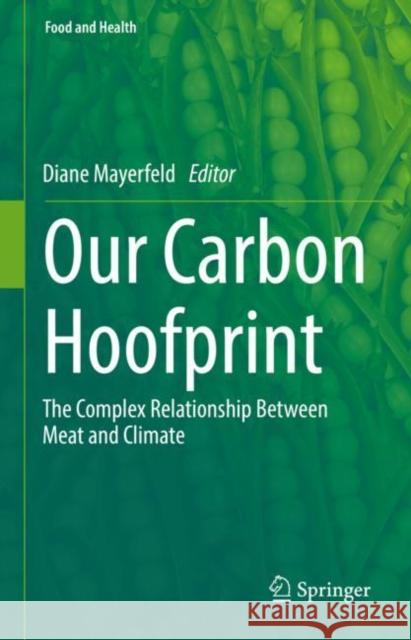
Diane Mayerfeld
Our Carbon Hoofprint: The Complex Relationship Between Meat and Climate Diane Mayerfeld 9783031090226 Springer - książkaWidoczna okładka, to zdjęcie poglądowe, a rzeczywista szata graficzna może różnić się od prezentowanej.

Our Carbon Hoofprint: The Complex Relationship Between Meat and Climate

ISBN-13: 9783031090226 / Angielski / Twarda / 2023 / 231 str.

Diane Mayerfeld
cena 605,23 zł
(netto: 576,41 VAT:  5%)

Najniższa cena z 30 dni: 578,30 zł
Termin realizacji zamówienia:
ok. 22 dni roboczych
Bez gwarancji dostawy przed świętami

Darmowa dostawa!
inne wydania

In the ongoing effort to combat global climate catastrophe, animal agriculture has long been a subject of contention. On the one hand, most agree that across the world increasing meat and dairy consumption are accelerating anthropogenic climate change. On the other hand, proponents of the livestock industry argue that modern advancements reduce greenhouse gas emissions from efficient livestock production to negligible quantities. Some even maintain that grass-based livestock production has a net positive impact on the environment, due to the carbon sequestration caused by grazing. Whom are we to believe?This book shows us that the answer is not so clear-cut. Beginning with the implications of the UN’sLivestock’s Long Shadowreport, it breaks down the blind spots and highlights the insights of the most prominent pro-meat arguments, as well as of the push for a global switch to vegetarianism. While advances in efficiency might reduce greenhouse gas emissions per unit of meat or milk produced, attendant decreases in cost can enable overconsumption and thus produce more waste. And while carbon sequestration is beneficial, it is not a reliable cure-all for the industry.Due to the economics of farming, however, eliminating meat consumption may not even reduce emissions at all. The truth about livestock production is much more nuanced but, luckily, also far more holistic. The future of agricultural policy will have to take into consideration factors such as human health and economics, as well as climate. Eschewing ideology for empirical rigor, this book paves an actionable path forward for both consumers and producers, offering unique solutions for each livestock system and simple, everyday adjustments for the average omnivore.


In the ongoing effort to combat global climate catastrophe, animal agriculture has long been a subject of contention. On the one hand, most agree that across the world increasing meat and dairy consumption are accelerating anthropogenic climate change. On the other hand, proponents of the livestock industry argue that modern advancements reduce greenhouse gas emissions from efficient livestock production to negligible quantities. Some even maintain that grass-based livestock production has a net positive impact on the environment, due to the carbon sequestration caused by grazing. Whom are we to believe? This book shows us that the answer is not so clear-cut. Beginning with the implications of the UN’s Livestock’s Long Shadow report, it breaks down the blind spots and highlights the insights of the most prominent pro-meat arguments, as well as of the push for a global switch to vegetarianism. While advances in efficiency might reduce greenhouse gas emissions per unit of meat or milk produced, attendant decreases in cost can enable overconsumption and thus produce more waste. And while carbon sequestration is beneficial, it is not a reliable cure-all for the industry.   Due to the economics of farming, however, eliminating meat consumption may not even reduce emissions at all. The truth about livestock production is much more nuanced but, luckily, also far more holistic. The future of agricultural policy will have to take into consideration factors such as human health and economics, as well as climate. Eschewing ideology for empirical rigor, this book paves an actionable path forward for both consumers and producers, offering unique solutions for each livestock system and simple, everyday adjustments for the average omnivore.

Kategorie:
Nauka, Biologia i przyroda
Kategorie BISAC:
Technology & Engineering > Agriculture - General
Science > Environmental Science (see also Chemistry - Environmental)
Technology & Engineering > Food Science - General
Wydawca:
Springer
Seria wydawnicza:
Food and Health
Język:
Angielski
ISBN-13:
9783031090226
Rok wydania:
2023
Dostępne języki:
Numer serii:
000919113
Ilość stron:
231
Oprawa:
Twarda
Dodatkowe informacje:
Wydanie ilustrowane

Preface

Chapter 1.  How we got here, and where we need to go: The bitter fight about meat and climate  

The UN’s Livestock’s Long Shadow report and its impact in the popular press and in farm country 

Chapter 2.  The consequences for climate of meat consumption  

The argument for reducing meat consumption to slow climate change. 

Chapter 3.  The Limits of Vegetarianism 

Critiques of the excesses of the vegetarian argument.  In developed nations livestock production contributes relatively little to global warming.  It is important to not exaggerate the impact of reduced meat consumption on greenhouse gas emissions.  Also, livestock play an important role in sustainable agriculture. 

Chapter 4.  The Benefits of Modern Efficiency

The argument that conventional modern techniques of producing meat are highly efficient and thus have a relatively low greenhouse gas footprint (or hoofprint).  

Chapter 5.  The Limits of Efficiency

Even with gains in efficiency, meat and especially beef, still has outsized greenhouse gas emissions.  Moreover, efficient production also translates to low cost, which in turn enables overconsumption and waste.   

Chapter 6.  The Miracle of Grass

The argument that grass-based livestock production can result in significant carbon sequestration.

Chapter 7.  The Limits of Grass

Grazing does not always result in carbon sequestration, let alone net sequestration of greenhouse gases after accounting for methane emissions from manure and ruminant digestion and nitrous oxide emissions from soils.  Sometimes this is due to poor management, but sometimes it is due to soil and climate factors.  In many cases we still don’t fully understand what factors result in carbon storage or loss in soils.  We need to be more realistic about what grazing can accomplish in terms of climate change mitigation. 

Chapter 8.  Lightening our Carbon Hoofprint

We have spent too much time trying to justify a simplistic response to the challenge posed by the greenhouse gas emissions of livestock.  The truth is more nuanced.  In fact, greenhouse gas emissions in the US are pretty similar for grazed and conventionally raised animals, but there is wide variation within each system depending on details of manure management and feed production.  And although on average meat production generates more greenhouse gases than raising vegetable protein sources, due to the economics of farming it is not clear that eliminating meat consumption would actually reduce greenhouse gas emissions.  While this complexity does not support the claim of any of the three viewpoints, it does allow farmers and eaters to reduce their greenhouse gas footprints without completely changing their way of life.  

Chapter 9.  Policy Pathways

While climate is a critical challenge for our planet, humans do not and should not make decisions based on climate alone.  As we consider what to eat and how to structure agricultural policy we also need to look at other environmental impacts such as water quality and biodiversity, as well as human health, cultural factors, and economics.  

Diane Mayerfeld is the Extension Sustainable Agriculture Coordinator at the University of Wisconsin-Madison.

In the ongoing effort to combat global climate catastrophe, animal agriculture has long been a subject of contention. On the one hand, most agree that across the world increasing meat and dairy consumption are accelerating anthropogenic climate change. On the other hand, proponents of the livestock industry argue that modern advancements reduce greenhouse gas emissions from efficient livestock production to negligible quantities. Some even maintain that grass-based livestock production has a net positive impact on the environment, due to the carbon sequestration caused by grazing. Whom are we to believe? 

This book shows us that the answer is not so clear-cut. Beginning with the implications of the UN’s Livestock’s Long Shadow report, it breaks down the blind spots and highlights the insights of the most prominent pro-meat arguments, as well as of the push for a global switch to vegetarianism. While advances in efficiency might reduce greenhouse gas emissions per unit of meat or milk produced, attendant decreases in cost can enable overconsumption and thus produce more waste. And while carbon sequestration is beneficial, it is not a reliable cure-all for the industry.  

Due to the economics of farming, however, eliminating meat consumption may not even reduce emissions at all. The truth about livestock production is much more nuanced but, luckily, also far more holistic. The future of agricultural policy will have to take into consideration factors such as human health and economics, as well as climate. Eschewing ideology for empirical rigor, this book paves an actionable path forward for both consumers and producers, offering unique solutions for each livestock system and simple, everyday adjustments for the average omnivore.




Udostępnij

Facebook - konto krainaksiazek.pl


Opinie o Krainaksiazek.pl na Opineo.pl

Partner Mybenefit

Krainaksiazek.pl w programie rzetelna firma Krainaksiaze.pl - płatności przez paypal

Czytaj nas na:

Facebook - krainaksiazek.pl
  • książki na zamówienie
  • granty
  • książka na prezent
  • kontakt
  • pomoc
  • opinie
  • regulamin
  • polityka prywatności

Zobacz:

  • Księgarnia czeska

  • Wydawnictwo Książkowe Klimaty

1997-2025 DolnySlask.com Agencja Internetowa

© 1997-2022 krainaksiazek.pl
     
KONTAKT | REGULAMIN | POLITYKA PRYWATNOŚCI | USTAWIENIA PRYWATNOŚCI
Zobacz: Księgarnia Czeska | Wydawnictwo Książkowe Klimaty | Mapa strony | Lista autorów
KrainaKsiazek.PL - Księgarnia Internetowa

Polityka prywatnosci - link
Krainaksiazek.pl - płatnośc Przelewy24
Przechowalnia Przechowalnia




