• Wyszukiwanie zaawansowane
  • Kategorie
  • Kategorie BISAC
  • Książki na zamówienie
  • Promocje
  • Granty
  • Książka na prezent
  • Opinie
  • Pomoc
  • Załóż konto
  • Zaloguj się

Organizing Schools for Productive Learning » książka


zaloguj się | załóż konto
Logo Krainaksiazek.pl

koszyk

konto

szukaj
topmenu
Księgarnia internetowa
Szukaj
Książki na zamówienie
Promocje
Granty
Książka na prezent
Moje konto
Pomoc
 
 
Wyszukiwanie zaawansowane
Pusty koszyk
Bezpłatna dostawa dla zamówień powyżej 20 złBezpłatna dostawa dla zamówień powyżej 20 zł

Kategorie główne

• Nauka
 [2949965]
• Literatura piękna
 [1857847]

  więcej...
• Turystyka
 [70818]
• Informatyka
 [151303]
• Komiksy
 [35733]
• Encyklopedie
 [23180]
• Dziecięca
 [617748]
• Hobby
 [139972]
• AudioBooki
 [1650]
• Literatura faktu
 [228361]
• Muzyka CD
 [398]
• Słowniki
 [2862]
• Inne
 [444732]
• Kalendarze
 [1620]
• Podręczniki
 [167233]
• Poradniki
 [482388]
• Religia
 [509867]
• Czasopisma
 [533]
• Sport
 [61361]
• Sztuka
 [243125]
• CD, DVD, Video
 [3451]
• Technologie
 [219309]
• Zdrowie
 [101347]
• Książkowe Klimaty
 [123]
• Zabawki
 [2362]
• Puzzle, gry
 [3791]
• Literatura w języku ukraińskim
 [253]
• Art. papiernicze i szkolne
 [7933]
Kategorie szczegółowe BISAC

Organizing Schools for Productive Learning

ISBN-13: 9781402083945 / Angielski / Twarda / 2008 / 112 str.
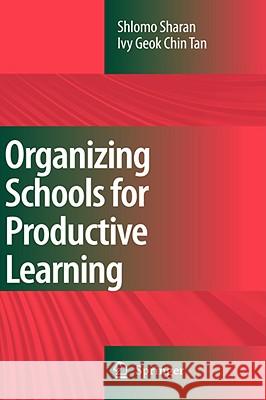
Shlomo Sharan; Ivy Geok-Chin Tan
Organizing Schools for Productive Learning Shlomo Sharan Ivy Geok-Chin Tan 9781402083945 KLUWER ACADEMIC PUBLISHERS GROUP - książkaWidoczna okładka, to zdjęcie poglądowe, a rzeczywista szata graficzna może różnić się od prezentowanej.

Organizing Schools for Productive Learning

ISBN-13: 9781402083945 / Angielski / Twarda / 2008 / 112 str.

Shlomo Sharan; Ivy Geok-Chin Tan
cena 201,72
(netto: 192,11 VAT:  5%)

Najniższa cena z 30 dni: 192,74
Termin realizacji zamówienia:
ok. 22 dni roboczych
Bez gwarancji dostawy przed świętami

Darmowa dostawa!

A major problem confronting schools is that many students are turned off from learning and are bored. Boredom is destructive of learning. The No Child Left Behind (NCLB) initiative of the US government (2001) stemmed from the claim accompanied by sharp debates pro and con that many schools in the United States fail to achieve basic educational objectives, and that many schools are doing a poor job for a wide variety of reasons and surely not just because of student boredom (Brigham, Gustashaw, Wiley, & Brigham, 2004; Essex, 2006; Goodman, Shannon, Goodman, & Rapoport, 2004; Sunderman, Tracey Jr., Kim, & Orfield, 2004). The model of school organization and instruction presented here seeks to provide an effective plan for significant improvement in secondary school education, one of whose central aims is to make students genuinely engaged in what they are learning. The NCLB legislation emphasizes, inter alia, the need for school improvement. Without it one cannot reasonably anticipate improvement over current levels in student engagement in learning and in academic achievement. The NCLB literature frequently employs the term school improvement to refer to the quality of the teachers, such as their academic credentials, instructional competence, and their knowledge of subject matter. Similarly, school restructuring is said to include steps such as transforming the school into a charter school, replacing the teaching staff, or inviting a private company to administer the school. The use of those terms in this work is distinctly different."


Kategorie:
Podręczniki
Kategorie BISAC:
Education > Teaching - General
Education > Administration - General
Education > Educational Policy & Reform
Wydawca:
KLUWER ACADEMIC PUBLISHERS GROUP
Język:
Angielski
ISBN-13:
9781402083945
Rok wydania:
2008
Wydanie:
2008
Ilość stron:
112
Waga:
0.36 kg
Wymiary:
23.39 x 15.6 x 0.97
Oprawa:
Twarda
Wolumenów:
01
Dodatkowe informacje:
Wydanie ilustrowane

LIST OF TABLES LIST OF FIGURES Introduction Students are bored in school Why the boredom? The road to productive learning in school Chapter 1 Two Models of School Structure Structural change: necessary but not sufficient Organizational regularities in school 1. The one-by-one formula The 'one-by-one' formula and the hierarchical nature of bureaucracy A hard-nosed view of the one-by-one concept 2. The greater than one formula A policy of instructional coherence The discipline oriented organization of schools Human organization is contrived What structure cannot do for teachers School organization and teaching practices: a summary of our goals Chapter 2 The School as a Community; the School in the Community Part 1: The school as a community School organization and community Communities and other enterprises The goals of the school as a community Community and academic disciplines Qualities of leadership Part 2: The school in the community The community as a site for learning Chapter 3 Student Engagement in Learning A cognitive-affective concept Engagement and the learning environment Engagement and students’ conceptions of learning Meaning and student autonomy Chapter 4 Class Size and School Size What is a large class? Teaching methods omitted from studies of class size Does class size inhibit innovation? School size Chapter 5 The Integrated Curriculum The fusion of academic disciplines The problem of relevance The problem of integration Chapter 6 Duration of Class Sessions and the Problem of Teaching Method The anticipated demise of the 50-minute hour Alternative teachingmethods and the 50-minute hour More alternative schedules Extensive and intensive study projects How schedule reform affects teaching: some research Teachers’ evaluations Results regarding students Some conclusions Chapter 7 Student Assessment Assessment as testing Alternative assessment Summative and formative assessment More alternative approaches to assessment Chapter 8 A Systems Approach to Organization and Instruction in Schools Systems integrate, bureaucracies separate A system is not a collection Classrooms as social systems Can schools adopt new principles of organization? References

This book offers an alternative approach to secondary school organization. In line with the definition formulated by John Dewey's philosophy of education, the new approach aims to promote productive learning. The book shows the way to extricate schools from their past in order to respond more successfully to the requirements of the information age in which we are living today.

The chapters treat the primary components of teachers' work in schools in light of systems' theory as opposed to the organization of instruction prevalent in today's schools that is designed in light of bureaucratic theory. The book demonstrates how the current principles of organization impede the change and improvement of instruction and by necessity create boredom and the routinization of teachers' and students' activity in schools.

Sharan, Shlomo Shlomo Sharan is professor emeritus at the Jaime a... więcej >


Udostępnij

Facebook - konto krainaksiazek.pl


Opinie o Krainaksiazek.pl na Opineo.pl

Partner Mybenefit

Krainaksiazek.pl w programie rzetelna firma Krainaksiaze.pl - płatności przez paypal

Czytaj nas na:

Facebook - krainaksiazek.pl
  • książki na zamówienie
  • granty
  • książka na prezent
  • kontakt
  • pomoc
  • opinie
  • regulamin
  • polityka prywatności

Zobacz:

  • Księgarnia czeska

  • Wydawnictwo Książkowe Klimaty

1997-2025 DolnySlask.com Agencja Internetowa

© 1997-2022 krainaksiazek.pl
     
KONTAKT | REGULAMIN | POLITYKA PRYWATNOŚCI | USTAWIENIA PRYWATNOŚCI
Zobacz: Księgarnia Czeska | Wydawnictwo Książkowe Klimaty | Mapa strony | Lista autorów
KrainaKsiazek.PL - Księgarnia Internetowa

Polityka prywatnosci - link
Krainaksiazek.pl - płatnośc Przelewy24
Przechowalnia Przechowalnia





