• Wyszukiwanie zaawansowane
  • Kategorie
  • Kategorie BISAC
  • Książki na zamówienie
  • Promocje
  • Granty
  • Książka na prezent
  • Opinie
  • Pomoc
  • Załóż konto
  • Zaloguj się

Ordinary Organisations: Why Normal Men Carried Out the Holocaust » książka


zaloguj się | załóż konto
Logo Krainaksiazek.pl

koszyk

konto

szukaj
topmenu
Księgarnia internetowa
Szukaj
Książki na zamówienie
Promocje
Granty
Książka na prezent
Moje konto
Pomoc
 
 
Wyszukiwanie zaawansowane
Pusty koszyk
Bezpłatna dostawa dla zamówień powyżej 20 złBezpłatna dostawa dla zamówień powyżej 20 zł

Kategorie główne

• Nauka
 [2950560]
• Literatura piękna
 [1849509]

  więcej...
• Turystyka
 [71097]
• Informatyka
 [151150]
• Komiksy
 [35848]
• Encyklopedie
 [23178]
• Dziecięca
 [617388]
• Hobby
 [139064]
• AudioBooki
 [1657]
• Literatura faktu
 [228597]
• Muzyka CD
 [383]
• Słowniki
 [2855]
• Inne
 [445295]
• Kalendarze
 [1464]
• Podręczniki
 [167547]
• Poradniki
 [480102]
• Religia
 [510749]
• Czasopisma
 [516]
• Sport
 [61293]
• Sztuka
 [243352]
• CD, DVD, Video
 [3414]
• Technologie
 [219456]
• Zdrowie
 [101002]
• Książkowe Klimaty
 [124]
• Zabawki
 [2311]
• Puzzle, gry
 [3459]
• Literatura w języku ukraińskim
 [254]
• Art. papiernicze i szkolne
 [8079]
Kategorie szczegółowe BISAC

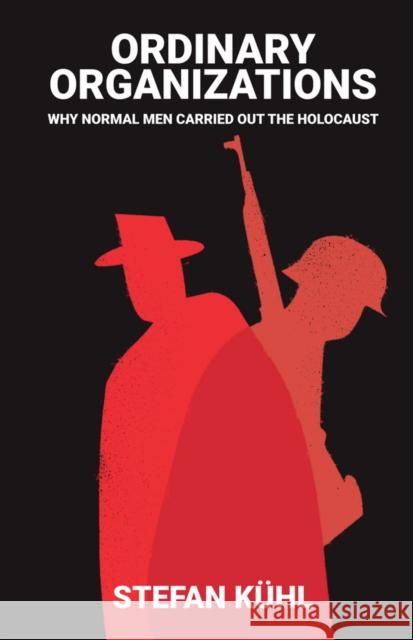
Ordinary Organisations: Why Normal Men Carried Out the Holocaust

ISBN-13: 9781509502899 / Angielski / Twarda / 2016 / 300 str.
Stefan Keuhl; Stefan Kuhl
Ordinary Organisations: Why Normal Men Carried Out the Holocaust Kühl, Stefan 9781509502899 Polity Press - książkaWidoczna okładka, to zdjęcie poglądowe, a rzeczywista szata graficzna może różnić się od prezentowanej.

Ordinary Organisations: Why Normal Men Carried Out the Holocaust

ISBN-13: 9781509502899 / Angielski / Twarda / 2016 / 300 str.

Stefan Keuhl; Stefan Kuhl
cena 280,67
(netto: 267,30 VAT:  5%)

Najniższa cena z 30 dni: 279,51
Termin realizacji zamówienia:
ok. 30 dni roboczych
Dostawa w 2026 r.

Darmowa dostawa!
inne wydania

During the Holocaust, 99 percent of all Jewish killings were carried out by members of state organizations. In this groundbreaking book, Stefan K?hl offers a new analysis of the integral role that membership in organizations played in facilitating the annihilation of European Jews under the Nazis.

Drawing on the well-researched case of the mass killings of Jews by a Hamburg reserve police battalion, K?hl shows how ordinary men from ordinary professions were induced to carry out massacres. It may have been that coercion, money, identification with the end goal, the enjoyment of brutality, or the expectations of their comrades impelled the members of the police battalion to join the police units and participate in ghetto liquidations, deportations, and mass shootings. But ultimately, argues K?hl, the question of immediate motives, or indeed whether members carried out tasks with enthusiasm or reluctance, is of secondary importance. The crucial factor in explaining what they did was the integration of individuals into an organizational framework that prompted them to perform their roles.

This book makes a major contribution to our understanding of the Holocaust by demonstrating the fundamental role played by organizations in persuading ordinary Germans to participate in the annihilation of the Jews. It will be an invaluable resource for students and scholars of organizations, violence, and modern German history, as well as for anyone interested in genocide and the Holocaust.


Kategorie:
Nauka, Historia
Kategorie BISAC:
History > Modern - 20th Century - Holocaust
History > Europe - Germany
History > Modern - General
Wydawca:
Polity Press
Język:
Angielski
ISBN-13:
9781509502899
Rok wydania:
2016
Ilość stron:
300
Waga:
0.59 kg
Wymiary:
23.11 x 15.24 x 3.05
Oprawa:
Twarda
Wolumenów:
01
Dodatkowe informacje:
Bibliografia

In this masterly researched and subtly conceptualized in–depth analysis of the infamous Police Battalion 101, Stefan Kühl shows hauntingly how the ‘normality’ of constraints, enrichment, comradeship, routine, and legality enabled Nazi perpetrators to achieve the ultimate abnormality. Ordinary Organizations will soon be considered as one of the key inquiries into the Holocaust.
Thomas Kühne, Clark University

An extremely interesting book, engaging with theoretical approaches to understanding the Holocaust. Kühl makes a strong case for the explanatory power of organizational sociology in understanding how ‘ordinary men’ could be brought to engage in acts of killing without seeing themselves as perpetrators. A controversial and stimulating read.
Mary Fulbrook, University College London

  • Introduction
  • 1. Beyond ordinary men and ordinary Germans
  • 1.1. The failure of easy answers
  • 1.2. From the search for motives to the presentation of motives
  • 1.3. The motivation of organization members
  • 2. Identification with the goal
  • 2.1. The formation of an antisemitic fictional consensus
  • 2.2. How ideological indoctrination secured an antisemitic fictional consensus
  • 2.3. From impassive acceptance to active participation
  • 3. Coercion
  • 3.1. Forced recruitment and barriers to exit
  • 3.2. Avoiding the membership issue in coercive organizations
  • 3.3. The limits of leeway
  • 3.4. The freedom in coercion
  • 4. Comradeship
  • 4.1. The pressure of comradeship and the formation of informal norms
  • 4.2. Levels in the formation of comradeship
  • 4.3. How are comradeship norms enforced?
  • 4.4. Mobilizing comradeship by granting leeway
  • 5. Money
  • 5.1. The function of regular remuneration for the battalion members
  • 5.2. Legalized enrichment through the dispossession of the Jewish population
  • 5.3. Enrichment beyond official forms of remuneration and reward
  • 5.4. The functionality of misappropriation
  • 6. The attractiveness of activities
  • 6.1. Inhibitions against killing and organizational strategies for overcoming them
  • 6.2. The production of motives: Dehumanizing the victims
  • 6.3. An organizational culture of brutality
  • 7. The generalization of motives
  • 7.1. The different ways of portraying personal engagement
  • 7.2. Managing one s self–presentation
  • 7.3. The separation between goals and motives
  • 8. From killers to perpetrators
  • 8.1. The legalization of the state s use of violence
  • 8.2. Using violence in the gray zones of legality
  • 8.3. The shift in the concept of law under the Nazis
  • 8.4. Facilitating killing by legalizing it
  • 9. The normality and abnormality of organizations
  • 9.1. Beyond the notion of abnormal organizations
  • 9.2. The expansion of zones of indifference in organizations
  • 9.3. Understanding organizations: Conclusions
  • Appendix: The sociological approach and empirical basis
  • Archives
  • Notes
  • Literature
  • Index

Stefan Kühl is Professor of Sociology at the University of Bielefeld.

Kuhl, Stefan Stefan Kuhl is a Fellow of the Institute of Sociol... więcej >


Udostępnij

Facebook - konto krainaksiazek.pl


Opinie o Krainaksiazek.pl na Opineo.pl

Partner Mybenefit

Krainaksiazek.pl w programie rzetelna firma Krainaksiaze.pl - płatności przez paypal

Czytaj nas na:

Facebook - krainaksiazek.pl
  • książki na zamówienie
  • granty
  • książka na prezent
  • kontakt
  • pomoc
  • opinie
  • regulamin
  • polityka prywatności

Zobacz:

  • Księgarnia czeska

  • Wydawnictwo Książkowe Klimaty

1997-2025 DolnySlask.com Agencja Internetowa

© 1997-2022 krainaksiazek.pl
     
KONTAKT | REGULAMIN | POLITYKA PRYWATNOŚCI | USTAWIENIA PRYWATNOŚCI
Zobacz: Księgarnia Czeska | Wydawnictwo Książkowe Klimaty | Mapa strony | Lista autorów
KrainaKsiazek.PL - Księgarnia Internetowa

Polityka prywatnosci - link
Krainaksiazek.pl - płatnośc Przelewy24
Przechowalnia Przechowalnia





