• Wyszukiwanie zaawansowane
  • Kategorie
  • Kategorie BISAC
  • Książki na zamówienie
  • Promocje
  • Granty
  • Książka na prezent
  • Opinie
  • Pomoc
  • Załóż konto
  • Zaloguj się

Nitrogen Fixation in Bacteria and Higher Plants » książka


zaloguj się | załóż konto
Logo Krainaksiazek.pl

koszyk

konto

szukaj
topmenu
Księgarnia internetowa
Szukaj
Książki na zamówienie
Promocje
Granty
Książka na prezent
Moje konto
Pomoc
 
 
Wyszukiwanie zaawansowane
Pusty koszyk
Bezpłatna dostawa dla zamówień powyżej 20 złBezpłatna dostawa dla zamówień powyżej 20 zł

Kategorie główne

• Nauka
 [2946912]
• Literatura piękna
 [1852311]

  więcej...
• Turystyka
 [71421]
• Informatyka
 [150889]
• Komiksy
 [35717]
• Encyklopedie
 [23177]
• Dziecięca
 [617324]
• Hobby
 [138808]
• AudioBooki
 [1671]
• Literatura faktu
 [228371]
• Muzyka CD
 [400]
• Słowniki
 [2841]
• Inne
 [445428]
• Kalendarze
 [1545]
• Podręczniki
 [166819]
• Poradniki
 [480180]
• Religia
 [510412]
• Czasopisma
 [525]
• Sport
 [61271]
• Sztuka
 [242929]
• CD, DVD, Video
 [3371]
• Technologie
 [219258]
• Zdrowie
 [100961]
• Książkowe Klimaty
 [124]
• Zabawki
 [2341]
• Puzzle, gry
 [3766]
• Literatura w języku ukraińskim
 [255]
• Art. papiernicze i szkolne
 [7810]
Kategorie szczegółowe BISAC

Nitrogen Fixation in Bacteria and Higher Plants

ISBN-13: 9783642809286 / Angielski / Miękka / 2011 / 192 str.
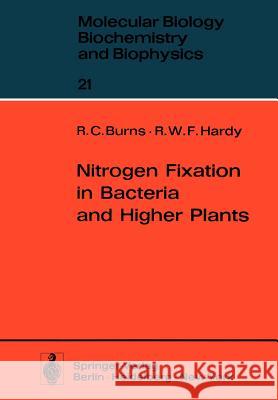
R. C. Burns; R. W. F. Hardy
Nitrogen Fixation in Bacteria and Higher Plants R. C. Burns R. W. F. Hardy 9783642809286 Springer - książkaWidoczna okładka, to zdjęcie poglądowe, a rzeczywista szata graficzna może różnić się od prezentowanej.

Nitrogen Fixation in Bacteria and Higher Plants

ISBN-13: 9783642809286 / Angielski / Miękka / 2011 / 192 str.

R. C. Burns; R. W. F. Hardy
cena 402,53
(netto: 383,36 VAT:  5%)

Najniższa cena z 30 dni: 385,52
Termin realizacji zamówienia:
ok. 22 dni roboczych
Bez gwarancji dostawy przed świętami

Darmowa dostawa!

Our knowledge of the biochemistry and biophysics of dinitrogen fixa tion has developed rapidly in the 15 years since the first N2-fixing enzyme system was successfully extracted from a bacterium. This peri od has produced a literature that now describes the N2 fixation reac tion and the nitrogenase enzyme itself in sophisticated terms, though a detailed reaction mechanism at the chemical level has not yet emerged. It is the purpose of the present monograph to present an in-depth re view, analysis, and integration of this research as is possible with a non-contributed publication and to relate this work to considera tions of N2 fixation that reach beyond the confines of the biochem ist's laboratory. The first section is directed as much toward the general science read er as toward the specialist. It covers the agricultural origins of man's interest in N2 fixation and also pertinent areas of taxonomy, physiology, and evolution. Ecological aspects of the subject include a comprehensive evaluation of the nitrogen cycle leading to a sub stantially greater estimate of the rate of global N2 fixation than previous ones. The treatment is of a survey fashion, in part to pro vide a general over-view of N2 fixation and in part to provide context for the biochemistry and biophysics that follow in the second section."


Kategorie:
Nauka, Biologia i przyroda
Kategorie BISAC:
Science > Biologia i przyroda
Science > Bakteriologia
Science > Biochemia
Wydawca:
Springer
Seria wydawnicza:
Molecular Biology, Biochemistry and Biophysics Molekularbiol
Język:
Angielski
ISBN-13:
9783642809286
Rok wydania:
2011
Wydanie:
Softcover Repri
Numer serii:
000402113
Ilość stron:
192
Waga:
0.37 kg
Wymiary:
24.4 x 17.0
Oprawa:
Miękka
Wolumenów:
01

I. The Diazotrophs.- 1 Recognition.- I. Historical Roots.- A. The Agricultural Imperative.- B. Early Experimentation.- II. Detection of Diazotrophs and Nitrogenase.- A. 15N2 Method.- B. Ammonia and Manometric Methods.- C. Acetylene Reduction Method.- D. Other Methods.- 2 Description and Classification of Diazotrophs.- I. Free-Living Diazotrophs.- A. Taxonomy and Characteristics.- 1. Bacteria.- 2. Blue-Green Algae.- B. Associative Symbioses.- 1. Loose Associations.- a) Interactions Among Microorganisms.- b) Phylloplane.- c) Rhizosphere.- 2. Associations Involving Morphological Modification or Accommodation.- 3. Associations with Animals.- II. Obligatory Symbioses.- A. Non-Legume Angiosperms.- B. Legumes.- 1. Rhizobia.- 2. Establishment of an Effective Legume Symbiosis.- 3. Tissue Culture Symbiosis.- Concluding Remarks.- 3 Perspectives.- I. Evolution.- A. N2 Fixation in Free-Living Organisms.- B. N2 Fixation in Symbioses.- II. Role of Diazotrophs in Global Nitrogen Economy.- A. Nitrogen Cycle.- 1. Nitrogen Sinks.- 2. Nitrogen Transformations and Transfers.- a) Soil-Water Pool.- b) Atmosphere.- Concluding Remarks.- B. Amount of N2 Fixed.- 1. N2 Fixation Rates in Various Ecosystems.- a) Cultivated Land.- b) Forests and Grasslands.- c) Unused Land.- d) Marine.- 2. Comparison with Previous Estimates.- II. Biochemistry and Biophysics.- 4 An Equation for the Nitrogenase Reaction.- I. The Clostridium — Pyruvate N2-Fixing System.- II. ATP.- III. Azotobacter Nitrogenase and Dithionite.- IV. H2 Evolution and ATP Hydrolysis: Nitrogenase Activity without N2.- V. Alternate Substrates for Nitrogenase.- VI. H2, N2, Hydrogenase and Nitrogenase — A Special Relationship?.- 5 Nitrogenase: The Catalyst.- I. Procurement.- A. Factors Affecting Nitrogenase Biosynthesis.- 1. Genetic Basis.- 2. Culture Conditions.- a) Metabolic Control.- b) General Considerations.- B. Extraction and Purification of Nitrogenase.- II. Properties of Mo-Fe Protein and Fe Protein.- A. Nitrogenase Proteins of Various Diazotrophs.- 1. Azotobacter vinelandii.- a) Mo-Fe Protein.- b) Fe Protein.- 2. Clostridium pasteurianum.- a) Mo-Fe Protein.- b) Fe Protein.- 3. Kiebsiella pneumoniae.- a) Mo-Fe Protein.- b) Fe Protein.- 4. Azotobacter chroococcum.- 5. Mycobacterium flavum.- 6. Chloropseudomonas ethylicum.- 7. Soybean Bacteroids.- B. Summary of Characteristics of the Nitrogenase Proteins.- 1. Mo-Fe Protein.- 2. Fe Protein.- III. Properties of Nitrogenase.- A. The Question of Nitrogenase Composition.- B. Physical-Chemical Characteristics of Nitrogenase.- C. Stability of Nitrogenase.- 1. O2 Sensitivity.- 2. Cold Lability.- D. Integrity of Reconstituted Nitrogenases.- 6 Nitrogenase: The Catalysis.- I. Nitrogenase Turnover.- A. Enzyme Concentration and Composition.- B. ATP.- 1. ATP and Reaction Rate.- a) Relationship of ATP, Enzyme Concentration and Activity.- b) Michaelis Constant.- c) ADP and Salt Inhibition.- 2. The ATP:2-Electron Ratio.- 3. Reductant-Independent ATP Hydrolysis.- 4. Other ATP Effects.- C. Dithionite.- D. External Factors.- 1. pH.- 2. Temperature.- 3. Inhibitors.- II. Substrate Reduction.- A. Electron Allocation: H3O+vs. Exogenous Reducible Substrate.- B. Specificity and Inhibition.- C. The Reducible Substrates.- 1. N2.- 2. Azide.- 3. N2O.- 4. Nitriles.- a) Cyanide.- b) Alkyl Cyanides.- c) Alkenyl Cyanides.- 5. Isonitriles.- 6. Alkynes.- Concluding Remarks on Substrate Reduction.- 7 Mechanism.- I. A Model for the Formation of Catalytically Active Species.- A. Protein and Ligand Complexes of the Model.- 1. Fe Protein · ATP · Mg Complex.- 2. Mo-Fe · Protein · Fe Protein Complexes.- B. Reactivity of the Model.- 1. Dilution Effect.- a) The Need for 2 Fe Proteins.- b) Effect of ATP Concentration.- c) ADP and Salt Effects.- 2. ATP Hydrolysis.- 3. Nature of ATP Saturation Curves and Reciprocal Plots for Km (ATP) Evaluation.- 4. Reaction of ATP with the Mo-Fe Protein · Fe Protein Complexes.- C. Allosteric Implications.- D. The Mechanistic Enigmas of ATP Hydrolysis and Electron Transfer.- II. Reducible Substrate Complexation and Reduction.- A. Locus of Active Site.- B. Role of Metals and Implications of Abiological Systems.- 1. Nitriding Systems.- 2. N2 Complexes in Aprotic Media.- 3. Homogeneous Protonic Catalysis.- C. Active Site Model and Reduction Sequence.- 8 Cellular Accommodation of Nitrogenase.- I. Localization of Nitrogenase.- II. Electron-Donating Systems.- A. Clostridium pasteurianum.- B. Azotobacter vinelandii.- C. Azotobacter chroococcum.- D. Mycobacterium flavum.- E. Bacillus polymyxa.- F. Chromatium.- G. Chloropseudomonas ethylicum.- H. Anabaena cylindrica.- I. Soybean Nodule Bacteroids.- III. Ammonia Assimilation.- IV. Other Enzymes and Proteins Associated with N2 Fixation.- A. Hydrogenase.- B. Leghemoglobin.- C. Other Proteins.- 1. Cytochromes.- 2. Nitrate Reductase.- References.


Udostępnij

Facebook - konto krainaksiazek.pl


Opinie o Krainaksiazek.pl na Opineo.pl

Partner Mybenefit

Krainaksiazek.pl w programie rzetelna firma Krainaksiaze.pl - płatności przez paypal

Czytaj nas na:

Facebook - krainaksiazek.pl
  • książki na zamówienie
  • granty
  • książka na prezent
  • kontakt
  • pomoc
  • opinie
  • regulamin
  • polityka prywatności

Zobacz:

  • Księgarnia czeska

  • Wydawnictwo Książkowe Klimaty

1997-2025 DolnySlask.com Agencja Internetowa

© 1997-2022 krainaksiazek.pl
     
KONTAKT | REGULAMIN | POLITYKA PRYWATNOŚCI | USTAWIENIA PRYWATNOŚCI
Zobacz: Księgarnia Czeska | Wydawnictwo Książkowe Klimaty | Mapa strony | Lista autorów
KrainaKsiazek.PL - Księgarnia Internetowa

Polityka prywatnosci - link
Krainaksiazek.pl - płatnośc Przelewy24
Przechowalnia Przechowalnia






