• Wyszukiwanie zaawansowane
  • Kategorie
  • Kategorie BISAC
  • Książki na zamówienie
  • Promocje
  • Granty
  • Książka na prezent
  • Opinie
  • Pomoc
  • Załóż konto
  • Zaloguj się

New Horizons in Computational Chemistry Software » książka


zaloguj się | załóż konto
Logo Krainaksiazek.pl

koszyk

konto

szukaj
topmenu
Księgarnia internetowa
Szukaj
Książki na zamówienie
Promocje
Granty
Książka na prezent
Moje konto
Pomoc
 
 
Wyszukiwanie zaawansowane
Pusty koszyk
Bezpłatna dostawa dla zamówień powyżej 20 złBezpłatna dostawa dla zamówień powyżej 20 zł

Kategorie główne

• Nauka
 [2952079]
• Literatura piękna
 [1850969]

  więcej...
• Turystyka
 [71058]
• Informatyka
 [151066]
• Komiksy
 [35579]
• Encyklopedie
 [23181]
• Dziecięca
 [620496]
• Hobby
 [139036]
• AudioBooki
 [1646]
• Literatura faktu
 [228729]
• Muzyka CD
 [379]
• Słowniki
 [2932]
• Inne
 [445708]
• Kalendarze
 [1409]
• Podręczniki
 [164793]
• Poradniki
 [480107]
• Religia
 [510956]
• Czasopisma
 [511]
• Sport
 [61267]
• Sztuka
 [243299]
• CD, DVD, Video
 [3411]
• Technologie
 [219640]
• Zdrowie
 [100984]
• Książkowe Klimaty
 [124]
• Zabawki
 [2281]
• Puzzle, gry
 [3363]
• Literatura w języku ukraińskim
 [258]
• Art. papiernicze i szkolne
 [8020]
Kategorie szczegółowe BISAC

New Horizons in Computational Chemistry Software

ISBN-13: 9783031076602 / Angielski / Miękka / 2023
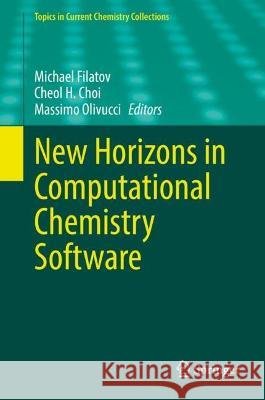
New Horizons in Computational Chemistry Software  9783031076602 Springer International Publishing - książkaWidoczna okładka, to zdjęcie poglądowe, a rzeczywista szata graficzna może różnić się od prezentowanej.

New Horizons in Computational Chemistry Software

ISBN-13: 9783031076602 / Angielski / Miękka / 2023

cena 1129,80
(netto: 1076,00 VAT:  5%)

Najniższa cena z 30 dni: 1079,53
Termin realizacji zamówienia:
ok. 22 dni roboczych
Dostawa w 2026 r.

Darmowa dostawa!
inne wydania

This volume presents the current status of software development in the field of computational and theoretical chemistry and gives an overview of the emerging trends. The challenges of maintaining the legacy codes and their adaptation to the rapidly growing hardware capabilities and the new programming environments are surveyed in a series of topical reviews written by the core developers and maintainers of the popular quantum chemistry and molecular dynamics programs. Special emphasis is given to new computational methodologies and practical aspects of their implementation and application in the computational chemistry codes. Modularity of the computational chemistry software is an emerging concept that enables to bypass the development and maintenance bottleneck of the legacy software and to customize the software using the best available computational procedures implemented in the form of self-contained modules. Perspectives on modular design of the computer programs for modeling molecular electronic structure, non-adiabatic dynamics, kinetics, as well as for data visualization are presented by the researchers actively working in the field of software development and application. This volume is of interest to quantum and computational chemists as well as experimental chemists actively using and developing computational software for their research.



Chapters "MLatom 2: An Integrative Platform for Atomistic Machine Learning” and “Evolution of the Automatic Rhodopsin Modeling (ARM) Protocol" are available open access under a CC BY 4.0 License via link.springer.com.

Kategorie:
Nauka, Chemia
Kategorie BISAC:
Science > Chemia - Fizyczna
Computers > Artificial Intelligence - General
Technology & Engineering > Materials Science - General
Wydawca:
Springer International Publishing
Seria wydawnicza:
Topics in Current Chemistry Collections
Język:
Angielski
ISBN-13:
9783031076602
Rok wydania:
2023
Waga:
0.50 kg
Wymiary:
23.5 x 15.5
Oprawa:
Miękka
Dodatkowe informacje:
Wydanie ilustrowane

Technological advances in remote collaborations.- MLatom 2: An Integrative Platform for Atomistic Machine Learning.- Reaction Space Projector (ReSPer) for Visualizing Dynamic Reaction Routes based on Reduced-Dimension Space.- NAST: Nonadiabatic statistical theory package for predicting kinetics of spin-dependent processes.- Evolution of the Automatic Rhodopsin Modeling (ARM) protocol.- Coupled- and independent-trajectory approaches based on the exact factorization using the PyUNIxMD package.- The Static-Dynamic-Static Family of Methods for Strongly Correlated Electrons: Methodology and Benchmarking.- Ensemble Density Functional Theory of Neutral and Charged Excitations.

Michael Filatov received his PhD in 1992 with a thesis in Computational Physical Chemistry at the Institute of Catalysis in Novosibirsk, Russia. After that he has been a postdoctoral fellow with Walter Thiel at the University of Zürich, Switzerland, and with Sason Shaik at the Hebrew University of Jerusalem, Israel. In 2000, he was appointed assistant professor at the University of Gothenburg, Sweden, and between 2005 and 2011 he was a professor of chemistry at the University of Groningen, Netherlands. Afterwards, he was an EU research fellow at the University of Bonn, Germany, and a senior research scientist at the Ulsan National Institute of Science and Technology, South Korea. Since 2018, Michael is working as a research professor at the Kyungpook National University in Daegu, South Korea. His research interests focus on the development of computational methodologies for modeling ground and excited electronic state properties of organic, bio-inorganic and inorganic compounds and their application to modeling the non-adiabatic dynamics. 


Cheol Ho Choi received his PhD in 1998 with a thesis in Computational Physical Chemistry at the Georgetown University, USA. After that he has been a postdoctoral fellow with Mark Gordon at the Iowa State University, USA. After returning to South Korea in 2001, he was appointed assistant professor and ultimately become full professor at the Kyungpook National University, South Korea. His research interests focus on the development of computational methodologies for modeling ground and excited electronic state properties and their application to modeling the non-adiabatic dynamics.

Massimo Olivucci received his PhD in 1989 with a Thesis in Theoretical Organic Chemistry at the University of Bologna, Italy, supervised by Fernando Bernardi. In the same year, he moved to the UK to carry out postdoctoral research with Michael A. Robb at King’s College London. After returning to Italy in 1992, he started his independent academic career at the University of Bologna, ultimately becoming full professor of Organic Chemistry at the University of Siena in 2001. In 2006 he was also appointed Research Professor at the Centre for Photochemical Sciences, Bowling Green State University, Ohio, where he is in charge of the Laboratory for Computational Photochemistry and Photobiology. In 2015 he was appointed USIAS Fellow at the University of Strasbourg, France. In 2019-2020 he received the Doctoris Honoris Causa at the Aix-Marseille Université, France. His interests span both methodological and applicative aspects of computational photochemistry and photobiology; two research fields that he contributed to shape.

This volume presents the current status of software development in the field of computational and theoretical chemistry and gives an overview of the emerging trends. The challenges of maintaining the legacy codes and their adaptation to the rapidly growing hardware capabilities and the new programming environments are surveyed in a series of topical reviews written by the core developers and maintainers of the popular quantum chemistry and molecular dynamics programs. Special emphasis is given to new computational methodologies and practical aspects of their implementation and application in the computational chemistry codes. Modularity of the computational chemistry software is an emerging concept that enables to bypass the development and maintenance bottleneck of the legacy software and to customize the software using the best available computational procedures implemented in the form of self-contained modules. Perspectives on modular design of the computer programs for modeling molecular electronic structure, non-adiabatic dynamics, kinetics, as well as for data visualization are presented by the researchers actively working in the field of software development and application. This volume is of interest to quantum and computational chemists as well as experimental chemists actively using and developing computational software for their research.


Chapters "MLatom 2: An Integrative Platform for Atomistic Machine Learning” and “Evolution of the Automatic Rhodopsin Modeling (ARM) Protocol" are available open access under a CC BY 4.0 License via link.springer.com.


Udostępnij

Facebook - konto krainaksiazek.pl


Opinie o Krainaksiazek.pl na Opineo.pl

Partner Mybenefit

Krainaksiazek.pl w programie rzetelna firma Krainaksiaze.pl - płatności przez paypal

Czytaj nas na:

Facebook - krainaksiazek.pl
  • książki na zamówienie
  • granty
  • książka na prezent
  • kontakt
  • pomoc
  • opinie
  • regulamin
  • polityka prywatności

Zobacz:

  • Księgarnia czeska

  • Wydawnictwo Książkowe Klimaty

1997-2025 DolnySlask.com Agencja Internetowa

© 1997-2022 krainaksiazek.pl
     
KONTAKT | REGULAMIN | POLITYKA PRYWATNOŚCI | USTAWIENIA PRYWATNOŚCI
Zobacz: Księgarnia Czeska | Wydawnictwo Książkowe Klimaty | Mapa strony | Lista autorów
KrainaKsiazek.PL - Księgarnia Internetowa

Polityka prywatnosci - link
Krainaksiazek.pl - płatnośc Przelewy24
Przechowalnia Przechowalnia



