• Wyszukiwanie zaawansowane
  • Kategorie
  • Kategorie BISAC
  • Książki na zamówienie
  • Promocje
  • Granty
  • Książka na prezent
  • Opinie
  • Pomoc
  • Załóż konto
  • Zaloguj się

Nanomedicine: Technologies and Applications » książka

zaloguj się | załóż konto
Logo Krainaksiazek.pl

koszyk

konto

szukaj
topmenu
Księgarnia internetowa
Szukaj
Książki na zamówienie
Promocje
Granty
Książka na prezent
Moje konto
Pomoc
 
 
Wyszukiwanie zaawansowane
Pusty koszyk
Bezpłatna dostawa dla zamówień powyżej 20 złBezpłatna dostawa dla zamówień powyżej 20 zł

Kategorie główne

• Nauka
 [2946600]
• Literatura piękna
 [1856966]

  więcej...
• Turystyka
 [72221]
• Informatyka
 [151456]
• Komiksy
 [35826]
• Encyklopedie
 [23190]
• Dziecięca
 [619653]
• Hobby
 [140543]
• AudioBooki
 [1577]
• Literatura faktu
 [228355]
• Muzyka CD
 [410]
• Słowniki
 [2874]
• Inne
 [445822]
• Kalendarze
 [1744]
• Podręczniki
 [167141]
• Poradniki
 [482898]
• Religia
 [510455]
• Czasopisma
 [526]
• Sport
 [61590]
• Sztuka
 [243598]
• CD, DVD, Video
 [3423]
• Technologie
 [219201]
• Zdrowie
 [101638]
• Książkowe Klimaty
 [124]
• Zabawki
 [2473]
• Puzzle, gry
 [3898]
• Literatura w języku ukraińskim
 [254]
• Art. papiernicze i szkolne
 [8170]
Kategorie szczegółowe BISAC

Nanomedicine: Technologies and Applications

ISBN-13: 9780857092335 / Angielski / Twarda / 2012 / 704 str.
Thomas Webster
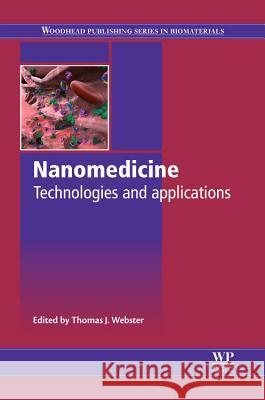
Nanomedicine: Technologies and Applications Thomas Webster 9780857092335 Woodhead Publishing - książkaWidoczna okładka, to zdjęcie poglądowe, a rzeczywista szata graficzna może różnić się od prezentowanej.

Nanomedicine: Technologies and Applications

ISBN-13: 9780857092335 / Angielski / Twarda / 2012 / 704 str.

Thomas Webster
cena 1014,57 zł
(netto: 966,26 VAT:  5%)

Najniższa cena z 30 dni: 1004,20 zł
Termin realizacji zamówienia:
ok. 30 dni roboczych
Bez gwarancji dostawy przed świętami

Darmowa dostawa!

Nanotechnology is at the forefront of advances in medicine. Nanomedicine: Technologies and applications provides an important review of this exciting technology and its growing range of applications.

After an introduction to nanomedicine, part one discusses key materials and their properties, including nanocrystalline metals and alloys, nanoporous gold and hydroxyapatite coatings. Part two goes on to review nanomedicine for therapeutics and imaging, before nanomedicine for soft tissue engineering is discussed in part three, including organ regeneration, skin grafts, nanotubes and self-assembled nanomaterials. Finally, nanomedicine for bone and cartilage tissue engineering is the focus of part four, with electrically active biocomposites as smart scaffolds investigated, as is cartilage and bone tissue engineering, regeneration and replacement.

With its distinguished editor and international team of expert contributors, Nanomedicine: Technologies and applications is an indispensable guide for all those involved in the research, development and application of this exciting technology, whilst providing a comprehensive introduction for students and academics interested in this field.

  • Provides an important review of nanomedicine technology and its growing range of applications
  • Discusses key nanomedicine materials and their properties, including nanocrystalline metals and alloys, nanoporous gold and hydroxyapatite coatings
  • Reviews nanomedicine for therapeutics and imaging and nanomedicine for soft tissue engineering

Kategorie:
Inne
Kategorie BISAC:
Technology & Engineering > Biomedical
Medical > Biotechnology
Science > Biotechnology
Wydawca:
Woodhead Publishing
Seria wydawnicza:
Woodhead Publishing Series in Biomaterials
Język:
Angielski
ISBN-13:
9780857092335
Rok wydania:
2012
Numer serii:
000450750
Ilość stron:
704
Waga:
1.15 kg
Wymiary:
23.39 x 15.6 x 3.81
Oprawa:
Twarda
Wolumenów:
01

Contributor contact details

Woodhead Publishing Series in Biomaterials

Dedication

Part I: Materials, properties and considerations

Chapter 1: Introduction to nanomedicine

Abstract:

1.1 Introduction: basic concepts of nanomedicine

1.2 Public perception of nanomedicine

1.3 Scientific principles and applications of nanomedicine

1.4 Future trends in nanomedicine

Chapter 2: Trends in nanomedicine

Abstract:

2.1 Introduction

2.2 The rise of nanomedicine

2.3 Diagnostics and medical records

2.4 Treatment

2.5 Future trends

Chapter 3: Biomedical nanocrystalline metals and alloys: structure, properties and applications

Abstract:

3.1 Introduction

3.2 Synthesis and structure of nanocrystalline metals and alloys

3.3 Properties of nanocrystalline metals and alloys

3.4 Biocompatibility of nanocrystalline metals and alloys

3.5 Applications of nanocrystalline metals and alloys

3.6 Future trends

3.7 Sources of further information and advice

Chapter 4: Nanoporous gold for biomedical applications: structure, properties and applications

Abstract:

4.1 Introduction

4.2 Medical applications

4.3 Biosensor applications

4.4 Alloy formation

4.5 Dealloying of gold-silver alloy

4.6 Mechanical properties of nanoporous gold

4.7 Electronic properties of nanoporous gold

4.8 Conclusions

Chapter 5: Hydroxyapatite (HA) coatings for biomaterials

Abstract:

5.1 Introduction

5.2 Hydroxyapatite (HA) coatings

5.3 HA coatings by plasma spraying

5.4 Properties of plasma-sprayed coatings

5.5 Biomimetic HA coatings

5.6 HA coatings by sol-gel deposition

5.7 Miscellaneous deposition techniques for HA coatings

5.8 Conclusions

5.9 Future trends

5.10 Acknowledgement

Part II: Nanomedicine for therapeutics and imaging

Chapter 6: Calcium phosphate-coated magnetic nanoparticles for treating bone diseases

Abstract:

6.1 Introduction

6.2 Iron oxide magnetic nanoparticle synthesis

6.3 Surface modification of iron oxide magnetic nanoparticles

6.4 Characterization of iron oxide magnetic nanoparticles

6.5 Biological applications of magnetic nanoparticles

6.6 Conclusions

6.7 Future trends

Chapter 7: Orthopedic carbon nanotube biosensors for controlled drug delivery

Abstract:

7.1 Introduction

7.2 Carbon nanotubes for electrochemical biosensing

7.3 Carbon nanotube-based in situ orthopedic implant sensors

7.4 Electrically controlled drug-delivery systems for infection and inflammation

7.5 Critical issues in developing in situ orthopedic implantable sensors and devices

7.6 Conclusions

Chapter 8: Nanostructured selenium anti-cancer coatings for orthopedic applications

Abstract:

8.1 Introduction

8.2 Selenium as an anti-cancer implant material

8.3 Nanostructured selenium coatings: a novel approach of using selenium to create anti-cancer biomaterials

8.4 In vitro biological assays for uncoated and selenium-coated metallic substrates

8.5 The effectiveness of titanium and stainless steel substrates

8.6 Coarse-grained Monte Carlo computer simulation of fibronectin adsorption on nanometer rough surfaces

8.7 Conclusions

Chapter 9: Nanoparticulate targeted drug delivery using peptides and proteins

Abstract:

9.1 Introduction

9.2 Peptides and proteins for targeted drug delivery

9.3 Drug-peptide conjugates

9.4 Peptide-functionalized drug delivery systems

9.5 Peptide-targeted drug delivery across the intestine

9.6 Peptide-targeted drug delivery across the blood-brain barrier (BBB)

9.7 Peptide-targeted drug delivery for cancer applications

9.8 Peptide-targeted drug delivery for the liver

9.9 Conclusions and future trends

Chapter 10: Nanotechnology for DNA and RNA delivery

Abstract:

10.1 Introduction to DNA and RNA delivery

10.2 Advanced DNA/RNA delivery approaches in nanotechnology

10.3 Nanomaterial applications for DNA/RNA delivery

10.4 Novel vaccines

10.5 Molecular probes and images

10.6 Conclusions and future trends

Chapter 11: Gold nanoshells for imaging and photothermal ablation of cancer

Abstract:

11.1 Introduction

11.2 The impact of cancer

11.3 Cancer biology

11.4 Nanotechnology and cancer treatment

11.5 Nanoshells

11.6 Conclusions and future trends

11.7 Sources of further information and advice

11.8 Acknowledgments

Chapter 12: Microfluidics for testing and delivering nanomedicine

Abstract:

12.1 Introduction

12.2 Microfluidics

12.3 Testing of nanomedicine with microfluidic instruments

12.4 Delivery of nanomedicine using microfluidic technology

12.5 Nanoparticles

12.6 Conclusions and future trends

Chapter 13: Zinc oxide nanowires for biomedical sensing and analysis

Abstract:

13.1 Introduction

13.2 Electrode growth and preparation

13.3 Sensors and functionalization

13.4 Measurement and results

13.5 Conclusions

Part III: Nanomedicine for soft tissue engineering

Chapter 14: Nanotechnology and tissue-engineered organ regeneration

Abstract:

14.1 Introduction

14.2 Nanotechnology and tissue engineering

14.3 Nanotechnology and organ regeneration

14.4 Future trends and challenges

Chapter 15: Rapid fabrication of biomimetic nanofiber-enabled skin grafts

Abstract:

15.1 Introduction

15.2 Autologous skin tissue engineering for wound healing

15.3 The effects of microenvironment on the formation of skin substitute

15.4 Production of biomimetic nanofibers using electrostatic spinning

15.5 Layer-by-layer assembly of cells into 3-D constructs using electrospun nanofibers

15.6 Rapid formation of skin grafts using the nanofiber-enabled cell-layering approach

15.7 Future trends and challenges

15.8 Conclusion

15.9 Acknowledgment

Chapter 16: Nanotubes for tissue engineering

Abstract:

16.1 Introduction

16.2 Nanotubes for tissue engineering

16.3 Nanotube applications in tissue engineering

16.4 Nanotubes and their effects

16.5 Conclusions

Chapter 17: Self-assembled nanomaterials for tissue-engineering applications

Abstract:

17.1 Introduction

17.2 Peptide-based self-assembled nanomaterials

17.3 Applications of peptide-based materials in tissue engineering

17.4 Nucleic acid-based nanomaterials

17.5 Applications of rosette nanotubes (RNTs) in bone and cartilage tissue engineering

Part IV: Nanomedicine for bone and cartilage tissue engineering

Chapter 18: Electrically active biocomposites as smart scaffolds for bone tissue engineering

Abstract:

18.1 Introduction

18.2 Composition and electrical properties of natural bone

18.3 Effect of an external E-field on cells

18.4 Development of hydroxyapatite (HA)-based bone replacement materials

18.5 Conclusions

18.6 Acknowledgement

Chapter 19: Nanotechnology for cartilage and bone regeneration

Abstract:

19.1 Introduction

19.2 Cartilage repair and regeneration

19.3 Bone repair and regeneration

19.4 Future trends and conclusions

Chapter 20: Nanostructured materials for bone tissue replacement

Abstract:

20.1 Introduction

20.2 The need for nano-engineered bone

20.3 Surface properties of orthopedic materials

20.4 Nano coating on conventional surfaces

20.5 Nanomaterials for orthopedic tissue engineering

20.6 Future trends and ethical concerns

20.7 Conclusions

Chapter 21: Nanocomposites for cartilage regeneration

Abstract:

21.1 Introduction

21.2 Design criteria and considerations for cartilage biomaterials

21.3 Biomaterials for cartilage regeneration

21.4 Scaffold fabrication

21.5 Conclusions and future trends

Index

Thomas J. Webster's (H index: 107; Google Scholar) degrees are in chemical engineering from the University of Pittsburgh (B.S., 1995; USA) and in biomedical engineering from RPI (Ph.D., 2000; USA). He has served as a professor at Purdue (2000-2005), Brown (2005-2012), and Northeastern (2012-2021; serving as Chemical Engineering Department Chair from 2012-2019) Universities and has formed over a dozen companies who have numerous FDA approved medical products currently improving human health. He currently serves as a professor, biomedical engineering, Hebei University of Technology and Professor, Center for Biomaterials, Vellore Institute of Technology. Prof. Webster's research explores the use of nanotechnology in numerous applications. Specifically, his research addresses the design, synthesis, and evaluation of nanophase materials (i.e., materials with fundamental length scales less than 100 nm) as more effective biomedical materials. He has directed numerous international centers in biomaterials and has graduated over 200 students with over 750 peer-reviewed publications. His research on nanomedicine has received attention in media including MSNBC, NBC Nightly News, PBS DragonFly TV, ABC Nightly News via the Ivanhoe Medical Breakthrough Segment, Fox News, the Weather Channel, NBC Today Show, NBC Nightly News, National Geographic TV series on the future of medicine, ABC Boston, Discovery Channel, and more. His work has been on display at the London and Boston Science Museums. He has helped to organize 27 conferences emphasizing nanotechnology in medicine and has organized over 83 symposia at numerous conferences emphasizing biological interactions with nanomaterials. Prof. Webster has received numerous honors including but not limited to: 2002, Biomedical Engineering Society Rita Schaffer Young Investigator Award; 2003, Outstanding Young Investigator Award Purdue University College of Engineering; 2005, American Association of Nanomedicine Young Investigator Award; 2005, Coulter Foundation Young Investigator Award; 2006, Fellow, American Association of Nanomedicine; 2010, Distinguished Lecturer in Nanomedicine, University of South Florida; 2011, Outstanding Leadership Award for the Biomedical Engineering Society (BMES); 2012, Fellow, American Institute for Medical and Biological Engineering (AIMBE, representing the top 2% of all medical and biological engineers); 2013, Fellow, Biomedical Engineering Society; 2014, Fellow, Ernst Strugmann; 2016, Fellow, College of Fellows of the International Union of Biomaterials Sciences and Engineering; 2016, Wenzhou 580 Award; 2016, Zeijiang 1000 Talent Program; 2016, SCOPUS Highly Cited Research (Top 1% Materials Science); 2016, Hsun Chinese Academy of Sciences Award; 2017, Fellow, National Associate of Inventors; 2017, Acta Biomaterialia Silver Award (given to researchers under the age of 45); 2019, Overseas Fellow, Royal Society for Medicine; 2020, World Top 2% Scientist by Citations (PLOS); 2020, SCOPUS Highly Cited Research (Top 1% Mixed Fields); and others.

Webster, Thomas Thomas Webster is a winner of the SC Fiction rojec... więcej >


Udostępnij

Facebook - konto krainaksiazek.pl


Opinie o Krainaksiazek.pl na Opineo.pl

Partner Mybenefit

Krainaksiazek.pl w programie rzetelna firma Krainaksiaze.pl - płatności przez paypal

Czytaj nas na:

Facebook - krainaksiazek.pl
  • książki na zamówienie
  • granty
  • książka na prezent
  • kontakt
  • pomoc
  • opinie
  • regulamin
  • polityka prywatności

Zobacz:

  • Księgarnia czeska

  • Wydawnictwo Książkowe Klimaty

1997-2025 DolnySlask.com Agencja Internetowa

© 1997-2022 krainaksiazek.pl
     
KONTAKT | REGULAMIN | POLITYKA PRYWATNOŚCI | USTAWIENIA PRYWATNOŚCI
Zobacz: Księgarnia Czeska | Wydawnictwo Książkowe Klimaty | Mapa strony | Lista autorów
KrainaKsiazek.PL - Księgarnia Internetowa

Polityka prywatnosci - link
Krainaksiazek.pl - płatnośc Przelewy24
Przechowalnia Przechowalnia





