• Wyszukiwanie zaawansowane
  • Kategorie
  • Kategorie BISAC
  • Książki na zamówienie
  • Promocje
  • Granty
  • Książka na prezent
  • Opinie
  • Pomoc
  • Załóż konto
  • Zaloguj się

Nanoelectronic Materials: Fundamentals and Applications » książka


zaloguj się | załóż konto
Logo Krainaksiazek.pl

koszyk

konto

szukaj
topmenu
Księgarnia internetowa
Szukaj
Książki na zamówienie
Promocje
Granty
Książka na prezent
Moje konto
Pomoc
 
 
Wyszukiwanie zaawansowane
Pusty koszyk
Bezpłatna dostawa dla zamówień powyżej 20 złBezpłatna dostawa dla zamówień powyżej 20 zł

Kategorie główne

• Nauka
 [2948695]
• Literatura piękna
 [1824038]

  więcej...
• Turystyka
 [70868]
• Informatyka
 [151073]
• Komiksy
 [35227]
• Encyklopedie
 [23181]
• Dziecięca
 [621575]
• Hobby
 [138961]
• AudioBooki
 [1642]
• Literatura faktu
 [228651]
• Muzyka CD
 [371]
• Słowniki
 [2933]
• Inne
 [445341]
• Kalendarze
 [1243]
• Podręczniki
 [164416]
• Poradniki
 [479493]
• Religia
 [510449]
• Czasopisma
 [502]
• Sport
 [61384]
• Sztuka
 [243086]
• CD, DVD, Video
 [3417]
• Technologie
 [219673]
• Zdrowie
 [100865]
• Książkowe Klimaty
 [124]
• Zabawki
 [2168]
• Puzzle, gry
 [3372]
• Literatura w języku ukraińskim
 [260]
• Art. papiernicze i szkolne
 [7838]
Kategorie szczegółowe BISAC

Nanoelectronic Materials: Fundamentals and Applications

ISBN-13: 9783030216238 / Angielski / Miękka / 2020 / 783 str.
Loutfy H. Madkour
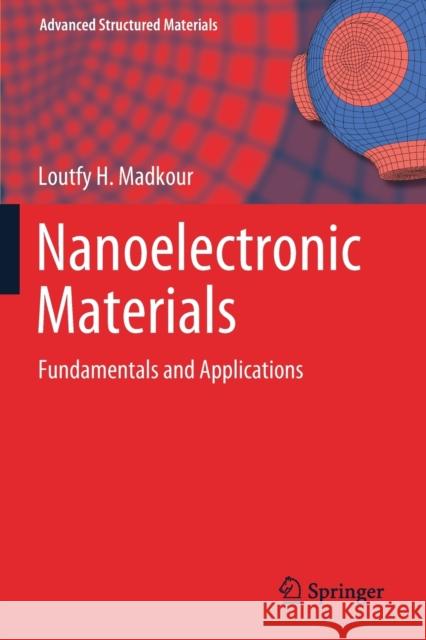
Nanoelectronic Materials: Fundamentals and Applications Loutfy H. Madkour 9783030216238 Springer - książkaWidoczna okładka, to zdjęcie poglądowe, a rzeczywista szata graficzna może różnić się od prezentowanej.

Nanoelectronic Materials: Fundamentals and Applications

ISBN-13: 9783030216238 / Angielski / Miękka / 2020 / 783 str.

Loutfy H. Madkour
cena 923,70
(netto: 879,71 VAT:  5%)

Najniższa cena z 30 dni: 886,75
Termin realizacji zamówienia:
ok. 22 dni roboczych.

Darmowa dostawa!
inne wydania
Kategorie:
Technologie
Kategorie BISAC:
Technology & Engineering > Nanotechnology & MEMS
Technology & Engineering > Materials Science - Electronic Materials
Science > Nanoscience
Wydawca:
Springer
Seria wydawnicza:
Advanced Structured Materials
Język:
Angielski
ISBN-13:
9783030216238
Rok wydania:
2020
Wydanie:
2019
Numer serii:
000394261
Ilość stron:
783
Waga:
1.13 kg
Wymiary:
23.39 x 15.6 x 4.19
Oprawa:
Miękka
Wolumenów:
01
Dodatkowe informacje:
Bibliografia
Wydanie ilustrowane

CONTENTS

Summary
A Look Ahead

1. INTRODUCTION TO NANOTECHNOLOGY (NT) 
AND NANOMATERIALS (NMs)

1.1 Nanotechnology Debate
1.2 Nanomaterials (NMs)
1.3 The Nanoworld 
1.4 Atoms, Clusters and Nanograins
1.5 What is Different at the Nanoscale
1.6 History of Nanomaterials

2. PRINCIPLES OF COMPUTATIONAL SIMULATIONS DEVICES AND CHARACTERIZATION OF NANOELECTRONIC MATERIALS

2.1. Charged particle single nanometer manufacturing 
2.2. Exotic effects and potential
2.3. Preliminary concepts: elements from solid state physics
2.4. Computing electronic transport
2.5. Basics of DFT and Methodology
2.6. Characterization of Nanomaterials
2.7. Characterization Techniques
References 

3. WHERE ARE NANOMATERIALS (NMs) FOUND

3.1. Nanoparticles Are All Around Us
3.2. What Nanomaterials Exist in Nature
3.3. Environmental Nanoparticles and Colloids
3.4. Humic Substances
3.5. Volcanic Ashes
3.6. Desert Sources of Nanoparticles
3.7. Biological Nanoparticles
References

4. BENEFITS OF NANOMATERIALS AND NANOWIRE GEOMETRY

4.1 The Nanobulk Stage (10-15 years)
4.2 Advances of Nanomaterials (NMs)
4.3 The Nanoworld Stage (15-40 years)
4.4 NMs Enhanced Surface Plasmon Resonance for Biological and 
Chemical Sensing Applications
4.5 Benefits of the Nanowire Geometry
4.6 Disadvantages of Nanomaterials (NMs)
References


5. WHY SO MUCH INTEREST IN NANOMATERIALS (NMs)

5.1. Recent Advances of Nanostructured Materials
5.2. New Properties can be created
5.3 Some Present and Future Applications of Nanomaterials
5.4 Engineered Nanoparticles Change Shape in Soil and Groundwater
5.5 Applications of Field-Effect Transistors (FET)
5.6 Fabrication of 1-D Nanostructures
References


6. EXAMPLES OF NANOMATERIALS WITH VARIOUS MORPHOLOGIES

6.1. Carbon Nanotubes (CNTs)
6.2. Nanoparticles
6.3. Other Application Examples of Nanoparticles are
6.4. Quantum Dots
6.5. Nanoshell
6.6. Metal Rubber
6.7. Nanopores
6.8. Nanoparticles with Different Morphologies
References

7. CARBON NANOMATERIALS AND TWO—DIMENSIONAL 
TRANSITION METAL DICHALCOGENIDES (2D TMDCs)

7.1. Classification of 2D materials
7.2. 2D materials, their properties, and applications
7.3. Crystal structure of 2D materials
7.4. Electronic, optical, and mechanical properties of 2D materials
7.5. 2D van der Waals heterostructures
7.6. Fabrication of 2D heterostructures
7.7. 2D heterostructures and their applications
7.8. Fullerenes molecules
7.9. Diamond molecules
7.10. Carbon Nanotubes (Carbon–based NPs)
7.11. Graphene background
7.12. Potential Applications of Graphene
7.13. Applications of Carbon Nanotubes (CNTs)
7.14. The Future of Graphene Research
References


8. NANOELECTRONICS AND ROLE OF SURFACES INTERFACES

8.1. The Development of Microelectronics 
8.2. The Region of Nanostructures
8.3. Crystal Structure and Dense Planes
8.4. The Surface Energy γ
8.5. Transistor Scaling
8.6. Molecular Electronics
8.7. Multi Walled Carbon Nanotubes (CNTs)

9. CLASSIFICATION OF NANOSTRUCTURED MATERIALS

9.1. Gleiter's Classification of Nanostructured Materials (NSM)
9.2. Classification of Nanomaterials by Dimensionality
9.3. Some Classifications Definitions 
9.4. Elementary Building Units (Nanostructures)
9.5. Quantum Confinement from 3D to 0D
9.6 Matrix-Reinforced and Layered Nanocomposites
9.7. Nanowires (NWs)
References

10. PROCESSING OF NANOMATERIALS (NMs) 

10.1. Top-down approaches
10.2. Bottom-up approach
10. 3. Two approaches with the same goal
10.4. Methods for Creating Nanostructures
References

11. TECHNIQUES FOR ELABORATION OF NANOMATERIALS

11.1. Vapor – Phase Synthesis
11.2. Liquid Phase Synthesis
11.3. Sol-Gel Technique
11.4. Solid – State Phase Synthesis
11.5. Other Methods
11.6. Consolidation of Nanopowders

12. SYNTHESIS METHODS FOR 2D NANOSTRUCTURED MATERIALS, NANOPARTICLES (NPs), NANOTUBES (NTs) AND NANOWIRES (NWs)

12.1. Synthesis Methods for 2D Materials
12.2. Synthesis Methods of Nanoparticles NPs
12.3. Synthesis Methods of Nanotubes (NTs)
12.4. Synthesis Methods of Nanowires NWs
References

13. CHEMISTRY AND PHYSICS FOR NANOSTRUCTURES SEMICONDUCTIVITY

13.1. Conductivity of Nanowires NWs
13.2. Welding Nanowires
13.3. Silicon-Germanium Nanowires SiGe NWs
13.4. Growth Techniques, Morphology, and Structural Properties of SiGe NWs
13.5. Chemical and Physical Properties of Nanowires
13.6. Theoretical Modeling
References

14. PROPERTIES OF NANOSTRUCTURED MATERIALS (NSMs) 
AND PHYSICOCHEMICAL PROPERTIES OF (NPs)

14.1. Properties of Nanoscale Matter
14.2. Nanoscale materials show quantum confinement effects
14.3. The Physical Properties of Nanoclusters
14.4. The Electronic Properties
14.5. The Magnetic Properties and Classifications of Magnetic Nanomaterials
14.6. The Optical Properties
14.7. The Electrical Properties
14.8. The Mechanical Properties of Nanomaterials
14.9 Thermal Properties of NSMs
14.10. Chemical Properties of NSMs
14.11. Physicochemical Properties of NPs
References 

15. APPLICATIONS OF NANOMATERIALS AND NANOPARTICLES 

15.1. Applications of NMs in Mechanical Industries
15.2. Applications of NMs in Health and Medical Therapy
15.3. Applications in manufacturing and materials
15.4. Applications in the Environment
15.5. Applications in the Electronics
15.6. Applications in Energy Harvesting
15.7. Current and future trends 
15.8. Examples of Nanomaterials’ Applications
References


16. ENVIRONMENTAL IMPACT OF NANOTECHNOLOGY AND NOVEL APPLICATIONS OF NANO MATERIALS AND NANO DEVICES 

16.1. From Microelectronics to Nanoelectronics and Molecular Electronics
16.2. Nano in Energy and Clean Energy
16.3. The Environmental Impact of Nanotechnology
16.4. AI and Nanotechnology How do They Work Together
16.5. Novel Nanotubes and Encapsulated Nanowires
16.6. Novel Applications of Nanowires and Nanotubes
16.7. Nanowire-based Transistors (Nanotube field-effect transistor)
16.8. Sensing Devices
16.9. Racetrack Memory
16.10. Nanowire-based Metamaterials
16.11. Indicators and Flat Displays
16.12. Nanowire Photovoltaics
16.13. Nanowires and Nano-Composite as Corrosion Inhibitors
References

17. INTERFACING BIOLOGY SYSTEMS WITH NANOELECTRONICS

17.1. Nanoelectronic-Biological Interfaces Enable
17.2. Molecular Biomimetic: Nanotechnology through Biology
17.3. Fundamentals of NanoFET in Biology and Medicine
17.4. Multiplexed Extracellular Electrical Recording
17.5. Intracellular Electrical Recording
17.6. Nanoelectronics Innervated Synthetic Tissues
17.7. Application areas of Biosensors and –assays
17.8. Selection of Inorganic-Binding Proteins through Display Technologies
17.9. Future Vision for Life Sciences
 References

FUTURE PERSPECTIVES
CONCLUSIONS
Bibliography
Recent Published Research Articles in Nano—and Bio—Nanotechnology 


Dr. LOUTFY H. MADKOUR has been a Professor of Physical Chemistry and Nano Science at the Department of Chemistry, Faculty of Science, Al Baha University, Saudi Arabia, since 2012. He received his B.Sc., M.Sc. and Ph.D. in Physical Chemistry from Cairo University, Minia University and Tanta University (Egypt), respectively. He began working as a Lecturer in Chemistry at Tanta University in 1982 and as a Professor of Physical Chemistry in 1999. He has conducted a series of studies in the fields of electrochemistry, corrosion science, density functional theory, molecular dynamic simulation, nanoscience, nanotechnology, nanomedicine, analytical chemistry, polarography, electrolytic extraction of heavy metals from natural ores and deposits, electrochemical thermodynamics and environmental chemistry. His previous research accomplishments include the biosynthesis of metallic nanoparticles (MNPs) and toxicology studies for pharmacological applications in medicine and therapy. He has published 150 peer-reviewed original research articles, 11 review articles, and 4 books on physical chemistry, practical and applied chemistry, corrosion science, nanoscience and nanomedicine.


Prof. Madkour is an Editorial Board member for several international journals, e.g. the International Journal of Industrial Chemistry (IJIC); International Journal of Ground Sediment & Water; Global Drugs and Therapeutics (GDT); Journal of Targeted Drug Delivery; Journal of Clinical and Medical Research; and International Journal of Environmental Chemistry. In addition to serving as a Reviewer for many international ELSEVIER and SPRINGER journals, he is a member of many prestigious international societies, including the American Association for the Advancement of Science (AAAS), European Desalination Society (EDS), Egyptian Chemical Society (ECS), Egyptian Corrosion Bulletin Society and American Chemical Society (ACS). 

This book presents synthesis techniques for the preparation of low-dimensional nanomaterials including 0D (quantum dots), 1D (nanowires, nanotubes) and 2D (thin films, few layers), as well as their potential applications in nanoelectronic systems. It focuses on the size effects involved in the transition from bulk materials to nanomaterials; the electronic properties of nanoscale devices; and different classes of nanomaterials from microelectronics to nanoelectronics, to molecular electronics. Furthermore, it demonstrates the structural stability, physical, chemical, magnetic, optical, electrical, thermal, electronic and mechanical properties of the nanomaterials. Subsequent chapters address their characterization, fabrication techniques from lab-scale to mass production, and functionality.


In turn, the book considers the environmental impact of nanotechnology and novel applications in the mechanical industries, energy harvesting, clean energy, manufacturing materials, electronics, transistors, health and medical therapy. In closing, it addresses the combination of biological systems with nanoelectronics and highlights examples of nanoelectronic–cell interfaces and other advanced medical applications.


The book answers the following questions:

• What is different at the nanoscale?

• What is new about nanoscience?

• What are nanomaterials (NMs)?

• What are the fundamental issues in nanomaterials?

• Where are nanomaterials found?

• What nanomaterials exist in nature?

• What is the importance of NMs in our lives?

• Why so much interest in nanomaterials?

• What is at nanoscale in nanomaterials?

• What is graphene?

• Are pure low-dimensional systems interesting and worth pursuing?

• Are nanotechnology products currently available?

• What are sensors?

• How can Artificial Intelligence (AI) and nanotechnology work together?

• What are the recent advances in nanoelectronic materials?

• What are the latest applications of NMs?


Udostępnij

Facebook - konto krainaksiazek.pl


Opinie o Krainaksiazek.pl na Opineo.pl

Partner Mybenefit

Krainaksiazek.pl w programie rzetelna firma Krainaksiaze.pl - płatności przez paypal

Czytaj nas na:

Facebook - krainaksiazek.pl
  • książki na zamówienie
  • granty
  • książka na prezent
  • kontakt
  • pomoc
  • opinie
  • regulamin
  • polityka prywatności

Zobacz:

  • Księgarnia czeska

  • Wydawnictwo Książkowe Klimaty

1997-2026 DolnySlask.com Agencja Internetowa

© 1997-2022 krainaksiazek.pl
     
KONTAKT | REGULAMIN | POLITYKA PRYWATNOŚCI | USTAWIENIA PRYWATNOŚCI
Zobacz: Księgarnia Czeska | Wydawnictwo Książkowe Klimaty | Mapa strony | Lista autorów
KrainaKsiazek.PL - Księgarnia Internetowa

Polityka prywatnosci - link
Krainaksiazek.pl - płatnośc Przelewy24
Przechowalnia Przechowalnia






