• Wyszukiwanie zaawansowane
  • Kategorie
  • Kategorie BISAC
  • Książki na zamówienie
  • Promocje
  • Granty
  • Książka na prezent
  • Opinie
  • Pomoc
  • Załóż konto
  • Zaloguj się

Multiple Representations in Chemical Education » książka

zaloguj się | załóż konto
Logo Krainaksiazek.pl

koszyk

konto

szukaj
topmenu
Księgarnia internetowa
Szukaj
Książki na zamówienie
Promocje
Granty
Książka na prezent
Moje konto
Pomoc
 
 
Wyszukiwanie zaawansowane
Pusty koszyk
Bezpłatna dostawa dla zamówień powyżej 20 złBezpłatna dostawa dla zamówień powyżej 20 zł

Kategorie główne

• Nauka
 [2949965]
• Literatura piękna
 [1857847]

  więcej...
• Turystyka
 [70818]
• Informatyka
 [151303]
• Komiksy
 [35733]
• Encyklopedie
 [23180]
• Dziecięca
 [617748]
• Hobby
 [139972]
• AudioBooki
 [1650]
• Literatura faktu
 [228361]
• Muzyka CD
 [398]
• Słowniki
 [2862]
• Inne
 [444732]
• Kalendarze
 [1620]
• Podręczniki
 [167233]
• Poradniki
 [482388]
• Religia
 [509867]
• Czasopisma
 [533]
• Sport
 [61361]
• Sztuka
 [243125]
• CD, DVD, Video
 [3451]
• Technologie
 [219309]
• Zdrowie
 [101347]
• Książkowe Klimaty
 [123]
• Zabawki
 [2362]
• Puzzle, gry
 [3791]
• Literatura w języku ukraińskim
 [253]
• Art. papiernicze i szkolne
 [7933]
Kategorie szczegółowe BISAC

Multiple Representations in Chemical Education

ISBN-13: 9781402088711 / Angielski / Twarda / 2009 / 367 str.
John K. Gilbert; David Treagust
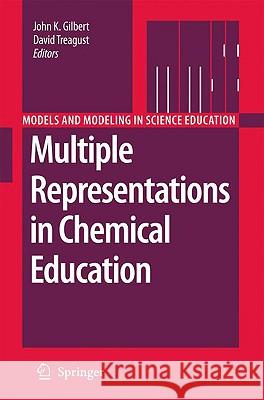
Multiple Representations in Chemical Education John K. Gilbert David Treagust 9781402088711 Springer - książkaWidoczna okładka, to zdjęcie poglądowe, a rzeczywista szata graficzna może różnić się od prezentowanej.

Multiple Representations in Chemical Education

ISBN-13: 9781402088711 / Angielski / Twarda / 2009 / 367 str.

John K. Gilbert; David Treagust
cena 605,23 zł
(netto: 576,41 VAT:  5%)

Najniższa cena z 30 dni: 578,30 zł
Termin realizacji zamówienia:
ok. 22 dni roboczych
Bez gwarancji dostawy przed świętami

Darmowa dostawa!

In bringing together the work of leading chemistry educators who are researching the triplet relationship at the secondary and university levels, the book discusses the learning involved, the problems that students encounter, and successful approaches to teaching. Based on the reported research, the editors argue for a coherent model for understanding the triplet relationship in chemical education.


Kategorie:
Podręczniki
Kategorie BISAC:
Education > Teaching - Subjects - Science & Technology
Science > Study & Teaching
Science > Chemia
Wydawca:
Springer
Seria wydawnicza:
Models and Modeling in Science Education
Język:
Angielski
ISBN-13:
9781402088711
Rok wydania:
2009
Wydanie:
2009
Numer serii:
000322497
Ilość stron:
367
Waga:
0.70 kg
Wymiary:
23.39 x 15.6 x 2.24
Oprawa:
Twarda
Wolumenów:
01
Dodatkowe informacje:
Bibliografia
Wydanie ilustrowane

Preface Alex Johnstone, University of Glasgow, Scotland Macro, submicro and symbolic representations, and the relationship between them: Key models in chemical education John K. Gilbert, The University of Reading UK and David F. Treagust, Curtin University of Technology, Australia Section A: The challenges faced in teaching and learning about the representational triplet Introduction Chapter1. Learning at the submicro level: Structural representations Bob Bucat, University of Western Australia and Mauro Mocerino, Curtin University of Technology, Australia. Chapter 2. Micro-macro thinking in chemical education: why and how to escape Berry van Berkel, Albert Pilot, Astrid M. W. Bulte, University of Utrecht, The Netherlands Chapter 3. Towards a better utilisation of diagrams in research into the use of representative levels in chemical education Maurice Cheng, University of Hong Kong and John K. Gilbert, The University of Reading,UK Chapter 4. Learning at the symbolic level Keith Taber, University of Cambridge,UK. Section B: Improving existing pedagogy in respect of the triplet relationship Introduction Chapter 5. Learning at the macro level: The role of practical work Georgios Tsaparlis,University of Ioannina, Greece Chapter 6. Linking the macroscopic, sub-microscopic, and symbolic levels: The use of inorganic qualitative analysis. Kim Chwee Daniel Tan, Nanyang Technological University, Ngoh Khang Goh, Lian Sai Chia, National Institute of Education, Singapore, David F. Treagust, Curtin University of Technology, Australia. Chapter 7. The efficacy of an alternative instructional programme designed to enhance secondary school students’ competence in the triplet relationship David F. Treagust andA.L.Chandrasegaran, Curtin University of Technology, Australia Chapter 8. Linking the submicro and symbolic levels: Diagrams Bette Davidowitz, University of Cape Town, South Africa, and Gail Chittleborough, Deakin University, Australia Section C:Classroom solutions to the challenges posed by the triplet relationship Introduction Chapter 9. Structure – property relations between macro and sub-micro representations: relevant meso-levels in authentic tasks Albert Pilot, Marijn R. Meijer, Astrid A.M. Bulte, University of Utrecht, The Netherlands Chapter 10. Historical material in micro-macro thinking: Conceptual change in chemistry education and in the history of chemistry. Lars Scheffel, Wiebke Brockmeier, Ilka Parchmann, University of Oldenburg, Germany Chapter 11. The roles of multimedia in the teaching and learning of the triplet relationship in chemistry Mei-Hung Chiu and Hsin-Kai Wu, National Taiwan Normal University, Taiwan Chapter 12. The application of a ‘model of modelling’ to illustrate the importance of metavisualization in respect of the three levels of represention Rosaria Justi, University of Minas Gerais, Brazil, John K. Gilbert, The University of Reading, UK, and Poliana F.M. Ferreira, University of Minas Gerais, Brazil Chapter 13. Action research to promote the formation of linkages by chemistry students between the macro, submicro, and symbolic representational levels Vesna Ferk Savec, Irena Sajovic, Katarina S. Wissiak Grm, University of Ljubljana, Slovenia Section D: Towards a synthesis Introduction Chapter 14. Towards a coherent model for macro, submicro and symbolic representation in chemical education John K.Gilbert, The University of Reading, UK, David F. Treagust,

Chemistry seeks to provide qualitative and quantitative explanations for the observed behaviour of elements and their compounds. Doing so involves making use of three types of representation: the macro (the empirical properties of substances); the sub-micro (the natures of the entities giving rise to those properties); and the symbolic (the number of entities involved in any changes that take place). Although understanding this triplet relationship is a key aspect of chemical education, there is considerable evidence that students find great difficulty in achieving mastery of the ideas involved. In bringing together the work of leading chemistry educators who are researching the triplet relationship at the secondary and university levels, the book discusses the learning involved, the problems that students encounter, and successful approaches to teaching. Based on the reported research, the editors argue for a coherent model for understanding the triplet relationship in chemical education.




Udostępnij

Facebook - konto krainaksiazek.pl


Opinie o Krainaksiazek.pl na Opineo.pl

Partner Mybenefit

Krainaksiazek.pl w programie rzetelna firma Krainaksiaze.pl - płatności przez paypal

Czytaj nas na:

Facebook - krainaksiazek.pl
  • książki na zamówienie
  • granty
  • książka na prezent
  • kontakt
  • pomoc
  • opinie
  • regulamin
  • polityka prywatności

Zobacz:

  • Księgarnia czeska

  • Wydawnictwo Książkowe Klimaty

1997-2025 DolnySlask.com Agencja Internetowa

© 1997-2022 krainaksiazek.pl
     
KONTAKT | REGULAMIN | POLITYKA PRYWATNOŚCI | USTAWIENIA PRYWATNOŚCI
Zobacz: Księgarnia Czeska | Wydawnictwo Książkowe Klimaty | Mapa strony | Lista autorów
KrainaKsiazek.PL - Księgarnia Internetowa

Polityka prywatnosci - link
Krainaksiazek.pl - płatnośc Przelewy24
Przechowalnia Przechowalnia





