• Wyszukiwanie zaawansowane
  • Kategorie
  • Kategorie BISAC
  • Książki na zamówienie
  • Promocje
  • Granty
  • Książka na prezent
  • Opinie
  • Pomoc
  • Załóż konto
  • Zaloguj się

Morphogenesis and Pathogenicity in Fungi » książka


zaloguj się | załóż konto
Logo Krainaksiazek.pl

koszyk

konto

szukaj
topmenu
Księgarnia internetowa
Szukaj
Książki na zamówienie
Promocje
Granty
Książka na prezent
Moje konto
Pomoc
 
 
Wyszukiwanie zaawansowane
Pusty koszyk
Bezpłatna dostawa dla zamówień powyżej 20 złBezpłatna dostawa dla zamówień powyżej 20 zł

Kategorie główne

• Nauka
 [2949965]
• Literatura piękna
 [1857847]

  więcej...
• Turystyka
 [70818]
• Informatyka
 [151303]
• Komiksy
 [35733]
• Encyklopedie
 [23180]
• Dziecięca
 [617748]
• Hobby
 [139972]
• AudioBooki
 [1650]
• Literatura faktu
 [228361]
• Muzyka CD
 [398]
• Słowniki
 [2862]
• Inne
 [444732]
• Kalendarze
 [1620]
• Podręczniki
 [167233]
• Poradniki
 [482388]
• Religia
 [509867]
• Czasopisma
 [533]
• Sport
 [61361]
• Sztuka
 [243125]
• CD, DVD, Video
 [3451]
• Technologie
 [219309]
• Zdrowie
 [101347]
• Książkowe Klimaty
 [123]
• Zabawki
 [2362]
• Puzzle, gry
 [3791]
• Literatura w języku ukraińskim
 [253]
• Art. papiernicze i szkolne
 [7933]
Kategorie szczegółowe BISAC

Morphogenesis and Pathogenicity in Fungi

ISBN-13: 9783642428340 / Angielski / Miękka / 2014 / 286 str.
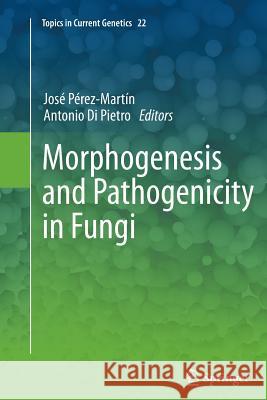
Jose Perez Martin; Antonio Di Pietro
Morphogenesis and Pathogenicity in Fungi Jose Pere Antonio D 9783642428340 Springer - książkaWidoczna okładka, to zdjęcie poglądowe, a rzeczywista szata graficzna może różnić się od prezentowanej.

Morphogenesis and Pathogenicity in Fungi

ISBN-13: 9783642428340 / Angielski / Miękka / 2014 / 286 str.

Jose Perez Martin; Antonio Di Pietro
cena 605,23 zł
(netto: 576,41 VAT:  5%)

Najniższa cena z 30 dni: 578,30 zł
Termin realizacji zamówienia:
ok. 22 dni roboczych
Bez gwarancji dostawy przed świętami

Darmowa dostawa!
inne wydania

Infectious fungal diseases continue to take their toll in terms of human suffering and enormous economic losses. Invasive infections by opportunistic fungal pathogens are a major cause of morbidity and mortality in immuno-compromised individuals. At the same time, plant pathogenic fungi have devastating effects on crop production and human health. New strategies for antifungal control are required to meet the challenges posed by these agents, and such approaches can only be developed through the identification of novel biochemical and molecular targets. However, in contrast to bacterial pathogens, fungi display a wealth of "lifestyles" and modes of infection. This diversity makes it extremely difficult to identify individual, evolutionarily conserved virulence determinants and represents a major stumbling block in the search for common antifungal targets. In order to activate the infection programme, all fungal pathogens must undergo appropriate developmental transitions that involve cellular differentiation and the introduction of a new morphogenetic programme. How growth, cell cycle progression and morphogenesis are co-ordinately regulated during development has been an active area of research in fungal model systems such as budding and fission yeast. By contrast, we have only limited knowledge of how these developmental processes shape fungal pathogenicity, or of the role of the cell cycle and morphogenesis regulators as true virulence factors. This book combines state-of-the-art expertise from diverse pathogen model systems to update our current understanding of the regulation of fungal morphogenesis as a key determinant of pathogenicity in fungi.


Kategorie:
Nauka, Biologia i przyroda
Kategorie BISAC:
Science > Biologia molekularna
Science > Biochemia
Science > Biologia rozwoju
Wydawca:
Springer
Seria wydawnicza:
Topics in Current Genetics
Język:
Angielski
ISBN-13:
9783642428340
Rok wydania:
2014
Wydanie:
2012
Numer serii:
000277932
Ilość stron:
286
Waga:
0.46 kg
Wymiary:
23.5 x 15.5
Oprawa:
Miękka
Wolumenów:
01
Dodatkowe informacje:
Wydanie ilustrowane

From the reviews:

"This book describes the molecular basis of morphogenesis and pathogenicity in the fungi and highlights new approaches. ... All the chapters are well organized and each chapter contains an introduction at the beginning and a conclusion at the last that can be very useful for the reader. ... This book is very important to scientists, researchers and teachers as well as students who are interested in fungal morphogenesis and pathogenicity. Therefore this book should be available in all schools, research laboratories, community and university libraries." (Kasun M. Thambugala, Fungal Diversity, Vol. 57 (1), November, 2012)

Molecular basis of morphogenesis in fungi.- Tropic orientation responses of pathogenic fungi.- Hyphal fusion.- Signalling of infectious growth in Fusarium oxysporum.- Integrating Cdk signaling in Candida albicans environmental sensing networks.- Cell cycle and morphogenesis connections during the formation of the infective filament in Ustilago maydis.- Appressorium Function in Colletotrichum orbiculare and Prospect for Genome Based Analysis.- Morphogenesis in Candida albicans: How to stay focused.- Morphogenesis in Paracoccidioides brasiliensi.- Morphogenesis of Cryptococcus neoformans.- Morphogenesis and infection in Botrytis cinere.-  Morphogenesis, growth and development of the grass symbiont Epichlöe festucae.- Cryptococcus-neutrophil interaction.-

Infectious fungal diseases continue to take their toll in terms of human suffering and enormous economic losses. Invasive infections by opportunistic fungal pathogens are a major cause of morbidity and mortality in immuno-compromised individuals. At the same time, plant pathogenic fungi have devastating effects on crop production and human health. New strategies for antifungal control are required to meet the challenges posed by these agents, and such approaches can only be developed through the identification of novel biochemical and molecular targets. However, in contrast to bacterial pathogens, fungi display a wealth of “lifestyles” and modes of infection. This diversity makes it extremely difficult to identify individual, evolutionarily conserved virulence determinants and represents a major stumbling block in the search for common antifungal targets. In order to activate the infection programme, all fungal pathogens must undergo appropriate developmental transitions that involve cellular differentiation and the introduction of a new morphogenetic programme. How growth, cell cycle progression and morphogenesis are co-ordinately regulated during development has been an active area of research in fungal model systems such as budding and fission yeast. By contrast, we have only limited knowledge of how these developmental processes shape fungal pathogenicity, or of the role of the cell cycle and morphogenesis regulators as true virulence factors. This book combines state-of-the-art expertise from diverse pathogen model systems to update our current understanding of the regulation of fungal morphogenesis as a key determinant of pathogenicity in fungi.



Udostępnij

Facebook - konto krainaksiazek.pl


Opinie o Krainaksiazek.pl na Opineo.pl

Partner Mybenefit

Krainaksiazek.pl w programie rzetelna firma Krainaksiaze.pl - płatności przez paypal

Czytaj nas na:

Facebook - krainaksiazek.pl
  • książki na zamówienie
  • granty
  • książka na prezent
  • kontakt
  • pomoc
  • opinie
  • regulamin
  • polityka prywatności

Zobacz:

  • Księgarnia czeska

  • Wydawnictwo Książkowe Klimaty

1997-2025 DolnySlask.com Agencja Internetowa

© 1997-2022 krainaksiazek.pl
     
KONTAKT | REGULAMIN | POLITYKA PRYWATNOŚCI | USTAWIENIA PRYWATNOŚCI
Zobacz: Księgarnia Czeska | Wydawnictwo Książkowe Klimaty | Mapa strony | Lista autorów
KrainaKsiazek.PL - Księgarnia Internetowa

Polityka prywatnosci - link
Krainaksiazek.pl - płatnośc Przelewy24
Przechowalnia Przechowalnia





