• Wyszukiwanie zaawansowane
  • Kategorie
  • Kategorie BISAC
  • Książki na zamówienie
  • Promocje
  • Granty
  • Książka na prezent
  • Opinie
  • Pomoc
  • Załóż konto
  • Zaloguj się

Molecular Toxicology Protocols » książka


zaloguj się | załóż konto
Logo Krainaksiazek.pl

koszyk

konto

szukaj
topmenu
Księgarnia internetowa
Szukaj
Książki na zamówienie
Promocje
Granty
Książka na prezent
Moje konto
Pomoc
 
 
Wyszukiwanie zaawansowane
Pusty koszyk
Bezpłatna dostawa dla zamówień powyżej 20 złBezpłatna dostawa dla zamówień powyżej 20 zł

Kategorie główne

• Nauka
 [2946912]
• Literatura piękna
 [1852311]

  więcej...
• Turystyka
 [71421]
• Informatyka
 [150889]
• Komiksy
 [35717]
• Encyklopedie
 [23177]
• Dziecięca
 [617324]
• Hobby
 [138808]
• AudioBooki
 [1671]
• Literatura faktu
 [228371]
• Muzyka CD
 [400]
• Słowniki
 [2841]
• Inne
 [445428]
• Kalendarze
 [1545]
• Podręczniki
 [166819]
• Poradniki
 [480180]
• Religia
 [510412]
• Czasopisma
 [525]
• Sport
 [61271]
• Sztuka
 [242929]
• CD, DVD, Video
 [3371]
• Technologie
 [219258]
• Zdrowie
 [100961]
• Książkowe Klimaty
 [124]
• Zabawki
 [2341]
• Puzzle, gry
 [3766]
• Literatura w języku ukraińskim
 [255]
• Art. papiernicze i szkolne
 [7810]
Kategorie szczegółowe BISAC

Molecular Toxicology Protocols

ISBN-13: 9781617373473 / Angielski / Miękka / 2011 / 489 str.
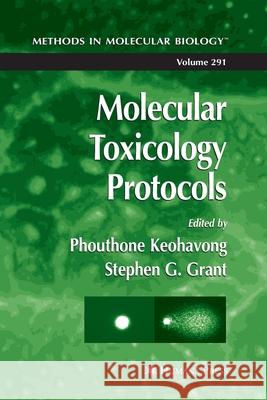
Phouthone Keohavong; Stephen G. Grant
Molecular Toxicology Protocols Phouthone Keohavong Stephen G. Grant 9781617373473 Springer - książkaWidoczna okładka, to zdjęcie poglądowe, a rzeczywista szata graficzna może różnić się od prezentowanej.

Molecular Toxicology Protocols

ISBN-13: 9781617373473 / Angielski / Miękka / 2011 / 489 str.

Phouthone Keohavong; Stephen G. Grant
cena 521,91
(netto: 497,06 VAT:  5%)

Najniższa cena z 30 dni: 501,04
Termin realizacji zamówienia:
ok. 22 dni roboczych
Dostawa w 2026 r.

Darmowa dostawa!

A collection of cutting-edge techniques for analyzing genotoxic exposure and detecting the resulting biological effects-including endogenous metabolites-up to and including the development of cancer. The authors emphasize analytical methods that can be specifically applied to human populations and patients. Among the applications detailed are the analysis of interactions between such cellular macromolecules as DNA and proteins and chemical and physical agents, the assessment of medically relevant toxicity, and the characterization of genetic alterations induced in transgenic animals by in vivo systems. There are also methods for the analysis of genotoxic exposure during gene expression, of cytotoxicity caused by the induction of apoptosis, of genetic alterations in reporter genes and oncogenes, early (premalignant) detection of altered oncogenes, and of individual variation in biotransformation and DNA repair capacity.


Kategorie:
Nauka, Medycyna
Kategorie BISAC:
Medical > Farmakologia
Medical > Toxicology
Medical > Genetyka kliniczna
Wydawca:
Springer
Seria wydawnicza:
Methods in Molecular Biology (Paperback)
Język:
Angielski
ISBN-13:
9781617373473
Rok wydania:
2011
Wydanie:
2005
Numer serii:
000203440
Ilość stron:
489
Waga:
0.69 kg
Wymiary:
23.39 x 15.6 x 2.57
Oprawa:
Miękka
Wolumenów:
01
Dodatkowe informacje:
Wydanie ilustrowane

"This book should be of interest to both specialist researchers as well as members of the wider scientific community..." - British Journal of Anesthesiology

Part I. Analysis of DNA Adducts 32P-Postlabeling Analysis of DNA Adducts David H. Phillips, Alan Hewer, and Volker M. Arlt Modification of the 32P-Postlabeling Method to Detect a Single Adduct Species as a Single Spot Masako Ochiai, Takashi Sugimura, and Minako Nagao DNA Isolation and Sample Preparation for Quantification of Adduct Levels by Accelerator Mass Spectrometry Karen H. Dingley, Esther A. Ubick, John S. Vogel, and Kurt W. Haack Fluoroimaging-Based Immunoassay of DNA Photoproducts in Ultraviolet-B-Irradiated Tadpoles Iovanna Pandelova, Stephen R. Hewitt, and John B. Hays Analysis of DNA Strand Cleavage at Abasic Sites Walter A. Deutsch and Vijay Hegde Part II. Detection of Chromosomal and Genome-Wide Damage Premature Chromosome Condensation in Human Resting Peripheral Blood Lymphocytes for Chromosome Aberration Analysis Using Specific Whole-Chromosome DNA Hybridization Probes Pataje G. S. Prasanna and William F. Blakely Mutagen-Induced Chromatid Breakage as a Marker of Cancer Risk Xifeng Wu, Yun-Ling Zheng, and T. C. Hsu Flow Cytometric Analysis of Micronuclei in Erythrocytes, Jan Grawé The Comet Assay: A Sensitive Genotoxicity Test for the Detection of DNA Damage Günter Speit and Andreas Hartmann Computerized Image Analysis Software for the Comet Assay R. C. Chaubey The Comet-FISH Technique: A Tool for Detection of Specific DNA Damage and Repair Alexander Rapp, Michael Hausmann, and Karl Otto Greulich DNA Double-Strand Break Damage and Repair Assessed by Pulsed-Field Gel Electrophoresis Nina Joshi and Stephen G. Grant Part III. Detection and Characterization of Surrogate Gene Mutation Analysis of In Vivo Mutation in the Hprt and Tk Genes of Mouse Lymphocytes Vasily N. Dobrovolsky, Joseph G. Shaddock, and Robert H.Heflich Quantifying In Vivo Somatic Mutations Using Transgenic Mouse Model Systems Roy R. Swiger Methods for Detecting Somatic Mutations In Vitro: The Human T-Cell Cloning Assay Selecting for HPRT Mutants Sai-Mei Hou Molecular Analysis of Mutations in the Human HPRT Gene Phouthone Keohavong, Liqiang Xi, and Stephen G. Grant Simultaneous Quantification of t(14;18) and HPRT Exon 2/3 Deletions in Human Lymphocytes James C. Fuscoe The GPA In Vivo Somatic Mutation Assay Stephen G. Grant Flow Cytometric Measurement of Mutant T Cells With Altered Expression of TCR: Detecting Somatic Mutations in Humans and Mice Seishi Kyoizumi, Yoichiro Kusunoki, and Tomonori Hayashi Part IV. Detection and Characterization of Cancer Gene Mutation Mutation Screening of the TP53 Gene by Temporal Temperature Gradient Gel Electrophoresis Therese Sørlie, Hilde Johnsen, Phuong Vu, Guro Elisabeth Lind, Ragnhild Lothe, and Anne-Lise Børresen-Dale Analysis of K-RAS and P53 Mutations in Sputum Samples Weimin Gao and Phouthone Keohavong Allele-Specific Competitive Blocker-PCR Detection of Rare Base Substitution Barbara L. Parsons, Page B. McKinzie, and Robert H. Heflich Gel-Based Nonradioactive Single-Strand Conformational Polymorphism and Mutation Detection: Limitations and Solutions Vibhuti Gupta, Reetakshi Arora, Anand Ranjan, Narendra K. Bairwa, Dheeraj K. Malhotra, P. T. Udhayasuriyan, Anjana Saha, and Ramesh Bamezai Detection and Characterization of Oncogene Mutations in Preneoplastic and Early Neoplastic Lesions Toshinari Minamoto Detection of DNA Double-Strand Breaks and Chromosome Translocations Using Ligation-Mediated PCR and Inverse PCR Michael J. Villalobos, Christopher J. Betti, and Andrew T. M. Vaughan Part V. Analysis of DNA Repair Mechanisms Microsatellite

New state-of-the-art molecular techniques promise to transform the field of genetic toxicology by making it possible to directly detect genotoxic exposures and their consequences in humans, to identify the agent(s) involved, and to clinically manage the exposed population. In Molecular Toxicology Protocols, researchers from prominent universities and cancer centers around the world describe in detail their best techniques for analyzing genotoxic exposure and the resulting biological effects, including intermediate biomarkers such as DNA and chromosomal damage, mutations in reporter and oncogenes, and the earliest possible detection of cancer. The authors emphasize analytical methods specifically developed for use in human populations and in cancer patients, or in other in vivo systems such as transgenic mice. Among the applications detailed are the analysis of interactions of chemical and physical agents with cellular macromolecules, especially DNA, the assessment of medically relevant toxicity, and the individualized characterization of genetic damage and repair. There are also methods to assess and characterize the modulation of this damage and repair through individual differences in specific and genome-wide gene expression, including metabolic profiling and apoptotic capacity. These methods mark a shift in emphasis from studies of the agents themselves to the exposed population, and from studies of small populations with significant known exposures to a single agent, to studies of common diseases, such as breast cancer, caused by normal levels of generalized genotoxic exposure. The protocols follow the successful Methods in Molecular Biology™ series format, each offering step-by-step laboratory instructions, an introduction outlining the principle behind the technique, lists of the necessary equipment and reagents, and tips on troubleshooting and avoiding known pitfalls.
Comprehensive and highly practical, Molecular Toxicology Protocols offers a gold-standard collection of cutting-edge techniques designed to investigate a broad range of exposures-endogenous, accidental, medical, environmental, and occupational-and their role in human carcinogenesis and other diseases of aging.


Udostępnij

Facebook - konto krainaksiazek.pl


Opinie o Krainaksiazek.pl na Opineo.pl

Partner Mybenefit

Krainaksiazek.pl w programie rzetelna firma Krainaksiaze.pl - płatności przez paypal

Czytaj nas na:

Facebook - krainaksiazek.pl
  • książki na zamówienie
  • granty
  • książka na prezent
  • kontakt
  • pomoc
  • opinie
  • regulamin
  • polityka prywatności

Zobacz:

  • Księgarnia czeska

  • Wydawnictwo Książkowe Klimaty

1997-2025 DolnySlask.com Agencja Internetowa

© 1997-2022 krainaksiazek.pl
     
KONTAKT | REGULAMIN | POLITYKA PRYWATNOŚCI | USTAWIENIA PRYWATNOŚCI
Zobacz: Księgarnia Czeska | Wydawnictwo Książkowe Klimaty | Mapa strony | Lista autorów
KrainaKsiazek.PL - Księgarnia Internetowa

Polityka prywatnosci - link
Krainaksiazek.pl - płatnośc Przelewy24
Przechowalnia Przechowalnia





