• Wyszukiwanie zaawansowane
  • Kategorie
  • Kategorie BISAC
  • Książki na zamówienie
  • Promocje
  • Granty
  • Książka na prezent
  • Opinie
  • Pomoc
  • Załóż konto
  • Zaloguj się

Molecular Symmetry » książka


zaloguj się | załóż konto
Logo Krainaksiazek.pl

koszyk

konto

szukaj
topmenu
Księgarnia internetowa
Szukaj
Książki na zamówienie
Promocje
Granty
Książka na prezent
Moje konto
Pomoc
 
 
Wyszukiwanie zaawansowane
Pusty koszyk
Bezpłatna dostawa dla zamówień powyżej 20 złBezpłatna dostawa dla zamówień powyżej 20 zł

Kategorie główne

• Nauka
 [2950560]
• Literatura piękna
 [1849509]

  więcej...
• Turystyka
 [71097]
• Informatyka
 [151150]
• Komiksy
 [35848]
• Encyklopedie
 [23178]
• Dziecięca
 [617388]
• Hobby
 [139064]
• AudioBooki
 [1657]
• Literatura faktu
 [228597]
• Muzyka CD
 [383]
• Słowniki
 [2855]
• Inne
 [445295]
• Kalendarze
 [1464]
• Podręczniki
 [167547]
• Poradniki
 [480102]
• Religia
 [510749]
• Czasopisma
 [516]
• Sport
 [61293]
• Sztuka
 [243352]
• CD, DVD, Video
 [3414]
• Technologie
 [219456]
• Zdrowie
 [101002]
• Książkowe Klimaty
 [124]
• Zabawki
 [2311]
• Puzzle, gry
 [3459]
• Literatura w języku ukraińskim
 [254]
• Art. papiernicze i szkolne
 [8079]
Kategorie szczegółowe BISAC

Molecular Symmetry

ISBN-13: 9780470853474 / Angielski / Twarda / 2009 / 438 str.
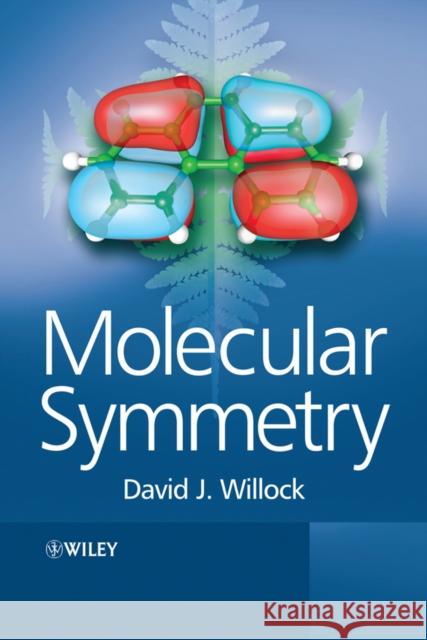
David J. Willock
Molecular Symmetry David Willock 9780470853474 John Wiley & Sons - książkaWidoczna okładka, to zdjęcie poglądowe, a rzeczywista szata graficzna może różnić się od prezentowanej.

Molecular Symmetry

ISBN-13: 9780470853474 / Angielski / Twarda / 2009 / 438 str.

David J. Willock
cena 654,28
(netto: 623,12 VAT:  5%)

Najniższa cena z 30 dni: 650,24
Termin realizacji zamówienia:
ok. 30 dni roboczych
Dostawa w 2026 r.

Darmowa dostawa!
inne wydania

Symmetry and group theory provide us with a formal method for the description of the geometry of objects by describing the patterns in their structure. In chemistry it is a powerful method that underlies many apparently disparate phenomena. Symmetry allows us to accurately describe the types of bonding that can occur between atoms or groups of atoms in molecules. It also governs the transitions that may occur between energy levels in molecular systems, which in turn allows us to predict the absorption properties of molecules and hence their spectra. Molecular Symmetry lays out the formal language used in the area using illustrative examples of particular molecules throughout. It then applies the ideas of symmetry to describe molecular structure, bonding in molecules and consider the implications in spectroscopy.Topics covered include:

  • Symmetry elements
  • Symmetry operations and products of operations
  • Point groups used with molecules
  • Point group representations, matrices and basis sets
  • Reducible and irreducible representations
  • Applications in vibrational spectroscopy
  • Symmetry in chemical bonding
Molecular Symmetry is designed to introduce the subject by combining symmetry with spectroscopy in a clear and accessible manner. Each chapter ends with a summary of learning points, a selection of self-test questions, and suggestions for further reading. A set of appendices includes templates for paper models which will help students understand symmetry groups. Molecular Symmetry is a must-have introduction to this fundamental topic for students of chemistry, and will also find a place on the bookshelves of postgraduates and researchers looking for a broad and modern introduction to the subject

Kategorie:
Nauka, Chemia
Kategorie BISAC:
Science > Chemia - Nieorganiczna
Science > Chemia - Fizyczna
Wydawca:
John Wiley & Sons
Język:
Angielski
ISBN-13:
9780470853474
Rok wydania:
2009
Ilość stron:
438
Waga:
0.88 kg
Wymiary:
24.89 x 17.53 x 2.79
Oprawa:
Twarda
Wolumenów:
01
Dodatkowe informacje:
Bibliografia
Wydanie ilustrowane

"The work will prove to be a popular choice as a textbook or as an additional resource for group theory and advanced inorganic chemistry courses." ( CHOICE, November 2009)

A major strength of this book is its accessibility to the practically and conceptually minded chemist; the reader is led into the subject through strong visual presentation of the ideas and although the mathematics is by no means ignored, it is presented within an applied context. ( The Higher Education Academy Physical Sciences Centre Reviews, May 2009)

Preface.

1. Symmetry Elements and Operations.

1.1 Introduction.

1.2 Symmetry Elements and Operations.

1.3 Examples of the Impact of Geometric Symmetry on Chemistry.

1.4 Summary.

1.5 Self–Test Questions.

Further Reading.

2. More Symmetry Operations and Products of Operations.

2.1 Introduction.

2.2 Background to Point Groups.

2.3 Closed Groups and New Operations.

2.4 Properties of Symmetry Operations.

2.5 Chirality and Symmetry.

2.6 Summary.

2.7 Completed Multiplication Tables.

2.8 Self–Test Questions.

3. The Point Groups Used with Molecules.

3.1 Introduction.

3.2 Molecular Classification Using Symmetry Operations.

3.3 Constructing Reference Models with Idealized Symmetry.

3.4 The Nonaxial Groups: Cs,Ci,C1.

3.5 The Cyclic Groups: Cn, Sn.

3.6 Axial Groups Containing Mirror Planes: Cnh and Cnv.

3.6.1 Examples of Axial Groups Containing Mirror Planes: Cnh and Cnv.

3.7 Axial Groups with Multiple Rotation Axes: Dn, Dnd and Dnh.

3.8 Special Groups for Linear Molecules: Cìv and Dìh.

3.9 The Cubic Groups: Td and Oh.

3.10 Assigning Point Groups to Molecules.

3.11 Example Point Group Assignments.

3.12 Self–Test Questions.

4. Point Group Representations, Matrices and Basis Sets.

4.1 Introduction.

4.2 Symmetry Representations and Characters.

4.3 Multiplication Tables for Character Representations.

4.4 Matrices and Symmetry Operations.

4.5 Diagonal and Off–Diagonal Matrix Elements.

4.6 The Trace of a Matrix as the Character for an Operation.

4.7 Noninteger Characters.

4.8 Reducible Representations.

4.9 Classes of Operations.

4.10 Degenerate Irreducible Representations.

4.11 The Labelling of Irreducible Representations.

4.12 Summary.

4.13 Completed Tables.

4.14 Self–Test Questions.

Further Reading.

5. Reducible and Irreducible Representations.

5.1 Introduction.

5.2 Irreducible Representations and Molecular Vibrations.

5.3 Finding Reducible Representations.

5.4 Properties of Point Groups and Irreducible Representations.

5.5 The Reduction Formula.

5.6 A Complete Set of Vibrational Modes for H2O.

5.7 Choosing the Basis Set.

5.8 The d–Orbitals in Common Transition Metal Complex Geometries.

5.9 Linear Molecules: Groups of Infinite Order.

5.10 Summary.

5.11 Self–Test Questions.

6. Applications in Vibrational Spectroscopy.

6.1 Introduction.

6.2 Selection Rules.

6.3 General Approach to Analysing Vibrational Spectroscopy.

6.4 Symmetry–Adapted Linear Combinations.

6.5 Normalization.

6.6 The Projector Operator Method.

6.7 Linking Results for Symmetry–Inequivalent Sets of Atoms.

6.8 Additional Examples.

6.9 Summary.

6.10 Self–Test Questions.

Further Reading.

7. Symmetry in Chemical Bonding.

7.1 Introduction.

7.2 Bond Energies.

7.3 The Relative Energies of Hydrogen–Like Atomic Orbitals.

7.4 The Molecules Formed by Other Second–Row Elements with Hydrogen.

7.5 The Second–Row Diatomic Molecules.

7.6 More Complex Polyatomic Molecules.

7.7 Metal Complexes.

7.8 Summary.

7.9 Self–Test Questions.

Further Reading.

Appendices.

Appendix 1. H2O Models for Identifying the Results of Symmetry Operation Products.

Appendix 2. Assignment of Chiral Centre Handedness using Cahn–Ingold–Prelog Rules.

Appendix 3. Model of a Tetrahedron and the Related Cube.

Appendix 4. Model of an Octahedron.

Appendix 5. Matrices and Determinants.

Appendix 6. The Mathematical Background to Infrared Selection Rules.

Appendix 7. The Franck–Condon Principle.

Appendix 8. Classical Treatment of Stokes/Anti–Stokes Absorption.

Appendix 9. The Atomic Orbitals of Hydrogen.

Appendix 10. The Origin of Chemical Bonding in H+2.

Appendix 11. H2O Molecular Orbital Calculation in C2v Symmetry.

Appendix 12. Character Tables.

Index.

Dr David Willock, Department of Chemistry, Cardiff University, UK
Dr Willock is a lecturer in physical chemistry at?Cardiff University. His research focuses on computer simulations and computational chemistry. He teaches courses in physical chemistry, group theory and solid state chemistry.


Udostępnij

Facebook - konto krainaksiazek.pl


Opinie o Krainaksiazek.pl na Opineo.pl

Partner Mybenefit

Krainaksiazek.pl w programie rzetelna firma Krainaksiaze.pl - płatności przez paypal

Czytaj nas na:

Facebook - krainaksiazek.pl
  • książki na zamówienie
  • granty
  • książka na prezent
  • kontakt
  • pomoc
  • opinie
  • regulamin
  • polityka prywatności

Zobacz:

  • Księgarnia czeska

  • Wydawnictwo Książkowe Klimaty

1997-2025 DolnySlask.com Agencja Internetowa

© 1997-2022 krainaksiazek.pl
     
KONTAKT | REGULAMIN | POLITYKA PRYWATNOŚCI | USTAWIENIA PRYWATNOŚCI
Zobacz: Księgarnia Czeska | Wydawnictwo Książkowe Klimaty | Mapa strony | Lista autorów
KrainaKsiazek.PL - Księgarnia Internetowa

Polityka prywatnosci - link
Krainaksiazek.pl - płatnośc Przelewy24
Przechowalnia Przechowalnia







