• Wyszukiwanie zaawansowane
  • Kategorie
  • Kategorie BISAC
  • Książki na zamówienie
  • Promocje
  • Granty
  • Książka na prezent
  • Opinie
  • Pomoc
  • Załóż konto
  • Zaloguj się

Molecular Orbitals and their Energies, Studied by the Semiempirical HAM Method » książka


zaloguj się | załóż konto
Logo Krainaksiazek.pl

koszyk

konto

szukaj
topmenu
Księgarnia internetowa
Szukaj
Książki na zamówienie
Promocje
Granty
Książka na prezent
Moje konto
Pomoc
 
 
Wyszukiwanie zaawansowane
Pusty koszyk
Bezpłatna dostawa dla zamówień powyżej 20 złBezpłatna dostawa dla zamówień powyżej 20 zł

Kategorie główne

• Nauka
 [2949965]
• Literatura piękna
 [1857847]

  więcej...
• Turystyka
 [70818]
• Informatyka
 [151303]
• Komiksy
 [35733]
• Encyklopedie
 [23180]
• Dziecięca
 [617748]
• Hobby
 [139972]
• AudioBooki
 [1650]
• Literatura faktu
 [228361]
• Muzyka CD
 [398]
• Słowniki
 [2862]
• Inne
 [444732]
• Kalendarze
 [1620]
• Podręczniki
 [167233]
• Poradniki
 [482388]
• Religia
 [509867]
• Czasopisma
 [533]
• Sport
 [61361]
• Sztuka
 [243125]
• CD, DVD, Video
 [3451]
• Technologie
 [219309]
• Zdrowie
 [101347]
• Książkowe Klimaty
 [123]
• Zabawki
 [2362]
• Puzzle, gry
 [3791]
• Literatura w języku ukraińskim
 [253]
• Art. papiernicze i szkolne
 [7933]
Kategorie szczegółowe BISAC

Molecular Orbitals and their Energies, Studied by the Semiempirical HAM Method

ISBN-13: 9783540156598 / Angielski / Miękka / 1985 / 290 str.
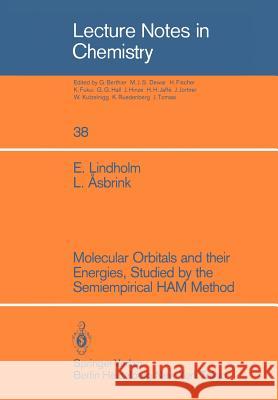
Einar Lindholm;Leif Asbrink
Molecular Orbitals and their Energies, Studied by the Semiempirical HAM Method Einar Lindholm, Leif Asbrink 9783540156598 Springer-Verlag Berlin and Heidelberg GmbH &  - książkaWidoczna okładka, to zdjęcie poglądowe, a rzeczywista szata graficzna może różnić się od prezentowanej.

Molecular Orbitals and their Energies, Studied by the Semiempirical HAM Method

ISBN-13: 9783540156598 / Angielski / Miękka / 1985 / 290 str.

Einar Lindholm;Leif Asbrink
cena 201,72 zł
(netto: 192,11 VAT:  5%)

Najniższa cena z 30 dni: 192,74 zł
Termin realizacji zamówienia:
ok. 22 dni roboczych
Bez gwarancji dostawy przed świętami

Darmowa dostawa!

This treatment of molecular and atomic physics is primarily meant as a textbook. It is intended for both chemists and physicists. -It can be read without much knowledge of quantum mechanics or mathematics, since all such details are explained-. It has developed through a series of lectures at the Royal Institute of Technology. The content is to about 50 % theoretical and to 50 % experimental. The reason why the authors, who are experimentalists, went into theory is the following. When we during the beginning of the 1970's measured photo- electron spectra of organic molecules, it appeared to be impossible to understand them by use of available theoretical calculations. To handle hydrocarbons we ( together with C. Fridh ) constructed in 1972 a purely empirical procedure, SPINDO 1] which has proved to be useful, but the extension to molecules with hetero- atoms appeared to be difficult. One of us ( L.A.) proposed then another purely E E EE2 E ( Hydrogenic Atoms in Molecules, HAM/1, unpublished), in which the Fock matrix elements f5..y were parametrized using Slater's shielding concept. The self-repulsion was compensated by a term "-1." The 2 _ ff2E, HAM/2 2], started from the total energy E: . of the molecule. The atomic parts of L used the Slater shielding constants, and the bond parts of E. were taken from SPINDO. The Fock matrix elements Fpv were then obtained from E in a conventional way.


Kategorie:
Nauka, Chemia
Kategorie BISAC:
Science > Chemia - Fizyczna
Science > Chemia
Technology & Engineering > Engineering (General)
Wydawca:
Springer-Verlag Berlin and Heidelberg GmbH &
Seria wydawnicza:
Lecture Notes in Chemistry
Język:
Angielski
ISBN-13:
9783540156598
Rok wydania:
1985
Dostępne języki:
Angielski
Numer serii:
000070482
Ilość stron:
290
Waga:
0.53 kg
Wymiary:
24.424.4 x 17.0
Oprawa:
Miękka
Wolumenów:
01

A. The LCAO model: “LCAO”.- 1. Molecular Orbitals ??.- 2. The LCAO formalism.- 3. The normalization and orthogonality of orbitals.- 4. How to interpret the print-out from a calculation.- 5. The charge in ? ?.- 6. The charges on atoms and in bonds.- 7. The idempotency of density matrices.- B. Hartree-Fock total energy: “HF”.- 1. The Hamilton operator.- 2. The wavefunctions in Hartree-Fock theory.- 3. The total energy in Hartree-Fock theory.- 4. The total energy in LCAO Hartree-Fock theory.- 5. Self-repulsion.- C. Density functional theory: “Density functional theory”.- 1. Correlation.- 2. Correlation energy.- 3. Exact energy expression.- 4. Exchange-correlation energy.- 5. Density functional theory: Kohn-Sham orbitals.- 6. Introducing Kohn-Sham orbitals.- 7. Introducing LCAO.- 8. Pair-correlation energies.- 9. Semiempirical methods.- 10. Comment on semiempirical theories.- 11. Conventional CI method to handle correlation.- 12. Proof for Gunnarsson-Lundqvist Exc.- D. Total energy of molecules and atoms: “HAM”.- 1. Rearrangement of the total energy expression.- 2. Shielding efficiencies ??? in the one-center terms.- 3. The one-center energies in a molecule.- 4. Further study of the shielding efficiencies.- E. Atoms: “Atoms”.- 1. The simple atom.- 2. The energies of the spin-configurations.- 3. Comments on the shielding efficiencies.- 4. Previous work on shielding efficiencies.- 5. Total energies of atoms and atomic ions in HAM/3.- 6. The multiplet split in atomic spectroscopy.- 7. The average state.- 8. Energies of terms — energies of average states.- 9. The physical meaning of the parameters.- 10. The semiempirical methods HAM/3 and HAM/4.- F. Molecules: “Molecules”.- 1. Interpretation of the energy expression for a molecule.- 2. Local dipoles.- 3. The final expression for the total energy.- 4. The parametrization of HAM/3.- G. Solving the Schrödinger equation: “SCF”.- 1. Variational calculus.- 2. Deduction of Roothaan’s equations.- 3. The Fock matrix elements.- 4. Solving the Roothaan equations.- 5. Some useful relations for the eigenvalue.- 6. Comparison with the Hartree-Fock method.- 7. The eigenvalue ?? in Hartree-Fock and HAM.- 8. Molecules with a small HOMO-LUMO gap.- H. Ionization and photoelectron spectroscopy: “PES”.- 1. Calculation of ionization energy in the HAM model.- 2. Treatment of ionization energies in Hartree-Fock.- 3. Calculation of ionization energies in ab-initio work.- 4. Experimental methods for study of ionization.- 5. Ionization of molecules: some results.- 6. Further studies.- I. Excitation and UV spectroscopy: “UV”.- 1. Calculation of excitation energy in the HAM model.- 2. A primitive CI method to find singlet-triplet splitting.- 3. Calculation of intensitites.- 4. Semiempirical methods to calculate excitation.- 5. Rydberg transitions.- 6. Calculation of excitation energies in ab-initio work.- 7. Experimental methods for study of excitation.- 8. Excitation of molecules: some results.- 9. Degenerate excited configurations will interact: CI.- 10. Excitation of linear molecules.- J. Negative ions and electron affinities: “EA”.- 1. Calculation of electron affinities in the HAM model.- 2. Experimental methods for determination of EA’s.- 3. Electron affinities of molecules: some results.- 4. The relation between the PES, UV and EA results.- 5. Other calculations of electron affinities.- 6. ?* orbitals.- K. Studies of 1s electrons: “ESCA”.- 1. Calculation of 1s ionization energies in the HAM model.- 2. Experimental methods in ESCA.- 3. ESCA energies: some results.- 4. Excitation of 1s electrons, studied in electron impact.- 5. Excitation of 1s electrons, studied spectroscopically.- L. Shake up in PES and EA: “Shake up”.- 1. Shake up in PES.- 2. Calculation of the PES shake-up energy.- 3. Shake ups in PES: some results.- 4. Discussion of calculations of shake up in PES.- 5. Shake up in EA.- 6. Shake ups in EA in small molecules: some results.- 7. The UV spectrum of the naphthalene anion.- 8. Shake ups in EA in larger molecules.- M. Total energy: “Total energy”.- 1. The total energy of a molecule.- 2. Heat of formation.- 3. Check of the transition state method.- 4. Doubly charged ions.- N. Dipole moments: “Dipole moment”.- 1. Calculation of dipole moment.- 2. Dipole moment of HCN.- O. Chemical reactions: “Reactions”.- 1. Can a HAM model be used?.- 2. Dissociation of cyclobutane.- 3. The internal rotation of ethylene.


Udostępnij

Facebook - konto krainaksiazek.pl


Opinie o Krainaksiazek.pl na Opineo.pl

Partner Mybenefit

Krainaksiazek.pl w programie rzetelna firma Krainaksiaze.pl - płatności przez paypal

Czytaj nas na:

Facebook - krainaksiazek.pl
  • książki na zamówienie
  • granty
  • książka na prezent
  • kontakt
  • pomoc
  • opinie
  • regulamin
  • polityka prywatności

Zobacz:

  • Księgarnia czeska

  • Wydawnictwo Książkowe Klimaty

1997-2025 DolnySlask.com Agencja Internetowa

© 1997-2022 krainaksiazek.pl
     
KONTAKT | REGULAMIN | POLITYKA PRYWATNOŚCI | USTAWIENIA PRYWATNOŚCI
Zobacz: Księgarnia Czeska | Wydawnictwo Książkowe Klimaty | Mapa strony | Lista autorów
KrainaKsiazek.PL - Księgarnia Internetowa

Polityka prywatnosci - link
Krainaksiazek.pl - płatnośc Przelewy24
Przechowalnia Przechowalnia






