• Wyszukiwanie zaawansowane
  • Kategorie
  • Kategorie BISAC
  • Książki na zamówienie
  • Promocje
  • Granty
  • Książka na prezent
  • Opinie
  • Pomoc
  • Załóż konto
  • Zaloguj się

Molecular Genetics of Bacteria » książka

zaloguj się | załóż konto
Logo Krainaksiazek.pl

koszyk

konto

szukaj
topmenu
Księgarnia internetowa
Szukaj
Książki na zamówienie
Promocje
Granty
Książka na prezent
Moje konto
Pomoc
 
 
Wyszukiwanie zaawansowane
Pusty koszyk
Bezpłatna dostawa dla zamówień powyżej 20 złBezpłatna dostawa dla zamówień powyżej 20 zł

Kategorie główne

• Nauka
 [2946912]
• Literatura piękna
 [1852311]

  więcej...
• Turystyka
 [71421]
• Informatyka
 [150889]
• Komiksy
 [35717]
• Encyklopedie
 [23177]
• Dziecięca
 [617324]
• Hobby
 [138808]
• AudioBooki
 [1671]
• Literatura faktu
 [228371]
• Muzyka CD
 [400]
• Słowniki
 [2841]
• Inne
 [445428]
• Kalendarze
 [1545]
• Podręczniki
 [166819]
• Poradniki
 [480180]
• Religia
 [510412]
• Czasopisma
 [525]
• Sport
 [61271]
• Sztuka
 [242929]
• CD, DVD, Video
 [3371]
• Technologie
 [219258]
• Zdrowie
 [100961]
• Książkowe Klimaty
 [124]
• Zabawki
 [2341]
• Puzzle, gry
 [3766]
• Literatura w języku ukraińskim
 [255]
• Art. papiernicze i szkolne
 [7810]
Kategorie szczegółowe BISAC

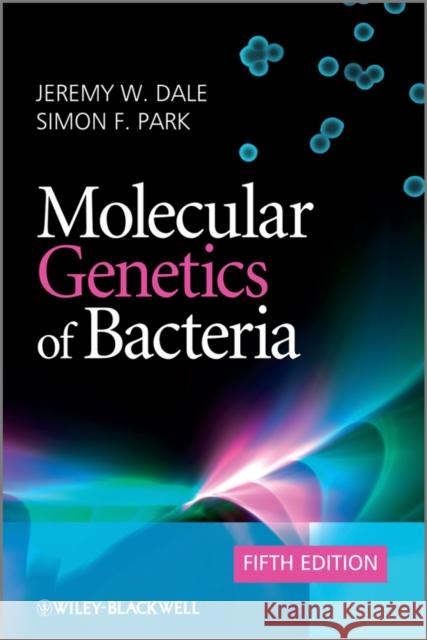
Molecular Genetics of Bacteria

ISBN-13: 9780470741849 / Angielski / Miękka / 2010 / 392 str.
Jeremy Dale
Molecular Genetics of Bacteria Jeremy Dale 9780470741849  - książkaWidoczna okładka, to zdjęcie poglądowe, a rzeczywista szata graficzna może różnić się od prezentowanej.

Molecular Genetics of Bacteria

ISBN-13: 9780470741849 / Angielski / Miękka / 2010 / 392 str.

Jeremy Dale
cena 356,96
(netto: 339,96 VAT:  5%)

Najniższa cena z 30 dni: 355,49
Termin realizacji zamówienia:
ok. 30 dni roboczych
Bez gwarancji dostawy przed świętami

Darmowa dostawa!
inne wydania

The fifth edition of this highly successful book provides students with an essential introduction to the molecular genetics of bacteria covering the basic concepts and the latest developments. It is comprehensive, easy to use and well structured with clear two-colour diagrams throughout. Specific changes to the new edition include:

  • More detail on sigma factors, anti-sigma factors and anti-anti sigma factors, and the difference in the frequency of sigma factors in bacteria
  • Expand material on integrons as these are becoming increasingly important in antibiotic resistance
  • Enhanced treatment of molecular phylogeny
  • Complete revision and updating of the final chapter on 'Gene Mapping and Genomics'
  • Two-colour illustrations throughout.

The focus of the book remains firmly on bacteria and will be invaluable to students studying microbiology, biotechnology, molecular biology, biochemistry, genetics and related biomedical sciences.

Kategorie:
Nauka, Biologia i przyroda
Kategorie BISAC:
Science > Mikrobiologia
Science > Biochemia
Język:
Angielski
ISBN-13:
9780470741849
Rok wydania:
2010
Wydanie:
Revised
Ilość stron:
392
Waga:
0.83 kg
Wymiary:
23.88 x 16.76 x 2.03
Oprawa:
Miękka
Wolumenów:
01
Dodatkowe informacje:
Bibliografia
Glosariusz/słownik

Preface.

1 Nucleic Acid Structure and Function.

1.1 Structure of nucleic acids.

1.1.1 DNA.

1.1.2 RNA.

1.1.3 Hydrophobic interactions.

1.1.4 Different forms of the double helix.

1.1.5 Supercoiling.

1.1.6 Denaturation and hybridization.

1.1.7 Orientation of nucleic acid strands.

1.2 Replication of DNA.

1.2.1 Unwinding and rewinding.

1.2.2 Fidelity of replication; proofreading.

1.3 Chromosome replication and cell division.

1.4 DNA repair.

1.4.1 Mismatch repair.

1.4.2 Excision repair.

1.4.3 Recombination (post–replication) repair.

1.4.4 SOS repair.

1.5 Gene expression.

1.5.1 Transcription.

1.5.2 Translation.

1.5.3 Post–translational events.

1.6 Gene organization.

2 Mutation and Variation.

2.1 Variation and evolution.

2.1.1 Fluctuation test.

2.1.2 Replica plating.

2.1.3 Directed mutation in bacteria?

2.2 Types of mutation.

2.2.1 Point mutations.

2.2.2 Conditional mutants.

2.2.3 Variation due to larger–scale DNA alterations.

2.2.4 Extrachromosomal agents and horizontal gene transfer.

2.3 Recombination.

2.3.1 A model of the general (homologous) recombination process.

2.3.2 Enzymes involved in recombination.

2.4 Phenotypes.

2.4.1 Restoration of phenotype.

2.5 Mechanisms of mutation.

2.5.1 Spontaneous mutation.

2.5.2 Chemical mutagens.

2.5.3 Ultraviolet irradiation.

2.6 Isolation and identification of mutants.

2.6.1 Mutation and selection.

2.6.2 Replica plating.

2.6.3 Isolation of other mutants.

2.6.4 Molecular methods.

3 Regulation of Gene Expression.

3.1 Gene copy number.

3.2 Transcriptional control.

3.2.1 Promoters.

3.2.2 Terminators, attenuators and anti–terminators.

3.2.3 Induction and repression: regulatory proteins.

3.2.4 Two–component regulatory systems.

3.2.5 Global regulatory systems.

3.2.6 Quorum sensing.

3.3 Translational control.

3.3.1 Ribosome binding.

3.3.2 Codon usage.

3.3.3 Stringent response.

3.3.4 Regulatory RNA.

3.4 Phase variation.

4 Genetics of Bacteriophages.

4.1 Bacteriophage structure.

4.2 Single–strand DNA bacteriophages.

4.2.1 X174.

4.2.2 M13.

4.3 RNA–containing phages: MS2.

4.4 Double–stranded DNA phages.

4.4.1 Bacteriophage T4.

4.4.2 Bacteriophage .

4.4.3 Lytic and lysogenic regulation of bacteriophage .

4.5 Restriction and modification.

4.6 Bacterial resistance to phage attack.

4.7 Complementation and recombination.

4.8 Why are bacteriophages important?

4.8.1 Phage typing.

4.8.2 Phage therapy.

4.8.3 Phage display.

4.8.4 Phages in the natural environment.

4.8.5 Bacterial virulence and phage conversion.

5 Plasmids.

5.1 Some bacterial characteristics are determined by plasmids.

5.1.1 Antibiotic resistance.

5.1.2 Colicins and bacteriocins.

5.1.3 Virulence determinants.

5.1.4 Plasmids in plant–associated bacteria.

5.1.5 Metabolic activities.

5.2 Molecular properties of plasmids.

5.2.1 Plasmid replication and control.

5.2.2 Partitioning.

5.2.3 Host range.

5.2.4 Plasmid incompatibility.

5.3 Plasmid stability.

5.3.1 Plasmid integrity.

5.3.2 Partitioning.

5.3.3 Differential growth rate.

5.4 Associating a plasmid with a phenotype.

6 Gene Transfer.

6.1 Transformation.

6.2 Conjugation.

6.2.1 Mechanism of conjugation.

6.2.2 The F plasmid.

6.2.3 Conjugation in other bacteria.

6.3 Transduction.

6.3.1 Specialized transduction.

6.4 Recombination.

6.4.1 Consequences of recombination.

6.4.2 Site–specific and non–homologous (illegitimate) recombination.

6.5 Mosaic genes and chromosome plasticity.

7 Genomic Plasticity: Movable Genes and Phase Variation.

7.1 Insertion sequences.

7.1.1 Structure of insertion sequences.

7.1.2 Occurrence of insertion sequences.

7.2 Transposons.

7.2.1 Structure of transposons.

7.2.2 Integrons.

7.2.3 ISCR elements.

7.3 Mechanisms of transposition.

7.3.1 Replicative transposition.

7.3.2 Non–replicative (conservative) transposition.

7.3.3 Regulation of transposition.

7.3.4 Activation of genes by transposable elements.

7.3.5 Mu: A transposable bacteriophage.

7.3.6 Conjugative transposons.

7.4 Phase variation.

7.4.1 Variation mediated by simple DNA inversion.

7.4.2 Variation mediated by nested DNA inversion.

7.4.3 Antigenic variation in the gonococcus.

7.4.4 Phase variation by slipped–strand mispairing.

7.4.5 Phase variation mediated by differential DNA methylation.

7.5 Clustered regularly interspersed short palindromic repeats.

8 Genetic Modification: Exploiting the Potential of Bacteria.

8.1 Strain development.

8.1.1 Generation of variation.

8.1.2 Selection of desired variants.

8.2 Overproduction of primary metabolites.

8.2.1 Simple pathways.

8.2.2 Branched pathways.

8.3 Overproduction of secondary metabolites.

8.4 Gene cloning.

8.4.1 Cutting and joining DNA.

8.4.2 Plasmid vectors.

8.4.3 Bacteriophage vectors.

8.4.4 Cloning larger fragments.

8.4.5 Bacteriophage M13 vectors.

8.5 Gene libraries.

8.5.1 Construction of genomic libraries.

8.5.2 Screening a gene library.

8.5.3 Cloning PCR products.

8.5.4 Construction of a cDNA library.

8.6 Products from cloned genes.

8.6.1 Expression vectors.

8.6.2 Making new genes.

8.6.3 Other bacterial hosts.

8.6.4 Novel vaccines.

8.7 Other uses of gene technology.

9 Genetic Methods for Investigating Bacteria.

9.1 Metabolic pathways.

9.1.1 Complementation.

9.1.2 Cross–feeding.

9.2 Microbial physiology.

9.2.1 Reporter genes.

9.2.2 Chromatin immunoprecipitation.

9.2.3 Cell division.

9.2.4 Motility and chemotaxis.

9.2.5 Cell differentiation.

9.3 Bacterial virulence.

9.3.1 Wide–range mechanisms of bacterial pathogenesis.

9.3.2 Detection of virulence genes.

9.4 Specific mutagenesis.

9.4.1 Gene replacement.

9.4.2 Antisense RNA.

9.5 Taxonomy, evolution and epidemiology.

9.5.1 Molecular taxonomy.

9.5.2 GC content.

9.5.3 16 S rRNA.

9.5.4 Denaturing–gradient gel electrophoresis and temperature–gradient gel electrophoresis.

9.5.5 Diagnostic use of PCR.

9.5.6 Molecular epidemiology.

10 Gene Mapping to Genomics and Beyond.

10.1 Gene mapping.

10.1.1 Conjugational analysis.

10.1.2 Gene libraries.

10.1.3 Restriction mapping and pulsed–field gel electrophoresis.

10.2 DNA sequence determination.

10.2.1 Sanger sequencing.

10.2.2 Dye terminator sequencing.

10.2.3 Pyrosequencing.

10.2.4 Massively parallel sequencing.

10.3 Genome sequencing.

10.3.1 Genome–sequencing strategies.

10.3.2 Relating sequence to function.

10.3.3 Metagenomics.

10.4 Comparative genomics.

10.4.1 Microarrays.

10.5 Analysis of gene expression.

10.5.1 Transcriptional analysis.

10.5.2 Translational analysis.

10.6 Metabolomics.

10.7 Systems biology and synthetic genomics.

10.7.1 Systems biology.

10.7.2 Synthetic genomics.

10.8 Conclusion.

Appendix A Further Reading.

Appendix B Abbreviations Used.

Appendix C Glossary.

Appendix D Enzymes and other Proteins.

Appendix E Genes.

Appendix F Standard Genetic Code.

Appendix G Bacterial Species.

Index.

The fifth edition of this highly successful book provides students with an essential introduction to the molecular genetics of bacteria covering the basic concepts and the latest developments. It is comprehensive, easy to use and well structured with clear two–colour diagrams throughout.

Specific changes to the new edition include:

  • More detail on sigma factors, anti–sigma factors and anti–anti sigma factors, and the difference in the frequency of sigma factors in bacteria
  • Expanded material on integrons, as these are becoming increasingly important in antibiotic resistance
  • Enhanced treatment of molecular phylogeny
  • Complete revision and updating of the final chapter on Gene Mapping and Genomics
  • Inclusion of modern sequencing strategies for example, massively parallel sequencing, transcriptome sequencing and metagenomics
  • Improved treatment of the molecular techniques used to identify and type bacteria
  • Two–colour illustrations throughout

The focus of the book remains firmly on bacteria and will be invaluable to students studying microbiology, biotechnology, molecular biology, biochemistry, genetics and related biomedical sciences.


Udostępnij

Facebook - konto krainaksiazek.pl


Opinie o Krainaksiazek.pl na Opineo.pl

Partner Mybenefit

Krainaksiazek.pl w programie rzetelna firma Krainaksiaze.pl - płatności przez paypal

Czytaj nas na:

Facebook - krainaksiazek.pl
  • książki na zamówienie
  • granty
  • książka na prezent
  • kontakt
  • pomoc
  • opinie
  • regulamin
  • polityka prywatności

Zobacz:

  • Księgarnia czeska

  • Wydawnictwo Książkowe Klimaty

1997-2025 DolnySlask.com Agencja Internetowa

© 1997-2022 krainaksiazek.pl
     
KONTAKT | REGULAMIN | POLITYKA PRYWATNOŚCI | USTAWIENIA PRYWATNOŚCI
Zobacz: Księgarnia Czeska | Wydawnictwo Książkowe Klimaty | Mapa strony | Lista autorów
KrainaKsiazek.PL - Księgarnia Internetowa

Polityka prywatnosci - link
Krainaksiazek.pl - płatnośc Przelewy24
Przechowalnia Przechowalnia







