• Wyszukiwanie zaawansowane
  • Kategorie
  • Kategorie BISAC
  • Książki na zamówienie
  • Promocje
  • Granty
  • Książka na prezent
  • Opinie
  • Pomoc
  • Załóż konto
  • Zaloguj się

Molecular Electrostatic Potentials: Concepts and Applications Volume 3 » książka


zaloguj się | załóż konto
Logo Krainaksiazek.pl

koszyk

konto

szukaj
topmenu
Księgarnia internetowa
Szukaj
Książki na zamówienie
Promocje
Granty
Książka na prezent
Moje konto
Pomoc
 
 
Wyszukiwanie zaawansowane
Pusty koszyk
Bezpłatna dostawa dla zamówień powyżej 20 złBezpłatna dostawa dla zamówień powyżej 20 zł

Kategorie główne

• Nauka
 [2949524]
• Literatura piękna
 [1817948]

  więcej...
• Turystyka
 [70715]
• Informatyka
 [151291]
• Komiksy
 [35671]
• Encyklopedie
 [23176]
• Dziecięca
 [612440]
• Hobby
 [136066]
• AudioBooki
 [1740]
• Literatura faktu
 [226030]
• Muzyka CD
 [378]
• Słowniki
 [2918]
• Inne
 [445441]
• Kalendarze
 [1181]
• Podręczniki
 [166545]
• Poradniki
 [469898]
• Religia
 [508035]
• Czasopisma
 [502]
• Sport
 [61392]
• Sztuka
 [242759]
• CD, DVD, Video
 [3348]
• Technologie
 [219537]
• Zdrowie
 [98738]
• Książkowe Klimaty
 [124]
• Zabawki
 [2382]
• Puzzle, gry
 [3543]
• Literatura w języku ukraińskim
 [259]
• Art. papiernicze i szkolne
 [7107]
Kategorie szczegółowe BISAC

Molecular Electrostatic Potentials: Concepts and Applications Volume 3

ISBN-13: 9780444823533 / Angielski / Twarda / 1996 / 664 str.
Murray, J. S.
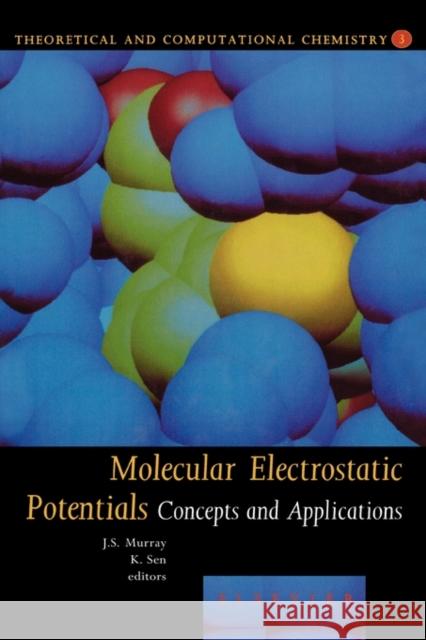
Molecular Electrostatic Potentials: Concepts and Applications Volume 3 Murray, J. S. 9780444823533 ELSEVIER SCIENCE & TECHNOLOGY - książkaWidoczna okładka, to zdjęcie poglądowe, a rzeczywista szata graficzna może różnić się od prezentowanej.

Molecular Electrostatic Potentials: Concepts and Applications Volume 3

ISBN-13: 9780444823533 / Angielski / Twarda / 1996 / 664 str.

Murray, J. S.
cena 1209,68
(netto: 1152,08 VAT:  5%)

Najniższa cena z 30 dni: 1194,91
Termin realizacji zamówienia:
ok. 16-18 dni roboczych.

Darmowa dostawa!

Over the past 25 years, the molecular electrostatic potential has become firmly established as an effective guide to molecular interactions. With the recent advances in computational technology, it is currently being applied to a variety of important chemical and biological systems. Its range of applicability has expanded from primarily a focus on sites for electrophilic and nucleophilic attack to now include solvent effects, studies of zeolite, molecular cluster and crystal behavior, and the correlation and prediction of a wide range of macroscopic properties. Moreover, the increasing prominence of density functional theory has raised the molecular electrostatic potential to a new stature on a more fundamental conceptual level. It is rigorously defined in terms of the electron density, and has very interesting topological characteristics since it explicitly reflects opposing contributions from the nuclei and the electrons.This volume opens with a survey chapter by one of the original pioneers of the use of the electrostatic potential in studies of chemical reactivity, Jacopo Tomasi. Though the flow of the succeeding chapters is not stringently defined, the overall trend is that the emphasis changes gradually from methodology to applications. Chapters discussing more theoretical topics are placed near the end. Readers will find the wide variety of topics provided by an international group of authors both convincing and useful.


Kategorie:
Nauka, Chemia
Kategorie BISAC:
Science > Chemia - Fizyczna
Science > Spectroscopy & Spectrum Analysis
Technology & Engineering > Chemical & Biochemical
Wydawca:
ELSEVIER SCIENCE & TECHNOLOGY
Seria wydawnicza:
Theoretical & Computational Chemistry S.
Język:
Angielski
ISBN-13:
9780444823533
Rok wydania:
1996
Numer serii:
000127973
Ilość stron:
664
Waga:
1.07 kg
Wymiary:
22.91 x 15.19 x 3.66
Oprawa:
Twarda
Wolumenów:
01
Dodatkowe informacje:
Bibliografia
Wydanie ilustrowane

1. MEP: A tool for interpretation and prediction. From molecular structure to solvation effects (J. Tomasi, B. Mennucci, R. Cammi). Thirty years ago: the evolution of chemical quantum theory. The molecular electrostatic potential as an interpretative tool for intermolecular interactions. Intermolecular energy: a full decomposition at HF level. Molecular electrostatics and semiclassical approximation in solvation effects. 2. Molecular electrostatic potentials from density functional theory (A.M. Köster, M. Lebouf, D.R. Salahub). Calculation of electrostatic observables. Simplified analytic expressions for the molecular electrostatic potential. Critical points of the molecular electrostatic potential. Evolution of the molecular electrostatic potential during chemical reactions. Conclusion. 3. The use of electrostatic potential fields in QSAR and QSPR (C.M. Breneman, M. Martinov). QSAR and QSPR. EP-based 3D QSAR/QSPR approaches. Conclusions. 4. Generalization of the molecular electrostatic potential for the study of noncovalent interactions (M. Orozco, F.J. Luque). Introduction of environment effects in the MEP. Introduction of non-electrostatic energy terms in the MEP. Future directions. 5. Molecular recognition via electrostatic potential topography (S.R. Gadre et al.. Models for weak intermolecular interactions. Topography of molecular scalar fields. Topography-based molecular interaction model. Concluding remarks. 6. Molecular electrostatic potentials and fields: hydrogen bonding, recognition, reactivity and modelling (P.C. Mishra, A. Kumar). Definitions and methods. Charge distribution. Representation of MEP and MEF. Reactivity, hydrogen bonding and other properties. Recognition and modelling. 7. Molecular electrostatic potentials for large systems (M. Krack, K. Jug). Reactivity concepts. Calculation of cumulative atomic multipole moments in SINDO1. Calculation of the MESP with SINDO1. The molecular surface. Silicon clusters. Solid silicon. Conclusions. 8. Protein electrostatics (G. Náray-Szabó). Methodology. Applications. Conclusions. 9. The Lorentz-Debye-Sack theory and dielectric screening of electrostatic effects in proteins and nucleic acids (E.L. Mehler). Lorentz-Debye-Sack theory of polar molecules and radial permittivity profiles. Electrostatic screening in macromolecular systems. Application of electrostatic screening to the calculation of equilibrium properties. Electrostatic screening in molecular dynamics and Monte Carlo simulations. Conclusions. 10. Modelling intrinsic basicities: the use of the electrostatic potentials and the atoms-in-molecules theory (M. Alcamí, O. Mó and M. Yáñez). Computational details. Carbonyl vs. thiocarbonyl compounds. Three-membered rings. Concluding remarks. 11. Computed electrostatic potentials in molecules, clusters, solids and biosystems containing transition metals (M. Bénard). Lattice energy and cluster-lattice iteraction in ionic crystals. Electrostatic potentials as a reactivity index for complex ions and molecules. Polar molecules in solution. Experimental electrostatic potentials. Conclusion. 12. Studies on the molecular electrostatic potential inside the microporous material and its relevance to their catalytic activity (R. Vetrivel et al.. Methodology. Applications. Conclusions. 13. X-ray diffraction and the potential distribution in crystals (D. Feil). Basic theory. Multipole analysis. Partitioning. Data collection. Results. Comparison with theory. 14. Molecular electrostatic potentials vs. DFT descriptors of reactivity (P. Geerlings et al.. DFT-based reactivity descriptors: conceptual and methodological issues. Results and discussion. Conclusion. 15. Electrostatic potential, bond density and bond order in molecules and clusters (N.H. March). Electrostatic potential at the nucleus of a neutral atom related to the electronic correlation energies of atomic ions. Chemical potential and bond mid-point properties. Cluster properties. Dissociation of doubly-charged clusters: study of supermolecular ions (Na20+)2 and (K20+)2. Bond density and chemical network model. Correlation energy and electron density. 16. Relationships of electrostatic potentials to intrinsic molecular properties (P. Politzer, J.S. Murray). Atomic and molecular energies as functions of electrostatic potentials at nuclei. Electrostatic potentials and chemical potentials. Topographical analyses. Lattice energies and ionic radii. Covalent radii and bond dissociation energies. Electronic densities and electrostatic potentials.


Udostępnij

Facebook - konto krainaksiazek.pl


Opinie o Krainaksiazek.pl na Opineo.pl

Partner Mybenefit

Krainaksiazek.pl w programie rzetelna firma Krainaksiaze.pl - płatności przez paypal

Czytaj nas na:

Facebook - krainaksiazek.pl
  • książki na zamówienie
  • granty
  • książka na prezent
  • kontakt
  • pomoc
  • opinie
  • regulamin
  • polityka prywatności

Zobacz:

  • Księgarnia czeska

  • Wydawnictwo Książkowe Klimaty

1997-2026 DolnySlask.com Agencja Internetowa

© 1997-2022 krainaksiazek.pl
     
KONTAKT | REGULAMIN | POLITYKA PRYWATNOŚCI | USTAWIENIA PRYWATNOŚCI
Zobacz: Księgarnia Czeska | Wydawnictwo Książkowe Klimaty | Mapa strony | Lista autorów
KrainaKsiazek.PL - Księgarnia Internetowa

Polityka prywatnosci - link
Krainaksiazek.pl - płatnośc Przelewy24
Przechowalnia Przechowalnia






