• Wyszukiwanie zaawansowane
  • Kategorie
  • Kategorie BISAC
  • Książki na zamówienie
  • Promocje
  • Granty
  • Książka na prezent
  • Opinie
  • Pomoc
  • Załóż konto
  • Zaloguj się

Modeling of Photovoltaic Systems Using MATLAB: Simplified Green Codes » książka


zaloguj się | załóż konto
Logo Krainaksiazek.pl

koszyk

konto

szukaj
topmenu
Księgarnia internetowa
Szukaj
Książki na zamówienie
Promocje
Granty
Książka na prezent
Moje konto
Pomoc
 
 
Wyszukiwanie zaawansowane
Pusty koszyk
Bezpłatna dostawa dla zamówień powyżej 20 złBezpłatna dostawa dla zamówień powyżej 20 zł

Kategorie główne

• Nauka
 [2950560]
• Literatura piękna
 [1849509]

  więcej...
• Turystyka
 [71097]
• Informatyka
 [151150]
• Komiksy
 [35848]
• Encyklopedie
 [23178]
• Dziecięca
 [617388]
• Hobby
 [139064]
• AudioBooki
 [1657]
• Literatura faktu
 [228597]
• Muzyka CD
 [383]
• Słowniki
 [2855]
• Inne
 [445295]
• Kalendarze
 [1464]
• Podręczniki
 [167547]
• Poradniki
 [480102]
• Religia
 [510749]
• Czasopisma
 [516]
• Sport
 [61293]
• Sztuka
 [243352]
• CD, DVD, Video
 [3414]
• Technologie
 [219456]
• Zdrowie
 [101002]
• Książkowe Klimaty
 [124]
• Zabawki
 [2311]
• Puzzle, gry
 [3459]
• Literatura w języku ukraińskim
 [254]
• Art. papiernicze i szkolne
 [8079]
Kategorie szczegółowe BISAC

Modeling of Photovoltaic Systems Using MATLAB: Simplified Green Codes

ISBN-13: 9781119118107 / Angielski / Twarda / 2016 / 240 str.
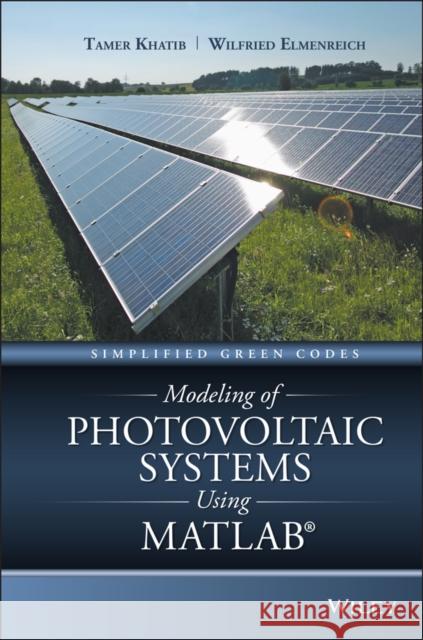
Tamer Khatib; Wilfried Elmenreich
Modeling of Photovoltaic Systems Using MATLAB: Simplified Green Codes Tamer Khatib Wilfried Elmenreich 9781119118107 Wiley - książkaWidoczna okładka, to zdjęcie poglądowe, a rzeczywista szata graficzna może różnić się od prezentowanej.

Modeling of Photovoltaic Systems Using MATLAB: Simplified Green Codes

ISBN-13: 9781119118107 / Angielski / Twarda / 2016 / 240 str.

Tamer Khatib; Wilfried Elmenreich
cena 490,40
(netto: 467,05 VAT:  5%)

Najniższa cena z 30 dni: 487,38
Termin realizacji zamówienia:
ok. 30 dni roboczych
Dostawa w 2026 r.

Darmowa dostawa!

Provides simplified MATLAB codes for analysis of photovoltaic systems, describes the model of the whole photovoltaic power system, and shows readers how to build these models line by line. This book presents simplified coded models for photovoltaic (PV) based systems using MATLAB to help readers understand the dynamic behavior of these systems. Through the use of MATLAB, the reader has the ability to modify system configuration, parameters and optimization criteria. Topics covered include energy sources, storage, and power electronic devices. This book contains six chapters that cover systems' components from the solar source to the end-user. Chapter 1 discusses modelling of the solar source, and Chapter 2 discusses modelling of the photovoltaic source. Chapter 3 focuses on modeling of PV systems' power electronic features and auxiliary power sources. Modeling of PV systems' energy flow is examined in Chapter 4, while Chapter 5 discusses PV systems in electrical power systems. Chapter 6 presents an application of PV system models in systems' size optimization. Common control methodologies applied to these systems are also modeled. - Covers the basic models of the whole photovoltaic power system, enabling the reader modify the models to provide different sizing and control methodologies - Examines auxiliary components to photovoltaic systems, including wind turbines, diesel generators, and pumps - Contains examples, drills and codes Modeling of Photovoltaic Systems Using MATLAB: Simplified Green Codes is a reference forresearchers, students, and engineers who work in the field of renewable energy, and specifically in photovoltaic systems. Tamer Khatib is an assistant professor in the Energy Engineering and Environment Department at An-Najah National University, Nablus, Palestine. He received his Ph.D. from National University of Malaysia, Malaysia. Khatib is a Senior Member of IEEE, a member of IEEE Power and Energy Society, and a member of The International Solar Energy Society. Wilfried Elmenreich is a professor of Smart Grids at the Alpen-Adria-UniversitAt in Klagenfurt, Austria. He received his Ph.D. from Vienna University of Technology, Austria. His research projects also affiliate him with the Lakeside Labs research cluster in Klagenfurt. Elmenreich is a Senior Member of IEEE and counselor of Klagenfurt's IEEE student branch.


Kategorie:
Nauka, Fizyka
Kategorie BISAC:
Science > Energia
Technology & Engineering > Electrical
Wydawca:
Wiley
Język:
Angielski
ISBN-13:
9781119118107
Rok wydania:
2016
Ilość stron:
240
Waga:
0.50 kg
Wymiary:
23.62 x 15.75 x 2.03
Oprawa:
Twarda
Wolumenów:
01
Dodatkowe informacje:
Bibliografia

About the Authors vii

Foreword ix

Acknowledgment xi

1 Modeling of the Solar Source 1

1.1 Introduction, 1

1.2 Modeling of the Sun Position, 2

1.3 Modeling of Extraterrestrial Solar Radiation, 8

1.4 Modeling of Global Solar Radiation on a Horizontal Surface, 13

1.5 Modeling of Global Solar Radiation on a Tilt Surface, 17

1.6 Modeling of Solar Radiation Based on Ground Measurements, 21

1.7 AI Techniques for Modeling of Solar Radiation, 26

1.8 Modeling of Sun Trackers, 32

Further Reading, 37

2 Modeling of Photovoltaic Source 39

2.1 Introduction, 39

2.2 Modeling of Solar Cell Based on Standard Testing Conditions, 39

2.3 Modeling of Solar Cell Temperature, 48

2.4 Empirical Modeling of PV Panels Based on Actual Performance, 48

2.5 Statistical Models for PV Panels Based on Actual Performance, 49

2.6 Characterization of PV Panels Based on Actual Performance, 51

2.7 AI Application for Modeling of PV Panels, 52

Further Reading, 84

3 Modeling of PV System Power Electronic Features and Auxiliary Power Sources 87

3.1 Introduction, 87

3.2 Maximum Power Point Trackers, 87

3.3 DC AC Inverters, 96

3.4 Storage Battery, 102

3.5 Modeling of Wind Turbines, 107

3.6 Modeling of Diesel Generator, 107

3.7 PV Array Tilt Angle, 108

3.8 Motor Pump Model in PV Pumping System, 113

Further Reading, 123

4 Modeling of Photovoltaic System Energy Flow 125

4.1 Introduction, 125

4.2 Energy Flow Modeling for Stand–Alone PV Power Systems, 125

4.3 Energy Flow Modeling for Hybrid PV/Wind Power Systems, 129

4.4 Energy Flow Modeling for Hybrid PV/Diesel Power Systems, 129

4.5 Current–Based Modeling of PV/Diesel Generator/Battery System Considering Typical Control Strategies, 136

Further Reading, 157

5 PV Systems in the Electrical Power System 159

5.1 Overview of Smart Grids, 159

5.2 Optimal Sizing of Grid–Connected Photovoltaic System s Inverter, 161

5.3 Integrating Photovoltaic Systems in Power System, 164

5.4 RAPSim, 168

Further Reading, 174

6 PV System Size Optimization 175

6.1 Introduction, 175

6.2 Stand–Alone PV System Size Optimization, 176

6.3 Hybrid PV System Size Optimization, 190

6.4 PV Pumping System Size Optimization, 196

Further Reading, 211

Index 213

Tamer Khatib is an assistant professor in the Energy Engineering and Environment Department at An–Najah National University, Nablus, Palestine. He received his Ph.D. from National University of Malaysia, Malaysia. Khatib is a Senior Member of IEEE, a member of IEEE Power and Energy Society, and a member of The International Solar Energy Society.

Wilfried Elmenreich is a professor of Smart Grids at the Alpen–Adria–Universität in Klagenfurt, Austria. He received his Ph.D. from Vienna University of Technology, Austria. His research projects also affiliate him with the Lakeside Labs research cluster in Klagenfurt. Elmenreich is a Senior Member of IEEE and counselor of Klagenfurt′s IEEE student branch.

Provides simplified MATLAB codes for analysis of photovoltaic systems, describes the model of the whole photovoltaic power system, and shows readers how to build these models line by line. 

This book presents simplified coded models for photovoltaic (PV) based systems using MATLAB to help readers understand the dynamic behavior of these systems. Through the use of MATLAB, the reader has the ability to modify system configuration, parameters and optimization criteria. Topics covered include energy sources, storage, and power electronic devices. This book contains six chapters that cover systems components from the solar source to the end–user. Chapter 1 discusses modelling of the solar source, and Chapter 2 discusses modelling of the photovoltaic source. Chapter 3 focuses on modeling of PV systems power electronic features and auxiliary power sources. Modeling of PV systems energy flow is examined in Chapter 4, while Chapter 5 discusses PV systems in electrical power systems. Chapter 6 presents an application of PV system models in systems size optimization. Common control methodologies applied to these systems are also modeled.

  • Covers the basic models of the whole photovoltaic power system, enabling the reader modify the models to provide different sizing and control methodologies
  • Examines auxiliary components to photovoltaic systems, including wind turbines, diesel generators, and pumps
  • Contains examples, drills and codes

Modeling of Photovoltaic Systems Using MATLAB: Simplified Green Codes is a reference forresearchers, students, and engineers who work in the field of renewable energy, and specifically in photovoltaic systems.


Udostępnij

Facebook - konto krainaksiazek.pl


Opinie o Krainaksiazek.pl na Opineo.pl

Partner Mybenefit

Krainaksiazek.pl w programie rzetelna firma Krainaksiaze.pl - płatności przez paypal

Czytaj nas na:

Facebook - krainaksiazek.pl
  • książki na zamówienie
  • granty
  • książka na prezent
  • kontakt
  • pomoc
  • opinie
  • regulamin
  • polityka prywatności

Zobacz:

  • Księgarnia czeska

  • Wydawnictwo Książkowe Klimaty

1997-2025 DolnySlask.com Agencja Internetowa

© 1997-2022 krainaksiazek.pl
     
KONTAKT | REGULAMIN | POLITYKA PRYWATNOŚCI | USTAWIENIA PRYWATNOŚCI
Zobacz: Księgarnia Czeska | Wydawnictwo Książkowe Klimaty | Mapa strony | Lista autorów
KrainaKsiazek.PL - Księgarnia Internetowa

Polityka prywatnosci - link
Krainaksiazek.pl - płatnośc Przelewy24
Przechowalnia Przechowalnia





