Mill and Town in South Carolina, 1880--1920 » książka





Mill and Town in South Carolina, 1880--1920
ISBN-13: 9780807110591 / Angielski / Miękka / 1982 / 328 str.
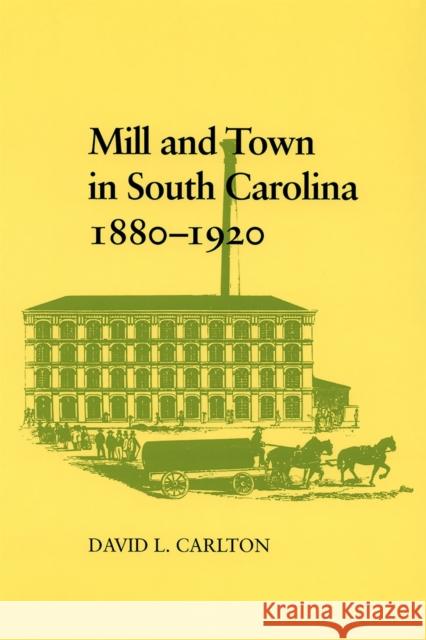
Probing the social repercussions of the industrial development of South Carolina in the decades following Reconstruction, David L. Carlton's Mill and Town in South Carolina, 1880-1920, tells of the conflict that erupted between the rising middle class of the South's small towns and the rural white who came to labor in the towns' burgeoning textile mills. The townsmen who built the mills initially expected no social friction to result from industrialization, since the work force was to consist entirely of white "Anglo-Saxons" like themselves. However, as thousands of rural whites moved into the mill villages at the turn of the century, their backwoods independence proved increasingly incompatible with the orderly, hierarchial outlook of the town people. As a result, the town people soon abandoned their belief in white equality and instead began to view the mill people as backward folk needing to be brought under the control of their betters. In keeping with the spirit of the Progressive era, the principal approach of the town people to the task of "uplifting" the mill people was through education. Through the creation of child labor and compulsory education laws they hoped to free the mill child from the hold of his parents and cement his allegiance to the new, more progressive world being forged under town leadership. This assault met with resentment and some opposition from the mill population, but the workers could put up little effective resistance until they were organized by the "demagogue" Cole Blease, whom they then helped to be elected governor in 1910. Blease's ascendancy, however, was brief. A progressive electoral victory in 1914 resulted in a new surge of reform, and by 1920 the use of the state government to "uplift" the poorer whites was an established practice. Tracing the social impact of southern industrialization from its beginnings to the ruse of the demagogue politicians of the early twentieth century, this study by David L. Carlton isolates the role of the textile mills in bringing increased rigidity and tension to the loose social structure of the preindustrial South. David L. Carlton grew up in a mill village in South Carolina and is associate professor of history at Vanderbilt University. For more information about the author, please visit his website at: www.vanderbilt.edu/AnS/history/carltodl/carltodl.htm
Probing the social repercussions of the industrial development of South Carolina in the decades following Reconstruction, David L. Carltons Mill and Town in South Carolina, 1880-1920, tells of the conflict that erupted between the rising middle class of the Souths small towns and the rural white who came to labor in the towns burgeoning textile mills.The townsmen who built the mills initially expected no social friction to result from industrialization, since the work force was to consist entirely of white "Anglo-Saxons" like themselves. However, as thousands of rural whites moved into the mill villages at the turn of the century, their backwoods independence proved increasingly incompatible with the orderly, hierarchial outlook of the town people. As a result, the town people soon abandoned their belief in white equality and instead began to view the mill people as backward folk needing to be brought under the control of their betters.In keeping with the spirit of the Progressive era, the principal approach of the town people to the task of "uplifting" the mill people was through education. Through the creation of child labor and compulsory education laws they hoped to free the mill child from the hold of his parents and cement his allegiance to the new, more progressive world being forged under town leadership. This assault met with resentment and some opposition from the mill population, but the workers could put up little effective resistance until they were organized by the "demagogue" Cole Blease, whom they then helped to be elected governor in 1910. Bleases ascendancy, however, was brief. A progressive electoral victory in 1914 resulted in a new surge of reform, and by 1920 the use of the state government to "uplift" the poorer whites was an established practice. Tracing the social impact of southern industrialization from its beginnings to the ruse of the demagogue politicians of the early twentieth century, this study by David L. Carlton isolates the role of the textile mills in bringing increased rigidity and tension to the loose social structure of the preindustrial South.David L. Carlton grew up in a mill village in South Carolina and is associate professor of history at Vanderbilt University. For more information about the author, please visit his website at: www.vanderbilt.edu/AnS/history/carltodl/carltodl.htm




Czytaj nas na:
KrainaKsiazek.PL - Księgarnia Internetowa


