• Wyszukiwanie zaawansowane
  • Kategorie
  • Kategorie BISAC
  • Książki na zamówienie
  • Promocje
  • Granty
  • Książka na prezent
  • Opinie
  • Pomoc
  • Załóż konto
  • Zaloguj się

Microbial Food Safety and Preservation Techniques » książka


zaloguj się | załóż konto
Logo Krainaksiazek.pl

koszyk

konto

szukaj
topmenu
Księgarnia internetowa
Szukaj
Książki na zamówienie
Promocje
Granty
Książka na prezent
Moje konto
Pomoc
 
 
Wyszukiwanie zaawansowane
Pusty koszyk
Bezpłatna dostawa dla zamówień powyżej 20 złBezpłatna dostawa dla zamówień powyżej 20 zł

Kategorie główne

• Nauka
 [2950560]
• Literatura piękna
 [1849509]

  więcej...
• Turystyka
 [71097]
• Informatyka
 [151150]
• Komiksy
 [35848]
• Encyklopedie
 [23178]
• Dziecięca
 [617388]
• Hobby
 [139064]
• AudioBooki
 [1657]
• Literatura faktu
 [228597]
• Muzyka CD
 [383]
• Słowniki
 [2855]
• Inne
 [445295]
• Kalendarze
 [1464]
• Podręczniki
 [167547]
• Poradniki
 [480102]
• Religia
 [510749]
• Czasopisma
 [516]
• Sport
 [61293]
• Sztuka
 [243352]
• CD, DVD, Video
 [3414]
• Technologie
 [219456]
• Zdrowie
 [101002]
• Książkowe Klimaty
 [124]
• Zabawki
 [2311]
• Puzzle, gry
 [3459]
• Literatura w języku ukraińskim
 [254]
• Art. papiernicze i szkolne
 [8079]
Kategorie szczegółowe BISAC

Microbial Food Safety and Preservation Techniques

ISBN-13: 9781138033801 / Angielski / Miękka / 2016 / 542 str.
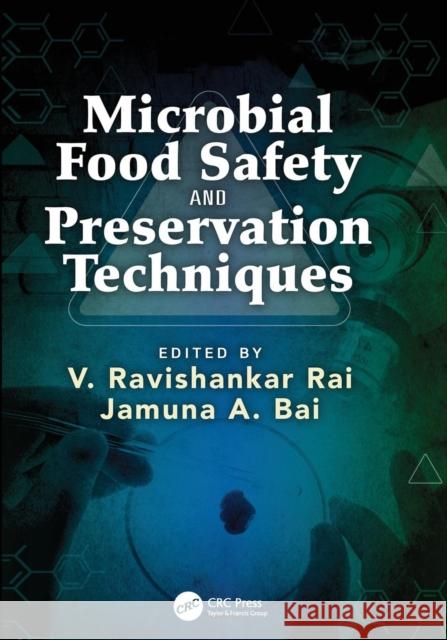
V. Ravishankar Rai; Jamuna A. Bai
Microbial Food Safety and Preservation Techniques V. Ravishankar Rai Jamuna A. Bai 9781138033801 CRC Press - książkaWidoczna okładka, to zdjęcie poglądowe, a rzeczywista szata graficzna może różnić się od prezentowanej.

Microbial Food Safety and Preservation Techniques

ISBN-13: 9781138033801 / Angielski / Miękka / 2016 / 542 str.

V. Ravishankar Rai; Jamuna A. Bai
cena 484,79
(netto: 461,70 VAT:  5%)

Najniższa cena z 30 dni: 478,50
Termin realizacji zamówienia:
ok. 22 dni roboczych
Dostawa w 2026 r.

Darmowa dostawa!
inne wydania

In recent years, rapid strides have been made in the fields of microbiological aspects of food safety and quality, predictive microbiology and microbial risk assessment, microbiological aspects of food preservation, and novel preservation techniques. Written by the experts and pioneers involved in many of these advances, Microbial Food Safety and Preservation Techniques gives you an in-depth look at the fundamental and applied aspects of food safety. It describes the control measures employed and emphasizes the food preservative techniques that are used to ensure high-quality and safe foods. The book elucidates the hazards caused by food-borne pathogens and assesses the microbiological risk of raw, fresh produce, ready-to-eat (RTE), minimally processed, and processed foods. It then discusses the detection of pathogens using advanced molecular techniques, biosensors, and nanotechnology. The topics covered include smart/intelligent and active packaging techniques, hurdle technology, plasma technology, nanotechnology, use of natural flora belonging to lactic acid bacteria, and antimicrobials such as phytochemicals and essential oils, as well as novel food preservatives based on quorum sensing inhibitors. The inclusion of chapters on modeling microbial growth in food enhancing the safety and quality of foods makes the book especially practical. Examining the advantages and limitations of these new preservation techniques, the book highlights the trends and hot topics that help you face the challenges of food safety. With coverage of food safety issues, including detection, identification, and prevention of food-borne illness disease agents, as well as preservation techniques, the book provides a comprehensive resource for tackling current and future food safety issues.


Kategorie:
Technologie
Kategorie BISAC:
Technology & Engineering > Food Science - General
Wydawca:
CRC Press
Język:
Angielski
ISBN-13:
9781138033801
Rok wydania:
2016
Ilość stron:
542
Waga:
0.92 kg
Wymiary:
25.4 x 17.78 x 2.79
Oprawa:
Miękka
Wolumenów:
01
Dodatkowe informacje:
Wydanie ilustrowane

Section 1. Food safety and hygiene. Microbiology of raw, semiprocessed and processed vegetable and fruit products, meat, poultry and seafoods, dairy products and fermented foods. Emerging and re-emerging infectious food borne diseases. Microbial physiology and pathogenicity of food-borne pathogens –quorum sensing, biofilm formation, infections and toxins. Detection of food borne pathogens using advanced and rapid molecular techniques- culture dependent and independent techniques. Application of nanotechnology and biosensors in pathogen detection and identification. Microbial risk assessment and risk management of various food products and quantitative microbial risk assessment tools. Predictive microbiology and modeling microbial growth in food systems. International and national food safety regulatory agencies, establishing and developing microbiological criteria for food borne pathogens, HACCP development, implementation and impact of regulations and food policies for safety and quality assurance of foods. Section 2. Food preservation. Microbes in food spoilage – Specific spoilage organisms, Mechanisms of food spoilage, Interaction between spoilage organisms, biofilms and biofouling. Modeling microbial growth in food and extension of shelf life of various food products. An overview of intervention technologies in food preservation and their advantages and drawbacks. Biological preservation of foods – bacteriocins, enterocins, food grade enzymes, chitosans, glucans, essential oils, lactic acid bacteria and protective cultures. Emerging intelligent and active packaging techniques, applications and safety concerns. Food preservation by hurdle technology – A combination of ultrasound, irradiation, pulsed electric fields, hyperbaric techniques, thermal and non thermal technologies. Nanotechnology in food preservation and food packaging- application, limitations and future trends. Quorum sensing inhibitors as novel food preservatives-dietary phytochemicals as anti quorum sensing agents.

V Ravishankar Rai earned his MSc and PhD from the University of Mysore, India. Currently, Dr. Rai is working as a Professor in the Department of Studies in Microbiology, University of Mysore, India. He was awarded a fellowship from the UNESCO Biotechnology Action Council, Paris (1996), the Indo-Israel Cultural Exchange Fellowship (1998), the Biotechnology Overseas Fellowship, Government of India (2008), and the Indo-Hungarian Exchange Fellowship (2011) Indian National Academy Fellowship (2015) and Cardiff Incoming Visiting Fellowship (2017).   Presently, he is the coordinator for the Department of Science and Technology, Promotion of University Research and Scientific Excellence and University Grants Commission innovative programs. Jamuna A. Bai has completed her MSc and PhD in Microbiology from University of Mysore, India. She is working as a Researcher in UGC sponsored University with Potential Excellence Project, University of Mysore, India. She has previously worked as ICMR Senior Research Fellow and carried a research work on food safety, role of quorum sensing and biofilms in food-related bacteria and developing quorum-sensing inhibitors. Her research interests also include antimicrobial application of functionalized nanomaterials against food-borne pathogens.


Udostępnij

Facebook - konto krainaksiazek.pl


Opinie o Krainaksiazek.pl na Opineo.pl

Partner Mybenefit

Krainaksiazek.pl w programie rzetelna firma Krainaksiaze.pl - płatności przez paypal

Czytaj nas na:

Facebook - krainaksiazek.pl
  • książki na zamówienie
  • granty
  • książka na prezent
  • kontakt
  • pomoc
  • opinie
  • regulamin
  • polityka prywatności

Zobacz:

  • Księgarnia czeska

  • Wydawnictwo Książkowe Klimaty

1997-2025 DolnySlask.com Agencja Internetowa

© 1997-2022 krainaksiazek.pl
     
KONTAKT | REGULAMIN | POLITYKA PRYWATNOŚCI | USTAWIENIA PRYWATNOŚCI
Zobacz: Księgarnia Czeska | Wydawnictwo Książkowe Klimaty | Mapa strony | Lista autorów
KrainaKsiazek.PL - Księgarnia Internetowa

Polityka prywatnosci - link
Krainaksiazek.pl - płatnośc Przelewy24
Przechowalnia Przechowalnia





