• Wyszukiwanie zaawansowane
  • Kategorie
  • Kategorie BISAC
  • Książki na zamówienie
  • Promocje
  • Granty
  • Książka na prezent
  • Opinie
  • Pomoc
  • Załóż konto
  • Zaloguj się

Methodologies in Peace Psychology: Peace Research by Peaceful Means » książka


zaloguj się | załóż konto
Logo Krainaksiazek.pl

koszyk

konto

szukaj
topmenu
Księgarnia internetowa
Szukaj
Książki na zamówienie
Promocje
Granty
Książka na prezent
Moje konto
Pomoc
 
 
Wyszukiwanie zaawansowane
Pusty koszyk
Bezpłatna dostawa dla zamówień powyżej 20 złBezpłatna dostawa dla zamówień powyżej 20 zł

Kategorie główne

• Nauka
 [2946912]
• Literatura piękna
 [1852311]

  więcej...
• Turystyka
 [71421]
• Informatyka
 [150889]
• Komiksy
 [35717]
• Encyklopedie
 [23177]
• Dziecięca
 [617324]
• Hobby
 [138808]
• AudioBooki
 [1671]
• Literatura faktu
 [228371]
• Muzyka CD
 [400]
• Słowniki
 [2841]
• Inne
 [445428]
• Kalendarze
 [1545]
• Podręczniki
 [166819]
• Poradniki
 [480180]
• Religia
 [510412]
• Czasopisma
 [525]
• Sport
 [61271]
• Sztuka
 [242929]
• CD, DVD, Video
 [3371]
• Technologie
 [219258]
• Zdrowie
 [100961]
• Książkowe Klimaty
 [124]
• Zabawki
 [2341]
• Puzzle, gry
 [3766]
• Literatura w języku ukraińskim
 [255]
• Art. papiernicze i szkolne
 [7810]
Kategorie szczegółowe BISAC

Methodologies in Peace Psychology: Peace Research by Peaceful Means

ISBN-13: 9783319183947 / Angielski / Twarda / 2015 / 454 str.
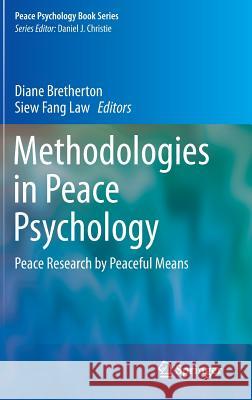
Diane Bretherton; Siew Fang Law
Methodologies in Peace Psychology: Peace Research by Peaceful Means Bretherton, Diane 9783319183947 Springer - książkaWidoczna okładka, to zdjęcie poglądowe, a rzeczywista szata graficzna może różnić się od prezentowanej.

Methodologies in Peace Psychology: Peace Research by Peaceful Means

ISBN-13: 9783319183947 / Angielski / Twarda / 2015 / 454 str.

Diane Bretherton; Siew Fang Law
cena 201,72
(netto: 192,11 VAT:  5%)

Najniższa cena z 30 dni: 192,74
Termin realizacji zamówienia:
ok. 22 dni roboczych
Bez gwarancji dostawy przed świętami

Darmowa dostawa!
inne wydania

This volume looks at research methods through the lens of peace studies and peace values. Apart from reviewing established methods from peace psychology, it presents some innovative ideas for conducting research in the area of peace psychology. Many of these methods are drawn from the field, from activities used by active peace practitioners. A critical component of this volume is its core argument that peace research should be conducted by peaceful means, and should model peaceful processes. Organized thematically, the volume begins with a review of the established best practices in peace psychology research methodology, including methods for qualitative research, for quantitative research, and participative action networks. In doing so, it also points to some of the limitations of working for peace within the tradition of a single discipline and to the need to expand psychology methodology, to methodologies. Therefore, the second half of the volume proceeds to explore the realm of innovative, relatively unorthodox research methods, such as participatory and workshop methods, the creative arts, and sports for research purposes. The use of new advances in information technology to conduct peaceful research are also discussed. The concluding chapters synthesize key issues from the previous chapters, and links peace psychology with ideas and implementation of research designs and practices. Finally, it discusses the nature of academic knowledge, and more specifically, academic knowledge in peace psychology, and where that fits into the mission to build a more peaceful world. Overall this book aims to provide peace psychologists with an array of possibilities and best practices for approaching their research. Many researchers find the experience of doing research a somewhat lonely, if not isolating, experience. Methodologies in Peace Psychology: Peace Research by Peaceful Means aims to alleviate this feeling as the use of these more innovative methods leads to a closer engagement with the community and a much more social experience of research. This volume is a useful tool for both new and experienced researchers because it provides leads for idealistic young researchers who want their work to make a difference, in addition to encouraging more reflection and analysis for experienced peace psychologists.


Kategorie:
Nauka, Psychologia
Kategorie BISAC:
Psychology > Social Psychology
Psychology > Personality
Wydawca:
Springer
Seria wydawnicza:
Peace Psychology Book
Język:
Angielski
ISBN-13:
9783319183947
Rok wydania:
2015
Wydanie:
2015
Numer serii:
000402373
Ilość stron:
454
Waga:
8.39 kg
Wymiary:
23.5 x 15.5
Oprawa:
Twarda
Wolumenów:
01
Dodatkowe informacje:
Wydanie ilustrowane

Acknowledgement

Contributors


Chapter 1 Introduction: Methodologies in Peace Psychology – Diane Bretherton and Siew Fang Law


Part I – Research Methods in Peace Psychology


Chapter 2        Theories Underlying Peace Research – Rachel M. MacNair

Chapter 3        Themes in Peace Psychology Research – Noraini M. Noor and Daniel J. Christie

Chapter 4        Quantitative Research in Peace Psychology – Daniel M. Mayton II, Benjamin C. Seloske and Brenda L. Cleaver

Chapter 5        Qualitative Research in Peace Psychology – Siew Fang Law and Diane Bretherton

Chapter 6        Utilizing Mixed Methods for Research in Peace Psychology - Anthony J. Onwuegbuzie and Abbas Tashakkori

Chapter 7        Ethical Objectives and Values in Peace Psychology and Social Justice Research – Marc Pilisuk, Melissa Anderson-Hinn and Gianina Pellegrini


Part II –Extending the Range of Methodologies.


Postcolonial Methodologies.

Chapter 8        Indigenous Paradigm Research – Polly O. Walker

Chapter 9        Approaches to Postcolonial Research – David Mellor

Chapter 10      Involving Participants in Data Analysis – Anouk Ride


Participatory and Workshop Methods.

Chapter 11      Philosophies of Participation: Analectic and Consciousness Methods – Maritza Montero

Chapter 12      Participatory Action Research as a Resource for Community Regeneration in Post-Conflict Contexts – M. Brinton Lykes and Alison Crosby

Chapter 13 Inquiry into Practice and Practicing Inquiry: the Intersection of Practice Intervention and Research – Serge Loode


Using the Creative Arts in Peace Research.

Chapter 14      Approaches to Narrative Analysis: Using Personal, Dialogical and Social Stories to Promote Peace – Mary Breheny and Christine Stephens

Chapter 15      Challenging Structural Violence through Community Drama: Exploring Theatre as Transformative Praxis – Christopher Sonn, Karina Smith and Kirsten Mayer

Chapter 16      Photovoice as Emancipatory Praxis: A Visual Methodology Towards Critical Consciousness and Social Action – Mohamed Seedat, Shahnaaz Suffla and Umesh Bawa

Chapter 17      Music and Peace – Jacqueline Bornstein

 Technological Innovation.

Chapter 18      Using the Internet and Social Media in Peace Psychology Research

– Cristina Jayme Montiel, Arvin Boller and Feric L. Galvez


Part III – Transforming the world.


Chapter 19      Translating Psychological Research into Policy, Advocacy and Programs in

International Development – Nikola Balvin

Chapter 20      Program Evaluation: Why Process Matters – Michael G. Wessells

Chapter 21      Writing Peace Psychology: Creating High-Impact Peace Research Scholarship – Michelle LeBaron  

Chapter 22      Conclusion: Peaceful Research by Peaceful Means – Diane Bretherton and Siew Fang Law


List of Tables

List of Figures

Index

Diane Bretherton was the founding director of the International Conflict Resolution Centre in the Pyschology Department at the University of Melbourne and for many years chaired the Committee for the Psychological Study of Peace of the International Union of Psychological Science. She is currently an Honorary Professor in Political Science and International Relations at the University of Queensland.  She is also a Visiting Professor at the Zhou En Lai School of International Relations at the University of Nankai in Tianjin, China.  She has previously contributed to the Springer Series in Peace Psychology as a co-editor of Peace Psychology in Australia and is a member of the Editorial Advisory Board of the Journal of Peace and Conflict. She has conducted conflict resolution and peace building workshops in many countries in the world, her most recent project being to facilitate a dialogue between indigenous (Mapuche) and non-indigenous people in Chile. She was awarded the Morton Deutsch Award for Research in Conflict Resolution by the American Psychological Association, Washington, in 2011. She has also been made a member of the Order of Australia for theoretical contributions her discipline and for the practical prevention of violence through promoting conflict resolution in the community. Her extensive experience of supervising the research of under-graduate and post-graduate psychology students who wished to make a contribution to the prevention of violence and promotion of peace, within the Psychology Department at the University of Melbourne, informs the proposed book.

Siew Fang Law is of Chinese Malaysian descent and received her education in four continents. She is a Senior Lecturer and teaches in conflict resolution and peace at Victoria University, Australia.  Her doctoral education was in culture and conflict resolution at RMIT University in Melbourne, Australia. She completed her Masters of Science in Social Psychology at the University of Kent in Canterbury, UK and Bachelor of Arts in Psychology at St Marys University, Canada.  Prior receiving her tenure position at Victoria University, she worked a consultant for international organizations such as UNDP and UNESCO in Southeast Asia and had taught at RMIT. She researches in cross-disciplinary issues that fall into the intersections of  culture and conflict resolution, identity, post-colonialism, community development and peacebuilding. She is a nationally Accredited Mediator in Australia and a committee member of the Committee for the Psychological Study of Peace

 Our world appears to be in endless crisis and increasingly people wonder if they can do something to make a difference.  But what role should researchers take?  Can we sit aside from the problems of the world or should we be actively engaged in social transformation?  Are we equipped to deal with the challenges of the 21st century? Can we help to build a more peaceful world? Perhaps it is time for us to re-imagine the nature of research and its relationship to the increasingly complex problems of the world.

This unique and timely book describes existing methods of inquiry in psychology, and then explores innovative approaches that use interactive workshops, the creative arts and the social media to more actively engage with communities in building peaceful relationships. Organized thematically, the volume begins with a review of the established best practices in peace psychology, including methods for quantitative, qualitative and mixed methods

designs. The core argument is that peace research should be conducted by peaceful means, and should model peaceful processes. In exploring this argument, the volume points to some of the limitations of working for peace within the tradition of a single discipline and to the need to expand psychology methodology, to methodologies. The compilation of chapters, from authors in different parts of the world gives inspiration to readers to create their own innovative, reliable and context appropriate research designs, ones that could make a real difference.

 Traditional research approaches have provided a strong foundation, particularly in understanding the nature of violence, but in the 21st century researchers will need to reach out to a wider range of cultural groups, to be more active in building peaceful communities and societies, and so be more creative in their approach. Creativity is essential in conflict resolution, in peace building and in peace research. The concluding chapters synthesize key issues from the previous chapters, and raise ideas for the future implementation of research designs and practices. Finally, the book discusses the nature of academic knowledge, and more specifically, academic knowledge in peace psychology, and where it fits into the mission to build a more peaceful world. Methodologies in Peace Psychology: Peace Research by Peaceful Means is a useful tool for both new and experienced researchers because it provides leads for idealistic young researchers who want their work to make a difference, in addition to encouraging more reflection and analysis for experienced peace psychologists.




Udostępnij

Facebook - konto krainaksiazek.pl


Opinie o Krainaksiazek.pl na Opineo.pl

Partner Mybenefit

Krainaksiazek.pl w programie rzetelna firma Krainaksiaze.pl - płatności przez paypal

Czytaj nas na:

Facebook - krainaksiazek.pl
  • książki na zamówienie
  • granty
  • książka na prezent
  • kontakt
  • pomoc
  • opinie
  • regulamin
  • polityka prywatności

Zobacz:

  • Księgarnia czeska

  • Wydawnictwo Książkowe Klimaty

1997-2025 DolnySlask.com Agencja Internetowa

© 1997-2022 krainaksiazek.pl
     
KONTAKT | REGULAMIN | POLITYKA PRYWATNOŚCI | USTAWIENIA PRYWATNOŚCI
Zobacz: Księgarnia Czeska | Wydawnictwo Książkowe Klimaty | Mapa strony | Lista autorów
KrainaKsiazek.PL - Księgarnia Internetowa

Polityka prywatnosci - link
Krainaksiazek.pl - płatnośc Przelewy24
Przechowalnia Przechowalnia



