• Wyszukiwanie zaawansowane
  • Kategorie
  • Kategorie BISAC
  • Książki na zamówienie
  • Promocje
  • Granty
  • Książka na prezent
  • Opinie
  • Pomoc
  • Załóż konto
  • Zaloguj się

Mechanisms of Inorganic and Organometallic Reactions: Volume 6 » książka


zaloguj się | załóż konto
Logo Krainaksiazek.pl

koszyk

konto

szukaj
topmenu
Księgarnia internetowa
Szukaj
Książki na zamówienie
Promocje
Granty
Książka na prezent
Moje konto
Pomoc
 
 
Wyszukiwanie zaawansowane
Pusty koszyk
Bezpłatna dostawa dla zamówień powyżej 20 złBezpłatna dostawa dla zamówień powyżej 20 zł

Kategorie główne

• Nauka
 [2952079]
• Literatura piękna
 [1850969]

  więcej...
• Turystyka
 [71058]
• Informatyka
 [151066]
• Komiksy
 [35579]
• Encyklopedie
 [23181]
• Dziecięca
 [620496]
• Hobby
 [139036]
• AudioBooki
 [1646]
• Literatura faktu
 [228729]
• Muzyka CD
 [379]
• Słowniki
 [2932]
• Inne
 [445708]
• Kalendarze
 [1409]
• Podręczniki
 [164793]
• Poradniki
 [480107]
• Religia
 [510956]
• Czasopisma
 [511]
• Sport
 [61267]
• Sztuka
 [243299]
• CD, DVD, Video
 [3411]
• Technologie
 [219640]
• Zdrowie
 [100984]
• Książkowe Klimaty
 [124]
• Zabawki
 [2281]
• Puzzle, gry
 [3363]
• Literatura w języku ukraińskim
 [258]
• Art. papiernicze i szkolne
 [8020]
Kategorie szczegółowe BISAC

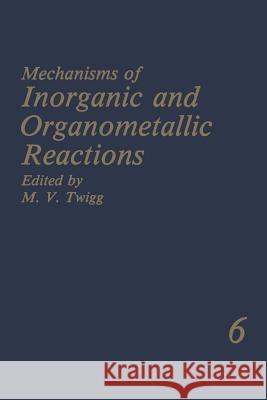
Mechanisms of Inorganic and Organometallic Reactions: Volume 6

ISBN-13: 9781461281023 / Angielski / Miękka / 2013 / 535 str.
Twigg, M. V.
Mechanisms of Inorganic and Organometallic Reactions: Volume 6 Twigg, M. V. 9781461281023 Springer - książkaWidoczna okładka, to zdjęcie poglądowe, a rzeczywista szata graficzna może różnić się od prezentowanej.

Mechanisms of Inorganic and Organometallic Reactions: Volume 6

ISBN-13: 9781461281023 / Angielski / Miękka / 2013 / 535 str.

Twigg, M. V.
cena 201,72
(netto: 192,11 VAT:  5%)

Najniższa cena z 30 dni: 192,74
Termin realizacji zamówienia:
ok. 22 dni roboczych
Dostawa w 2026 r.

Darmowa dostawa!

This series, Mechanisms of Inorganic and Organometallic Reactions, provides an ongoing critical review of the published literature concerned with the mechanisms of reactions of inorganic and organometallic compounds. Emphasis is on reactions in solution, although solid state and gas phase studies are included where they provide mechanistic insight. The sixth volume deals with papers published during the period January 1987 through June 1988 inclusive, together with some earlier work where it is appropriate to make comparisons. Coverage spans the whole area as comprehensively as practically possible, and the cited references are chosen for their relevance to the elucidation of reaction mechanisms. The now familiar format of earlier volumes has been maintained to facilitate tracing progress in a particular topic over several volumes, but some small changes have been made. Reflecting the a'mount of mechanistic work associated with ligand reactivity, and the growing importance of this area, Chapter 12 has been renamed and enlarged to bring together informa- tion on both coordination and organometallic systems involving ligand reactions. Numerical data are usually reported in the units used by the original authors, except when making comparisons and conversion to common units is necessary.


Kategorie:
Nauka, Chemia
Kategorie BISAC:
Science > Chemia - Nieorganiczna
Science > Chemia - Fizyczna
Science > Fizyka
Wydawca:
Springer
Język:
Angielski
ISBN-13:
9781461281023
Rok wydania:
2013
Wydanie:
Softcover Repri
Ilość stron:
535
Waga:
0.81 kg
Wymiary:
22.9 x 15.2
Oprawa:
Miękka
Wolumenów:
01

I. Electron Transfer Reactions.- 1. Electron Transfer: General and Theoretical.- 1.1. Overview of Reactions in Fluid Media.- 1.2. The Electronic Coupling Problem (Ke/).- 1.2.1. The Distance Dependence of Electron Transfer Rates.- 1.2.2. The “Inverted Region”.- 1.2.3. Related Excited-State Energy-Transfer Processes.- 1.3. Medium Effects: Thermodynamic.- 1.4. Medium Effects: Kinetic.- 1.4.1. Conformational Effects.- 1.4.2. Slow and Fast Solvation: Theory.- 1.4.3. Effects of “Slow” Solvent Relaxation Processes.- 1.4.4. Effects of “Fast” Solvent Relaxation Processes.- 1.5. Optical Electron Transfer (Intervalence Transitions).- 1.5.1. Medium Effects on Intervalence Charge Transfer.- 1.6. Charge-Transfer Excited-State Relaxation and Excited State Reactions.- 1.7. Gas Phase Reactions.- 1.7.1. Atom-Atom Reactions.- 1.7.2. Reactions Involving Molecules.- 1.8. Electron Transfer in the Solid State.- 2. Redox Reactions between Two Metal Complexes.- 2.1. Introduction.- 2.2. Reactions of Metal Aqua and Oxo Ions.- 2.2.1. Titanium(III) and (IV).- 2.2.2. Vanadium(IV) and (V).- 2.2.3. Chromium(II).- 2.2.4. Manganese(VI).- 2.2.5. Iron(II) and Ruthenium(II).- 2.2.6. Uranium(IV) and (VI).- 2.2.7. Miscellaneous Reactions.- 2.3. Reactions of Metal Ion Complexes.- 2.3.1. Manganese(III).- 2.3.2. Iron(II) and Ruthenium(II).- 2.3.3. Cobalt(-I), (II), and (III).- 2.3.4. Nickel(II) and Platinum(II).- 2.3.5. Copper(I) and (II).- 2.3.6. Stereoselective Electron Transfer.- 2.3.7. Excited State Reactions.- 2.3.8. Miscellaneous Reactions.- 2.4. Reactions with Metalloproteins.- 2.4.1. Introduction.- 2.4.2. Blue Copper Proteins.- 2.4.3. Hemoglobin and Myoglobin.- 2.4.4. Cytochromes.- 2.4.5. Iron-Sulfur Proteins.- 2.4.6. Hemerythrins.- 3. Metal-Ligand Redox Reactions.- 3.1. Introduction.- 3.2. Oxygen, Peroxide. Water. and Other Oxygen Compounds.- 3.2.1. Dioxygen.- 3.2.2. Hydrogen Peroxide.- 3.2.3. Alkyl Hydroperoxides, Peroxyl Acids. and Metal Peroxides.- 3.2.4. Water and Other Oxygen-Containing Compounds.- 3.3. Nitrogen Compounds and Oxyanions.- 3.3.1. Hydrazine, Azide. Hydroxylamine. and Derivatives.- 3.3.2. Nitrous Oxide, Nitrite. Nitrosonium, Trioxodinitrate Ions, and Nitric Acid.- 3.3.3. N-Oxide Compounds.- 3.3.4. Organic Amines.- 3.3.5. Bipyridinium Ions.- 3.3.6. Aryldiazonium Ions.- 3.4. Halogens. Halides, and Halogen Oxyacids.- 3.4.1. Halogens.- 3.4.2. Halides.- 3.4.3. Oxyhalides.- 3.4.4. Oscillating Reactions.- 3.5. Sulfur Compounds and Oxyanions.- 3.5.1. Peroxodisulfate.- 3.5.2. Sulfur Dioxide and Sulfite Ions.- 3.5.3. Dithionites.- 3.5.4. Thiosulfates.- 3.5.5. Sulfides, Thiols, and Disulfides.- 3.5.6. Sulfoxides.- 3.6. Phosphorus, Arsenic, and Oxycompounds.- 3.6.1. Phosphines/ Arsines.- 3.6.2. Phosphorus Oxyanions.- 3.6.3. Arsenious Compounds.- 3.7. Inorganic Radicals.- 3.8. Hydrogen.- 3.9. Ascorbic Acid, Quinols, Catechols, and Diols.- 3.9.1. Ascorbic Acid.- 3.9.2. Quinols and Catechols.- 3.9.3. Diols, Aliphatic and Aromatic Alcohols.- 3.10 Carboxylic Acids, Carboxylates, Carbon Dioxide, and Carbon Monoxide.- 3.10.1. Carboxylic Acids.- 3.10.2. Carbon Dioxide.- 3.10.3. Carbon Monoxide.- 3.1 1. Alkyl and Aryl Halides.- 3.12. Organic Radicals.- II. Substitutions and Related Reactions.- 4. Reactions of Compounds of the Nonmetallic Elements.- 4.1. Boron.- 4.2. Carbon.- 4.3. Silicon.- 4.4. Germanium.- 4.5. Nitrogen.- 4.6. Phosphorus.- 4.7. Arsenic and Antimony.- 4.8. Oxygen.- 4.9. Sulfur.- 4.10. Selenium and Tellurium.- 4.11. Halogens and Xenon.- 4.11.1. Fluorine.- 4.11.2. Chlorine.- 4.11.3. Bromine.- 4.11.4. Iodine.- 4.11.5. Xenon.- 4.12. Oscillating Reactions.- 5. Substitution Reactions of Inert-Metal Complexes-Coordination Numbers 4 and 5.- 5.1. Introduction.- 5.2. Ligand Replacement at Square-Planar Platinum(II).- 5.3. Ligand Replacement at Square-Planar Palladium(II).- 5.4. Nickel(II) Complexes.- 5.5. Isomerization Reactions.- 5.6. Trans Effect.- 5.7. Five-Coordinate Compounds.- 5.8. Oxidative Additions.- 5.9. Rhodium(I) and Gold(III) Complexes.- 6. Substitution Reactions of Inert-Metal Complexes-Coordination Numbers 6 and Above: Chromium.- 6.1. Introduction.- 6.2. Aquation and Solvolysis of Chromium(III) Complexes.- 6.2.1. [Cr(III)(L5)X]n+ Systems (L = OH2, NH3).- 6.2.2. Cr(III)—C Bond Rupture.- 6.2.3. Amine Complexes.- 6.2.4. Dechelation/Chelation Processes.- 6.3. Formation of Chromium(III) Complexes.- 6.3.1. The Nature of the Cr3+ Cation in Aqueous Solution.- 6.3.2. Anation Reactions.- 6.4. Base Hydrolysis.- 6.5. Oxidation and Reduction of Cr(III) Complexes.- 6.6. Isomerization and Racemization.- 6.7. Photochemistry and Photophysics of Chromium(III) Complexes.- 6.8. The Solid State.- 6.8.1. Single-Crystal X-Ray Structures.- 6.8.2. Synthesis and Solid State Decomposition.- 6.9. Other Oxidation States.- 6.9.1. Chromium(II).- 6.9.2. Chromium(V).- 6.9.3. Chromium(VI).- 6.10. Catalysis.- 6.1 1. Miscellaneous.- 7. Substitution Reactions of Inert-Metal Complexes—Coordination Numbers 6 and Above: Cobalt.- 7.1. Aquation.- 7.2. Catalyzed Aquation.- 7.3. Base Hydrolysis.- 7.4. Anation.- 7.5. Solvolysis.- 7.6. Isomerization.- 7.7. Carbonato Complexes.- 7.8. Cobaloximes and B12.- 7.9. Photochemistry.- 7.10. Miscellaneous.- 8. Substitution Reactions of Inert—Metal Complexes-Coordination Numbers 6 and Above: Other Inert Centers.- 8.1. Introduction.- 8.2. Molybdenum.- 8.3. Tungsten.- 8.4. Technetium.- 8.5. Rhenium.- 8.6. Iron.- 8.6.1. Pentacyanoferrates and Nitrosyls.- 8.6.2. Diimine Complexes.- 8.6.3. Other Complexes.- 8.7. Ruthenium.- 8.8. Osmium.- 8.9. Rhodium.- 8.10. Iridium.- 8.1 1. Platinum(1V).- 8.11.1. General.- 8.11.2. Intramolecular Processes.- 9. Substitution Reactions of Labile Metal Complexes.- 9.1. General.- 9.2. Complex Formation Involving Unsubstituted Metal Ions: Unidentate Ligand Substitution and Solvent Exchange.- 9.2.1. Bivalent Ions.- 9.2.2. Trivalent Ions.- 9.3. Complex Formation Involving Unsubstituted Metal Ions: Multidentate Ligand Substitution.- 9.3.1. Uni- and Bivalent Ions.- 9.3.2. Trivalent Ions.- 9.4. Complex Formation Involving Substituted Metal Ions: Ligand Substitution and Solvent Exchange.- 9.4.1. Uni- and Bivalent Ions.- 9.4.2. Trivalent Ions and Ions of Higher Valency.- 9.5. Ligand Substitution Processes in Dimeric Metal Complexes.- III. Reactions of Organometallic Compounds.- 10. Substitution and Insertion Reactions.- 10.1. Substitution Reactions.- 10.1.1. Mononuclear Complexes.- 10.1.2. Polynuclear Complexes.- 10.2. Insertion Reactions.- 10.2.1. Carbon Monoxide Insertion.- 10.2.2. Alkene Insertion.- 10.2.3. Miscellaneous Insertions.- 11. Metal-Alkyl and Metal-Hydride Bond Formation and Fission; Oxidative Addition and Reductive Elimination.- 11.1. Introduction.- 11.2. Dihydrogen and Trihydrogen Complexes.- 11.3. Metal-Hydride Complexes.- 11.4. C—H Bond Activation.- 11.4.1. Unactivated C—H Bonds.- 11.4.2. Activated C—H Bonds.- 11.4.3. Intramolecular C—H Bonds.- 11.5. Oxidative Addition and Reductive Elimination of Alkyl Halides.- 11.6. Oxidative Addition and Reductive Elimination Involving Two Metal Centers.- 12. Reactivity of Coordinated Ligands.- 12.1. Introduction.- 12.2. Cobalt Complexes.- 12.2.1. Phosphate Esters.- 12.2.2. Carboxylic Acids, Esters, and Amides.- 12.3. Other Metal Complexes.- 12.3.1. Nucleophilic Addition to Nitriles.- 12.3.2. Nucleophilic Addition to Imines.- 12.3.3. Nucleophilic Addition to Carbonyls.- 12.3.4. Reactions of 1, 3-Dicarbonyls and Derivatives.- 12.3.5. Electrophilic Attack at Nitrogen and Oxygen.- 12.3.6. Reactions at Phosphorus.- 12.3.7. Reactions of Sulfur Ligands.- 12.3.8. Reactions of Heterocyclic Ligands.- 12.4. OrganometallicCompounds.- 12.4.1. Reactions with Nucleophiles.- 12.4.2. Reactions with Electrophiles.- 12.4.3. Reactions at Side Chains.- 13. Rearrangements. Intramolecular Exchanges. and Isomerizations of Organometallic Compounds.- 13.1. Introduction.- 13.2. Mononuclear Compounds.- 13.2.1. Isomerizations and Ligand Site Exchange.- 13.2.2. Ligand Rotations about the Metal-Ligand Bond.- 13.2.3. Migration of Metal Atoms between Different Ligand Sites.- 13.2.4. Agostic Bonding and Hydrogen Atom Migrations.- 13.2.5. Internal Ligand Rearrangements.- 13.3. Dinuclear Compounds.- 13.3.1. Rotation about the Metal-Metal Direction.- 13.3.2. Carbonyl Ligand Migrations.- 13.3.3. Migration of Other Ligands between Metal Atoms.- 13.3.4. Other Exchange Reactions.- 13.4. Cluster Compounds.- 13.4.1. Rearrangements Involving the Relative Motion of Metal Atoms in a Cluster.- 13.4.2. Carbonyl Ligand Exchanges.- 13.4.3. Other Exchange Reactions.- 14. Homogeneous Catalysis of Organic Reactions by Transition Metal Complexes.- 14.1. General Reviews.- 14.2. Hydrogenations.- 14.2.1. Asymmetric Hydrogenations.- 14.3. Dehydrogenation and Hydrogen Transfer.- 14.4. Isomerizations.- 14.5. C—H Activation.- 14.6. Olefin Metathesis.- 14.7. Olefin Polymerizations.- 14.8. Alkyne Polymerizations.- 14.9. Hydrosilylations.- 14.10. Catalyzed Addition Reactions.- 14.11. Olefin Oligomerizations.- 14.12. Alkyne Oligomerizations.- 14.13. Carbonylations.- 14.13.1. Carbonylation of Alkenes and Alkynes.- 14.13.2. Hydroformylations.- 14.13.3. Water-Gas Shift Reactions.- 14.13.4. Ethylene Glycol Synthesis.- 14.13.5. Carbonylation of Alcohols and Amines.- 14.13.6. Carbonylation of Organic Halides.- 14.14. C—C Cross-Coupling Reactions.- IV. Compilations of Numerical Data.- 15. Volumes of Activation for Inorganic and Organometallic Reactions: A Tabulated Compilation.- 15.1. Introduction.- 15.2. Data in Tabular Form.- References.


Udostępnij

Facebook - konto krainaksiazek.pl


Opinie o Krainaksiazek.pl na Opineo.pl

Partner Mybenefit

Krainaksiazek.pl w programie rzetelna firma Krainaksiaze.pl - płatności przez paypal

Czytaj nas na:

Facebook - krainaksiazek.pl
  • książki na zamówienie
  • granty
  • książka na prezent
  • kontakt
  • pomoc
  • opinie
  • regulamin
  • polityka prywatności

Zobacz:

  • Księgarnia czeska

  • Wydawnictwo Książkowe Klimaty

1997-2025 DolnySlask.com Agencja Internetowa

© 1997-2022 krainaksiazek.pl
     
KONTAKT | REGULAMIN | POLITYKA PRYWATNOŚCI | USTAWIENIA PRYWATNOŚCI
Zobacz: Księgarnia Czeska | Wydawnictwo Książkowe Klimaty | Mapa strony | Lista autorów
KrainaKsiazek.PL - Księgarnia Internetowa

Polityka prywatnosci - link
Krainaksiazek.pl - płatnośc Przelewy24
Przechowalnia Przechowalnia






