• Wyszukiwanie zaawansowane
  • Kategorie
  • Kategorie BISAC
  • Książki na zamówienie
  • Promocje
  • Granty
  • Książka na prezent
  • Opinie
  • Pomoc
  • Załóż konto
  • Zaloguj się

Measurement of Food Preferences » książka


zaloguj się | załóż konto
Logo Krainaksiazek.pl

koszyk

konto

szukaj
topmenu
Księgarnia internetowa
Szukaj
Książki na zamówienie
Promocje
Granty
Książka na prezent
Moje konto
Pomoc
 
 
Wyszukiwanie zaawansowane
Pusty koszyk
Bezpłatna dostawa dla zamówień powyżej 20 złBezpłatna dostawa dla zamówień powyżej 20 zł

Kategorie główne

• Nauka
 [2946912]
• Literatura piękna
 [1852311]

  więcej...
• Turystyka
 [71421]
• Informatyka
 [150889]
• Komiksy
 [35717]
• Encyklopedie
 [23177]
• Dziecięca
 [617324]
• Hobby
 [138808]
• AudioBooki
 [1671]
• Literatura faktu
 [228371]
• Muzyka CD
 [400]
• Słowniki
 [2841]
• Inne
 [445428]
• Kalendarze
 [1545]
• Podręczniki
 [166819]
• Poradniki
 [480180]
• Religia
 [510412]
• Czasopisma
 [525]
• Sport
 [61271]
• Sztuka
 [242929]
• CD, DVD, Video
 [3371]
• Technologie
 [219258]
• Zdrowie
 [100961]
• Książkowe Klimaty
 [124]
• Zabawki
 [2341]
• Puzzle, gry
 [3766]
• Literatura w języku ukraińskim
 [255]
• Art. papiernicze i szkolne
 [7810]
Kategorie szczegółowe BISAC

Measurement of Food Preferences

ISBN-13: 9781461359081 / Angielski / Miękka / 2012 / 301 str.
H. J. H. Macfie; H. J. H. Macfie
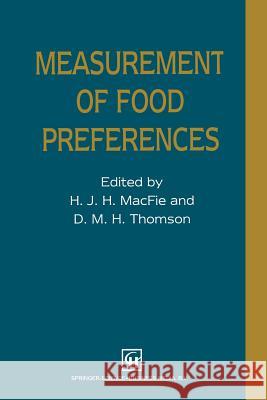
Measurement of Food Preferences H. J. H. Macfie H. J 9781461359081 Springer - książkaWidoczna okładka, to zdjęcie poglądowe, a rzeczywista szata graficzna może różnić się od prezentowanej.

Measurement of Food Preferences

ISBN-13: 9781461359081 / Angielski / Miękka / 2012 / 301 str.

H. J. H. Macfie; H. J. H. Macfie
cena 201,72
(netto: 192,11 VAT:  5%)

Najniższa cena z 30 dni: 192,74
Termin realizacji zamówienia:
ok. 22 dni roboczych
Bez gwarancji dostawy przed świętami

Darmowa dostawa!

This book provides comprehensive coverage of the numerous methods used to characterise food preference. It brings together, for the first time, the broad range of methodologies that are brought to bear on food choice and preference. Preference is not measured in a sensory laboratory using a trained panel - it is measured using consumers by means of product tests in laboratories, central locations, in canteens and at home, by questionnaires and in focus groups. Similarly, food preference is not a direct function of sensory preference - it is determined by a wide range of factors and influences, some competing against each other, some reinforcing each other. We have aimed to provide a detailed introduction to the measurement of all these aspects, including institutional product development, context effects, variation in language used by consumers, collection and analysis of qualitative data by focus groups, product optimisation, relating prefer- ence to sensory perception, accounting for differences in taste sensitivity between consumers, measuring how attitudes and beliefs determine food choice, measuring how food affects mood and mental performance, and how different expectations affect sensory perception. The emphasis has been to provide practical descriptions of current methods. Three of the ten first-named authors are university academics, the rest are in industry or research institutes. Much of the methodology is quite new, particularly the repertory grid coupled with Generalised Procrustes Analysis, Individualised Difference Testing, Food and Mood Testing, and the Sensory Expectation Models.


Kategorie:
Technologie
Kategorie BISAC:
Cooking > General
Business & Economics > Business Law
Technology & Engineering > Food Science - General
Wydawca:
Springer
Język:
Angielski
ISBN-13:
9781461359081
Rok wydania:
2012
Wydanie:
1994
Ilość stron:
301
Waga:
0.44 kg
Wymiary:
23.39 x 15.6 x 1.68
Oprawa:
Miękka
Wolumenów:
01

1 A measurement scheme for developing institutional products.- 1.1 Introduction.- 1.2 Phase I. Consumer marketing.- 1.2.1 Whom to test.- 1.2.2 What to test.- 1.2.3 How to test.- 1.3 Phase II. Individual item sensory testing.- 1.3.1 Trained and consumer panels.- 1.3.2 Choice of rating scales.- 1.4 Phase III. Consumer meal testing — laboratory.- 1.4.1 What is a meal?.- 1.4.2 Acceptance and consumption.- 1.5 Phase IV. Consumer meal testing — field.- 1.5.1 Realism.- 1.5.2 Test population.- 1.5.3 Adhering to test protocol.- 1.5.4 Item and meal acceptance.- 1.6 Phase V. Prototype testing.- 1.7 Phase VI. Extended ration use validation.- 1.8 Phase VII. Quality control testing.- 1.9 How to use the seven-phase testing sequences.- References.- 2 Appropriateness as a measure of the cognitive-contextual aspects of food acceptance.- 2.1 Introduction.- 2.2 Description of procedures for appropriateness, item by use technique.- 2.2.1 Selection of stimuli.- 2.2.2 Format of the questionnaire.- 2.2.3 Selection of respondents.- 2.2.4 Collection of non-appropriateness data.- 2.2.5 Data collection.- 2.2.6 Analysis of appropriateness data.- 2.2.7 Use of principal component analysis.- 2.2.8 Analyses with non-appropriateness data.- 2.3 Conclusions.- References.- 3 The repertory grid approach.- 3.1 Introduction.- 3.1.1 Food choice.- 3.1.2 Personal construct theory.- 3.2 Methodology.- 3.2.1 Repertory grid method.- 3.2.2 Statistical analysis of repertory grids.- 3.2.3 Generalised Procrustes analysis.- 3.3 Application.- 3.3.1 The different aspects of food choice.- 3.3.2 Investigating the food: general perceptions, sensory characteristics and reasons for choice.- 3.3.3 Investigating consumers.- 3.3.4 Investigating contexts of use.- 3.3.5 Interaction of foods, consumers and context of use.- 3.3.6 Extending repertory grid methodology: laddering, preference mapping and other procedures.- 3.4 Conclusions.- References.- 4 Focus group interviewing.- 4.1 Introduction.- 4.1.1 Advantages and limitations of focus groups.- 4.1.2 Myths about focus groups.- 4.2 The process of conducting focus groups.- 4.2.1 Designing a study.- 4.2.2 Developing the questioning route.- 4.2.3 Recruiting participants.- 4.2.4 Moderating.- 4.2.5 Analysis.- 4.2.6 Validity and reliability — Can we really trust this stuff?.- 4.3 Summary.- References.- 5 Product optimization: approaches and applications.- 5.1 Background and applications.- 5.1.1 What is product optimization?.- 5.1.2 Historical background.- 5.2 Steps in a designed experiment and product optimization study.- 5.2.1 Selection of variables and their levels — systematic versus haphazard designs.- 5.2.2 Questionnaire development.- 5.2.3 Test implementation.- 5.2.4 Analysis of the data — a multi-step process.- 5.3 A case history — salsa.- 5.3.1 Experimental design.- 5.3.2 Results.- 5.3.3 Analysis phase 1, R—R analysis.- 5.3.4 Analysis phase 2, S—R (stimulus—response) analysis.- 5.3.5 Three examples of optimization technology.- 5.4 An overview.- References.- 6 Preference mapping in practice.- 6.1 Introduction.- 6.1.1 An alternative approach.- 6.2 External preference analysis — Prefmap.- 6.2.1 The method.- 6.2.2 Case study using external analysis.- 6.2.3 Problems with external preference mapping.- 6.3 Internal analysis — MDPREF.- 6.3.1 Method.- 6.3.2 Case study using internal analysis.- 6.4 Advantages and limitations of preference mapping.- 6.5 Aspects of conduct.- References.- 7 An individualised psychological approach to measuring influences on consumer preferences.- 7.1 Introduction.- 7.2 Measuring individual consumer preferences.- 7.2.1 Acquisition of food preferences.- 7.2.2 Relating determinants to food preferences: the acceptance triangle.- 7.2.3 Principles of consumer preference measurement.- 7.3 Psychophysical acceptance parameters.- 7.3.1 Ideal point (IP).- 7.3.2 Rejections ratio (RR).- 7.3.3 Tolerance discrimination ratio (TDR).- 7.4 Aggregation of individuals’ acceptance parameters.- 7.5 Measuring determinants of acceptance in the `real world’.- 7.5.1 Multiple determinants.- 7.5.2 Unidentified determinants.- 7.5.3 Non-sensory determinants.- 7.6 Conclusions.- References.- 8 Modelling food choice.- 8.1 Introduction.- 8.2 Factors influencing food choice.- 8.3 Beliefs and attitudes.- 8.4 Application of the theory of reasoned action to food choice.- 8.4.1 Fat intake: the roles of attitudes and nutritional knowledge.- 8.5 Extensions of the theory of reasoned action.- 8.5.1 Perceived control.- 8.5.2 Habit.- 8.5.3 Self-identity.- 8.5.4 Consumption of chips.- 8.5.5 Biscuits and bread.- 8.5.6 Organic vegetables.- 8.6 Conclusions.- References.- 9 Nutritional influences on mood and cognitive performance:their measurement and relevance to food acceptance.- 9.1 Introduction.- 9.2 Relevance to food acceptance of dietary effects on behaviour.- 9.3 Conceptual issues.- 9.3.1 Mood and emotion.- 9.3.2 Arousal, mood and cognitive performance.- 9.3.3 Effects of food on mood and cognitive performance.- 9.4 Methodological issues.- 9.4.1 Experimental design.- 9.4.2 Sensitivity and validity of measures.- 9.4.3 Mood measures.- 9.4.4 Mood induction.- 9.4.5 Measures of cognitive performance.- 9.5 Caffeine: a case study.- 9.6 Summary.- References.- 10 Consumer expectations and their role in food acceptance.- 10.1 Introduction.- 10.1.1 Food acceptance: definition and measurement.- 10.1.2 Overview.- 10.2 The plausible role of expectations in food behavior.- 10.2.1 Oral texture and temperature.- 10.2.2 Flavor.- 10.2.3 Appearance: food and its packaging.- 10.2.4 Ideational effects.- 10.3 Consumer expectations and food acceptance.- 10.3.1 Expectations as a construct.- 10.3.2 Expectations: sensory versus hedonic.- 10.3.3 Models of the effect of disconfirmed expectations.- 10.3.4 Measuring expectations and confirmation/disconfirmation.- 10.4 Experimental studies.- 10.4.1 Sensory disconfirmation.- 10.4.2 Direct manipulation of expectations.- 10.4.3 Direct manipulation of disconfirmation levels.- 10.5 Summary/conclusions.- References.


Udostępnij

Facebook - konto krainaksiazek.pl


Opinie o Krainaksiazek.pl na Opineo.pl

Partner Mybenefit

Krainaksiazek.pl w programie rzetelna firma Krainaksiaze.pl - płatności przez paypal

Czytaj nas na:

Facebook - krainaksiazek.pl
  • książki na zamówienie
  • granty
  • książka na prezent
  • kontakt
  • pomoc
  • opinie
  • regulamin
  • polityka prywatności

Zobacz:

  • Księgarnia czeska

  • Wydawnictwo Książkowe Klimaty

1997-2025 DolnySlask.com Agencja Internetowa

© 1997-2022 krainaksiazek.pl
     
KONTAKT | REGULAMIN | POLITYKA PRYWATNOŚCI | USTAWIENIA PRYWATNOŚCI
Zobacz: Księgarnia Czeska | Wydawnictwo Książkowe Klimaty | Mapa strony | Lista autorów
KrainaKsiazek.PL - Księgarnia Internetowa

Polityka prywatnosci - link
Krainaksiazek.pl - płatnośc Przelewy24
Przechowalnia Przechowalnia






