• Wyszukiwanie zaawansowane
  • Kategorie
  • Kategorie BISAC
  • Książki na zamówienie
  • Promocje
  • Granty
  • Książka na prezent
  • Opinie
  • Pomoc
  • Załóż konto
  • Zaloguj się

Materials and Reliability Handbook for Semiconductor Optical and Electron Devices » książka


zaloguj się | załóż konto
Logo Krainaksiazek.pl

koszyk

konto

szukaj
topmenu
Księgarnia internetowa
Szukaj
Książki na zamówienie
Promocje
Granty
Książka na prezent
Moje konto
Pomoc
 
 
Wyszukiwanie zaawansowane
Pusty koszyk
Bezpłatna dostawa dla zamówień powyżej 20 złBezpłatna dostawa dla zamówień powyżej 20 zł

Kategorie główne

• Nauka
 [2946600]
• Literatura piękna
 [1856966]

  więcej...
• Turystyka
 [72221]
• Informatyka
 [151456]
• Komiksy
 [35826]
• Encyklopedie
 [23190]
• Dziecięca
 [619653]
• Hobby
 [140543]
• AudioBooki
 [1577]
• Literatura faktu
 [228355]
• Muzyka CD
 [410]
• Słowniki
 [2874]
• Inne
 [445822]
• Kalendarze
 [1744]
• Podręczniki
 [167141]
• Poradniki
 [482898]
• Religia
 [510455]
• Czasopisma
 [526]
• Sport
 [61590]
• Sztuka
 [243598]
• CD, DVD, Video
 [3423]
• Technologie
 [219201]
• Zdrowie
 [101638]
• Książkowe Klimaty
 [124]
• Zabawki
 [2473]
• Puzzle, gry
 [3898]
• Literatura w języku ukraińskim
 [254]
• Art. papiernicze i szkolne
 [8170]
Kategorie szczegółowe BISAC

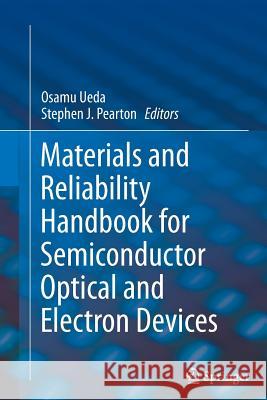
Materials and Reliability Handbook for Semiconductor Optical and Electron Devices

ISBN-13: 9781493901197 / Angielski / Miękka / 2014 / 616 str.
Osamu Ueda; Stephen J. Pearton
Materials and Reliability Handbook for Semiconductor Optical and Electron Devices Osamu Ueda Stephen J. Pearton 9781493901197 Springer - książkaWidoczna okładka, to zdjęcie poglądowe, a rzeczywista szata graficzna może różnić się od prezentowanej.

Materials and Reliability Handbook for Semiconductor Optical and Electron Devices

ISBN-13: 9781493901197 / Angielski / Miękka / 2014 / 616 str.

Osamu Ueda; Stephen J. Pearton
cena 1210,50 zł
(netto: 1152,86 VAT:  5%)

Najniższa cena z 30 dni: 1156,64 zł
Termin realizacji zamówienia:
ok. 22 dni roboczych
Bez gwarancji dostawy przed świętami

Darmowa dostawa!
inne wydania

Materials and Reliability Handbook for Semiconductor Optical and Electron Devices provides comprehensive coverage of reliability procedures and approaches for electron and photonic devices. These include lasers and high speed electronics used in cell phones, satellites, data transmission systems and displays. Lifetime predictions for compound semiconductor devices are notoriously inaccurate due to the absence of standard protocols. Manufacturers have relied on extrapolation back to room temperature of accelerated testing at elevated temperature. This technique fails for scaled, high current density devices. Device failure is driven by electric field or current mechanisms or low activation energy processes that are masked by other mechanisms at high temperature. The Handbook addresses reliability engineering for III-V devices, including materials and electrical characterization, reliability testing, and electronic characterization. These are used to develop new simulation technologies for device operation and reliability, which allow accurate prediction of reliability as well as the design specifically for improved reliability. The Handbook emphasizes physical mechanisms rather than an electrical definition of reliability. Accelerated aging is useful only if the failure mechanism is known. The Handbook also focuses on voltage and current acceleration stress mechanisms.


Kategorie:
Nauka, Fizyka
Kategorie BISAC:
Technology & Engineering > Materials Science - Electronic Materials
Technology & Engineering > Electronics - Circuits - General
Technology & Engineering > Lasers & Photonics
Wydawca:
Springer
Język:
Angielski
ISBN-13:
9781493901197
Rok wydania:
2014
Wydanie:
2013
Ilość stron:
616
Waga:
0.87 kg
Wymiary:
23.39 x 15.6 x 3.25
Oprawa:
Miękka
Wolumenów:
01
Dodatkowe informacje:
Wydanie ilustrowane

Preface

Part 1: Materials Issues and Reliability of Optical Devices
1. Reliability Testing of Semiconductor Optical Devices
2. Failure Analysis of Semiconductor Optical Devices
3. Failure Analysis using Optical Evaluation Technique (OBIC) of LDs and APDs for Fiber Optical Communication
4. Reliability and Degradation of III-V Optical Devices Focusing on Gradual Degradation
5. Catastrophic Optical-damage in High Power, Broad-Area Laser-diodes
6. Reliability and Degradation of Vertical Cavity Surface Emitting Lasers
7. Structural Defects in GaN-based Materials and Their Relation to GaN-based Laser Diodes
8. InGaN Laser Diode Degradation
9. Radiation-enhanced Dislocation Glide - The Current Status of Research
10. Mechanism of Defect Reactions in Semiconductors

Part 2: Materials Issues and Reliability of Electron Devices
11. Reliability Studies in the Real World
12. Strain Effects in AlGaN/GaN HEMTs
13. Reliability Issues in AlGaN/GaN High Electron Mobility Transistors
14. GaAs Device Reliability: High Electron Mobility Transistors and Heterojunction Bipolar Transistors
15. Novel Dielectrics for GaN Device Passivation And Improved Reliability
16. Reliability Simulation
17. The Analysis of Wide Bandgap Semiconductors Using Raman Spectroscopy
18. Reliability Study of InP-Based HBTs Operating at High Current Density
Index

Materials and Reliability Handbook for Semiconductor Optical and Electron Devices provides comprehensive coverage of reliability procedures and approaches for modern electron and photonic devices. These devices include lasers and high speed electronics used in all aspects of our lives, from cell phones to satellites, data transmission systems and displays. Lifetime prediction for compound semiconductor device operation is notoriously inaccurate due to the fragmented efforts in reliability and the absence of standard protocols. Manufacturers have usually relied on accelerated testing at elevated temperature and then extrapolated back to room temperature operation. This technique frequently fails for scaled, high current density devices. Device failure is driven by electric field or current mechanisms or low activation energy processes that are masked by other mechanisms at high temperature. Device degradation can be driven by failure in either active structures or passivation layers.

The Handbook addresses reliability engineering for III-V device structures, including materials and electrical characterization, reliability testing, and electronic characterization. These last techniques are used to develop new simulation technologies for device operation and reliability, which in turn allow accurate prediction of reliability as well as the design of structures specifically for improved reliability of operation. Given that a relatively small percentage of devices will actually show failure, it is critical to both enhance the failure rate through accelerated testing and to treat the resulting reliability data correctly. For this reason, the Handbook emphasizes physical mechanisms rather than an electrical definition of reliability. In other words, accelerated aging is useful only if we know the failure mechanism. Also covered are standard Si reliability approaches to determine the instantaneous failure rate and mean time to failure and therefore the distribution functions of greatest relevance to the specific device technology. Furthermore, the Handbook focuses attention on voltage and current acceleration stress mechanisms.

Materials and Reliability Handbook for Semiconductor Optical and Electron Devices provides comprehensive coverage of reliability procedures and approaches for electron and photonic devices. These include lasers and high speed electronics used in cell phones, satellites, data transmission systems and displays. Lifetime predictions for compound semiconductor devices are notoriously inaccurate due to the absence of standard protocols. Manufacturers have relied on extrapolation back to room temperature of accelerated testing at elevated temperature. This technique fails for scaled, high current density devices. Device failure is driven by electric field or current mechanisms or low activation energy processes that are masked by other mechanisms at high temperature.

The Handbook addresses reliability engineering for III-V devices, including materials and electrical characterization, reliability testing, and electronic characterization. These are used to develop new simulation technologies for device operation and reliability, which allow accurate prediction of reliability as well as the design specifically for improved reliability. The Handbook emphasizes physical mechanisms rather than an electrical definition of reliability.  Accelerated aging is useful only if the failure mechanism is known. The Handbook also focuses on voltage and current acceleration stress mechanisms.

Provides the first handbook to cover all aspects of compound semiconductor device reliability

Systematically describes research results on reliability and materials issues of both optical and electron devices developed since 2000

Covers characterization techniques needed to understand failure mechanisms in compound semiconductor devices

Includes experimental approaches in reliability studies

Presents case studies of laser degradation and HEMT degradation

Pearton, Stephen J. Stephen J Pearton and Cammy R. Abernathy are full ... więcej >


Udostępnij

Facebook - konto krainaksiazek.pl


Opinie o Krainaksiazek.pl na Opineo.pl

Partner Mybenefit

Krainaksiazek.pl w programie rzetelna firma Krainaksiaze.pl - płatności przez paypal

Czytaj nas na:

Facebook - krainaksiazek.pl
  • książki na zamówienie
  • granty
  • książka na prezent
  • kontakt
  • pomoc
  • opinie
  • regulamin
  • polityka prywatności

Zobacz:

  • Księgarnia czeska

  • Wydawnictwo Książkowe Klimaty

1997-2025 DolnySlask.com Agencja Internetowa

© 1997-2022 krainaksiazek.pl
     
KONTAKT | REGULAMIN | POLITYKA PRYWATNOŚCI | USTAWIENIA PRYWATNOŚCI
Zobacz: Księgarnia Czeska | Wydawnictwo Książkowe Klimaty | Mapa strony | Lista autorów
KrainaKsiazek.PL - Księgarnia Internetowa

Polityka prywatnosci - link
Krainaksiazek.pl - płatnośc Przelewy24
Przechowalnia Przechowalnia




