• Wyszukiwanie zaawansowane
  • Kategorie
  • Kategorie BISAC
  • Książki na zamówienie
  • Promocje
  • Granty
  • Książka na prezent
  • Opinie
  • Pomoc
  • Załóż konto
  • Zaloguj się

Material Characterization Techniques and Applications » książka


zaloguj się | załóż konto
Logo Krainaksiazek.pl

koszyk

konto

szukaj
topmenu
Księgarnia internetowa
Szukaj
Książki na zamówienie
Promocje
Granty
Książka na prezent
Moje konto
Pomoc
 
 
Wyszukiwanie zaawansowane
Pusty koszyk
Bezpłatna dostawa dla zamówień powyżej 20 złBezpłatna dostawa dla zamówień powyżej 20 zł

Kategorie główne

• Nauka
 [2946600]
• Literatura piękna
 [1856966]

  więcej...
• Turystyka
 [72221]
• Informatyka
 [151456]
• Komiksy
 [35826]
• Encyklopedie
 [23190]
• Dziecięca
 [619653]
• Hobby
 [140543]
• AudioBooki
 [1577]
• Literatura faktu
 [228355]
• Muzyka CD
 [410]
• Słowniki
 [2874]
• Inne
 [445822]
• Kalendarze
 [1744]
• Podręczniki
 [167141]
• Poradniki
 [482898]
• Religia
 [510455]
• Czasopisma
 [526]
• Sport
 [61590]
• Sztuka
 [243598]
• CD, DVD, Video
 [3423]
• Technologie
 [219201]
• Zdrowie
 [101638]
• Książkowe Klimaty
 [124]
• Zabawki
 [2473]
• Puzzle, gry
 [3898]
• Literatura w języku ukraińskim
 [254]
• Art. papiernicze i szkolne
 [8170]
Kategorie szczegółowe BISAC

Material Characterization Techniques and Applications

ISBN-13: 9789811695711 / Angielski / Miękka / 2023 / 305 str.
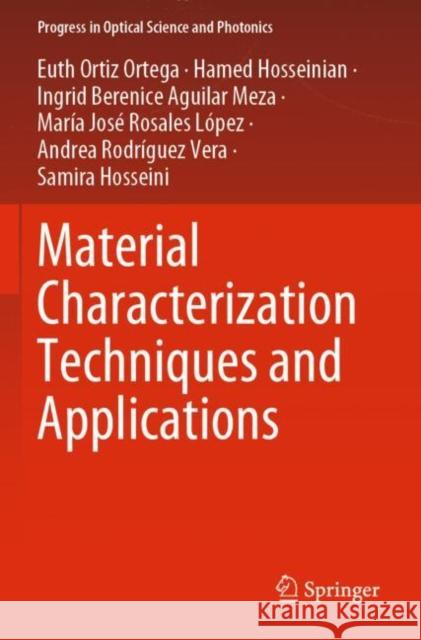
Euth Ortiz Ortega; Hamed Hosseinian; Ingrid Berenice Aguilar Meza
Material Characterization Techniques and Applications Euth Orti Hamed Hosseinian Ingrid Berenice Aguila 9789811695711 Springer - książkaWidoczna okładka, to zdjęcie poglądowe, a rzeczywista szata graficzna może różnić się od prezentowanej.

Material Characterization Techniques and Applications

ISBN-13: 9789811695711 / Angielski / Miękka / 2023 / 305 str.

Euth Ortiz Ortega; Hamed Hosseinian; Ingrid Berenice Aguilar Meza
cena 645,58 zł
(netto: 614,84 VAT:  5%)

Najniższa cena z 30 dni: 616,85 zł
Termin realizacji zamówienia:
ok. 22 dni roboczych
Bez gwarancji dostawy przed świętami

Darmowa dostawa!
inne wydania

This book presents commonly applied characterization techniques in material science, their brief history and origins, mechanism of operation, advantages and disadvantages, their biosensing applications, and troubleshooting for each technique, while addressing the challenges researchers face when working with these techniques. The book dedicates its focus to identifying physicochemical and electrochemical nature of materials including analyses of morphology, mass spectrometry, and topography, as well as the characterization of elemental, structural, thermal, wettability, electrochemical, and chromatography properties. Additionally, the main features and benefits of using coupled characterization techniques are discussed in this book.


This book presents commonly applied characterization techniques in material science, their brief history and origins, mechanism of operation, advantages and disadvantages, their biosensing applications, and troubleshooting for each technique, while addressing the challenges researchers face when working with these techniques. The book dedicates its focus to identifying physicochemical and electrochemical nature of materials including analyses of morphology, mass spectrometry, and topography, as well as the characterization of elemental, structural, thermal, wettability, electrochemical, and chromatography properties. Additionally, the main features and benefits of using coupled characterization techniques are discussed in this book.

Kategorie:
Nauka, Fizyka
Kategorie BISAC:
Technology & Engineering > Materials Science - Electronic Materials
Science > Spectroscopy & Spectrum Analysis
Science > Microscopes & Microscopy
Wydawca:
Springer
Seria wydawnicza:
Progress in Optical Science and Photonics
Język:
Angielski
ISBN-13:
9789811695711
Rok wydania:
2023
Wydanie:
2022
Numer serii:
000459756
Ilość stron:
305
Oprawa:
Miękka
Wolumenów:
01
Dodatkowe informacje:
Wydanie ilustrowane

Chapter 1. Morphology Analysis Abstract 1.1 Optical microscopy (OM) 1.1.1 History 1.1.2 Mechanism of operation 1.1.3 Advantages and disadvantages 1.1.4 Applications 1.2 Scanning Electron Microscopy (SEM) 1.2.1 History 1.2.2 Mechanism of operation 1.2.3 Advantages and disadvantages 1.2.4 Applications 1.3 Transmission Electron Microscopy Analysis (TEM) 1.3.1 History 1.3.2 Mechanism of operation 1.3.3 Advantages and disadvantages 1.3.4 Applications Troubleshooting References

 Chapter 2. Mass Spectrometry Analysis Abstract 2.1 Mass Spectrometry (MS) 2.1.1 History 2.1.2 Mechanism of operation 2.1.3 Advantages and disadvantages 2.1.4 Applications 2.2 Matrix-Assisted Laser Desorption/Ionization - Time-Of-Flight (MALDI-TOF) Spectrometry 2.2.1 History 2.2.2 Mechanism of operation 2.2.3 Advantages and disadvantages 2.2.4 Applications Troubleshooting References  

Chapter 3. Topography Analysis Abstract 3.1 Atomic Force Microscopy (AFM) 3.1.1 History 3.1.2 Mechanism of operation 3.1.3 Advantages and disadvantages 3.1.4 Applications 3.2 RAMAN Spectroscopy 3.2.1 History 3.2.2 Mechanism of operation 3.2.3 Advantages and disadvantages 3.2.4 Applications Troubleshooting References  

Chapter 4. Chemical and Structural Analysis Abstract 4.1 RAMAN Spectroscopy 4.1.1 History 4.1.2 Mechanism of operation 4.1.3 Advantages and disadvantages 4.1.4 Applications 4.2 Fourier Transform Infrared Spectroscopy (FTIR) 4.2.1 History 4.2.2 Mechanism of operation 4.2.3 Advantages and disadvantages 4.2.4 Applications 4.3 Ultraviolet-visible Spectroscopy (UV-Vis) 4.3.1 History 4.3.2 Mechanism of operation 4.3.3 Advantages and disadvantages 4.3.4 Applications 4.4 X-ray Photoelectron Spectroscopy (XPS) 4.4.1 History 4.4.2 Mechanism of operation 4.4.3 Advantages and disadvantages 4.4.4 Applications 4.5 Diffuse Reflectance Infrared Fourier Transform Spectroscopy (DRIFTS) 4.5.1 History 4.5.2 Mechanism of operation 4.5.3 Advantages and disadvantages 4.5.4 Applications 4.6 X-Ray Diffraction (XRD) 4.6.1 History 4.6.2 Mechanism of operation 4.6.3 Advantages and disadvantages 4.6.4 Applications 4.7 Nuclear Magnetic Resonance (NMR) 4.7.1 History 4.7.2 Mechanism of operation 4.7.3 Advantages and disadvantages 4.7.4 Applications Troubleshooting References

 Chapter 5. Thermal Analysis Abstract 5.1 Thermal Gravimetric Analysis (TGA) 5.1.1 History 5.1.2 Mechanism of operation 5.1.3 Advantages and disadvantages 5.1.4 Applications 5.2 Differential scanning calorimetry (DSC) 5.2.1 History 5.2.2 Mechanism of operation 5.2.3 Advantages and disadvantages 5.2.4 Applications 5.3 Differential thermal analysis (DTA) 5.3.1 History 5.3.2 Mechanism of operation 5.3.3 Advantages and disadvantages 5.3.4 Applications Troubleshooting References


Chapter 6. Wettability analysis Abstract 6.1 Water Contact Angle (WCA) 6.1.1 History 6.1.2 Mechanism of operation 6.1.3 Advantages and disadvantages 6.1.4 Applications Troubleshooting References  

Chapter 7. Electrochemical analysis Abstract 7.1 Cyclic Voltammetry (CV) 7.1.1 History 7.1.2 Mechanism of operation 7.1.3 Advantages and disadvantages 7.1.4 Applications 7.2 Electrochemical Impedance Spectroscopy (EIS) 7.2.1 History 7.2.2 Mechanism of operation 7.2.3 Advantages and disadvantages 7.2.4 Applications Troubleshooting References  

Chapter 8. Chromatography analysis Abstract 8.1 Gas Chromatography (GC) 8.1.1 History 8.1.2 Mechanism of operation 8.1.3 Advantages and disadvantages 8.1.4 Applications 8.2 High-Performance Liquid Chromatography (HPLC) 8.2.1 History 8.2.2 Mechanism of operation 8.2.3 Advantages and disadvantages 8.2.4 Applications 8.3 Ion Chromatography 8.3.1 History 8.3.2 Mechanism of operation 8.3.3 Advantages and disadvantages 8.3.4 Applications 8.4 High Temperature Gel Permeation Chromatography (HT-GPC) 8.4.1 History 8.4.2 Mechanism of operation 8.4.3 Advantages and disadvantages 8.4.4 Applications Troubleshooting References  

Chapter 9. Coupled Techniques Abstract 9.1 RAMAN-AFM 9.1.1 History 9.1.2 Mechanism of operation 9.1.3 Advantages and disadvantages 9.1.4 Applications 9.2 GC-MS 9.2.1 History 9.2.2 Mechanism of operation 9.2.3 Advantages and disadvantages 9.2.4 Applications 9.3 GPC-MS 9.3.1 History 9.3.2 Mechanism of operation 9.3.3 Advantages and disadvantages 9.3.4 Applications 9.4 SEM-EDX 9.4.1 History 9.4.2 Mechanism of operation 9.4.3 Advantages and disadvantages 9.4.4 Applications 9.5 UV-Vis-CV 9.5.1 History 9.5.2 Mechanism of operation 9.5.3 Advantages and disadvantages 9.5.4 Applications Troubleshooting References Table of abbreviations

Dr. Euth Ortiz-Ortega obtained his PhD in Engineering (microfluidic devices for energy conversion) from the University of Queretaro, Mexico. Currently, he is working as a Postdoctoral Researcher at the School of Engineering and Sciences, Tecnologico de Monterrey, Mexico. His research interests are in the area of electrochemical devices, carbon functionalization, electrochemical characterization of nanostructured materials, and bio-sensing.


Hamed Hosseinian obtained his Masters in Genetics from the University of Science and Arts, Yazd, Iran. His major research focus is on development of a fiber-based platform for biosensing applications. Currently, Hamed is pursuing his PhD at the School of Engineering and Sciences, Tecnologico de Monterrey.


Ingrid Berenice Aguilar Meza Obtained her Master of Science in Biomaterials and Regenerative Medicine from The University of Sheffield, the United Kingdom. Currently, she is studying her PhD in Nanotechnology at Tecnologico de Monterrey, Mexico. 


María José Rosales López obtained her bachelor degree in Sociology and Psychology at DePaul University in Illinois, United States. She has recently obtained her second bachelor’s in Chemical Engineering with a minor in Industrial Engineering at Tecnologico de Monterrey, Mexico. 


Andrea Rodríguez Vera is studying a bachelor’s degree in Biomedical Engineering with a minor in Biomedical Micro-Technology at Tecnologico de Monterrey, Mexico. She is also a Research Assistant at Neuro-Acoustics and Neuro-Engineering Research Group of Tecnologico de Monterrey.


​Dr. Samira Hosseini obtained her Ph.D. in Biomedical Engineering from the the University of Malaya, Kuala Lumpur, Malaysia. She served as a postdoctoral associate at Tecnologico de Monterrey, Mexico while holding a postdoctoral fellowship at Massachusetts Institute of Technology, Cambridge, USA. Currently, she is Director of Writing Lab in the Center for Educational Innovation at Tecnologico de Monterrey, Mexico. She also holds the position of research professor at the School of Engineering and Sciences, Tecnologico de Monterrey. She is a member of the Mexican National Academy of Researchers.

This book presents commonly applied characterization techniques in material science, their brief history and origins, mechanism of operation, advantages and disadvantages, their biosensing applications, and troubleshooting for each technique, while addressing the challenges researchers face when working with these techniques. The book dedicates its focus to identifying physicochemical and electrochemical nature of materials including analyses of morphology, mass spectrometry, and topography, as well as the characterization of elemental, structural, thermal, wettability, electrochemical, and chromatography properties. Additionally, the main features and benefits of using coupled characterization techniques are discussed in this book.




Udostępnij

Facebook - konto krainaksiazek.pl


Opinie o Krainaksiazek.pl na Opineo.pl

Partner Mybenefit

Krainaksiazek.pl w programie rzetelna firma Krainaksiaze.pl - płatności przez paypal

Czytaj nas na:

Facebook - krainaksiazek.pl
  • książki na zamówienie
  • granty
  • książka na prezent
  • kontakt
  • pomoc
  • opinie
  • regulamin
  • polityka prywatności

Zobacz:

  • Księgarnia czeska

  • Wydawnictwo Książkowe Klimaty

1997-2025 DolnySlask.com Agencja Internetowa

© 1997-2022 krainaksiazek.pl
     
KONTAKT | REGULAMIN | POLITYKA PRYWATNOŚCI | USTAWIENIA PRYWATNOŚCI
Zobacz: Księgarnia Czeska | Wydawnictwo Książkowe Klimaty | Mapa strony | Lista autorów
KrainaKsiazek.PL - Księgarnia Internetowa

Polityka prywatnosci - link
Krainaksiazek.pl - płatnośc Przelewy24
Przechowalnia Przechowalnia




