Master Planning and Scheduling: An Essential Guide to Competitive Manufacturing » książka





Master Planning and Scheduling: An Essential Guide to Competitive Manufacturing
ISBN-13: 9781119809418 / Angielski / Twarda / 2021 / 960 str.
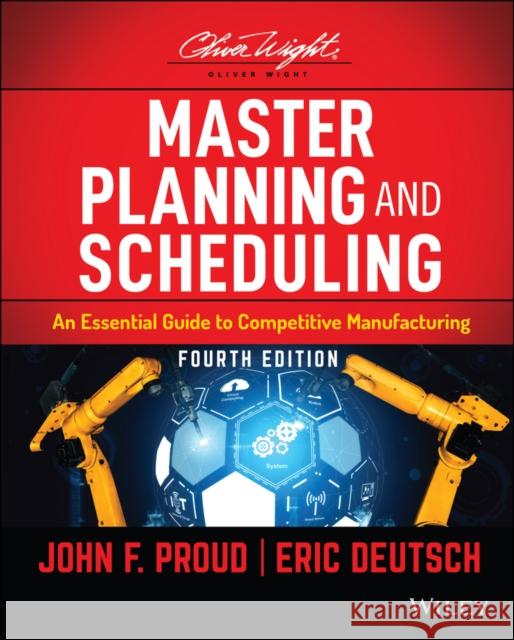
Master Planning and Scheduling: An Essential Guide to Competitive Manufacturing
ISBN-13: 9781119809418 / Angielski / Twarda / 2021 / 960 str.
(netto: 564,65 VAT: 5%)
Najniższa cena z 30 dni: 585,64
ok. 30 dni roboczych.
Darmowa dostawa!
Acknowledgments xxiiiForeword xxixIntroduction xxxiInitial Thoughts xxxix1 Chaos in Manufacturing 1Problems in Manufacturing 2And the Solutions 7Getting Out of the Overloaded Master Plan and/or Master Schedule 16Rescheduling the Overloaded Master Plan and/or Master Schedule 192 Why Master Planning and Scheduling 25The Four Cornerstones of a Manufacturing Business 25Between Strategy and Execution 27What Is a Master Plan versus a Master Schedule? 31Maximizing, Minimizing, and Optimizing 32Objectives of Master Planning and Scheduling (If You Don't Know Where You're Going, Any Road Will Get You There) 33Challenges for the Master Planner and Master Scheduler 35Principles of Master Planning and Scheduling 37MPS, MRPII, ERP, SCM, and ITP 39Finding the Diamond in the Rough--Why It's Important 58The Four Cornerstones of Manufacturing Revisited 67Four Levels of Planning (Sometimes Use Only Three) 68Why Master Planning and Scheduling Is a Must in Business Excellence 743 The Mechanics of Master Planning and Scheduling 79The Importance of Master Planning and Scheduling 79The Master Planning and Scheduling Matrices 80Master Scheduling in Action 87Why and How Master Scheduling Drives Material Requirements Planning and Detailed Scheduling 92The What, Why, and How of Safety Stock 99Additional Material Planning Techniques 103Maintaining Demand/Supply Balance Inside the Planning Time Fence 107Master Plan and Schedule Design Criteria 113So, What's Next? 1154 Managing the Supply Chain with Master Planning and Scheduling 117The Master Planner's and Master Scheduler's Job 119Exception-Driven Action Messages 125Six (Sometimes Seven) Key Questions to Answer 129Answering the Six (or Seven) Questions 133Time Zones as Aids to Decision Making 134Planning Within Master Planning and Scheduling Policy 138No Past Dues 141Managing with Planning Time Fences 142Load-Leveling in Manufacturing 147Lean Manufacturing and Continuous Improvement 150Mixed-Model Scheduling 151Planned Plant Shutdowns 1545 Using the MPS Output for Make-to-Stock Products 159The Master Schedule Screens 160Working Make-to-Stock Master Scheduled Items 168Time Phasing the Bills-of-Material 170Understanding Exception-Driven Action Messages 172Bridging Data and Judgment 180The Seven Key Questions Revisited 184Scheduling in a World of Many Schedules 185From Master Planning and Scheduling to Time-Phased Material Requirements Planning 194From Master Planning to Master Scheduling (It's Called Master Planning and Scheduling) 1996 Where and What to Master Plan and Master Schedule 203Manufacturing Strategies Defined 204Choosing the Right Manufacturing Strategy 206Master Planning, Master Scheduling, and Product Structures 210Multilevel Master Planning and Scheduling 213Ensuring That Supply Plans and Schedules Are Aligned, Synchronized, and Integrated 216Master Scheduling Capacities, Activities, and Events 2247 Scheduling in a Flow Environment 227Different Manufacturing Environments 228Similarities Between Intermittent and Flow Environments 232Product Definition 236The Planning Process 239Process Company Using Rough Cut Capacity Planning: An Extended Example 244Catalysts and Recovered Material 250Production Line Scheduling 251Planning Multiplant Workloads 2528 Planning Bills 255The Overly Complex Bill-of-Material 257Anatomy of a Planning Bill 266Creating Demand at the Master Planning and Scheduling Level 2719 Two-Level MPS Coupled with Other Advanced Techniques 277The Backlog Curve 277Identifying Demand 281Creating the Master Plan and/or Master Schedule for Products Using a Make-to-Order Manufacturing Strategy 288Option Overplanning 292Calculating Projected Available Balance for Pseudo Items 294Calculating Available-to-Promise 295Using Available-to-Promise to Commit Customer Orders 297Changes in Projected Available Balance 303Option Overplanning for Products in the Make-to-Stock Environment 305Master Planning and Scheduling Products in Make-to-Stock and Make-to-Order Environments: A Comparison 30910 Using MPS Output for Make-to-Order Products 313Using Planning Bills to Simplify Option Scheduling 315The Scheduling Process 317Master Scheduling Common Components 321Analyzing the Detail Data 325Balancing the Sold-Out Zone for Common Components 326Handling Abnormal Demand 328Action Messages 330Working the Pseudo Options 330Master Scheduling Purchased Items in the Planning Bill 341Linking the Master Plan to the Master Schedule to the Material Plan 346Manufacturing Strategies--Products in the Make-to-Order Environment 35011 Master Planning and Scheduling in Custom-Product Environments 355The Unique Challenges of the DTO and ETO Environments 356The Case of New Product Introduction 358Master Planning and Scheduling--Activities and Events 363Prices and Promises to Keep 367What Can Go Wrong 368Integrating Design and Operation Activities 370Plan Down, Replan Up 373Make-to-Contract Environments 381The Need for Standards--A Long Time Ago 382When Supply Can't Satisfy Demand 38612 Finishing or Final Assembly Scheduling 389Manufacturing Strategy Tied to Finishing/Final Assembly Schedules 389Manufacturing Strategy Approaches 391Traditional Means of Communicating the Master Plan and/or Master Schedule 395The Role of People and Computers in Finishing and Final Assembly Scheduling--Past, Present, and Future 397The Kanban System 399Tying It All Together (Aggregate Integrated Business Planning Through Master Planning and Scheduling Through Detailed Production Scheduling) 403Final Assembly or Process Routings 406Configuring and Building to a Customer Order 408Finishing or Final Assembly Combined Materials and Operations List 411Choosing the Most Effective Approach 413Master Plans versus Master Schedules versus Finishing Schedules 414Master Scheduling Logistics (Sharing In/Out Information) 41513 Data Integrity Requirements to Support Master Planning and Scheduling 417What Is Data Integrity and Why Is It Important? 418Gaining Control and Integration Points 422The Four Pillars of Data Integrity 425Applying the Four Pillars of Data Integrity in Support of Master Planning and Scheduling 438Summary 45214 Integrated Business Planning 455Integrated Business Planning Process Elements in Brief 457Workable, Adjustable Plans 466Master Supply Planning 468Integrated Business Planning and the Master Supply Schedule 470Synchronizing and Assessing Demand and Supply 481Measuring Accuracy and Performance 487The Evolution of Integrated Business Planning 49515 Resource Requirements Planning and Rough Cut Capacity Planning 499Know Before You Go 500Rough Cut Revealed 502The Rough Cut Process 502Creating the Resource Profile 505Finalizing the Resource Profile 512Capacity Inputs 514Overloading Demonstrated and/or Planned Capacity 520Rough Cut Capacity Planning at the Master Planning and Master Scheduling Levels 522Resource Requirements and Rough Cut Capacity Planning Graphs 529Using and Working the Rough Cut Capacity Plan 533Simulations--Rough Cut Capacity Planning 538Screen and Report Formats 540Rough Cut Capacity Planning at a Process Company (Industry Example) 543The Benefits and Limitations of Rough Cut Capacity Planning 551Implementing the Rough Cut Capacity Planning Process 554Closing Comments Regarding Resource Requirements Planning and Rough Cut Capacity Planning 55516 Supply Management and Aggregate Master Planning 559Supply Management and Master Planning in Action 565The Impact of New Product in Supply Management and Master Planning 567Inventory Projection and Planning 572Will the Plan Work? 575Product-Driven, Disaggregated Inventory Planning 577Product-Driven, Aggregated Backlog Planning 579Product-Driven, Disaggregated Backlog Planning 585Production-Driven Environments 589Reviewing and Approving the Aggregate Supply Plan 591Interplant Product Integration 592Key Performance Metrics--Calculations, Colors, Standards 597Should Companies Have Supply Managers and/or Master Planners? 59817 Demand Management and Aggregate Master Planning 603What Is Demand Management? 603The Impact of New Product in Demand Management 608Master Launch Plan and Pipeline Funnel Examples for New Products 609Problems with the Demand Forecast 614The Impact of Demand Bias on Supply Chain Management 615Coping with Forecast Inaccuracies 617Reviewing and Approving the Aggregate Demand Plan 619It's About Quantities 621It's About Time 623Demand and Forecast Adjustment 631Customer Order Processing with Process Flow Diagram Example 637Possible Problems Caused by Abnormal Demand 640Customer Linking 642Getting Sales Pipeline Control 645Distribution Resource/Requirements Planning 646Available-to-Promise 655ATP with Two Demand Streams 659Should Companies Have Demand Managers? 66318 The Proven Path to a Successful MPS Implementation (Phase 1) 669From the Original Implementation Plan to the Current Proven Path 669The Proven Path to Successful Operational Excellence 671The Decision Point 673Going on the Air 675The Former Proven Path to Master Planning and Scheduling in a Class A Operational Excellence Environment 676The Journey to Excellence--Today and Tomorrow 679Oliver Wight's Class A Integrated Planning and Control Milestone 681The Proven Path (3rd Version) to Successful Supply Chain Management and Master Planning and Scheduling Implementation 683Phase 1: Lead Phase (Understanding and Committing) 685Company Vision of Operations (A Modified Client Example) 687Case for Change (A Modified Excerpt from a Client Example) 696Segue to . . . 702The Proven Path to a Successful MPS Implementation (Phase 2) Influencers Transform MPS Process Design and Structure 70219 The Proven Path to a Successful MPS Implementation (Phase 2) 705Methodology for Implementing Change Revisited 705Phase 2: Transform Phase (Process Designing and Structuring) 707Policy, Flow Diagrams, Procedures, Work Instructions, and Metrics Defined 731Segue to . . . 741The Proven Path to a Successful MPS Implementation (Phase 3) Users Own MPS Launch and Measures 74120 The Proven Path to a Successful MPS Implementation (Phase 3) 743Methodology for Implementing Change Revisited--Again! 743Phase 3: Own Phase (Launching and Measuring) 745Deterrents to Successful Implementation of the Master Planning and Scheduling Process and Supporting System Technology 762The Master Planner's and Master Scheduler's List of Responsibilities 764Putting It All Together to Ensure Success--Guaranteed 768An Aggressive Master Plan and Schedule for the MPS Implementation 771The Variables of a Master Planning and Scheduling Implementation 774EpilogueOrder from Chaos 779Final Thoughts - People and Process and Profession 783Appendix A Master Planning and Scheduling Process and Performance Standards 809Appendix B Master Planning and Scheduling Improvement Initiative Task Listing 817Appendix C Master Planning and Scheduling Policy, Procedure, and Flow Diagram 827Appendix D Master Planning and Scheduling 831Appendix E Supply Chain Management Overall Process Flow Diagram (An Example) 843Appendix F Master Planning and Scheduling Process Flow Diagram Examples 845Appendix G Master Planning and Scheduling RACI Examples 851Appendix H Master Planning and Scheduling Spinoff Task Team Charter 855Appendix I Master Planning and Scheduling Oliver Wight International Offerings Founders' and Co-Authors' Biographies 859Glossary 865Index 895
JOHN F. PROUD is a business advisor with Oliver Wight. Throughout his career, Mr. Proud has enjoyed collaborating with several large companies, from Lockheed Martin and Boeing to Weyerhaeuser and Starbucks. He has educated and consulted throughout the USA as well as around the free world. Numerous companies under his leadership and coaching have implemented supply chain management including master planning and scheduling best practice principles for more than 50 years. Mr. Proud was a recipient of Who's Who Albert Nelson Marquis Lifetime Achievement Award in 2021 and will be listed in Who's Who in America in 2022.ERIC DEUTSCH is a business advisor with Oliver Wight, working with companies to implement and improve their integrated business planning processes. He has an academic background and career experience in the biotech industry and, since starting his consulting practice, has worked across many industries to coach and advise clients through transformational change. In addition to advising clients, he is a member of the Oliver Wight Board of Directors, and teaches the Oliver Wight Master Planning and Scheduling Course offered publicly several times per year.




Czytaj nas na:
1997-2026 DolnySlask.com Agencja Internetowa
KrainaKsiazek.PL - Księgarnia Internetowa


