• Wyszukiwanie zaawansowane
  • Kategorie
  • Kategorie BISAC
  • Książki na zamówienie
  • Promocje
  • Granty
  • Książka na prezent
  • Opinie
  • Pomoc
  • Załóż konto
  • Zaloguj się

Mass Spectrometry : Principles and Applications » książka


zaloguj się | załóż konto
Logo Krainaksiazek.pl

koszyk

konto

szukaj
topmenu
Księgarnia internetowa
Szukaj
Książki na zamówienie
Promocje
Granty
Książka na prezent
Moje konto
Pomoc
 
 
Wyszukiwanie zaawansowane
Pusty koszyk
Bezpłatna dostawa dla zamówień powyżej 20 złBezpłatna dostawa dla zamówień powyżej 20 zł

Kategorie główne

• Nauka
 [2946600]
• Literatura piękna
 [1856966]

  więcej...
• Turystyka
 [72221]
• Informatyka
 [151456]
• Komiksy
 [35826]
• Encyklopedie
 [23190]
• Dziecięca
 [619653]
• Hobby
 [140543]
• AudioBooki
 [1577]
• Literatura faktu
 [228355]
• Muzyka CD
 [410]
• Słowniki
 [2874]
• Inne
 [445822]
• Kalendarze
 [1744]
• Podręczniki
 [167141]
• Poradniki
 [482898]
• Religia
 [510455]
• Czasopisma
 [526]
• Sport
 [61590]
• Sztuka
 [243598]
• CD, DVD, Video
 [3423]
• Technologie
 [219201]
• Zdrowie
 [101638]
• Książkowe Klimaty
 [124]
• Zabawki
 [2473]
• Puzzle, gry
 [3898]
• Literatura w języku ukraińskim
 [254]
• Art. papiernicze i szkolne
 [8170]
Kategorie szczegółowe BISAC

Mass Spectrometry : Principles and Applications

ISBN-13: 9780470033104 / Angielski / Twarda / 2007 / 502 str.
Edmond De Hoffmann; Vincent Stroobant
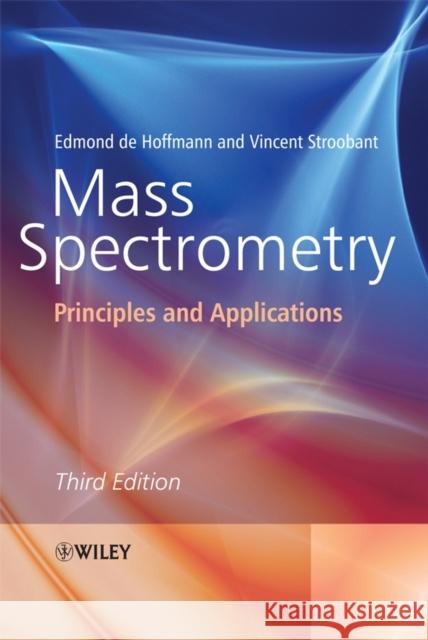
Mass Spectrometry : Principles and Applications Edmond De Hoffmann Vincent Stroobant 9780470033104 Wiley-Interscience - książkaWidoczna okładka, to zdjęcie poglądowe, a rzeczywista szata graficzna może różnić się od prezentowanej.

Mass Spectrometry : Principles and Applications

ISBN-13: 9780470033104 / Angielski / Twarda / 2007 / 502 str.

Edmond De Hoffmann; Vincent Stroobant
cena 752,98 zł
(netto: 717,12 VAT:  5%)

Najniższa cena z 30 dni: 746,80 zł
Termin realizacji zamówienia:
ok. 30 dni roboczych
Bez gwarancji dostawy przed świętami

Darmowa dostawa!
inne wydania

The latest edition of a highly successful textbook, Mass Spectrometry, Third Edition provides students with a complete overview of the principles, theories and key applications of modern mass spectrometry. All instrumental aspects of mass spectrometry are clearly and concisely described: sources, analysers and detectors. Tandem mass spectrometry is introduced early on and then developed in more detail in a later chapter. Emphasis is placed throughout the text on optimal utilisation conditions. Various fragmentation patterns are described together with analytical information that derives from the mass spectra. This new edition has been thoroughly revised and updated and has been redesigned to give the book a more contemporary look. As with previous editions it contains numerous examples, references and a series of exercises of increasing difficulty to encourage student understanding. Updates include: Increased coverage of MALDI and ESI, more detailed description of time of flight spectrometers, new material on isotope ratio mass spectrometry, and an expanded range of applications. Mass Spectrometry, Third Edition is an invaluable resource for all undergraduate and postgraduate students using this technique in departments of chemistry, biochemistry, medicine, pharmacology, agriculture, material science and food science. It is also of interest for researchers looking for an overview of the latest techniques and developments.


Kategorie:
Nauka, Chemia
Kategorie BISAC:
Science > Spectroscopy & Spectrum Analysis
Wydawca:
Wiley-Interscience
Język:
Angielski
ISBN-13:
9780470033104
Rok wydania:
2007
Ilość stron:
502
Waga:
1.02 kg
Wymiary:
25.2 x 16.7 x 3.6
Oprawa:
Twarda

"An excellent source of qualitative information on MS for postgraduates and professionals in the fields of research … .A reasonably priced book and we would recommend it." ( The Higher Education Academy Physical Sciences Centre, December 2008)


"Featuring numerous examples, references, and a series of exercises of increasing difficulty, this updated edition now includes additional coverage." (Materials and Corrosion, November 2007)


Preface.

Introduction.

Principles.

Diagram of a Mass Spectrometer.

History.

Ion Free Path.

1 Ion Sources.

1.1 Electron Ionization.

1.2 Chemical Ionization.

1.2.1 Proton transfer.

1.2.2 Adduct formation.

1.2.3 Charge–transfer chemical ionization.

1.2.4 Reagent gas.

1.2.5 Negative ion formation.

1.2.6 Desorption chemical ionization (DCI).

1.3 Field Ionization.

1.4 Fast Atom Bombardment and Liquid Secondary Ion Mass Spectrometry.

1.5 Field Desorption.

1.6 Plasma Desorption.

1.7 Laser Desorption.

1.8 Matrix–Assisted Laser Desorption Ionization.

1.8.1 Principle of MALDI.

1.8.2 Practical considerations.

1.8.3 Fragmentations.

1.8.4 Atmospheric pressure matrix–assisted laser desorption ionization.

1.9 Thermospray.

1.10 Atmospheric Pressure Ionization.

1.11 Electrospray.

1.11.1 Multiply charged ions.

1.11.2 Electrochemistry and electric field as origins of multiply charged ions.

1.11.3 Sensitivity to concentration.

1.11.4 Limitation of ion current from the source by the electrochemical process.

1.11.5 Practical considerations.

1.12 Atmospheric Pressure Chemical Ionization.

1.13 Atmospheric Pressure Photoionization (APPI).

1.14 Atmospheric Pressure Secondary Ion Mass Spectrometry (APSIMS).

1.14.1 Desorption electrospray ionization (DESI).

1.14.2 Direct analysis in real time (DART).

1.15 Inorganic Ionization Sources.

1.15.1 Thermal ionization source.

1.15.2 Spark source.

1.15.3 Glow discharge source.

1.15.4 Inductively coupled plasma source.

1.15.5 Practical considerations.

1.16 Gas–Phase Ion–Molecule Reactions.

1.17 Formation and Fragmentation of Ions: Basic Rules.

1.17.1 Electron ionization and photoionization under vacuum.

1.17.2 Ionization at low pressure or at atmospheric pressure.

1.17.3 Proton transfer.

1.17.4 Adduct formation.

1.17.5 Formation of aggregates or clusters.

1.17.6 Reactions at the interface between source and analyzer.

2 Mass Analyzers.

2.1 Quadrupole Analyzers.

2.1.1 Description.

2.1.2 Equations of motion.

2.1.3 Ion guide and collision cell.

2.1.4 Spectrometers with several quadrupoles in tandem.

2.2 Ion Trap Analyzers.

2.2.1 Three–dimensional ion trap.

2.2.2 Two–dimensional ion trap.

2.3 The Electrostatic Trap or "Orbitrap".

2.4 Time–of–Flight Analyzers.

2.4.1 Linear time–of–flight mass spectrometer.

2.4.2 Delayed pulsed extraction.

2.4.3 Reflectrons.

2.4.4 Tandem mass spectrometry with time–of–flight analyzer.

2.4.5 Orthogonal acceleration time–of–flight instruments.

2.5 Magnetic and Electromagnetic Analyzers.

2.5.1 Action of the magnetic field.

2.5.2 Electrostatic field.

2.5.3 Dispersion and resolution.

2.5.4 Practical considerations.

2.5.5 Tandem mass spectrometry in electromagnetic analyzers.

2.6 Ion Cyclotron Resonance and Fourier Transform Mass Spectrometry.

2.6.1 General principle.

2.6.2 Ion cyclotron resonance.

2.6.3 Fourier transform mass spectrometry.

2.6.4 MSn in ICR/FTMS instruments.

2.7 Hybrid Instruments.

2.7.1 Electromagnetic analyzers coupled to quadrupoles or ion trap.

2.7.2 Ion trap analyzer combined with time–of–flight or ion cyclotron resonance.

2.7.3 Hybrids including a time–of–flight with orthogonal acceleration.

3 Detectors and Computers.

3.1 Detectors.

3.1.1 Photographic plate.

3.1.2 Faraday cup.

3.1.3 Electron multipliers.

3.1.4 Electro–optical ion detectors.

3.2 Computers.

3.2.1 Functions.

3.2.2 Instrumentation.

3.2.3 Data acquisition.

3.2.4 Data conversion.

3.2.5 Data reduction.

3.2.6 Library search.

4 Tandem Mass Spectrometry (MS/MS).

4.1 Tandem Mass Spectrometry in Space or in Time.

4.2 Tandem Mass Spectrometry Scan Modes.

4.3 Collision–activated or Collision–induced Dissociation (CAD or CID).

4.3.1 Collision energy conversion to internal energy.

4.3.2 High–energy collision (keV).

4.3.3 Low–energy collision (between 1 and 100 eV).

4.4 Other Methods of Ion Activation.

4.5 Reactions Studied in MS/MS.

4.6 Tandem Mass Spectrometry Applications.

4.6.1 Structure elucidation.

4.6.2 Selective detection of target compound class.

4.6.3 Ion–molecule reaction.

4.6.4 The kinetic method.

5 Mass Spectrometry/Chromatography Coupling.

5.1 Elution Chromatography Coupling Techniques.

5.1.1 Gas chromatography/mass spectrometry (GC/MS).

5.1.2 Liquid chromatography/mass spectrometry (LC/MS).

5.1.3 Capillary electrophoresis/mass spectrometry (CE/MS).

5.2 Chromatography Data Acquisition Modes.

5.3 Data Recording and Treatment.

5.3.1. Data recording.

5.3.2 Instrument control and treatment of results.

6 Analytical Information.

6.1 Mass Spectrometry Spectral Collections.

6.2 High Resolution.

6.2.1 Information at different resolving powers.

6.2.2 Determination of the elemental composition.

6.3 Isotopic Abundances.

6.4 Low–mass Fragments and Lost Neutrals.

6.5 Number of Rings or Unsaturations.

6.6 Mass and Electron Parities, Closed–shell Ions and Open–shell Ions.

6.6.1 Electron parity.

6.6.2 Mass parity.

6.6.3 Relationship between mass and electron parity.

6.7 Quantitative Data.

6.7.1 Specificity.

6.7.2 Sensitivity and detection limit.

6.7.3 External standard method.

6.7.4 Sources of error.

6.7.5 Internal standard method.

6.7.6 Isotopic dilution method.

7 Fragmentation Reactions.

7.1 Electron Ionization and Fragmentation Rates.

7.2 Quasi–equilibrium and RRKM Theory.

7.3 Ionization and Appearance Energies.

7.4 Fragmentation Reactions of Positive Ions.

7.4.1 Fragmentation of odd–electron cations or radical cations (OE.+).

7.4.2 Fragmentation of cations with an even number of electrons (EE+).

7.4.3 Fragmentations obeying the parity rule.

7.4.4 Fragmentations not obeying the parity rule.

7.5 Fragmentation Reactions of Negative Ions.

7.5.1 Fragmentation mechanisms of even electron anions (EE–).

7.5.2 Fragmentation mechanisms of radical anions (OE. –).

7.6 Charge Remote Fragmentation (CRF).

7.7 Spectrum Interpretation.

7.7.1 Typical ions.

7.7.2 Presence of the molecular ion.

7.7.3 Typical neutrals.

7.7.4 A few examples of the interpretation of mass spectra.

8 Analysis of Biomolecules.

8.1 Biomolecules and Mass Spectrometry.

8.2 Proteins and Peptides.

8.2.1 ESI and MALDI.

8.2.2 Structure and sequence determination using fragmentation.

8.2.3. Applications.

8.3. Oligonucleotides.

8.3.1. Mass Spectra of Oligonucleotides.

8.3.2. Applications of Mass Spectrometry to Oligonucleotides.

8.3.3. Fragmentation of Oligonucleotides.

8.3.4. Characterization of Modified Oligonucleotides.

8.4. Oligosaccharides.

8.4.1. Mass Spectra of Oligosaccharides.

8.4.2. Fragmentation of Oligosaccharides.

8.4.3. Degradation of Oligosaccharides Coupled with Mass Spectrometry.

8.5. Lipids.

8.5.1. Fatty Acids.

8.5.2 Acylglycerols.

8.5.3. Bile Acids.

8.6 Metabolomics.

8.6.1 Mass spectrometry in metabolomics.

8.6.2 Applications.

9 Exercises.

A. Questions.

B. Answers.

Appendices.

Appendix 1. Nomenclature.

1.1. Units.

1.2. Definitions.

1.3. Analyzers.

1.4. Detection.

1.5. Ionization.

1.6 Ion Types.

1.7. Ion–molecule Reaction.

1.8. Fragmentation.

Appendix 2. Abbreviations.

Appendix 3. Fundamental Physical Constants.

Appendix 4A . Table of Isotopes in Ascending Mass Order.

Appendix 4B. Table of Isotopes in Alphabetical Order.

Appendix 5. Isotopic Abundances in % for Various Elemental Compositions CHON (M = 100%).

Appendix 6. Gas–Phase Ion Thermochemical Data of Molecules.

Appendix 7. Gas–Phase Ion Thermochemical Data of Radicals.

Appendix 8. Literature on Mass Spectrometry.

Appendix 9. Mass Spectrometry on Internet.

Index.

Edmond de Hoffmann

Universit´e Catholique de Louvain, Belgium & Ludwig Institute for

Cancer Research, Brussels, Belgium

Vincent Stroobant

Ludwig Institute for Cancer Research, Brussels, Belgium

Mass Spectrometry: Principles and Applications, Third Edition

Edmond de Hoffmann, Université Catholique de Louvain, Belgium and Vincent Stroobant, Ludwig Institute for Cancer Research, Brussels Branch, Belgium.

Mass Spectrometry, Third Edition provides students with a complete overview of the principles, theories and key applications of modern mass spectrometry. Extensively revised and updated, the third edition of this successful textbook focuses on recent developments in techniques and applications. All instrumental aspects of mass spectrometry are clearly and concisely described. Emphasis is placed throughout the text on practical application examples. As with previous editions, it contains numerous tables of useful data, references and a series of exercises of increasing difficulty to encourage student understanding.

  • Provides a complete overview of the principles, theories and applications of modern mass spectrometry
  • An extensive revision and update including: increased coverage of MALDI and ESI, resolution and mass accuracy and activation of ions
  • New material about instruments such as linear traps, Orbitrap, TOF/TOF, hybrid instruments, and about new atmospheric ionisation techniques such as APPI, DESI, DART. The range of applications has been expanded and newer methods such as metabolome are included
  • Contains numerous examples and exercises to encourage student understanding

Mass Spectrometry: Principles and Applications, Third Edition will prove invaluable to undergraduates and postgraduates using this technique in departments of chemistry, biochemistry, medicine, pharmacology, agriculture, materials science and food science. It will also appeal to researchers looking for an overview of the latest techniques and developments.



Udostępnij

Facebook - konto krainaksiazek.pl


Opinie o Krainaksiazek.pl na Opineo.pl

Partner Mybenefit

Krainaksiazek.pl w programie rzetelna firma Krainaksiaze.pl - płatności przez paypal

Czytaj nas na:

Facebook - krainaksiazek.pl
  • książki na zamówienie
  • granty
  • książka na prezent
  • kontakt
  • pomoc
  • opinie
  • regulamin
  • polityka prywatności

Zobacz:

  • Księgarnia czeska

  • Wydawnictwo Książkowe Klimaty

1997-2025 DolnySlask.com Agencja Internetowa

© 1997-2022 krainaksiazek.pl
     
KONTAKT | REGULAMIN | POLITYKA PRYWATNOŚCI | USTAWIENIA PRYWATNOŚCI
Zobacz: Księgarnia Czeska | Wydawnictwo Książkowe Klimaty | Mapa strony | Lista autorów
KrainaKsiazek.PL - Księgarnia Internetowa

Polityka prywatnosci - link
Krainaksiazek.pl - płatnośc Przelewy24
Przechowalnia Przechowalnia




